A friend e-mailed me and mentioned her diet, and I immediately read “Diet,” as in the Japanese legislature (which is controlled by the bad guys in “Debt of Honor.”)
Seriously, I love that book.

A friend e-mailed me and mentioned her diet, and I immediately read “Diet,” as in the Japanese legislature (which is controlled by the bad guys in “Debt of Honor.”)
Seriously, I love that book.
“Good little sunbeams must learn to fly,
“But it’s madly ungay when the goldfish die.”
— Adrian and Francisco, from W.H. Auden’s “The Sea and the Mirror”
“There was once a time, in decades not too long ago, when life for a young artist consisted of living in a threadbare apartment while trying to create great art, instead of trying to live in a great apartment while creating threadbare art.”
– Roger Ebert.
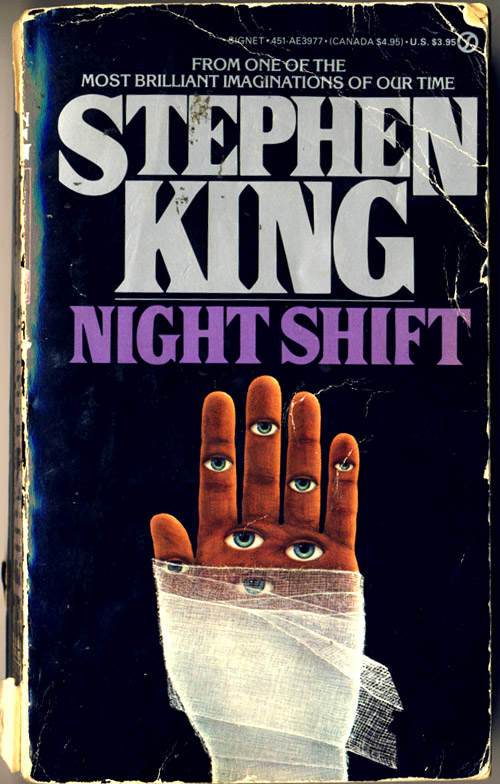
I’m pretty sure “The Boogeyman” was my favorite story. (I might have borrowed it from my brother without his permission.)
For some reason, however, it was “The Tommyknockers” (and not “The Stand!!”) that really made me want to become an author. I read that one on a long car ride to visit my sister at college in Boston.
$1 movies at Dodd Auditorium. (What a cheap date.)
Anyone else remember “Fantasia” or “The Birds?”
“The past is the only dead thing that smells sweet.”
Edward Thomas, Poems (1917)
I do.
If you’re a writer, you could learn hell of a lot about storytelling by reading his film reviews. Two areas he taught readers a lot, for example, were character development and avoiding cliche.
And not to sound like an anti-intellectual here, but I always trusted (and enjoyed reading) his opinion far more than those of the highbrow film school prof-type reviewers who seemed to feel that every movie needed to be “Citizen Kane.”
(a portion of “The Sea and the Mirror”)
BY ROBERT FROST
I bitch as much as the next person, but gentle twilight snowfalls actually are rather pretty …
 Eric Robert Nolan, Author