“The Revenant” (2015) changed the way that I see movies. This utterly immersive, jaw-droppingly gorgeous period thriller is easily one of the best films I’ve ever seen, and I plan to see it again, soon. I’d rate it a perfect 10.
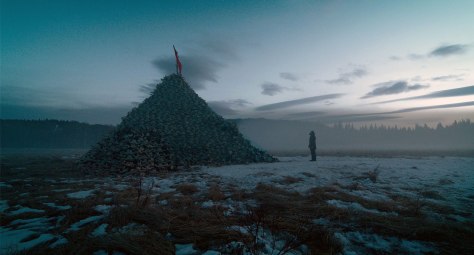
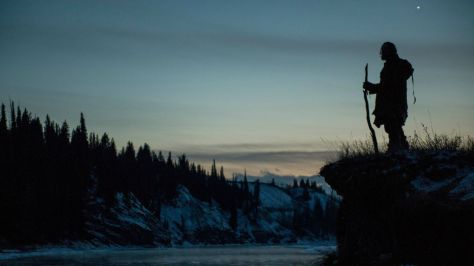
It’s a visual masterpiece. Its cinematography renders its mountains, valleys and plains both dreamlike and lucid, and its action is unflinchingly visceral. Shot mostly in Alberta, Canada (standing in for 1823 Montana and South Dakota), the film’s visuals are more stunning than anything I’ve ever seen. You truly do feel that “you are there.” But “there” is an absolutely brutal 19th century middle American winter wilderness. It’s fatally dangerous, both with its unforgiving elements and with the human violence that seems to erupt casually and constantly over its land and resources — not to mention bloody retribution among groups and individuals. This isn’t a movie for the faint of heart. I won’t spoil the subject of its gut-wrenching action sequences for fear of spoilers — most of these sequences arrive as frightening surprises, thanks to Alejandro G. Inarritu’s expert direction. It is this juxtaposition of beauty and brutality that define the movie.
Leonardo DiCaprio plays Hugh Glass, an American trapper who begins as one of the seemingly few characters that do not quickly resort to unnecessary violence, prejudice or revenge. He later does seek vengeance for his son’s death against fellow trapper John Fitzgerald, played by Tom Hardy. (Glass was a real frontiersman who was the subject of Michael Punke’s 2002 biography, “The Revenant.” But a cursory Google search suggests to me that this is not actually “a true story;” I think of it as loosely based historical fiction.) Like DiCaprio and Hardy, Domhnall Gleeson and Will Poulter also excel in their supporting roles. (Gleeson seems to specialize in playing reluctant innocents; I remember him from his skilled performance as the gentle young computer genius in last year’s outstanding science fiction thriller, “Ex Machina.”)
But the main star of “The Revenant” is the setting itself, beautifully shot by Emmanuel Lebezki and masterfully employed by Inarritu as a kind of character unto itself in the story. It’s lovely. I’ve never seen a movie like this. And while I’m no film connoisseur, or even a genuine critic, I’ve seen a lot of good ones.
The direction most reminds me of Francis Ford Coppola’s work in 1979’s “Apocalypse Now.” I was also reminded of Stanley Kubrick’s “The Shining” (1980) — that was a film that also depicted threatening snowscapes as dreamlike and eerily beautiful. There was one shot near the end, following DiCaprio’s vengeful hero on his path through immense firs on either side — it reminded me a lot of Jack Nicholson’s murderous Jack Torrance on his path through the hellish hedge labyrinth.
There is also a central action set piece involving an attack on one group of characters on another — it actually reminded me of Oliver Stone’s work in “Platoon” (1986). Like Stone’s finale, the battle is staged so that the viewers have no sense of which direction the attack is coming from, paralleling the experience of the confused defenders. There are countless long tracking shots throughout this film, with fewer cuts — and amazing circular surrounding shots of the action. I’ve read that Inarritu actually had to transport cranes to his mountaintop shooting locations in order to execute those.
If you had to find a flaw with “The Revenant,” I suppose you could complain that its story and characters are thin. We know little more about DiCaprio’s Glass beyond that he is competent, patient and slow to fight — then merciless and unrelenting in seeking justice. Poulter’s Jim Bridger is loyal, but not as strong as the hero. Hardy’s Fitzgerald is a greedy, opportunistic bully whose murder of an innocent drives the plot. That’s … little more than the plot and characters of a lot of throwaway westerns, isn’t it? (I’ve indeed seen this movie categorized as a western in reviews. That’s technically correct, I guess, but it feels too unique to pigeonhole that way.)
You could easily read the movie for moral ambiguity. There are the obvious issues connected with revenge, of course, underscored by a final shot in which one character appears to break the fourth wall. I found myself wondering about Glass’ compatriots. Yes, it is Fitzgerald who acts villainously, but all of Glass’ fellow trappers also consign him to death by abandoning him after his injuries. I do understand that they feel they can’t survive themselves if they try to carry him back to their staging area at Fort Kiowa. But … is what they do “right?” What would you or I do?
I think I am coming too close here to revealing too much about the film. The best way to experience “The Revenant” is to walk into it knowing little about it. I strongly recommend you do so.






 Eric Robert Nolan, Author