
Tag Archives: Season 1

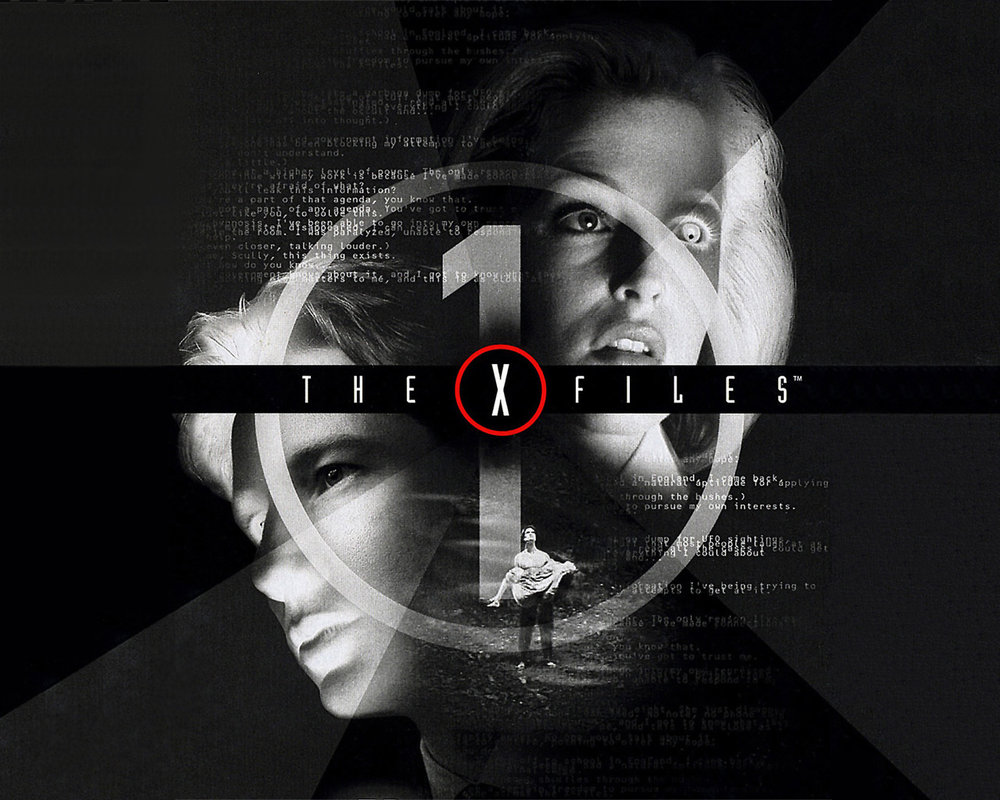
My slightly disappointed review of “The X Files” Season 1.

I am blogging my past TV reviews from Facebook; this was my surprisingly unenthusiastic reaction to “The X Files” Season 1.  Yes, this review is dated, as it makes no mention of the show’s impending return.  (Hooray.)

**********

I love ‘The X Files.” And I mean I REALLY love “The X Files.” It’s possibly my favorite television show of all time, running neck and neck with shows like “24,” Battlestar Galactica” and “Mystery Science Theater 3000.” So I was very surprised at my own disappointment when, via Netflix, I was able to watch Season 1 in its entirety for the first time. Taken together, I think its 24 episodes deserve a 5 out 0f 10. And bear in mind – that’s coming from a diehard fan.

I first fell in love with this show as its fourth or fifth season was currently airing. This was long before Netflix streaming, and I’m pretty sure it was before DVD’s were even a thing. (I’m old.) What few episodes I’d seen of Season 1 were from syndication and purchased VHS tapes. So I’ve been proclaiming my love for the show (which had a nine-year run) for years without ever having seen much of the early seasons.

Some great TV shows can get off to a rough start. “The Simpsons,” “MST3K” and even “Family Guy” were less than stellar when they first began. Shows like “24” and “Star Trek: The Next Generation” were good, but got much better. “The X Files” was surprisingly average.

The first nine episodes were, frankly, poor. There was little of the suspense, mystery and characterization that would eventually make the show great, with Mulder and Scully being flat, and even annoying characters that were thinly scripted and awkwardly played by David Duchovny and Gillian Anderson. Duchovny, early on, was just bad. His wooden line delivery made him seem like a Fox Network intern who was standing in for a sick professional actor. Anderson was better, but could only do so much with the clunky and simplistic dialogue.

Episodes like “Ghost in the Machine” and “Ice” seem clearly like ripoffs of sci-fi classics (“2001: A Space Odyssey” and John Carpenter’s “The Thing,” respectively), though “Ice” still manages to be fun. One episode, “Space,” was so boring that it was painful to watch. “Squeeze,” which is a favorite for many longtime fans, was good, but even it hasn’t aged all that well. I’m surprised the show lasted.

As mysteries or police thrillers, these early episodes also failed. Eager witnesses cheerfully and conveniently present themselves early on to volunteer clues and exposition. The underlying reveals seemed like elements thrown together with little exposition. And Duchovny looks like he’d never held a gun in his life. (I’m pretty sure you’re not supposed to wave it around like that.) I can’t remember the episode but, at one point, Mulder (a supposedly brilliant Oxford-trained criminal psychologist) actually confuses schizophrenia with MPD (multiple personality disorder). Sigh.

Then there was a shift in tone and quality. “Eve” is one of the all-time greats. (And it was here where the dark themes and complex overarching plotlines were truly established that would later define the show.) “Beyond The Sea” saw Anderson shine, along with the writers and directors. It was simply fantastic … even unforgettable (thanks in no small part to amazing guest actor Brad Dourif).

“Darkness Falls” and “Born Again” established their creators’ abilities to make great standalone, scary mysteries. Duchovny just seemed to … get better. He settled into the role, became more natural, and the writers seemed to begin giving Mulder the endearing quirks and idiosyncrasies that eventually grew him into an attractive, three-dimensional character that so many people would grow to love.

And the final episode, “The Erlenmeyer Flask,” clinched it. Here the show seemed to reach the greatness that I remember, with a great story with humor, pathos, creepiness, tension and seemingly plausible twists and mysteries. It was wonderful, and a great precursor of the greatness we would see in later seasons.

Don’t get me wrong. I love the show. And Season 1 was really more average than flat out bad. I’m just saying that the first season compares poorly with what longtime fans remember from the next eight years.
The-X-Files-Season-1

My review of “Sherlock” Season 1.

While other 14-year-olds were successfully chasing girls, I was wearing a hat from London and trying to learn Sherlock Holmes’ deduction techniques.  This is a thing.  This is a thing that happened.  Anyway, here is the review I did a couple of years ago when I first saw England’s “Sherlock.”  I was slightly enthusiastic in my praise.

++++++++++

This … this is a *TV* show?! One episode of Britain’s “Sherlock” is more entertaining than most feature films I’ve seen lately — thanks to high-production values, and incredibly good acting, writing and directing. The first “season” (the Brits call them “series”) is easily a perfect 10.

To give you an idea of how good a show this is, I was hooked on it in under five minutes. (I can’t even say that about “Battlestar Galactica,” which took me a couple of episodes.) I was at a friend’s house and saw Holmes’ first confrontation with his arch-nemesis and apparent equal, James Moriarity in the closing minutes of the final episode. After seeing other bits and pieces (I had stuff going on that night), I renewed my Netflix Streaming subscription just to watch the whole show.

A caveat – I’ve been a Sherlock Holmes nerd since before I was even a sci-fi nerd, and that’s a looooong time. I was introduced to the short stories (and various film adaptations) at age 14 by a bibliophilic uncle, and I was a nut for it. It honestly isn’t as pathetic as it sounds – people who’ve never read the stories don’t really know how dark they were. Holmes fought monsters, assassins, poisonous snakes, and the goddam KKK. Sherlock Holmes was never Miss Marple. People don’t realize that. I even had a genuine deerstalker cap from London, and tried to practice the deduction techniques that Arthur Conan Doyle described in his stories. I sucked at it. (Okay, maybe all this actually is pathetic.)

But this show is awesome, seriously. Benedict Cumberbatch is a great actor, and is perfect as a younger Holmes transplanted to modern London. He has the look (and height) of the literary character, and a great voice for him. The (fantastic) script for the show can’t lend itself easily to line delivery — lots of exposition and jargon that need to be delivered quickly and naturally, but with enough interest and enthusiasm to arouse interest in the viewer. Cumberbatch is terrific. He doesn’t stumble once. And his rapid line delivery (coupled with a lot of fast directing) keeps the momentum going in a show that can easily get bogged down in jargon and detail. Martin Freeman (is this the same guy playing Bilbo in “The Hobbit?”) as Watson is also perfect as an exasperated, everyman foil.

Again, the writing is damned good. Basically, you’ve got all the magic of the original stories (including countless Easter eggs and homages), combined with a police procedural like “CSI,” with a darker tone that reminded me a little of “24.” (Any show that reminds me of “24” is automatically good.) The plot and character dynamics actually remind me of “The X-Files.” Each episode features ordinary people as minor characters, thrust into a violent mystery. They’re then aided by two protagonists – one with unusual investigative methods, and one a straight-man foil with whom the viewers can identify.

The directing reminded me of Steven Soderbergh, which is also a very good thing.

My only quibbles are almost negligible. One, I do remember the Holmes from the stories as being a reasonably nice guy. (Or at least my teenaged mind read him that way.) He was aloof but ultimately kind. And films like “The Seven Percent Solution” (1976), the amazing “Murder By Decree” (1979), and “Young Sherlock Holmes” (1985) conveyed this well. Here, Holmes actually doesn’t seem terribly nice. He visibly cares nothing for the victims of crimes, and is a “consulting detective” only for the intellectual stimulation. Holmes describes himself as “a high functioning sociopath.” He tells Watson he doesn’t bother with empathy or compassion because they simply don’t help him solve the crime more quickly. Watson calls him on this a few times, in scenes that were meant to bring depth and moral ambiguity to the character.

Well, that’s fine … it seems like good screenwriting. But it does present the writers with a question: if Holmes is truly a sociopath … why is he not Moriarity? I got the sense that if Holmes were questioned, he would probably reveal himself to be a moral nihilist. (It’s possible I read too much into things.) So … why isn’t he a bad guy? Why does Watson even trust him? Why not perpetrate the crimes instead of solving them?

My other quibble is also small – the musical score. Here we have a great example of a dark TV show. And yet … Holmes’ theme throughout the episodes is … a charming little ditty. I think that’s a harpsichord playing. Whatever – it hampers the mood and tone, and I hope they get rid of it for the second season. But it’s not a big deal. I actually found the theme music for “The X-Files” pretty annoying early on, but it never prevented me from enjoying the show.

Quick note – a “season” here is only three episodes, each of which is an hour and a half, so anybody buying the DVD should keep that in mind.

original