“Never fight fair with a stranger, boy. You’ll never get out of the jungle that way.”
― Uncle Ben, in Arthur Miller’s “Death of a Salesman”
“Never fight fair with a stranger, boy. You’ll never get out of the jungle that way.”
― Uncle Ben, in Arthur Miller’s “Death of a Salesman”


Oil on canvas.
God, I love this painting.
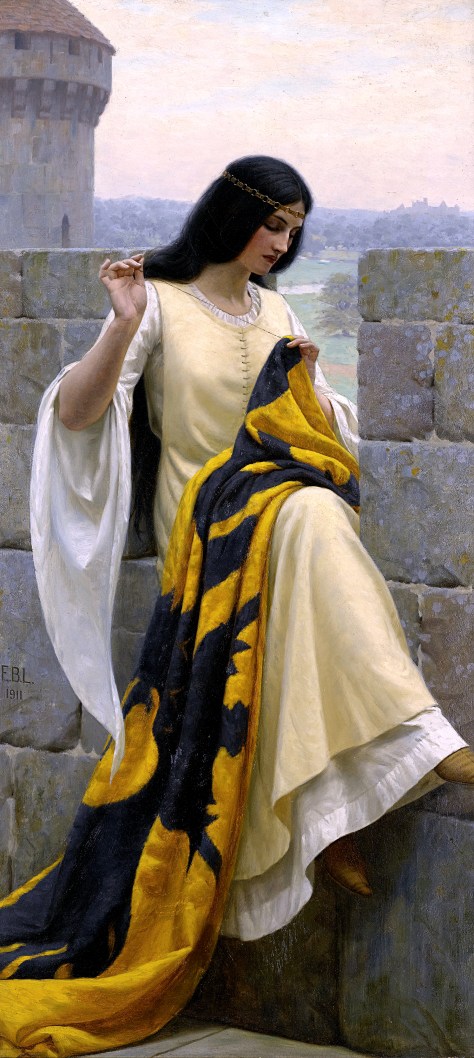
What a neat little horror movie. “Monster” (2016) is unencumbered by any sort of belabored mystery or backstory — or even the need for familiarity with werewolf or vampire lore. Its title baddie appears to simply be a horrible, nameless, forest-dwelling predator that waylays and assails a mother and her young daughter along a lonely highway at night. The story’s simplicity alone makes it interesting.
And it’s a well crafted, thoughtful story. It focuses heavily on its characters while its plot-driving antagonist is concealed in the rainswept woods, and the movie’s extensive use of flashbacks isn’t too jarring and is generally very good. We see two interwoven stories — the first is a bare-bones scary campfire tale, while the second is about a mother-daughter relationship effectively destroyed by alcoholism. The flashbacks do not feel like filler, nor are they maudlin. They pack a decent enough emotional punch and, despite being sparsely scripted, they seem to reflect a sophisticated understanding of alcoholism on the part of screenwriter and director Bryan Bertino.
Bertino also shot this movie beautifully, making the most of its primary location on a rainy rural road. It looks just great, and the isolated, pretty and nearly surreal environment here lends itself well to the movie’s horror elements.
The many positive reviews for “The Monster” point to a great performance by Zoe Kazan; I definitely agree with them. Equal credit, I think, should go to 15-year-old Ella Ballentine (who is playing a much younger character here). She brings a mixture of vulnerability and intensity to her role … I actually think Bertino could have improved his story somewhat by allowing her to have a bit more pathos, and having her fight a bit more — both against her mother and against the monster. In the latter half of the movie, she does feel underused when depicted only as an imperiled child.
If I had a major criticism of “The Monster,” I’d suggest that it is maybe 20 or 30 minutes too long. Yes, the simplicity of the story is what makes it interesting. But … it also feels like too little to sustain the full length of a feature film. There … actually isn’t a hell of a lot of story here.
I would also better conceal the monster itself to the shadows. We do indeed get a good look at it — and its artistic design is actually great. But Bertino obviously didn’t have a tremendous special effects budget, and it shows a little — particularly when the monster should be shown moving. For a movie that succeeds so well in being character-driven, I think a less-is-more approach would have worked just fine here.
I’d rate this movie an 8 out of 10 and I’d recommend it.
Weird trivia — that violent, abusive prick of a boyfriend that we see in flashbacks? That’s none other than Scott Speedman, who plays nice-guy Michael Corvin in the “Underworld” movies. I thought that was funny.
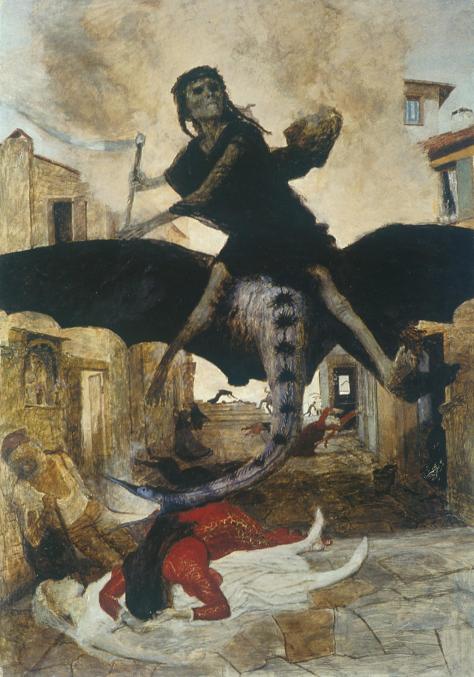
“Wolf Creek” (2005) and “Wolf Creek 2” (2013) are among the most chilling and effective horror films out there. (They can be difficult for even seasoned fans of the genre to watch.) And last year’s follow-up television series faithfully channeled so much of their mood, tone and atmosphere that it should have been just as effective. What a shame that its first season falls short due to tremendous problems with pacing and story structure. I’d rate it a 6 out of 10.
The six-episode arc has the feel of the films. It was written, directed and produced by Greg McLean, as they were. Once again, the forbidding Australian outback is itself a central character, gorgeously captured and lovingly presented by the show’s cinematography. I think it’s been a long time since I saw a horror film or series so successfully project a mood. Also returning, of course, is John Jarrett in his perfect and perfectly frightening portrayal of the serial killer Mick Taylor.
Lucy Fry’s young American antihero, Eve, is the latest to face off against him, but there’s a twist — after surviving the slaughter of her family, she resolves to find and kill him. Fry is just great in the role; Dustin Clare is well cast as the nice-guy cop who alternately pursues and tries to rescue her from danger. The rest of the cast is also roundly terrific. The soundtrack and scoring are beautifully atmospheric.
Unfortunately, though, all of these elements appear within a plot that moves at a snail’s pace. We actually don’t see much of Mick for many episodes — the story focuses on Eve’s haphazard, calamitous odyssey through rural Australia, encountering criminals, good Samaritans and just plain lunatics. McLean scripts a protagonist that is compelling and cool, and Fry is a good actress. But many of the events of her journey are only tangentially related to the story’s central conflict, which is her duel with Mick. I get the sense that fans might tune in to see a horror film, but might be disappointed by a moody, loosely plotted travelogue through McLean’s brutal fictional interpretation of the Australian outback.
I wondered how the screenwriter here could make such a major miscalculation. Then I remembered that the “Wolf Creek” films, despite their brilliance, were also quite slow. They contained what seem like lots of supporting or ancillary material connected with Mick’s victims, which were ultimately interspersed with the intense violence that made them terrifying movies (not to mention Jarratt’s flawless portrayal of a violent sociopath).
But those movies both had an hour-and-forty-minutes running time. These six episodes add up to four full hours. The slow pace of films was a forgivable flaw — it even came across as deliberate pacing. It’s frustrating, though, for any onscreen story lasting more time than that. I honestly think I would have enjoyed Season 1 much more if it had been edited down to half its length — into maybe three episodes or one feature film.
Oh, well. This series is still remarkably well made, and I do think it will please many fans of the films. If you enjoyed those, I would recommend giving this series a shot.

The nonprofit Grandin Theatre looks like a hell of a fun place for a film buff. The building dates from 1932, and upcoming screenings include “To Have and Have Not,” “The Trouble With Harry,” and Kevin Smith’s “Mallrats.” The theater is screening “The Boondock Saints” for free on St. Patrick’s Day.


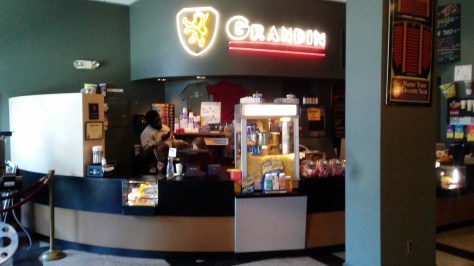
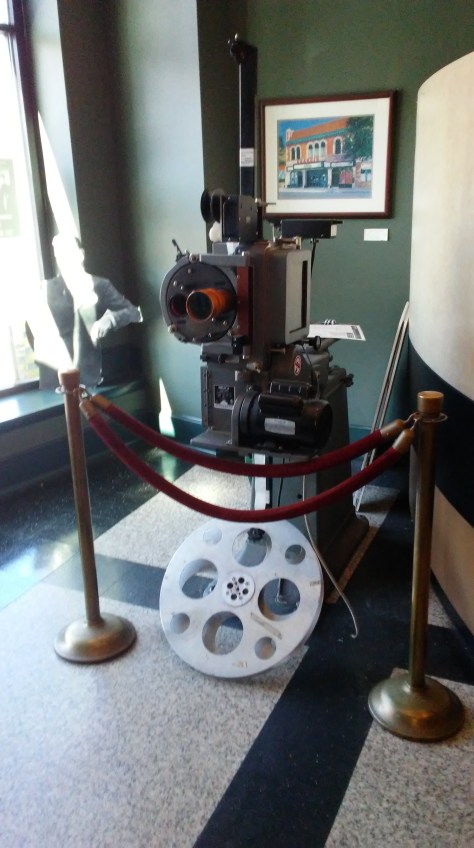
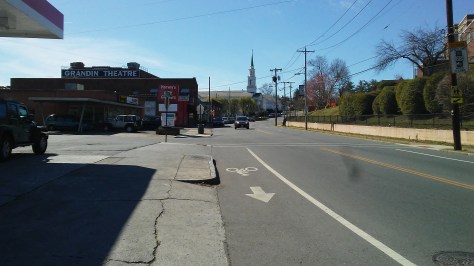

Photo credit: By Tony Hisgett from Birmingham, UK [CC BY 2.0 (http://creativecommons.org/licenses/by/2.0)%5D, via Wikimedia Commons
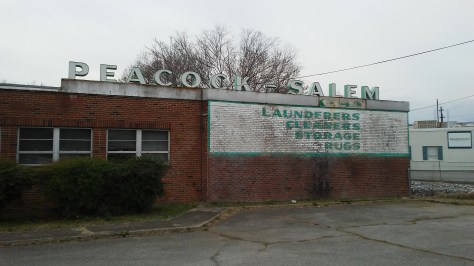
This building had too much character for me not to photograph it. It is the former site of the Peacock-Salem Launderers and Cleaners on Colorado Street in Salem.
The business is not defunct — they actually just moved elsewhere in town five years ago. Prior to that, the building below was used since 1935.


Hi, guys.
I just finished reworking the website a bit — mostly trying to create at least a quasi-professional looking Purchasing page, and swapping out most of the public domain photos for my own shots. (Mine of are inferior quality, of course, but I wanted the site to feel more “mine.”)
If any of you guys feel like perusing the site, and offering constructive feedback, I would be very grateful. (Be gentle … poets are sensitive creatures, and living in Southwest Virginia has softened me up a bit — everybody is so damn polite!!)
I know most people tend to respond via Facebook, but anyone else can feel free to comment or shoot me a note here, as well.
Again, my goal here was to create something more professional, as well as easy to navigate. Does the Purchasing page feel at least somewhat professional? And I am thinking of getting rid of the Brevity is the soul of wit section entirely … I tacked it on years ago, and now it feels superfluous and childish.
Speaking of my photos … I can’t resist running the one below again. It’s trippy. I love it.

 Eric Robert Nolan, Author