Be sure to stop by and check out Strider Marcus Jones’ “The Samaritan Machine” and three new pieces by Matthew Borczon.

Photo credit: Des Blenkinsopp [CC BY-SA 2.0 (http://creativecommons.org/licenses/by-sa/2.0)%5D, via Wikimedia Commons
Be sure to stop by and check out Strider Marcus Jones’ “The Samaritan Machine” and three new pieces by Matthew Borczon.
Photo credit: Des Blenkinsopp [CC BY-SA 2.0 (http://creativecommons.org/licenses/by-sa/2.0)%5D, via Wikimedia Commons
Restored bust of Gaius Julius Caesar Augustus Germanicus (31 August AD 12 – 24 January AD 41), also known as “Caligula,” or “Little Boots.” (He is said to have disliked the nickname.)
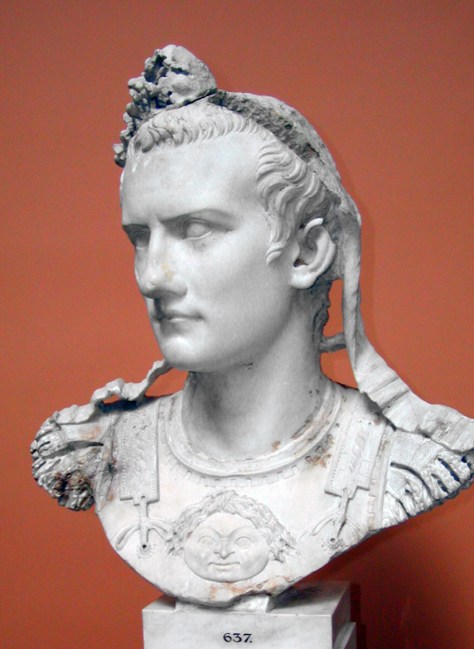
Photo credit: By Louis le Grand (Own work) [GFDL (http://www.gnu.org/copyleft/fdl.html) or CC-BY-SA-3.0 (http://creativecommons.org/licenses/by-sa/3.0/)%5D, via Wikimedia Commons

I actually can understand why some “Sherlock” fans were less than thrilled with its fourth (and apparently last?) season. (I’ve read that the final episode received the lowest ratings in the show’s history.) Even if Season 4 wasn’t quite as strong as past seasons, however, I’d still give it a 9 out f 10.
The narrative style and the content of this three-episode arc changed drastically. The detail and methodical pace of past seasons gave way to a faster, looser narrative that made the show feel more … mainstream, in a way. These episodes felt more like the standard adventure tales that you’d expect from any television thriller, and far less a genuine homage to the literary source material. At times it was a little sloppy, with bombs, disguises, false memories and other over-the-top plot devices that were sometimes pretty implausible. The final episode even seemed directly inspired by a series of horror films not known for being critically acclaimed.
The writing and directing wasn’t as clean, either. This was easily the most surreal of the show’s four seasons — especially if you count the standalone “special,” “The Abominable Bride,” which preceded the official initial episode. There were some overly stylized flashbacks, spliced scenes, and other departures from a linear narrative. (I can’t be more specific without spoilers.)
The tone of the humor changed, too. Some of the droll, dialogue-driven British humor was replaced by the zanier, crowd-pleasing stuff that you would expect from a more mainstream television comedy. (One lamentable scene involving the outcome of a car chase, for example, was entirely too silly.)
At the same time, this was the darkest season yet. The goofier humor was juxtaposed with story elements that were hard-hitting, sad and occasionally frightening. When one character delivers the line, “Maintain eye-contact,” it was chilling enough to stay with me hours after the show aired. There was some scary stuff this season, on a couple of different levels — the second episode, in particular, superbly delivers creeping psychological horror, then tops if off with a chilling story resolution.
And here is where Season 4 shined. At one point, I asked myself, “When did ‘Sherlock’ become a horror show?” But it was shortly thereafter that I realized that I absolutely didn’t mind.
The season’s success boils down to three things. The first is the darker story content, which I thought was a bold and surprising choice for what is probably the show’s last season.
The second is the quality of the writing. I realize that sounds strange, given my above criticisms above, but it is still a superbly scripted show.
And, third, the performances from its principal actors were still uniformly excellent. (And when they combine via some great dialogue, “Sherlock” still hits it out of the park.) Martin Freeman, Benedict Cumberbatch, and Amanda Abbington were all at their peak — particularly since their characters have evolved now to what is probably their culmination. This last season was easily the most personal and character-focused, and sees these protagonists finally complete their individual arcs. Sherlock is finally sufficiently humanized, Mary’s development finally reaches full fruition, and Watson has finally grown into his own man. If I had quibbles about Holmes and Watson’s portrayals in past seasons, it was that Holmes was too much of a jerk , while Watson was merely a weak, even neutered foil for him. Holmes was never such a heel in the stories I loved a boy — neither was he in the film adaptations. And I found the far stronger Watson in “The Abominable Bride” to be truer to the stories as well — not to mention reminiscent of my favorite Holmes films, like 1976’s “The Seven Percent Solution” or 1979’s “Murder By Decree.”
The villains were damn good too. “Sherlock” has always excelled at bringing believable, well scripted and creatively conceived bad guys, and this season was no exception.
All in all, this was still terrific television, despite its relative flaws. I heartily recommend it to Holmes fans.

These were powered by a single AA battery, and made little boys everywhere quite happy on early 80’s Christmas mornings. I always thought that the nearly identical “Stompers” were a ripoff of Rough Riders. But, as it turns out, Stompers came first, in 1980.
Do NOT play the commercial below unless you want the Rough Riders jingle stuck in your head. It’s a hell of an earworm, especially if you remember it from childhood.






Tonight’s frightening poem was found and shared by our resident expert in all things scary, Blog Correspondent Pete Harrison.
The Man of Double Deed
By Anonymous
There was a man of double deed,
Who sowed his garden full of seed;
When the seed began to grow,
‘Twas like a garden full of snow;
When the snow began to melt,
‘Twas like a ship without a belt;
When the ship began to sail,
‘Twas like a bird without a tail;
When the bird began to fly,
‘Twas like an eagle in the sky;
When the sky began to roar,
‘Twas like a lion at my door;
When my door began to crack,
‘Twas like a stick across my back;
When my back began to smart,
‘Twas like a penknife in my heart;
And when my heart began to bleed,
‘Twas death, and death, and death indeed.
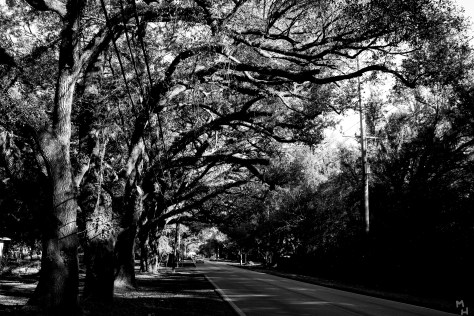
Photo credit: By Marcus Quigmire from Florida, USA (Scary Branches) [CC BY-SA 2.0 (http://creativecommons.org/licenses/by-sa/2.0)%5D, via Wikimedia Commons
I love this photo. I don’t know why.
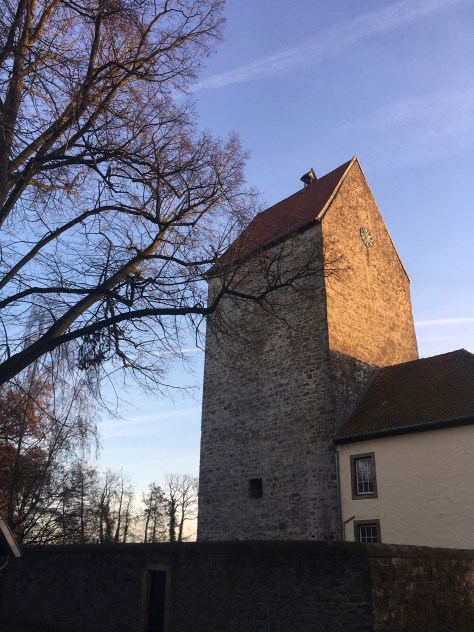
Photo credit: By Megalithicguy (Own work) [CC BY-SA 4.0 (http://creativecommons.org/licenses/by-sa/4.0)%5D, via Wikimedia Commons
I can’t say I fully understand the zeal of “The Boondock Saints'” (1999) cult following, but I had fun with it — I’d give it an 8 out of 10 for being unusual and unexpectedly diverting.
I don’t really see it as a crime thriller — it’s more like an absurdly violent situation-comedy. It borrows its tone and style from 1994’s “Pulp Fiction,” not to mention its own shock-comedy throwaway scene involving an accidentally discharged sidearm.
Like its superior inspiration, its formula is creating quirky, likable characters with some funny dialogue, and then raising the tension by placing them in the midst of graphic violence. It mostly succeeds — Sean Patrick Flanery and Norman Reedus’ characters are endearing, cool and easy to root for. I laughed out loud a few times, and I can see how their telegenic antiheroes would attract a devoted fandom.
The directing seemed choppy and even amateurish. I noticed this right from the opening credits, which are awkwardly spliced with the onscreen introduction of the main characters.
The screenwriting is a little spotty, too — we’re never told, for example, how its two protagonists come to be such proficient assassins. (Are they former military? Is there a joke here I’m missing about them being “blessed,” consistent with the “saints” motif and all the references to Catholicism?) Nor do we get much meaningful information about their motivations. (Their bloody crusade begins only when they kill several gangsters in self-defense, then they seem to pursue a life of vigilantism as an afterthought.) Finally, our antiheroes seem refreshingly real and identifiable, while other characters (Willem Dafoe’s detective and Billy Connolly’s mafia hitman) seem cartoonish enough to populate a farce like “The Naked Gun” series).
Again, though — this was fun. I’d recommend it.

 Eric Robert Nolan, Author