All posts by Eric Robert Nolan

Eric Robert Nolan graduated from Mary Washington College in 1994 with a Bachelor of Science in Psychology. He spent several years a news reporter and editorial writer for the Culpeper Star Exponent in Culpeper, Virginia. His work has also appeared on the front pages of numerous newspapers in Virginia, including The Free Lance – Star and The Daily Progress. Eric entered the field of philanthropy in 1996, as a grant writer for nonprofit healthcare organizations. Eric’s poetry has been featured by Dead Beats Literary Blog, Dagda Publishing, The International War Veterans’ Poetry Archive, and elsewhere. His poetry will also be published by Illumen Magazine in its Spring 2014 issue.

My favorite poem of all time, read by W. H. Auden himself.

Dear GOD. This is my favorite poem of all time, read by W. H. Auden himself.

I had no idea this recording existed.

A tiny review of “Dr. Strange” (2016)

So Dr. Strange was pretty good — I’d give it a B+ for being a competent superhero origin movie that mostly handles its fantasy story devices quite well.  The script smartly translates the story’s magical elements for the average viewer by having them articulated in language that sounds rational, and the rules seem consistent throughout.

It still strays occasionally into cartoonishness.  (The astral projection sequences seem silly enough for 1995’s “Caspar the Friendly Ghost.”)

The  film has three terrific leads in Benedict Cumberbatch, Tilda Swinton and Mads Mikkelsen.  (The first two are allowed to shine; the third seems underused.)

The special effects are dazzling — I remember thinking inwardly throughout the film that an alternate title could be “Better Inception,” at least as far as its visuals are concerned.

All in all, it’s a by-the-numbers superhero origin story that’s still fun — and the special effects alone make it worth seeing.


Santiago Carbonell’s “Apologia Edades,” 2012

31

Eric Robert Nolan reads W. H. Auden’s “The Average”

November 30, 2016.


“It’s like water lilies drifting through Hell …”

Thus begins Dennis Villelmi’s newly published poem over at The Bees Are Dead, “The Hidden Player (The Starvation Pages: Part 1)”.

From The Bees Are Dead:  “From one of our own… ‘The Hidden Player’ is the first limb of a severed body of work lovingly and darkly devised by our resident writer of all things epic, Gothic and poetic. Dennis Villelmi.

“Inspired, and approved of, by renowned expert on Jack the Ripper, Richard Patterson – this piece lays the first brick of what will be a bloodied cobblestone road of poetic dissection; revealing the evidence of an horrific truth about the true identity of London’s most notorious murderer. Click the link to view an historical dystopia portrayed through a marriage of the bleak and the eloquent in a way that only Villelmi can truly muster…”

Enjoy the start of this superb Gothic poetic series by clicking on the link above!


From Wikimedia Commons:  “Newspaper broadsheet referring to the Whitechapel murderer (later known as “Jack the Ripper”) as “Leather Apron”, published immediately after the murder of Annie Chapman. Note that the details as printed on the broadsheet are inaccurate, since Chapman’s heart was not actually removed.”


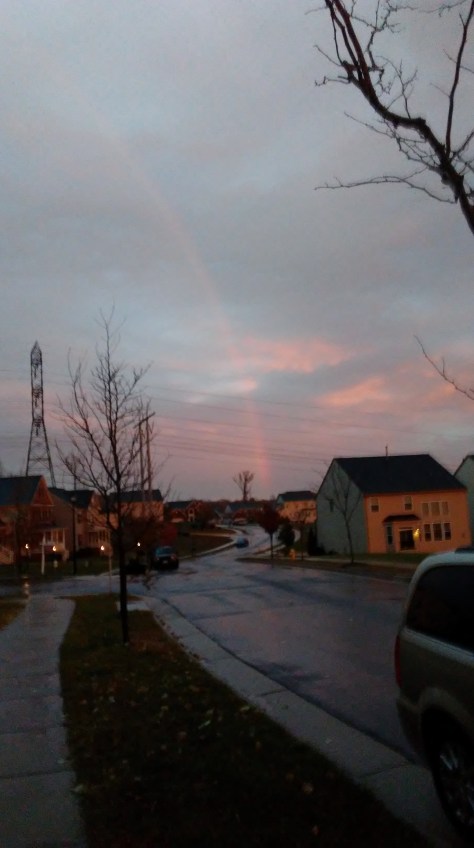
Colors at the end of day.

I saw this as I was loading the car on my last day in Northern Virginia.

A high, narrow rainbow pierces a sepia autumn twilight.


20161119_165308


Throwback Thursday: “Handmade” Turkeys!

First grade memories … every kid in America made one of these at least once.

Happy Thanksgiving!!


Raimondo Madrazo’s “Fond Memories”

Circa 1910?  Oil on canvas.


Aline, album de familia

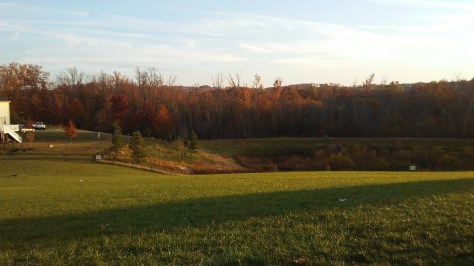
Rolling hills of burning gold.

Northern Virginia bids the day adieu, with a fiery salute.


20161115_161943

20161115_161945

20161115_161948

20161115_161925

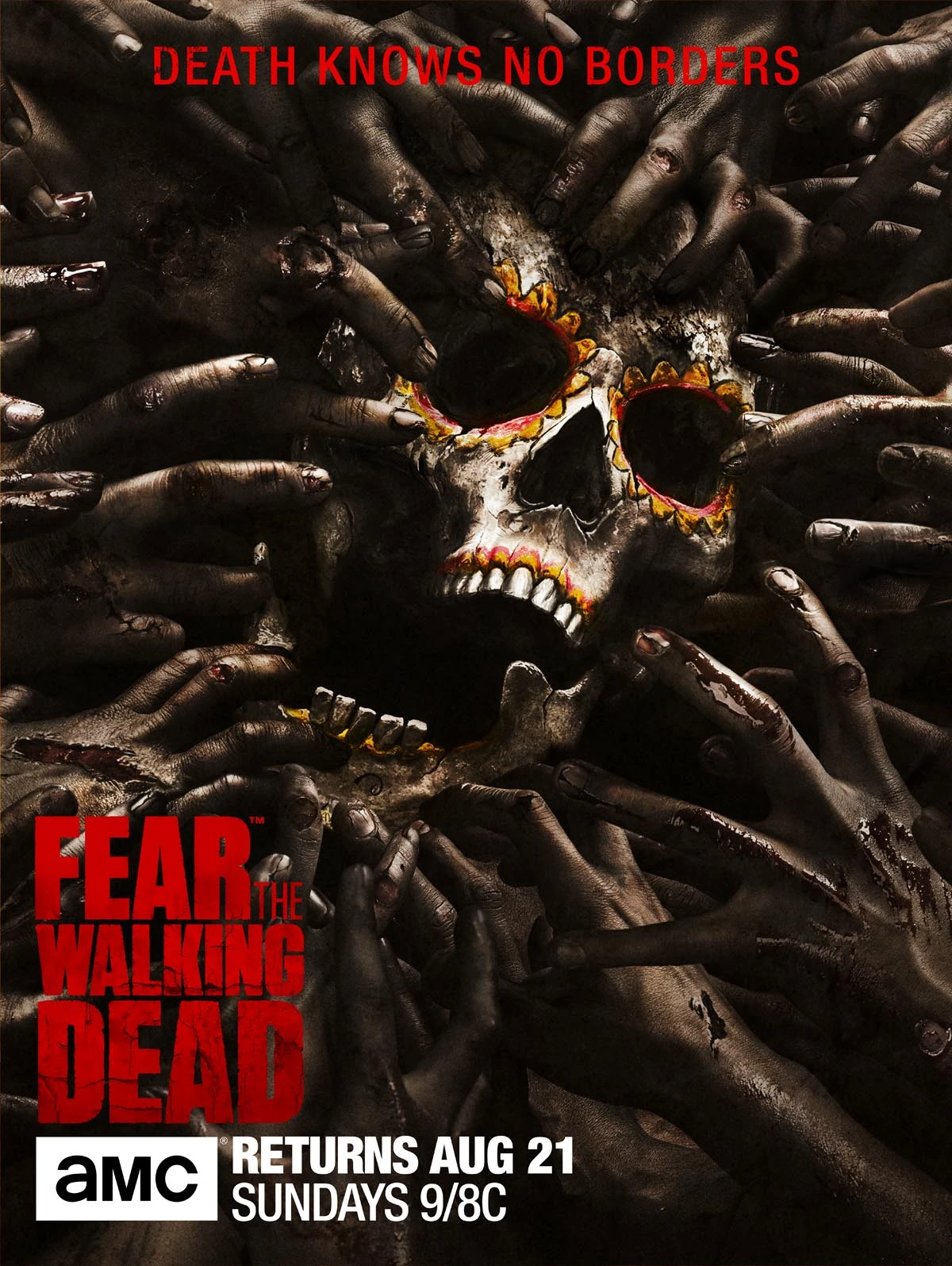
A short review of “Fear the Walking Dead” Season 2

I realize that “Fear the Walking Dead” is the show that so many people love to hate.  But I myself am just thrilled with it.  I’d give the second season a 9 out of 10 for being the show to which I looked forward to the most all week, and for arguably being more enjoyable than … that other zombie show.  (Its name escapes me at the moment.)

I suppose it feels smarter than it really is.  The pace is slower, there is far more background and context for the story, and I personally feel that there is far better characterization than in its predecessor.  (My fellow horror zombie fans strongly disagree, but I always thought that consistent characterization was a problem with “The Walking Dead.”)

As friends and reviewers have pointed out to me, though, it isn’t as smart as it feels.  People do dumb things; I’m not sure if it is laziness on the part of the screenwriters or just a lack of good judgement.  A typically egregious example is when our seafaring heroes deploy an unwieldy landing party to the beach while literally waiting to be attacked by pirates.  Another is the characters’ general apathy about the possibility of infection from blood splatters, from surfaces or from skin-to-dead-skin contact.  (We actually see a hero destroy a zombie by inserting his thumbs through its eye sockets into its brains.)

But the show is still damned enjoyable.  It has an epic feel.  Season 2 opens with a sweeping panorama of a ravaged Los Angeles, seen by a departing boat.  We have action by sea and by land, and show visits Mexico.  Radio transmissions and the accounts of minor characters further paint the apocalypse broadly.

I actually found the characters identifiable, if not always likable.  They just seemed more like real people than their counterparts on “The Walking Dead,” who lean closer to recognizable tropes (the good cop, the kid, the biker-with-a-heart-of-gold, the ninja).  The grounded, real-world drama among average, mundane people just made the show’s horror story context more real, and therefore more frightening.  (Let’s face it — you and I would probably be far more similar to “Fear’s” Travis, Madison or Alicia than to “The Walking Dead’s” Rick, Daryl or Michonne.)

And I think the subplots and story devices are often just genuinely creepy.  The hazards at sea, the boat-to-boat conflict, the outcome of the lighthouse storyline on the dock … a few of the show’s story arcs seemed like they were inspired by the kind of short stories you’d find in the best zombie anthologies.  Maybe I enjoyed “Fear” more than other viewers because I like the kind of varying, “situational” horror tales it served up every week.  This appealed to me more than the standard colony-vs.-colony stories seen that have grown routine on the show’s progenitor.

All in all, “Fear the Walking Dead” isn’t perfect, but its still a a great horror show.