2016 has been good to me so far; I’ve been lucky to have a few pieces published since the start of the year. If you like my poetry and care to peruse my publications since January 1st, then just click the link below:
All posts by Eric Robert Nolan
“April is the cruellest month, breeding lilacs out of the dead land …”
April is the cruellest month, breeding
Lilacs out of the dead land, mixing
Memory and desire, stirring
Dull roots with spring rain.
Winter kept us warm, covering
Earth in forgetful snow, feeding
A little life with dried tubers.
Summer surprised us, coming over the Starnbergersee
With a shower of rain; we stopped in the colonnade,
And went on in sunlight, into the Hofgarten,
And drank coffee, and talked for an hour.
Bin gar keine Russin, stamm’ aus Litauen, echt deutsch.
And when we were children, staying at the arch-duke’s,
My cousin’s, he took me out on a sled,
And I was frightened. He said, Marie,
Marie, hold on tight. And down we went.
In the mountains, there you feel free.
I read, much of the night, and go south in the winter.
What are the roots that clutch, what branches grow
Out of this stony rubbish? Son of man,
You cannot say, or guess, for you know only
A heap of broken images, where the sun beats,
And the dead tree gives no shelter, the cricket no relief,
And the dry stone no sound of water. Only
There is shadow under this red rock,
(Come in under the shadow of this red rock),
And I will show you something different from either
Your shadow at morning striding behind you
Or your shadow at evening rising to meet you;
I will show you fear in a handful of dust.
— from “The Burial of the Dead,” Section I. of T.S. Eliot’s “The Waste Land”

Source: Lady Ottoline Morrell [Public domain], via Wikimedia Commons.
John William Waterhouse’s “Ophelia,” 1894
Oil on canvas.

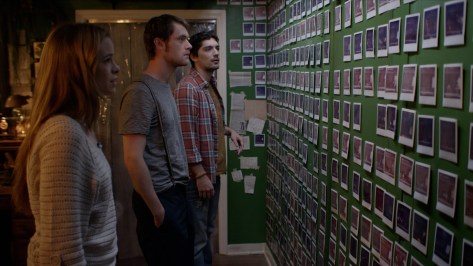
A very quick review of “Time Lapse” (2014)
Despite it being highly recommended, I almost stopped watching “Time Lapse” (2014) after a few minutes. But I’m glad I stayed with it — it’s a smart, damn fun and unexpectedly dark time-machine tale that transcends its microbudget to become edgy and entertaining. I’d give it an 8 out of 10.
It begins weakly. A few strictly average actors perform what seems like a weak script right out of a sitcom doomed to cancellation. Its premise seems cheesy — three friends discover a mysterious camera that can take pictures of its subject as it will be 24 hours into the future. Its plot sounds trite and unwieldy. (They send themselves photographed notes containing advice from their future selves.) Even the film’s minimalist set (the movie appears to have only two of them) seems to betray the threadbare budget of an earnest-but-average film school project.
But, damn, was I pleasantly proven wrong. The script turns out to be quite strong, inviting the viewer down a progressively frightening and maddening rabbit hole alongside its characters. The acting improves, as George Finn settles into his role as the greedy, impulsive and least stable of the trio. (Trust me, this isn’t just a cliche sci-fi morality tale about greed; the movie has far more to offer than that.) Then Jason Spisak arrives and masterfully almost steals the entire movie, chewing the scenery as a fabulously frightening bad guy.
The last shot of this movie is absolutely killer.
Seriously, check this film out. It deserves its positive press, and I guarantee it’ll at least surprise you with how good it becomes.
“GOODNIGHT AND GOOD LUCK,” by August Arps
Here’s a terrific piece by a wonderfully talented poet and a recent new friend of mine — August Arps.
“GOODNIGHT AND GOOD LUCK,” by August Arps
how do you cross the street
with tomorrow so completely
a near miss ?
are your skeletons as eloquent
as frost fire ?
and how do you account
for all the rain ?
seems a pity to lack so many hands as Shiva
in a downpour of your very own Sun.
when the clouds part with gathering
and gather yonder –
leaving you the view of your delirious star
and the valley of what
has never been
known.
goodnight and good luck.
may your hemispheres release you
from the globe, and your journey be wicked smart
through the jungles of unrelenting
deep.
may you find there what you lost by keeping
and abandon your crown of thorns, in favor
of a velvet noose
should the mysteries prove anguish,
is a virtue of mortality
or else the joke wouldn’t work
to pay the bills.

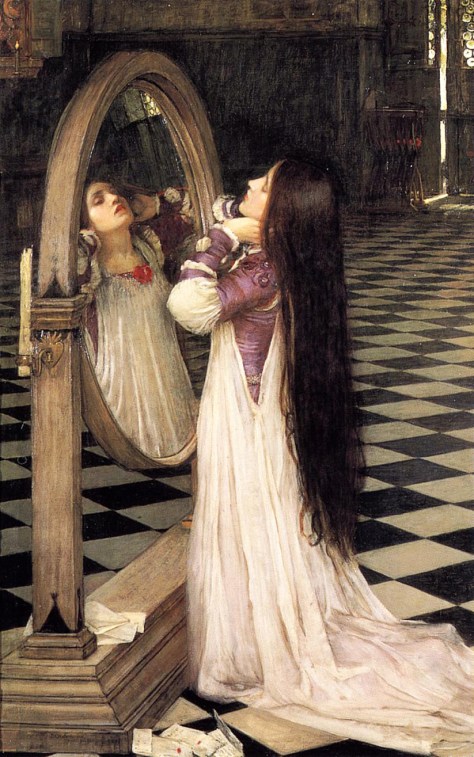
John William Waterhouse’s “Mariana in the South,” 1897
Oil on canvas.
A very short review of “Coherence” (2013)
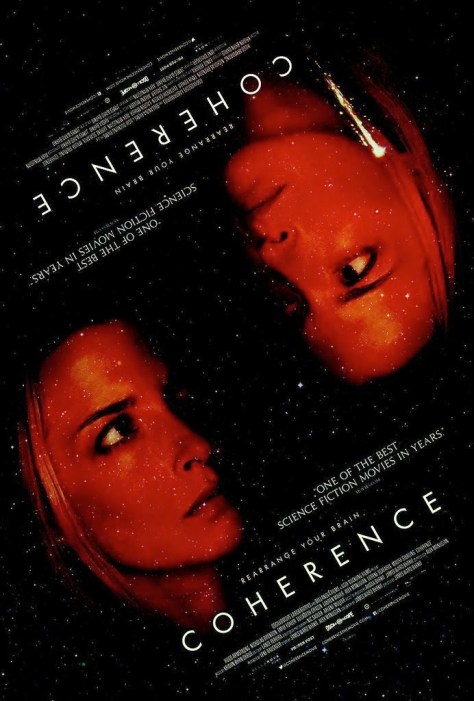
James Ward Byrkit wrote the screenplay for “Coherence” (2013), then filmed and directed it on a shoestring budget in his living room. And the result is pretty impressive — this a trippy, unusual, and unusually cerebral science fiction thriller. I’d rate it an 8 out of 10.
The movie portrays eight friends at a dinner party who find their sense of reality frighteningly altered after a comet flies overhead. I really can’t write much more than that without spoilers — even this movie’s central story device is best arrived at as a surprise for the viewer. I don’t even want to name which “science” serves as the basis for the “science fiction” here, as that would be a big hint as to what transpires.
It’s pretty good. The thriller elements here are creepy. And it’s a wonderfully intelligent “what-if?” story that other reviewers have compared to “The Twilight Zone” episodes. (I myself … mostly kept up with it — I was sometimes a little murky about the strategies adopted by the group to address their predicament.)
The closing minutes are damned good.
I’d recommend this to sci-fi fans looking for a unique, dialogue-driven brain-buster.
Hey, just for fun, consider this — the refreshingly intelligent “Coherence” employs the exact same MacGuffin as one of the stupidest, overrated cult “classics” of all time — 1984’s “Night of the Comet.”
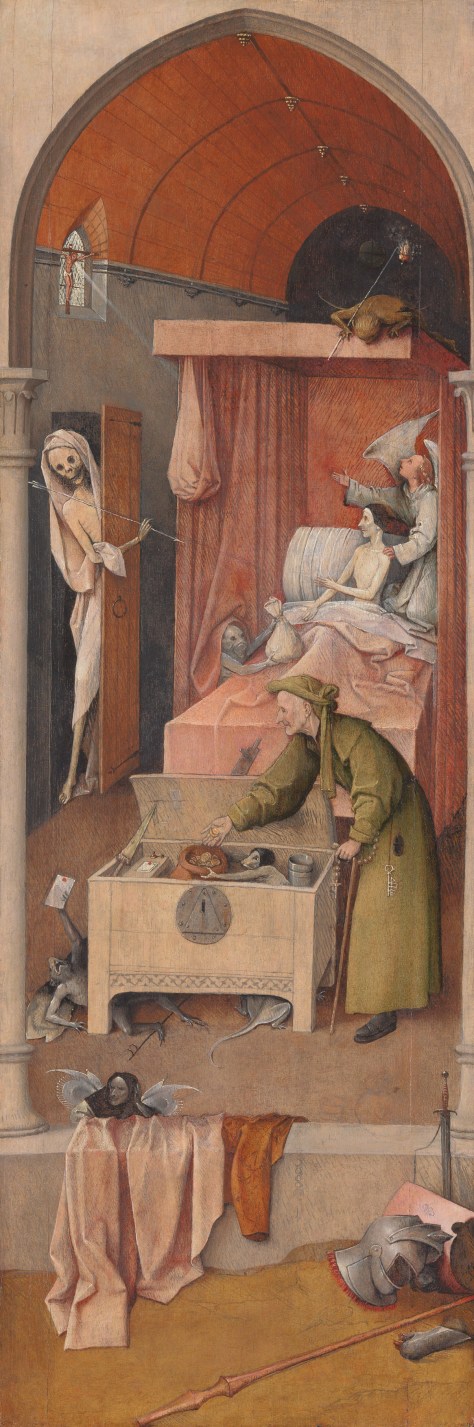
Hieronymus Bosch’s “Death and the Miser,” circa 1500
Also referred to as “Death and the Userer.” Oil on oak panel. Currently at the National Gallery of Art in Washington, D.C.
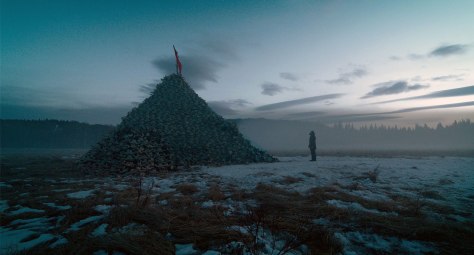
“The Revenant” (2015) was astonishingly good.
“The Revenant” (2015) changed the way that I see movies. This utterly immersive, jaw-droppingly gorgeous period thriller is easily one of the best films I’ve ever seen, and I plan to see it again, soon. I’d rate it a perfect 10.
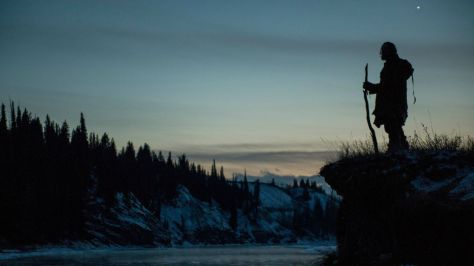
It’s a visual masterpiece. Its cinematography renders its mountains, valleys and plains both dreamlike and lucid, and its action is unflinchingly visceral. Shot mostly in Alberta, Canada (standing in for 1823 Montana and South Dakota), the film’s visuals are more stunning than anything I’ve ever seen. You truly do feel that “you are there.” But “there” is an absolutely brutal 19th century middle American winter wilderness. It’s fatally dangerous, both with its unforgiving elements and with the human violence that seems to erupt casually and constantly over its land and resources — not to mention bloody retribution among groups and individuals. This isn’t a movie for the faint of heart. I won’t spoil the subject of its gut-wrenching action sequences for fear of spoilers — most of these sequences arrive as frightening surprises, thanks to Alejandro G. Inarritu’s expert direction. It is this juxtaposition of beauty and brutality that define the movie.
Leonardo DiCaprio plays Hugh Glass, an American trapper who begins as one of the seemingly few characters that do not quickly resort to unnecessary violence, prejudice or revenge. He later does seek vengeance for his son’s death against fellow trapper John Fitzgerald, played by Tom Hardy. (Glass was a real frontiersman who was the subject of Michael Punke’s 2002 biography, “The Revenant.” But a cursory Google search suggests to me that this is not actually “a true story;” I think of it as loosely based historical fiction.) Like DiCaprio and Hardy, Domhnall Gleeson and Will Poulter also excel in their supporting roles. (Gleeson seems to specialize in playing reluctant innocents; I remember him from his skilled performance as the gentle young computer genius in last year’s outstanding science fiction thriller, “Ex Machina.”)
But the main star of “The Revenant” is the setting itself, beautifully shot by Emmanuel Lebezki and masterfully employed by Inarritu as a kind of character unto itself in the story. It’s lovely. I’ve never seen a movie like this. And while I’m no film connoisseur, or even a genuine critic, I’ve seen a lot of good ones.
The direction most reminds me of Francis Ford Coppola’s work in 1979’s “Apocalypse Now.” I was also reminded of Stanley Kubrick’s “The Shining” (1980) — that was a film that also depicted threatening snowscapes as dreamlike and eerily beautiful. There was one shot near the end, following DiCaprio’s vengeful hero on his path through immense firs on either side — it reminded me a lot of Jack Nicholson’s murderous Jack Torrance on his path through the hellish hedge labyrinth.
There is also a central action set piece involving an attack on one group of characters on another — it actually reminded me of Oliver Stone’s work in “Platoon” (1986). Like Stone’s finale, the battle is staged so that the viewers have no sense of which direction the attack is coming from, paralleling the experience of the confused defenders. There are countless long tracking shots throughout this film, with fewer cuts — and amazing circular surrounding shots of the action. I’ve read that Inarritu actually had to transport cranes to his mountaintop shooting locations in order to execute those.
If you had to find a flaw with “The Revenant,” I suppose you could complain that its story and characters are thin. We know little more about DiCaprio’s Glass beyond that he is competent, patient and slow to fight — then merciless and unrelenting in seeking justice. Poulter’s Jim Bridger is loyal, but not as strong as the hero. Hardy’s Fitzgerald is a greedy, opportunistic bully whose murder of an innocent drives the plot. That’s … little more than the plot and characters of a lot of throwaway westerns, isn’t it? (I’ve indeed seen this movie categorized as a western in reviews. That’s technically correct, I guess, but it feels too unique to pigeonhole that way.)
You could easily read the movie for moral ambiguity. There are the obvious issues connected with revenge, of course, underscored by a final shot in which one character appears to break the fourth wall. I found myself wondering about Glass’ compatriots. Yes, it is Fitzgerald who acts villainously, but all of Glass’ fellow trappers also consign him to death by abandoning him after his injuries. I do understand that they feel they can’t survive themselves if they try to carry him back to their staging area at Fort Kiowa. But … is what they do “right?” What would you or I do?
I think I am coming too close here to revealing too much about the film. The best way to experience “The Revenant” is to walk into it knowing little about it. I strongly recommend you do so.




Cool, but should I worry about where the rest of it is?
Found: one dragon claw. Talons and all.

 Eric Robert Nolan, Author