“I Lie Belly Up,” a dog poem by Anonymous — For Jax and the Liles Family!

I lie belly-up
In the sunshine, happier than
You ever will be.

Today I sniffed
Many dog butts—I celebrate
By kissing your face.

I sound the alarm!
Paperboy—come to kill us all —
Look! Look! Look! Look! Look!

I sound the alarm!
Garbage man—come to kill us all —
Look! Look! Look! Look! Look!

I lift my leg and
Whiz on each bush. Hello, Spot—
Sniff this and weep.

I Hate my choke chain—
Look, world, they strangle me! Ack
Ack Ack Ack Ack Ack!

Sleeping here, my chin
On your foot—no greater bliss—well,
Maybe catching cats.

Look in my eyes and
Deny it. No human could
Love you as much as I do.

Anonymous

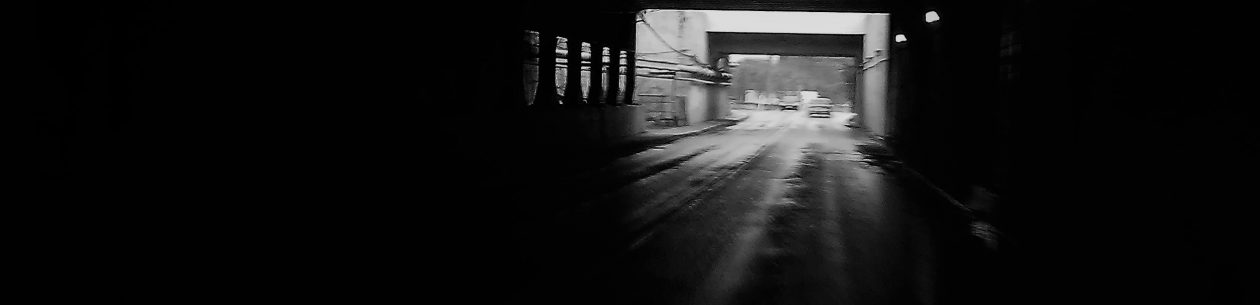
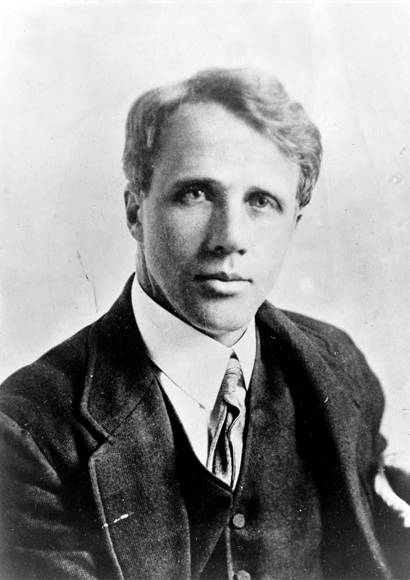
“The Road Not Taken,” by Robert Frost

“The Road Not Taken,” by Robert Frost

Two roads diverged in a yellow wood,
And sorry I could not travel both
And be one traveler, long I stood
And looked down one as far as I could
To where it bent in the undergrowth;

Then took the other, as just as fair,
And having perhaps the better claim,
Because it was grassy and wanted wear;
Though as for that the passing there
Had worn them really about the same,

And both that morning equally lay
In leaves no step had trodden black.
Oh, I kept the first for another day!
Yet knowing how way leads on to way,
I doubted if I should ever come back.

I shall be telling this with a sigh
Somewhere ages and ages hence:
Two roads diverged in a wood, and I--
I took the one less traveled by,
And that has made all the difference.

Jb_modern_frost_2_e

“The City,” by W. H. Auden

(Part V. of “The Quest.”)

“The City”

In villages from which their childhoods came
Seeking Necessity, they had been taught
Necessity by nature is the same
No matter how or by whom it be sought.

The city, though, assumed no such belief,
But welcomed each as if he came alone,
The nature of Necessity like grief
Exactly corresponding to his own.

And offered them so many, every one
Found some temptation fit to govern him,
And settled down to master the whole craft

Of being nobody; sat in the sun
During the lunch-hour round the fountain rim,
And watched the country kids arrive, and laughed.

“safe,” by Charles Bukowski

“safe,” by Charles Bukowski

the house next door makes me
sad.
both man and wife rise early and
go to work.
they arrive home in early evening.
they have a young boy and a girl.
by 9 p.m. all the lights in the house
are out.
the next morning both man and
wife rise early again and go to
work.
they return in early evening.
By 9 p.m. all the lights are
out.

the house next door makes me
sad.
the people are nice people, I
like them.

but I feel them drowning.
and I can’t save them.

they are surviving.
they are not
homeless.

but the price is
terrible.

sometimes during the day
I will look at the house
and the house will look at
me
and the house will
weep, yes, it does, I
feel it.

bukowski3

“The Traveler,” by W. H. Auden

“The Traveler,” by W. H. Auden (Part IV of “The Quest”)

No window in his suburb lights that bedroom where
A little fever heard large afternoons at play:
His meadows multiply; that mill, though, is not there
Which went on grinding at the back of love all day.

Nor all his weeping ways through weary wastes have found
The castle where his Greater Hallows are interned;
For broken bridges halt him, and dark thickets round
Some ruin where an evil heritage was burned.

Could he forget a child’s ambition to be old
And institutions where it learned to wash and lie,
He’d tell the truth for which he thinks himself too young,

That everywhere on his horizon, all the sky,
Is now, as always, only waiting to be told
To be his father’s house and speak his mother tongue.

“The way you word things just sets my teeth on edge sometimes.”

— Amanda Stirling, in a recent conversation.

Not exactly a ringing endorsement of my command of the English language, is it?

No wonder that Blenkiron guy gets all the great press!

“After Sept. 11, a 62-year-old poem by Auden drew new attention. Not all of it was favorable.”

Linking here to a great article in 2001 by Peter Steinfels at the New York Times, discussing the renewed popularity of W.H. Auden’s “September 1, 1939” after 9/11.

I knew the poem was controversial, and that it arguably could have been quoted out of context, as it references the events preceding World War II.  But I had no idea how controversial.  I can’t believe the famous piece was later so “loathed” by Auden himself.

Here is a link to the poem itself, at the website of Academy of American Poets:

http://www.poets.org/poetsorg/poem/september-1-1939

Photo by Jessica Maxwell (U.S. Army Forces Command), September 21, 2009.

“Gen. Charles C. Campbell, U.S. Army Forces commanding general, Col. Deborah B. Grays, U.S. Army Garrison commander and Command Sgt. Maj. Kenny LeonGuerrero, USAG command sergeant major, render salutes to the United States flag as a bugler plays taps during the close of Patriot Day ceremonies held Sept. 11 at Fort McPherson. Fort McPherson and Fort Gillem joined the rest of the nation in honoring the victims of the terrorist attacks that took place Sept. 11, 2001.” — Wikimedia Commons

US_Army_51107_Forts_McPherson,Gillem_honor_fallen_at_Patriot_Day_ceremonies

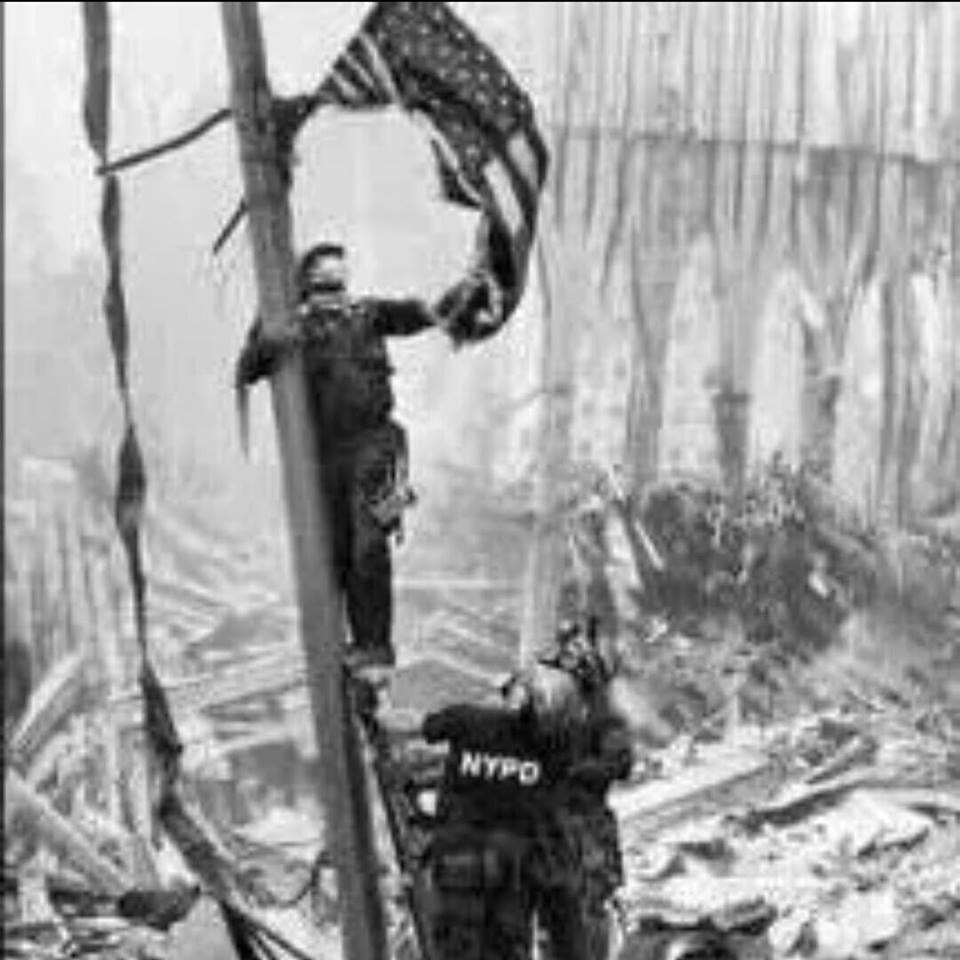
“Liberty’s Gal,” by Eric Robert Nolan

This was written 13 years ago in Queens, New York, after the September 11th attacks.

Never forget.

“Liberty’s Gal,” by Eric Robert Nolan

Italian blood runs hot
Under coffee-colored African skin,
Through Vietnamese veins, fed
By a jackhammer Irish heart.

Lithe Iranian hands
Guide a Swedish skirt
Across Parisian legs.

Share an irreverent joke.
She laughs with the warmth of Canada.
Her Samoan smile comes easily.

Ask and she’ll join you in
A Brazilian toast,
A Vatican prayer,
Old Arabian verses
Or Norwegian song.

Argue, if you like.
She is prone to opinions and forgiving of dissent.
Her Japanese adherence to honor
Is expressed with British civility.

She’s used to disagreement,
And she’ll answer back —
Greek logic and Chinese wisdom
Are equally at her command.

But don’t touch her. Never arouse
Her Spanish temper.
Her German sense of purpose.
Her Russian tolerance for grief.
Her Colombian notions of vengeance.

Never arouse
Her Australian, white-knuckled toughness.
Her Native American will
To guard the dirt at her toes.
Her Puerto Rican sense
Of protection of kin.

Never arouse
Her Afghan memory,
Her Israeli flair for reprisal.
She’s wont to undertake
A Mexican vendetta.

And if aroused, nothing can deter her:

Not illness in envelopes.
Not zealots in caves.
Not soot-colored cities or glass in the streets.

Not desert alchemy,
Or the asymmetric threat
Of a holocaust virus,

Not the grimace of a gap-toothed skyline,
Or silence in engine-less skies
As vast iron birds, once as common as swallows,
Are felled to the ground.

(c) 2002, Eric Nolan

Originally printed on January 1, 2002, at the Veterans of Foreign Wars Post 2053, White Cloud, Michigan, website

1462904_10152336574196762_961868443320747958_n

AN APOLOGY.

To all those who I regaled on Monday with my newly memorized “Song of the Master and Boatswain,” by W.H. Auden, I apologize for being an idjit and incorrectly pronouncing its title as “Master and BOAT’S-Wayne.”

Sigh … the Internet, forever helping to edumucate me, informs me that, of course, it is pronounced “Song of the Master and BO-sin.”

See this link:  

That’s “Bo-sin.”  You know … like when Bo Duke commits adultery.

This writer gig would be so much easier if I could only master this … ENGLISHY thing.

OH!  Amanda!!  That reminds me!!  I apologize also for utterly destroying your car today!!  (As the mood tonight is one of penitence, I figured I’d work that one in there …)  We can work out a payment plan, right?  And … I can, like … pay you in verse, or something … right?   

See this link, Honey:


Nurse Your Favorite Heresies in Whispers