Tag Archives: 1962

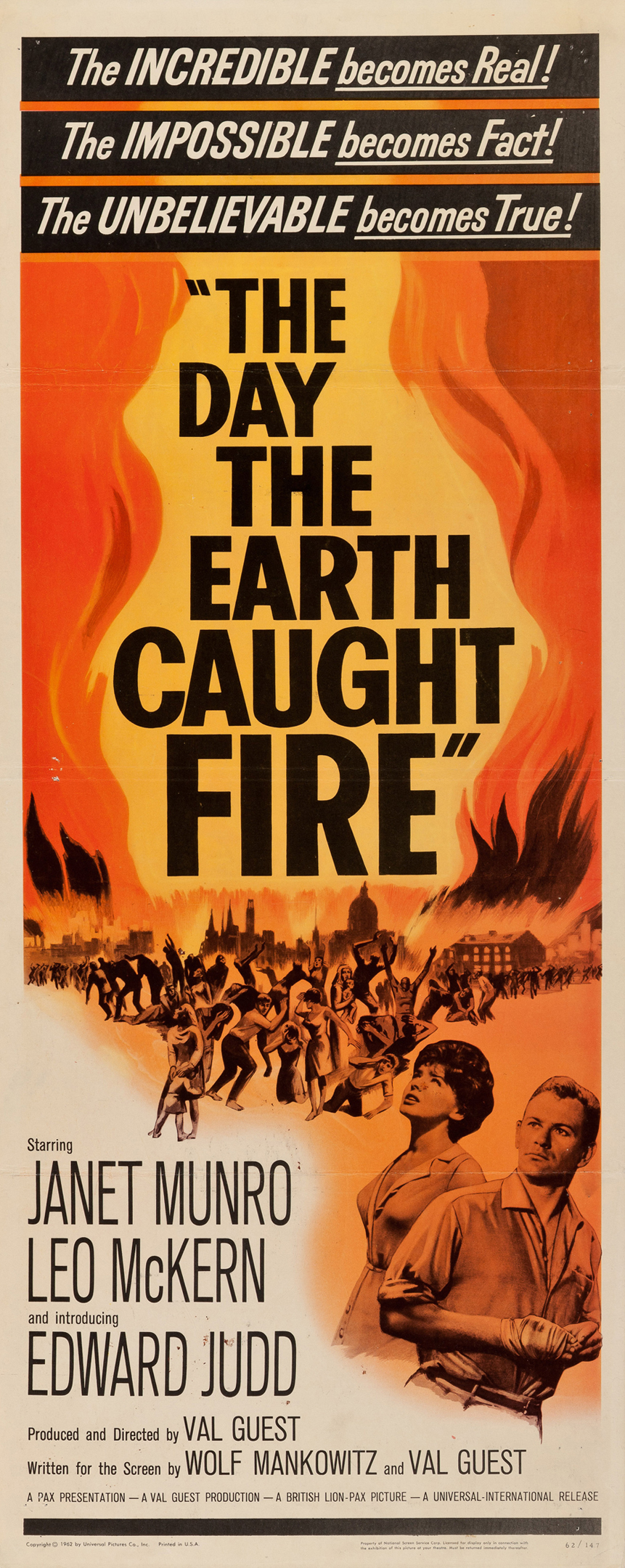
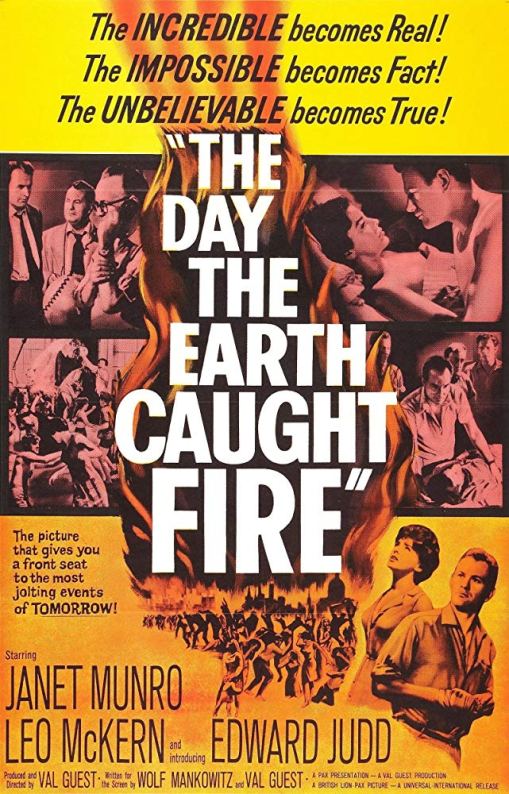
Poster for “The Day the Earth Caught Fire” (1961)

Universal Pictures, British Lion Films.  1961 was the release date in the United Kingdom; 1962  was the release date in the United States.

“The conquest of the physical world is not man’s only duty.”

“There are, forever, swamps to be drained, cities to be created, mines to be exploited, children to be fed. None of these things can be done alone.

“But the conquest of the physical world is not man’s only duty. He is also enjoined to conquer the great wilderness of himself. The precise role of the artist, then, is to illuminate that darkness, blaze roads through that vast forest, so that we will not, in all our doing, lose sight of its purpose, which is, after all, to make the world a more human dwelling place.”

— from James Baldwin’s “The Creative Process,” 1962


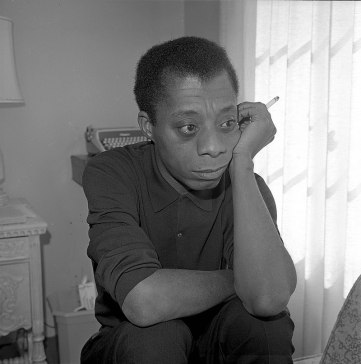
JamesBaldwin1964

Source: The Marginalian

“But the conquest of the physical world is not man’s only duty.”

Perhaps the primary distinction of the artist is that he must actively cultivate that state which most men, necessarily, must avoid: the state of being alone.  That all men are, when the chips are down, alone, is a banality — a banality because it is very frequently stated, but very rarely, on the evidence, believed.  Most of us are not compelled to linger with the knowledge of our aloneness, for it is a knowledge that can paralyze all action in this world.  There are, forever, swamps to be drained, cities to be created, mines to be exploited, children to be fed.  None of these things can be done alone.  But the conquest of the physical world is not man’s only duty.  He is also enjoined to conquer the great wilderness of himself.  The precise role of the artist, then, is to illuminate that darkness, blaze roads through that vast forest, so that we will not, in all our doing, lose sight of its purpose, which is, after all, to make the world a more human dwelling place.

— James Baldwin, The Creative Process, 1962

Source: The Marginalian


JamesBaldwin1964

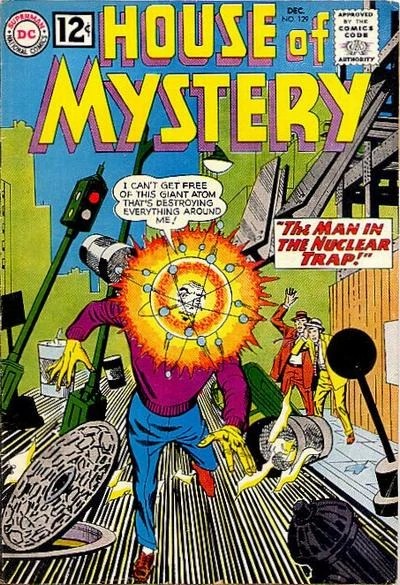
Cover to “House of Mystery” #129, Mort Meskin & George Roussos, 1962

DC Comics.

ho

Cover to Richard Matheson’s “The Shrinking Man,” Art by Mitchell Hooks, 1962

Gold Medal Books.

mtheson2

Poster for “La Jetee” (1962)

Argos Films.

80795456_10158036251553417_2698408865518583808_n

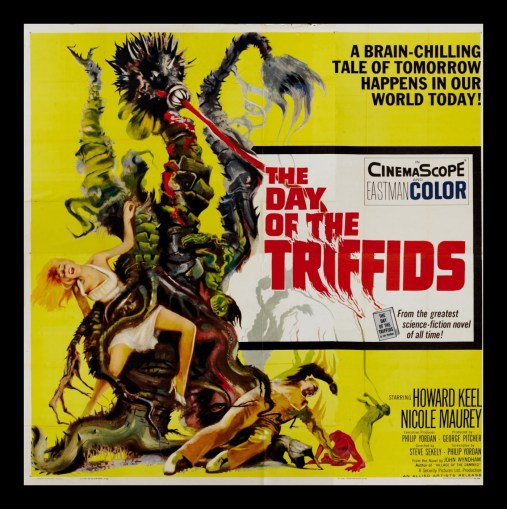
Throwback Thursday: “Day of the Triffids” (1962)!

I remember getting excited about seeing “Day of the Triffids” (1962) for the first time.  It was the early 2000’s, and the advent of DVD-by-mail services enabled me to hunt down all the various apocalyptic sci-fi movies I’d heard about as a kid — including a few that I’d only seen portions of, because I’d tuned in late.  (The local video stores I’d grown up with had some of these films, but not all — and my interest in the sub-genre was truly exhaustive.)

“Day of the Triffids” was mildly disappointing.  It was positively lethargic for an end-of-the-world monster tale, even if those monsters were slow-moving plants.  (It’s a good bet that John Wyndham’s 1951 source novel did a better job with the story concept.)

I ordered this DVD through Blockbuster Video.  Here’s a little movie industry trivia for you — Blockbuster briefly had a DVD-by-mail offer that was better than the one pioneered by Netflix.  (You actually got more movies out of it, and you got them quicker.)  But this was around the end of the prior decade; Netflix had already won the war for the home movie market, while Blockbuster was suffering its first location-closing death rattles.  And the DVD-by-mail business model was itself becoming largely obsolete, anyway — the twin threats of Redbox kiosks and online movies saw to that.


Day-of-the-Triffids-film-1962

Poster for “The Day the Earth Caught Fire” (1962)

Universal-International.

MV5BZjZmYTUxZDktZDA5YS00OTE0LWFjZWItNjc1ZDU1Mjg5YmIyXkEyXkFqcGdeQXVyMjI4MjA5MzA@._V1_SY1000_CR0,0,641,1000_AL_

U.S. Christmas Stamp, 1962

Christmas_issue_4c_1962

Throwback Thursday: More of the WOR-9 Thanksgiving Monster Movie Marathon!!!

As I explained last year, monster movies were simply a part of Thanksgiving if you lived in the Tri-State region around New York City between 1976 and 1985.  This was due to WOR-9’s “Holiday Film Festival” broadcast, which actually also extended to the day following the holiday after the lineup’s first year.  (People just called it the “Monster Movie Marathon.”)

As a kid, I was a hell of a lot more thrilled with the monster movies than anything being served for dinner.  (Remember, video stores only began arriving the early 1980’s.  Before that, you usually had to catch a movie on television if you wanted to see it at all.  It’s why every house had a “TV Guide.”)

“King Kong vs. Godzilla” (1962) was one gem in the marathon.  (Or, at least, it seemed like an amazing film to a gradeschool boy.)  I was raised with the enduring myth that this Japanese film had two endings — an American version where King Kong prevailed, and a Japanese version where its native Godzilla was the victor.)  My Dad told me that, and I remember being fascinated that a movie could have two different endings.  I actually only learned just now, writing this blog entry, that it was a particularly widespread urban legend — stemming from an erroneous report in “Spacemen” magazine.  The American version of the film had tons of alterations, but the outcome was essentially the same — King Kong won.

There were always a few more Godzilla movies on the day after Thanksgiving, too.  “Son of Godzilla” (1967) was one of them; that was always hit with the kids.  (I could swear at some point there was a cartoon adaptation in the early 80’s.)  It was weird how 80’s kids apparently loved that ostensibly “cute” character; the adult in me today swears that “Son of Godzilla” looks like an upright, reptile-shaped poop.  (Seriously, check out the second clip below.)

“Godzilla vs. Megalon” (1973) was another one I seem to remember being pretty thrilled with.  I was even occasionally scared of the giant monsters in flicks like these.  (Hey, I was a little kid.)  Even as a first- or second-grader, though, I was smart enough to question why these movies were weirdly inconsistent.  (Why was Godzilla a bad guy who destroyed Tokyo in one movie, but the “good monster” that the Japanese rooted for in another?)

I’m learning now that “Godzilla vs. Megalon” was the target of a Mystery Science Theater 3000 episode.  I’m going to have to hunt that one down.