Tag Archives: 2011

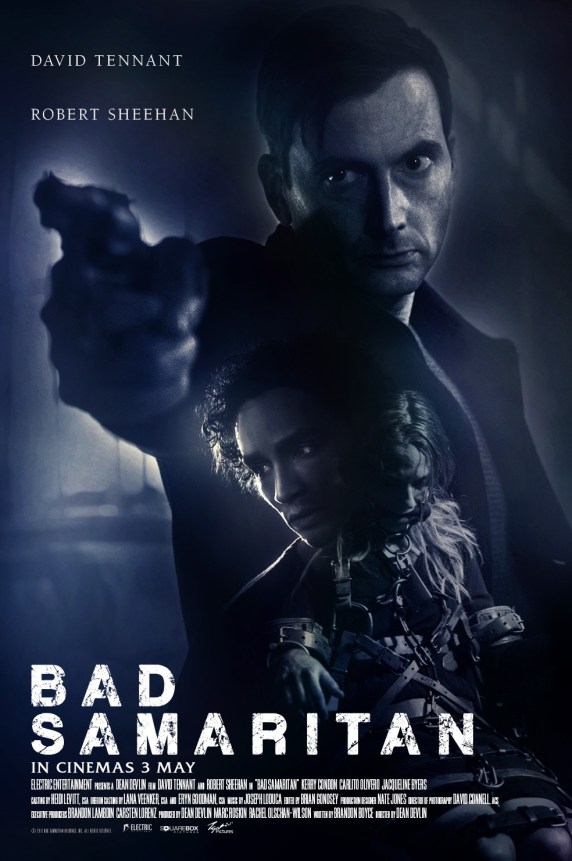
A short review of “Bad Samaritan” (2018)

As I believe I may have mentioned, I have a love-hate relationship with David Tennant’s onscreen performances.  I find him inexplicably, positively grating whenever he plays a protagonist.  (See 2011’s “Fright Might” remake, or his cringe-inducing stint as “Doctor Who.”)  But it seems to me that the man is absolutely fantastic when he plays a bad guy.  (See his frightening and hilarious role as Kilgrave the first season of “Jessica Jones” in 2015.)

“Bad Samaritan” (2018) thankfully presents us with the latter Tennant.  He musters an intensity with his eyes and his voice that are incongruous counterpoints to his innocent-looking face, and this makes him a damned good antagonist in a thriller.  (He is a highly organized, sociopathic kidnapper in this film.  I don’t think that’s much of a spoiler, as all of the film’s marketing make it clear.)  He’s a hell of a lot of fun to watch — and listen to.

With that said, “Bad Samaritan” is an average movie — not altogether bad, but not awesomely good, either.  (I suppose I’d rate it a 7 out of 10.)  It benefits a lot from another very good actor in Robert Sheehan as its anti-heroic young protagonist.  (The plot setup here is interesting — a mild-mannered burglar discovers a psychopath’s captive while in his house, then struggles with how he can help the terrified victim of a far worse criminal than he is.)  The movie’s biggest sin seems to be that it borrows heavily from comparable genre-defining works from the likes of Thomas Harris and James Patterson.  But it’s still an enjoyable enough movie in its own right.

There’s someone else here that’s great fun to watch too — Kerry Condon as the kidnapee.  Her voice is amazing, and she’s a superb actress; I think she’s strong enough to carry another movie like this.  I just knew she looked familiar … it turns out she played Clara, the really weird woman that Rick found in the woods during Season 3 of “The Walking Dead.”  (He asks her the show’s signature “three questions.”)

She is also to voice of F.R.I.D.A.Y., Tony Stark’s on-board A.I. in several of Marvel’s “Avengers” movies.  Didn’t see that one coming.  Weird world.
 

bad_samaritan_ver2_xlg

Cover to “Justice League Generation Lost” (Variant) #24, Kevin Maguire, 2011

DC Comics.

Justice_League_Generation_Lost_24_Variant

A few quick words about “Philip K. Dick’s Electric Dreams” (2017)

I was skeptical about “Philip K. Dick’s Electric Dreams” (2017), and I’m not sure why — maybe because I assumed it would be a failed and shameless imitator of “Black Mirror” (2011).  But I’m happy to be proven wrong — the first episode was damned good.  It isn’t quite as good as “Black Mirror” (the success of which doubtlessly helped this series reach fruition), but it looks like it could be a great show in its own right.  (None other than Ron Moore and Bryan Cranston are among the producers for “Electric Dreams,” so that should make us optimistic about the show’s quality.)

I’d rate the first episode a 9 out of 10.  (The entry I’m referring to here is the “Episode 1” with which Amazon Video audiences will be familiar — the episodes appeared in a different order when this series first aired last year on Britain’s Channel 4.)  It’s got a great cast, including Anna Paquin, Lara Pulver, and the incredible Terrence Howard.  (His acting skills are among the best I’ve ever seen.)  And its story is damned neat, even if it employs a Dick story device that we’ve already seen in some other adaptations.  (Can I write “Dick story device” without my Facebook friends snickering?)

This was good.  I recommend it.


MV5BNGY4OTBiMTktMDM4Zi00MjVhLTgyNjctOGYzNGM5YzBlMjU5XkEyXkFqcGdeQXVyNjI4OTg2Njg@._V1_UY1200_CR92,0,630,1200_AL_

Cover to “Resurrection Man” #1, Ivan Reis, 2011

DC Comics.

14f2ae18fb428583212865ef606af762_xl

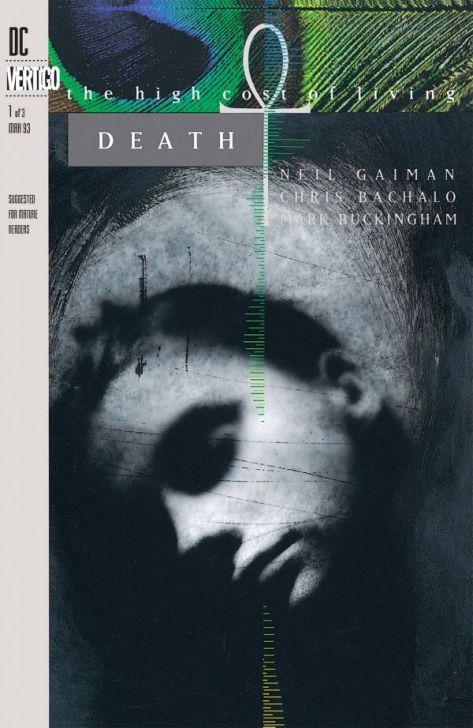
Cover to “Death: The High Cost of Living” #1, Dave McKean, 2011

DC Comics.

ICO001455._SX1280_QL80_TTD_

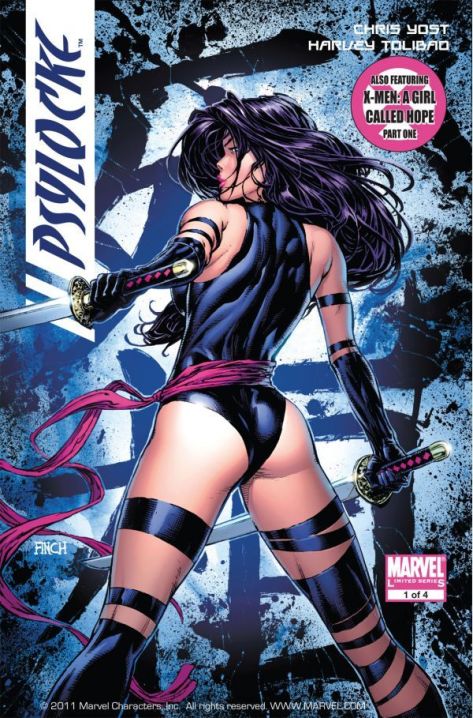
Cover to “X-Men: Psylocke” #1, David Finch, 2011

Marvel Comics.

SEP090483._SX1280_QL80_TTD_

A short review of “Black Mirror” Season 3

“Black Mirror” (2011) remains the best science fiction show on television; I’d rate the six-episode third season a perfect 10.  The show continues to succeed at every level with its story concepts and their execution.  And I think it’s actually getting better.

It’s getting darker and harder hitting, too.  I’d guess that this season’s blackmailing-hackers episode (“Shut Up and Dance”) would be the one that the majority of viewers find the most disturbing.  For some reason, the man-vs.-monster story of “Men Against Fire” is the one that really got under my skin.

I was surprised to learn that nearly all of “Black Mirror’s” episodes are penned by series creator Charlie Brooker.  I’m still surprised at how many clever ideas and lean, smart scripts could spring from one writer.  I was so impressed that I looked Brooker up on Wikipedia — but was surprised to discover I’m unfamiliar with nearly all of his other work.  The one exception is “Dead Set” (2008) — the truly fantastic British zombie horror miniseries that I’ve been recommending to friends for ages.  That makes sense.

Anyway, I am fully and happily converted to “Black Mirror’s” cult following, and I enthusiastically recommend it to people who ask about it.  (The show’s popularity is still growing — I believe it appeals to the same kind of fans as those who flocked to the various iterations of “The Twilight Zone” and “The Outer Limits” of generations past.)  But I might actually suggest that newcomers begin with the second or third season, rather than the first.  Season 1 is terrific, but it’s three episodes are more subtle and thematic, while the latter seasons follow a more conventional story structure that might better appeal to more mainstream audiences.  (They have more satisfying twists and emotional payoffs, too.)

And a quick caveat — I’ll reiterate that this show is indeed dark.  There is a strictly human element to most of “Black Mirror’s” twists that is intended to surprise the viewer by provoking anxiety or dread.  For a show that relies on technological story devices, it succeeds even more with its old fashioned psychological horror.


1_m1

A few quick words on the premiere of “The End of the World” (2013)

An Pan-Seok’s “The End of the World” miniseries (2013) appears to be an intelligent, if a little understated, Korean epidemiological thriller.  I was engaged enough by the first episode to rate it a 7 out of 10, and I’ll probably keep watching it to give the show a chance.

It reminded me of Steven Soderbergh’s “Contagion” (2011), though the dramatic elements here are even more underplayed — at times the first episode even felt like a documentary.  It’s a bit slow, but it really looks like screenwriter Park Hye-Reon has done his homework.  (The miniseries was based on the novel “Infectious Disease,” by Bae Young-Ik.)

Assuming the series retains the tone and pace of its pilot episode, I believe this would appeal to only serious fans of disease thrillers.  To them, I’d recommend it.


The End of the World

A few quick words on “Black Mirror” Season 1 (2011)

Season 1 of Britain’s “Black Mirror” (2011) was absolutely terrific.  (To be clear, this first “season” consists of only three episodes, although subsequent seasons have more.)  This looks to be a truly superb dystopian science fiction anthology series — I’d rate it a 9 out of 10.

I’d point to two qualities that make this show stellar.  First, it’s truly smart stuff.  The story devices are thoughtfully invented and quite original.  (These are “near-future” -type sci-fi tales depicting how new technology or cultural trends can have unforeseen consequences.)  This show doesn’t insult the viewer’s intelligence, it relies on him or her to pay attention and think.

Second, the writers here have a firm grasp of genuine psychological horror.  There are no radioactive monsters in the sewers here, or killer robots from the future — but “Black Mirror” manages to be scary without those things.  It does just fine presenting the viewer with visions of human shame, fear, jealousy or existential loss.  These are stories that deal primarily with the psychology of their characters — and they truly get under your skin.

This is great stuff — I’d recommend it.


Black-Mirror-Logo

A review of Season 1 of “Jessica Jones” (2015)

Netflix’ “Jessica Jones” (2015) is easily one of the best things in the Marvel Cinematic Universe; I’d rate it a 9 out of 10.  It’s smart, it’s funny and it’s extremely dark — I don’t want to spoil too much by revealing the modus operandi of Season 1’s villain, but his manner of destroying his victims is utterly disturbing.  (I’ve mentioned before how his powers seem like a plot device from a Stephen King novel.)  Although this series excellently retains a “comic book” feel (due in part to its episodic format), its story elements frequently feel like something out of a John Carpenter film.  And, although I know I’m repeating myself yet again, this Hell’s Kitchen niche of the MCU feels like its chosen stage for horror-thrillers.

The cast is excellent.  Krysten Ritter is perfect as the titular, hard-drinking, antihero private detective.  Mike Colter is nearly as good in the role of Luke Cage, another low-level hero in the Marvel universe.  Colter’s talent is evident by the fact that Cage could so easily come across as a one-dimensional character.  (And, Jesus, doesn’t the guy look the part?)

The story’s villain, Kilgrave, is played by fan-favorite David Tennant.  (Yes, the name “Kilgrave” is stupid and is lifted from the comic book source material.  Its silliness is lampshaded in the series several times by other characters making fun of it.)  Tennant is an actor I’ve abhorred in the past.  There was no logical reason for it — there used to be just something about his voice and his face that made me cringe.  It was a running joke for a while among me and my female sci-fi friends.  (Good Lord, how the ladies adore that man.)  My admittedly irrational dislike of the man even detracted from my enjoyment of the otherwise quite enjoyable 2011 “Fright Night” remake.

He’s phenomenal here.  He’s perfect for the part, as Ritter and Colter are for theirs, and he was alternately menacing and quite funny.  (He has perfect timing and line delivery, as Ritter often does.)  I really liked watching him.

“Jessica Jones” might succeed more than any other MCU property in terms of dialogue and character development — although the “Iron Man” and “Daredevil” series also do great work there.  (It’s a tough call.)  The show also seems to flesh out the MCU into a kind of “lived in” universe in a way that other Marvel properties usually haven’t — by creating detailed, three-dimensional protagonists out of characters that have no superpowers whatsoever.  They’re not “sidekicks” (a trope that the script that slyly winks at); they’re realistic characters that affect the plot.  When one or two actually appear to develop superpowers toward the end of the season, the consequences are unexpected and dire.  (There is a truly kickass Easter egg here that will please longtime readers of Marvel Comics.)  Furthermore, Jones, Cage and most of the other characters have power sets that pale in comparison to M.C.U. heavy hitters like Thor, the Hulk or the Vision. The result is that the MCU feels more … integrated and nuanced, with a blurrier line between superheroes and everyday people.  I liked that a hell of a lot.

The show is not entirely without its failings.  Despite what I said above about the show’s attention to ordinary characters, I still think it went a bit overboard here.  The character of Malcom (nicely portrayed by Eka Darville) began as a hugely interesting supporting character.  So, too, did other residents of the heroine’s apartment building.  It was a nice touch that expanded the show’s scope and depth … until the law of diminishing returns kicked in.  By the end of Season 1’s 13-episode arc, I felt that they’d received far too much screen time.  The support group that one character attends started out as an intelligent subplot, but then eventually grew tiresome.  (Again, I’m being necessarily vague here to avoid spoilers.)  Towards the finale, I actually felt that these minor characters were padding the plot and dragging down the narrative.

Which brings me to another criticism — the narrative’s length.  This is yet another show that I felt could be edited down a bit.  As much as I loved Tennant here and found Kilgrave to be an interesting villain, I’m not sure that Jones’s conflict with him warranted 12 52-minute episodes.  This could have been abridged to eight or ten, I think.

Another criticism I had of “Jessica Jones” was its fight choreography.  For a show that succeeds on so many levels, the action sequences were sometimes surprisingly poor.  Why do brawls between superpowered individuals include so much polite (and bloodless) grabbing and throwing?  Especially when a single punch or kick could easily kill or incapacitate an opponent?  The answer, of course, is that those kinds of melees are easy to film, with minimal training for the actors.  It’s especially noticeable here because this show’s sibling, “Daredevil,” has fight choreography that is some of the best I’ve ever seen.  (If you’re curious, then search for “Daredevil stairwell fight” on Youtube sometime.)

The rudimentary effects were usually even poor when depicting the title character’s “jumping” scenes.  (She has super strength, so she can virtually “fly” short distances by literally jumping.)  These shots looked like something out of a primetime 80’s action show.

All in all, though, this was indeed a great show.  Don’t shy away from it, as I initially did, because you’re unfamiliar with the title character.  It’s among the best that Marvel has to offer.


maxresdefault