Tag Archives: Stephen King

The Lazarus Effect on the Flatliners’ Jaunt. With Dark Phoenix.

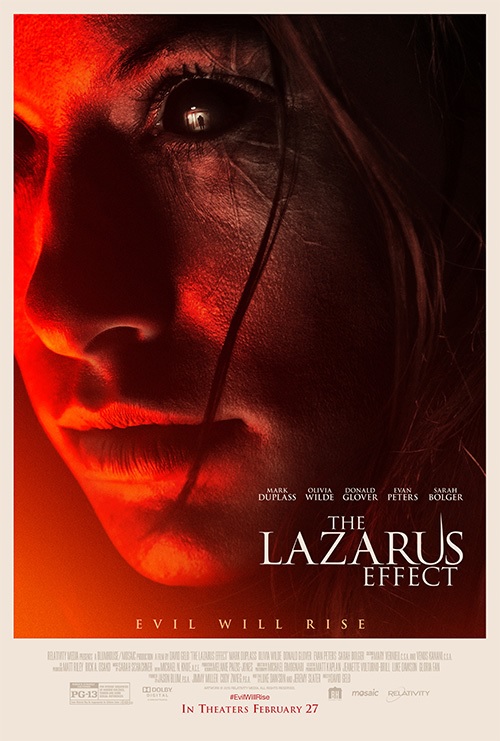
[THIS REVIEW CONTAINS MILD SPOILERS FOR “THE LAZARUS EFFECT.”]  “The Lazarus Effect” (2015) is a good horror – science fiction movie, just not a great one.  I’d give it a 7 out of 10.

It’s well put together.  There are some scary parts, and the characters are likable, if thinly drawn.  One part of this movie expertly recalls Stephen King’s amazing short story, “The Jaunt,” which I believe is the scariest story I’ve ever read.  The closing moments of the movie are damn creepy.   (Watch carefully until the end.)

If you think you recognize Eva, that’s the talented young Sarah Bolger, who was troubled by a vampire prep-school classmate in “The Moth Diaries” (2011).  The smart-mouthed lab assistant?  That’s none other than Quicksilver from “X-Men: Days of Future Past” (the likable Evan Peters).

But here’s it’s problem — this film’s story device was already employed a hundred times better 25 years ago by the far superior “Flatliners.”  That 1990 classic exceeds it on every level — even visually, despite today’s CGI.  I just can’t recommend paying to see “The Lazarus Effect” if the star-studded, funny, genuinely frightening “Flatliners” is available at home.

Even “The Lazarus Effect’s” modern special effects are nothing new.  When Zoe (Olivia Wilde) completes her horrifying transformation, I swear she looked exactly like Jean Grey after her transformation into Dark Phoenix in “X-Men 3: The Last Stand” (2006).

We’re also left with a lot of questions.  (Again, I’m trying to keep this generally spoiler free.)

1)  Are we seeing the real Zoe?  A possessed Zoe?  A traumatized Zoe?  An angry version of Zoe?  All four?  I’m still not sure.

2)  Why does Zoe’s transformation appear to happen gradually?  Why not immediately?

3)  Why is one character made to face consequences for a childhood mistake, no matter how serious it may have been?

4)  What exactly is the significance of the side effects we are told about (increased brain activity and aggression)?

5)  Given what we know about what’s happening to Zoe, does it really make sense that the dog should have a comparable experience?

6)  Can the process we see have a happier outcome for a different subject?

7)  Why does Zoe object to the lab assistant using e-cigarettes in the laboratory?  “Vaping” produces no smoke or odor, and contains no tobacco — it’s just a water mist.

Anyway … do any other horror-sci-fi fans remember “Flatliners” the way I do?  I never hear it mentioned.  Its contemporary, “The Lost Boys,” (justifiably) still gets praise and brings tons of nostalgia to 80’s horror movie fans.  Why not “Flatliners?”  EVERYBODY talked about “Flatliners” back in the day.  It was even better “The Lost Boys,” and it’s served up with both Kief AND Bacon.
The_Lazarus_Effect_(2015_film)_poster

If you have author friends, call and ask them if the blizzard-borne ghosts have driven them yet to murder their families.

It’s what I’m doing.  (Calling author friends, not murdering my family.)

Then yell “REDRUM” in that creaky voice.  It’s exactly the light-hearted humor that will lighten the stress of severe snowy weather.

Stephen King’s “Joyland”

“Joyland” is a surprisingly average novel by an otherwise amazing novelist.  Its ghost story is actually pretty scary, but it occupies so little of the book that it seems like a brief subplot.  The bulk of the book is a coming-of-age story about its protagonist, with tons and TONS of expository information about “carny” life, work, and culture.  I actually found myself skimming pages that detailed the carny dialect (or “Talk”), or the descriptions of daily work.

The characters of Devin, Tom and Erin were relatable and likeable — Annie and Mike were a little less so.

This book was okay, but I doubt it belongs at the top of anyone’s must-read list.

index

“Let me through. I am a priest.”

This blog post contains major spoilers for Stephen King’s “The Gunslinger” and “The Waste Lands.”  Please read no further if you haven’t read the series.

*

*

*

*

*

*

*

*

*

*

*

*

*

*

A re-read of “The Waste Lands” has informed me of a switcheroo that might strongly detract from one of the most powerful scenes in “The Gunslinger.”  (And I am not sure how the hell I missed this in past readings of the novel … did I just forget?  Am I going senile?)

It is actually Jack Mort, and not The Man In Black, who pushes Jake Chambers into traffic in New York. He is (somewhat confusingly) also dressed as a priest.

I much prefer the iconic, terrifying Walter/Flagg as the slayer (sort of) of poor Jake.  I might just forget that whole Jack Mort retcon, which served little point in “The Waste Lands” and seemed like a surprise that was just shoehorned in.

Stephen King’s “Full Dark, No Stars”

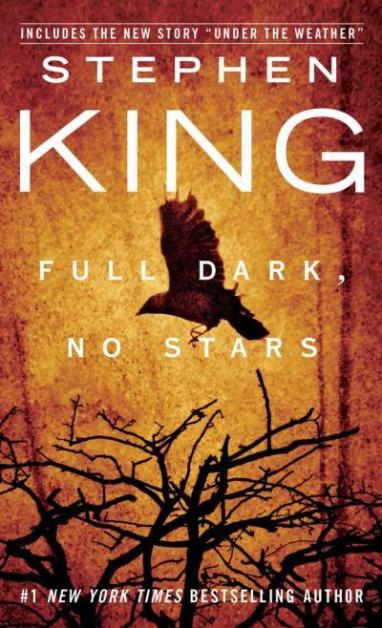
“Full Dark, No Stars” is a good, solid collection of horror tales — four strong novellas by Stephen King that had me engrossed. Interestingly, three of the four tales — “1922,” “Big Driver,” and “A Good Marriage” — contain no supernatural elements whatsoever, and deal only with murders.  The one tale of the supernatural — “Fair Extension” — is a shorter, faster, superior take on the basic plot device examined by the less-than-stellar “Needful Things.” It was typical King; parts were slow, but the pace didn’t change the fact that this was a great page-turner that was hard to put down.  There were a few references to other King novels to please long-term fans, including a reference to “The Dark Tower” series.  Even the Afterword was entertaining, as King delivered his down-to-earth recounting of how he got the ideas for each story.  There’s some great trivia there, too — King says “The Long Walk” was the first novel he wrote, at the tender age of 18. My copy of “Full Dark, No Stars” had a bonus feature — a damn fantastic short story called “Under the Weather.”  Don’t miss it.

Stephen King’s “Mr. Mercedes”

Stephen King’s “Mr. Mercedes” is a terrific thriller that will be sure to please his fans.  It’s the story of very unlikely heroes and friends pursuing an at-large, highly intelligent and remorseless spree killer/serial killer.

It is occasioanlly slow.  We spend way too much time getting to know Hodges, for example, before his character becomes either likable or even plot-relevant.  But this is forgivable for such a great book.  I loved the characters and found certain scenes touching.  And the character development for the eponymous Mr. Mercedes is consistently disturbing.

And for horror fans … Jeez, does this book deliver.  It’s a frightening story, to say the least.  One part, involving a certain mixup (I can’t say more without spoilers), is positively horrifying, even by Stephen King standards.

My pal Steve Miller told me that this is the start of a trilogy — I can’t wait for the next installment.

Stephen King and W. H. Auden inspired by the same Jungian archetype?!?!

Well, probably not … as Auden’s manmade “Tower” does sound different than King’s nexus of all realities.  Nor does “The Quest,” the set of poems from which this is selected, parallel Roland’s journey.

Still, it’s a terrific poem.  

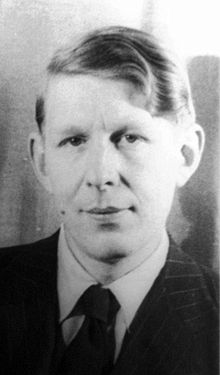
“The Tower,” by W. H. Auden

This is an architecture for the old;
Thus heaven was attacked by the afraid,
So once, unconsciously, a virgin made
Her maidenhead conspicuous to a god.

Here on dark nights while worlds of triumph sleep
Lost Love in abstract speculation burns,
And exiled Will to politics returns
In epic verse that makes its traitors weep.

Yet many come to wish their tower a well;
For those who dread to drown, of thirst may die,
Those who see all become invisible:

Here great magicians, caught in their own spell,
Long for a natural climate as they sigh
“Beware of Magic” to the passer-by.

220px-AudenVanVechten1939

“Cycle of the Werewolf,” by Stephen King

There was a time in Stephen King’s career when he focused on familiar movie monsters (vampires, werewolves, blobs and boogeymen), instead of more abstract horrors.  “Cycle of the Werewolf” is an example of that, and it’s great fun — perfect for a late night horror fix that appeals to the kid at heart.  If you’re a fan of King’s work in books like “Salem’s Lot” or “Night Shift,” you ought to enjoy this.

It IS more of a long story than a novel or a novella — it’s brief.  The illustrations by Berni (Bernie?) Wrightson, of comic book fame, are perfect.

I thought it would be fun to read this and then revisit its 1985 film adaptation, “Silver Bullet,” which I remember loving as a kid.  Gonna have to hunt that one down.

Image 


“Dancers from the iron sky.”

“At last, as the gray November afternoon tightens down toward an early anvil-colored dusk, he bounds into the kitchen, snatches the Volare’s keys from the peg by the door, and almost runs toward the car.  He drives toward Portland fast, smiling, and he does not slow when the season’s first snow skirls into the beams of his headlights, dancers from the iron sky.”

— from Stephen King’s “Cycle of the Werewolf”

Image

The “Under the Dome” tv show is in its second season?

And we’ve yet to see a feature film or television series for Stephen King’s stunning, seminal “The Dark Tower” series?

“Under the Dome” is precisely my least favorite Stephen King novel.  And I have read “Dreamcatcher” (which was quite good in places) and the somewhat-too-disturbing novella, “Rage.”

What’s next?  A TV series based on Tom Clancy’s “Teeth of the Tiger?”

Sorry for being cranky today — this cold is kicking my @$$.

They need to make a “Gunslinger” film, at the very least, and have it star Clint Eastwood.  I don’t care about his age, and we’ll forgive his chiding of invisible presidents.  He simply IS Roland Deschain.