A very short review of “Rings” (2017)

“Rings” (2017) actually begins with great promise — it looks like the rare horror “threequel” that could live up to its two predecessors.  (And the early millennium’s “Ring” films were indeed good movies.)  It starts with a truly fascinating story device that I won’t spoil here, except to say that it’s macabre and thoughtful and involves an intrepid college professor (Johnny Galecki).

Inexplicably, the movie abandons this unsettling stroke of genius about 20 minutes in, and instead falls back on a by-the-numbers plot that too closely parallels the first films. What follows is pretty average stuff.  Instead of the lovely and talented Naomi Watts, who was the capable heroine of the first films, we get two flat, college-aged protagonists portrayed by two mostly flat young actors.  (Alex Roe is particularly bad.)  Not even the arrival of the great Vincent D’Onofrio in a supporting role can redeem “Rings” past the direct-to-video level of quality.

Oh, well.  This still wasn’t the worst horror movie I’ve ever seen, and it did have some creepy parts.  (I thought the movie’s closing moments were pretty effective.)  I’d call “Rings” an average outing and rate it a 6 out of 10.

Postscript: D’Onofrio has a damned cool voice.  I’m serious.


A review of “The Man in the High Castle” Season 2

[This review contains spoilers for Season 1 of “The Man in the High Castle.”]  Despite my love for its first season, I was surprised to find my interest waning for Season 2 of “The Man in the High Castle.”  But while the earlier episodes felt a little slow, the second season gained a lot of momentum as it progressed, and then went out with a satisfying bang.  Overall, I’d rate it an 8 out of 10.

By the time Season 2 began, some of the novelty of the show’s premise had worn off.  Its unique milieu — a post-World War II, occupied America in which Germany and Japan are triumphant — was already explored in depth.  The show also felt scattered for much of this season … we follow disparate protagonists trying to negotiate or survive the alternate-history dystopia.  Their individual stories felt like subplots, while the central plot line — the nature and purpose of the mysterious newsreels — was left in the periphery.

Compounding this problem is the fact that the characters themselves weren’t always interesting or terribly likable.  Juliana Crain is always engaging to follow, given the strength and vulnerability brought to the role by actress Alexa Davalos.  Far less so, however, was Joe Blake, a character as flat and boring as his generic name.  (And this isn’t helped by actor Luke Kleintank’s wooden performance.)

There may be a few things that I am missing, as well.  For one,  various characters view the newsreels, which depict separate events in parallel universes.  They then try to prevent those terrible futures from coming to pass in their own timeline.  But why are they so certain those events will come to pass?  They know they are viewing events in an entirely different universe, and not their own.

Also, it becomes clear that certain characters can actually travel back and forth between parallel universes, but there is virtually no exposition about this.  Why do some people have this gift, but not others?  How rare is it?  What would happen if a character met their own double in a parallel universe?  Why don’t people in power recruit these talented “travelers” themselves, instead of relying on the newsreels they bring back?  Or are they doing that already?

Despite my misgivings above, however, “The Man in the High Castle” is a terrifically smart TV thriller, full of frightening ideas and detailed world-building.  Its depiction of a mid-twentieth century America conquered by the Axis powers is unflinching.  There are some really good performances by Rufus Sewell, Brennan Brown, Cary-Hiroyuki Tagawa and the awesome, scenery-chewing Callum Keith Rennie.

The show is inspired enough to challenge the viewer with a lot of moral ambiguity, as well.  American resistance fighters act as ruthlessly as the Nazis, while the worst secret police from both the German and Japanese sides cooperate to try to prevent a nuclear war.

“The Man in the High Castle” is still pretty intricately plotted, too — the last two episodes surprisingly do reveal how some of its scattered subplots tie together in the context of the larger story.  And those final two episodes are damn dramatic and thrilling.  I’m glad I stayed with the show.


man-in-the-high-castle

“The Awakening of a Man in Bed,” unknown artist, circa 1900

Used as an illustration to writing by Leo Tolstoy.

1900_the_awakening

Dennis Villelmi interviews Nicholas Vince!

My friend and colleague Dennis Villelmi interviewed Nicholas Vince, a.k.a. “Chatterbox,” from the classic “Hellraiser” films! This is the second interview of a “Cenobite” for The Bees Are Dead transatlantic magazine. (He interviewed Barbie Wilde this past Fall.)

Congratulations on a great interview, Dennis!

John William Waterhouse’s “Diogenes,” 1882

Oil on canvas.

waterhouse-diogenes

More stories from Eric Robert Nolan

If you happened to enjoy “Shine Now, Fiercely, Forever” last week, then stop by the “My stories” section right here at this website.  It has links to all of my published stories, and some of them can be read for free:

https://ericrobertnolan.wordpress.com/stories/

Detail from Attributes of Tshans-pa in a Tibetan “rgyan tshogs” banner

L0030397 Attributes of Tshans-pa (Brahma, 'The Pure One') in a "rgyan

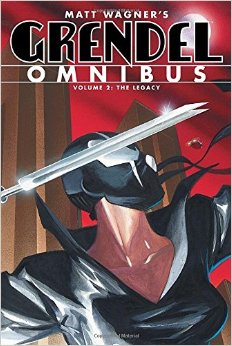
A review of “Grendel Omnibus: Volume 2: The Legacy”

“Grendel Omnibus Volume 2: The Legacy” can’t match its predecessor.  Where the first amazing Omnibus edition focused gorgeously and exclusively on creator Matt Wagner’s first “Grendel” character, the arch-villain Hunter Rose, this second collection focuses mostly on supporting characters and Rose’s successors.  “Devil Child” shows us the cruel fate of an adult Stacy Palumbo, while “Devil’s Legacy” and “The Devil Inside” follow Christine Spar and Brian Li Sung’s turns as both heirs and victims of “Grendel’s” identity.   The “Devil Tales” coda of two stories at the very end are told from the perspective of Albert Wiggins, who was first introduced in the Spar and L Sung story arcs.

There are decent stories throughout; all except the first were written by Wagner himself.  And I do think a serious “Grendel” collector would need to at least read these stories to grasp the overall continuity of Wagner’s seminal work.  (We see for the first time, for example, how “Grendel” is a conscious entity jumping from person to to person.)

But nearly all the stories have great pacing problems.  I get the sense that Wagner wrote these during an experimental stage as a creator.  There are all sorts of departures from standard comic book storytelling, in format, scripting, paneling, and point-of-view.  These departures are interesting, but don’t always pay off.  Some of the stories were cluttered with too much text, too many panels, or even an unnecessary speaker.  (Wagner himself appears to interject as a speaker in one of the closing “Devil Tales;” a distracting kind of narration runs throughout it, in scrawled overhead text that looks like … an author’s outline?)

A few of these felt a little too long.  “Devil’s Legacy,” which follows the career of Christine Spar, was a great tale, and important to the overall mythos.  Yet the otherwise brilliant Wagner seems to struggle structuring it over 12 issues … it is often too slow, with unnecessary dialogue and drama, and with too much attention paid to minor plot points.

A lot of the artwork simply wasn’t my cup of tea.  While Tim Sale and Teddy Kristiansen shine in the first entry, most of the following artists do not.

Ah, well.  Wagner’s brilliance still shines through, particularly with the two closing stories, which he wrote and illustrated.  And all of the stories themselves, with their complex themes of aggression and identity, remain some of the most unique and interesting things in comic books as a medium.  This was a good book — despite its relative failings.  I’d give it an 8 out of 10.


51grycqvdnl-_sy344_bo1204203200_

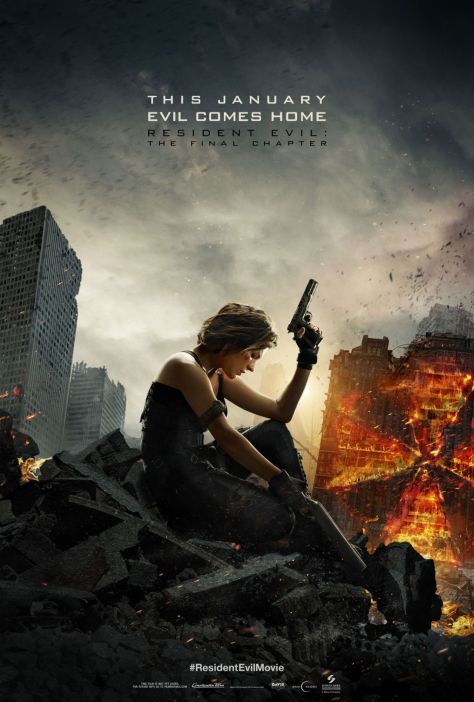
A few quick words on “Resident Evil: The Final Chapter” (2017)

If you can look past the silliness, there is some fun to be had with “Resident Evil: The Final Chapter” (2017).  Critics everywhere are skewering it, but I think it’s a fun throwaway monster movie.  I’d give it a 7 out of 10, while cautioning you that I’m biased because the franchise has always been a fond, guilty pleasure of mine.

The monsters are cool enough, and Milla Jovovich alone sustained my interest with her screen presence.  (No, she isn’t the greatest actress ever, but she’s a strong, suitably intense leading lady for an action film.)

I was also surprised at how this movie attempted to bring closure to the entire series.  The story structure for the “Resident Evil” films strayed into the barely comprehensible several sequels ago, but this final installment did its best to bring the convoluted mythology full circle.  Surprisingly enough, it worked … I myself might have tweaked the final few minutes, but it was satisfying finale.


refcposter2

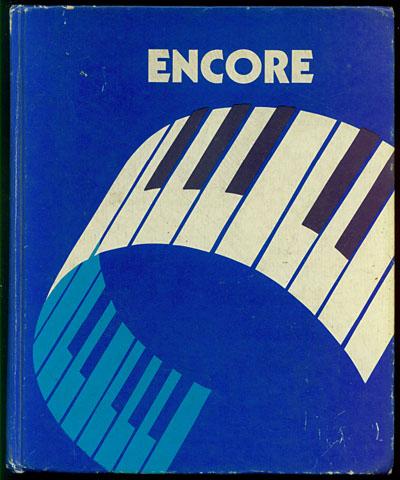
Throwback Thursday: “ENCORE”

What sort of uber-nerd can actually remember a reading textbook from grade-school?

This kind, Ladies and Gentlemen.  This kind.


15531723571