All posts by Eric Robert Nolan

Eric Robert Nolan graduated from Mary Washington College in 1994 with a Bachelor of Science in Psychology. He spent several years a news reporter and editorial writer for the Culpeper Star Exponent in Culpeper, Virginia. His work has also appeared on the front pages of numerous newspapers in Virginia, including The Free Lance – Star and The Daily Progress. Eric entered the field of philanthropy in 1996, as a grant writer for nonprofit healthcare organizations. Eric’s poetry has been featured by Dead Beats Literary Blog, Dagda Publishing, The International War Veterans’ Poetry Archive, and elsewhere. His poetry will also be published by Illumen Magazine in its Spring 2014 issue.

Two cents from a former news reporter.

I spent time as a newspaper reporter. It was only a couple of years, but it was a demanding job that I “lived” more than worked. And it was my first professional job after college.

I loved it. It was a priceless experience for learning about the world and about my fellow human beings. And I honestly think it shaped me.

Let me tell you something — public figures who vilify the news media should not be trusted.

They are few and far between. (You might be surprised to hear me tell you that plenty of “politicians” are actually good, admirable people, working hard and doing their best to serve their community.)

But those who blast the media, or seek to control it, tend to be power-hungry individuals who are simply unaccustomed to having their authority questioned. They also tend to be less intelligent than their colleagues who are more at ease dealing with reporters. I swear it — local officials or staff who have poor relationships with reporters definitely tend to be less educated and more extreme in their views.

You know, of course, whose tweets (sigh) prompted me to write this. (It’s getting so that my abhorrence for the man makes me cringe at even typing his name.)

Of course I may be biased as a former “newsie.” But bias in America lately seems to be all the rage.

François-Dominique-Aimé Milhomme’s “Sorrow,” 1816

Tomb of Pierre Gareau, Père-Lachaise Cemetery, Paris.


francois-dominique-aime_milhomme-_sorrow_-_tomb_of_pierre_gareau

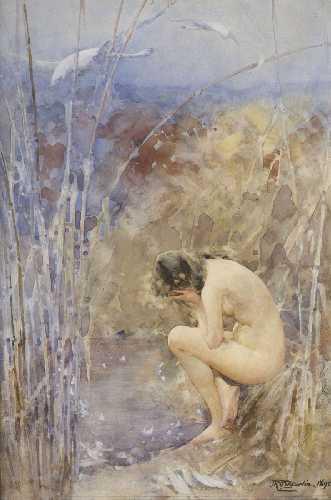
John Reinhard Weguelin’s “Female Nude in the Reeds,” 1895

john_reinhard_weguelin-female_nude_in_the_reeds_1895

Seriously. Like June.

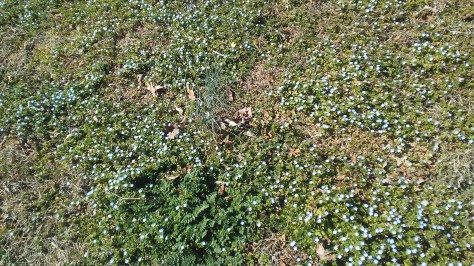
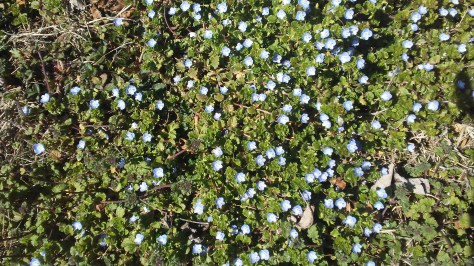
I don’t know what these are (Japanese Mazus?  Birdseye Speedwell?), but they arrived today to brightly pepper the hills around Roanoke.

Maybe it’s because this February feels like June.

“Birdseye Speedwell” sounds like a hillbilly superhero.

[UPDATE: a friend of mine has informed me that this is “Blue Star Creeper.”]


20170217_141021

20170217_141026-1


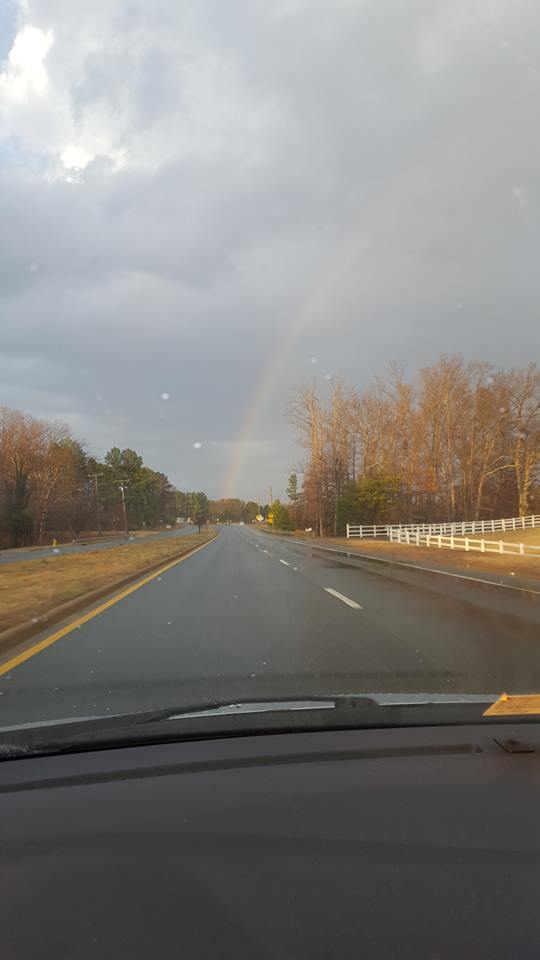
Another NoVa rainbow.

A buddy of mine took this in Northern Virginia last weekend.


16508790_1031484813623028_5357338515894030267_n

Peter Vilhelm Ilsted’s “Interior With Girl Reading,” circa 1910

ilsted_peter_vilhelm_1861-1933_2

“One pill makes you larger, one pill makes you small.”

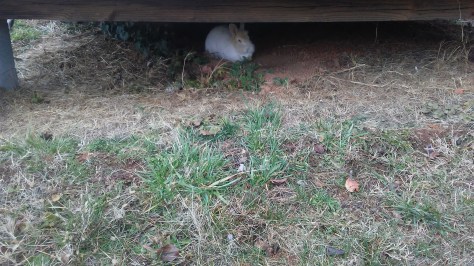
Random Rabbit says hello.

20170215_091346

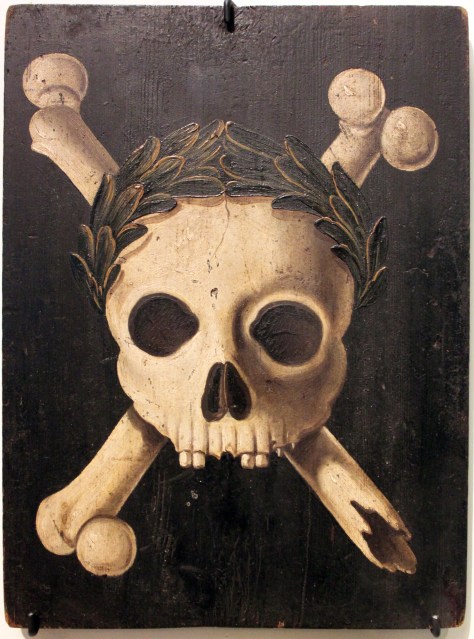
Plague panel with the triumph of death, early 17th Century

Panels of this kind were placed on the walls of houses to warn against the plague. A plague epidemic raged in Augsburg, Germany, between 1607 and 1636.


1607-35_pesttafel_augsburg_anagoria

“Atlantis,” by W. H. Auden

“Atlantis,” by W. H. Auden

Being set on the idea
Of getting to Atlantis,
You have discovered of course
Only the Ship of Fools is
Making the voyage this year,
As gales of abnormal force
Are predicted, and that you
Must therefore be ready to
Behave absurdly enough
To pass for one of The Boys,
At least appearing to love
Hard liquor, horseplay and noise.

Should storms, as may well happen,
Drive you to anchor a week
In some old harbour-city
Of Ionia, then speak
With her witty sholars, men
Who have proved there cannot be
Such a place as Atlantis:
Learn their logic, but notice
How its subtlety betrays
Their enormous simple grief;
Thus they shall teach you the ways
To doubt that you may believe.

If, later, you run aground
Among the headlands of Thrace,
Where with torches all night long
A naked barbaric race
Leaps frenziedly to the sound
Of conch and dissonant gong:
On that stony savage shore
Strip off your clothes and dance, for
Unless you are capable
Of forgetting completely
About Atlantis, you will
Never finish your journey.

Again, should you come to gay
Carthage or Corinth, take part
In their endless gaiety;
And if in some bar a tart,
As she strokes your hair, should say
“This is Atlantis, dearie,”
Listen with attentiveness
To her life-story: unless
You become acquainted now
With each refuge that tries to
Counterfeit Atlantis, how
Will you recognise the true?

Assuming you beach at last
Near Atlantis, and begin
That terrible trek inland
Through squalid woods and frozen
Thundras where all are soon lost;
If, forsaken then, you stand,
Dismissal everywhere,
Stone and snow, silence and air,
O remember the great dead
And honour the fate you are,
Travelling and tormented,
Dialectic and bizarre.

Stagger onward rejoicing;
And even then if, perhaps
Having actually got
To the last col, you collapse
With all Atlantis shining
Below you yet you cannot
Descend, you should still be proud
Even to have been allowed
Just to peep at Atlantis
In a poetic vision:
Give thanks and lie down in peace,
Having seen your salvation.

All the little household gods
Have started crying, but say
Good-bye now, and put to sea.
Farewell, my dear, farewell: may
Hermes, master of the roads,
And the four dwarf Kabiri,
Protect and serve you always;
And may the Ancient of Days
Provide for all you must do
His invisible guidance,
Lifting up, dear, upon you
The light of His countenance.


9780307278081


Paul Hoecker’s “Abend,” 1897

Paul Hoecker-Abend-1897.jpg