All posts by Eric Robert Nolan

Eric Robert Nolan graduated from Mary Washington College in 1994 with a Bachelor of Science in Psychology. He spent several years a news reporter and editorial writer for the Culpeper Star Exponent in Culpeper, Virginia. His work has also appeared on the front pages of numerous newspapers in Virginia, including The Free Lance – Star and The Daily Progress. Eric entered the field of philanthropy in 1996, as a grant writer for nonprofit healthcare organizations. Eric’s poetry has been featured by Dead Beats Literary Blog, Dagda Publishing, The International War Veterans’ Poetry Archive, and elsewhere. His poetry will also be published by Illumen Magazine in its Spring 2014 issue.

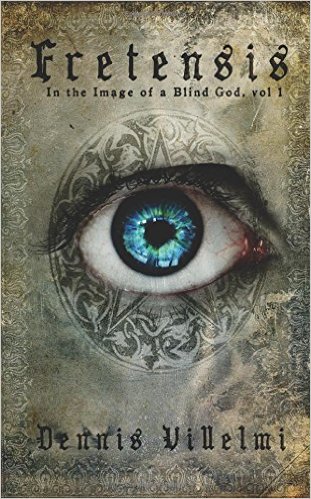
A review of “Fretensis: In the Image of a Blind God, volume 1,” by Dennis Villelmi

With “Fretensis: In the Image of a Blind God, volume 1” Dennis Villelmi expertly enmeshes the reader in a twisting, troubling narrative that is both mythic and tragically personal for the poem’s speaker. It’s a unique work, employing both arcane myth and personal impressions in equal measure. And it’s a hell of a ride.

“Fretensis” is a 56-page book of dark, modernist poetry divided into three parts and baroquely illustrated with medieval woodcuts and other images of the monstrous and the grotesque. The narrative it presents is like nothing else I’ve discovered reading poetry. Its protagonist is a rich intellect and a troubled soul. The mood of “Fretensis” throughout is striking; the overall work expertly conveys sadness, desperation and an enervating sense of struggle. (In the interest of full disclosure here, Villelmi is a valued friend and a poet whose work I have long admired.)

“Fretensis” might be challenging for the average reader. It might take a seasoned academic to understand all of its references and allusions while also understanding their significance within the poem. Villelmi draws on what appears to be an encyclopedic knowledge of ancient history, myth and religion. (He studied philosophy at Old Dominion University, but his expertise is visibly far more expansive in all of his work.) The title of this story, “Fretensis,” is the name of the Tenth Roman Legion, employed at the start of the Fall of the Roman Empire. As with Villelmi’s other published poetry, this debut book is linked intricately to those myths and symbols from which he draws inspiration.

But this is a good thing. Villelmi’s dark and antiquated iconography makes his work unique and unusually rich. This is a poem that begs for rereading and further scrutiny. I myself gleaned so much more from my second reading.

If I could name one thing about Villelmi’s style that makes his work distinctive to me, it would be how he meaningfully interweaves his esoteric symbols and references with the narrator’s personal experience. That duplexity characterizes the entire book, and it makes “Fretensis” remind me of a personal favorite, W.H. Auden’s “September 1, 1939.” That famous poem and its “accurate scholarship” also uses classical references to frame the narrator’s personal experience in context. (In Auden’s case, he called upon Thucydides, Luther and others to frame his own reaction to the 1939 German invasion of Poland.)

Villelmi’s resulting juxtaposition, which is consistent throughout the book, makes for an excellent poetic device. Memphis, Egypt, is made interchangeable with Memphis, Tennessee. References to Jeudayn are used to provide context for the death of a prostitute. A small boy plays “Deity” in “a grey dirt patch behind [a] garage.”

Consider the context that he employs to describe ravens feeding upon a dog’s carcass:

“Driving, I find it ironic, even inappropriate, that as the roadside augur is a dog on which the forest ravens have come to feast on the meat pulled out from under the fur, courtesy of other scavengers, the convent isn’t named after St. Paul. Paul and ravens both know how to seize an opportunity. Rather, it’s named for Fiacre, an old Irish woman-hater of the woods. I once read there were other Fiacres predating Christ’s arrival on Irish soil; they were warlords, predators by serendipity, much like those ravens chowing down on the mutt.”

And Villelmi’s mastery of the language is truly enviable. I found myself most immersed in “Fretensis’” prose-poetry sections. I’m not sure why, but here is where I best felt that I could identify with the narrator. These seemed the most personal to me. They’re so beautifully illustrated by the narrator’s sad, resigned voice that they have the feel of a genuine vignette spoken by a real person.

Consider the opening of “Part II: The Whore’s Afternoon.”

“On my ongoing canvas, there’s only been caricatures and carcasses, with a highway torture dividing the two. Somewhere, I took a detour of forgeries and virgins, and lost the rest of the America I was meant to see …

“Every time I try to measure the time I get a case of dry mouth. That’s how I met Ettey, Ettey Roth. She, too, had a memoir, not unlike mine, and it was over slugs in Seire’s Tavern time and again that we found the mutual souring of our lives to have been rooted in the hems of our birthplaces.”

All in all, “Fretensis” depicts a universe that is both twisting and twisted – a byzantine existence where an eloquent narrator’s darkness is informed by far greater forces that are divine, demonic or both. It’s an accomplished book of poetry that deserves not only to be read, but reread and reconsidered … assuming that you are willing to take that winding, redoubtable journey more than once.

Bravo.
51HuLmHrseL._SX309_BO1,204,203,200_

Can I scare you this Halloween with 100 words or less?

So you’re busy this Halloween with work or family — maybe you’ll spend the holiday taking the little ones trick-or-treating or to a party?  And maybe you have little time for any genuinely creepy Samhain scares for yourself?

Don’t miss out.  I’m linking here to three “flash fiction” horror stories that I wrote last year; each one is 100 words or less.  They’re packed with maximum malice and fast frights for the busy horror aficionado, so you can get your spook on despite a busy day.

Two were published last October in Microfiction Monday Magazine; a third was self-published right here at the blog on Halloween.

Enjoy!

Click here: My flash fiction and microfiction

Run_-_zombies_are_on_their_way

Photo credit: “Run – zombies are on their way” by Frédéric DUPONT from Yerres, France – Run ! zombies are on their way…. Licensed under CC BY 2.0 via Wikimedia Commons.

Bela Lugosi as “Dracula” (1931)

movies-bela-lugosi-dracula

Happy Halloween!!

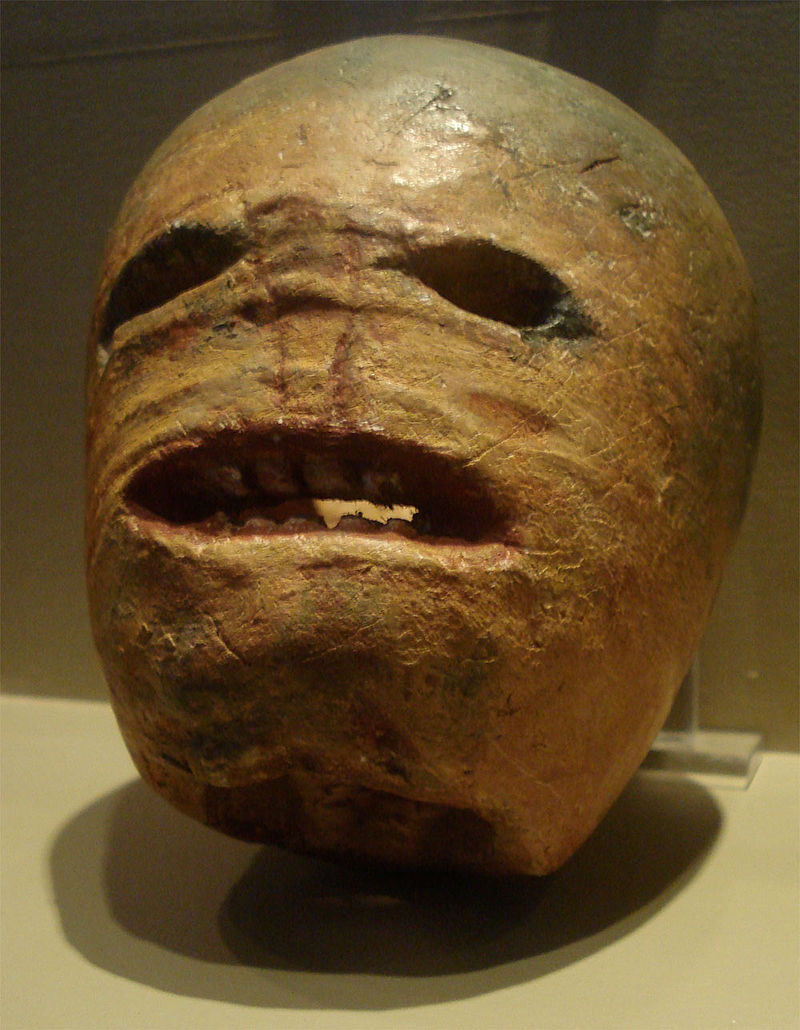
That second-to-last photo that you see is a vintage traditional Irish jack-o-lantern fashioned from a turnip.  Because my ancestors were weird and sad.

800px-Jack-o'-Lantern_2003-10-31

Photo credit: By Toby Ord (Own work) [CC BY-SA 2.5 (http://creativecommons.org/licenses/by-sa/2.5)%5D, via Wikimedia Commons.


Rack_of_pumpkins,_Keene_NH

Photo credit: By John Phelan (Own work) [CC BY-SA 3.0 (http://creativecommons.org/licenses/by-sa/3.0)%5D, via Wikimedia Commons.


800px-Traditional_Irish_halloween_Jack-o'-lantern

Photo credit: Rannpháirtí anaithnid at en.wikipedia [CC BY-SA 3.0 (http://creativecommons.org/licenses/by-sa/3.0) or GFDL (http://www.gnu.org/copyleft/fdl.html)%5D, from Wikimedia Commons.


Kinder_feiern_Halloween_-_2004

Photo credit:  By Ingo Rickmann (Own work) [GFDL (http://www.gnu.org/copyleft/fdl.html), CC-BY-SA-3.0 (http://creativecommons.org/licenses/by-sa/3.0/) or CC BY-SA 2.5-2.0-1.0 (http://creativecommons.org/licenses/by-sa/2.5-2.0-1.0)%5D, via Wikimedia Commons.

“Don’t Touch My Soul,” by Tejal Jhaveri Moen

I am quite happy to have a guest poet here at the blog — my friend Tejal Jhaveri Moen.

Enjoy “Don’t Touch My Soul.”

Don’t Touch My Soul
By Tejal Jhaveri Moen

The fairy dust settles
On my lashes,
Lightly, magically
Making me see
An optical illusion,
A reflection of love
Of which I seek.

The enchanting rose,
So maliciously sweet,
Touched my soul,
A most beautiful scar
Given by a single kiss.

A drop of blood
After the embrace of a
Most handsome thorn
Is cherished yet grieved.
The sadness and beauty of life —
Which am I to believe?

(c)  Tejal Jhaveri Moen 2015

800px-Small_Red_Rose

Publication Notice: Dead Snakes features “Not of Byzantium”

Dead Snakes has featured another one of my recent poems; click the link to read “Not of Byzantium.”

As always, thanks to Editor Stephen Jarrell Williams for allowing me to share my voice with the readers of Dead Snakes!

http://deadsnakes.blogspot.com/2015/10/eric-robert-nolan-poem_30.html

Field_Hamois_Belgium_Luc_Viatour

Photo credit: “Field Hamois Belgium Luc Viatour” by I, Luc Viatour. Licensed under CC BY-SA 3.0 via Wikimedia Commons.

“Cultivators of the earth are the most valuable citizens.”

“Cultivators of the earth are the most valuable citizens.  They are the most vigorous, the most independant, the most virtuous, and they are tied to their country and wedded to it’s liberty and interests by the most lasting bands.”

— Thomas Jefferson, in a letter to John Jay, 1785

uewb_06_img0372

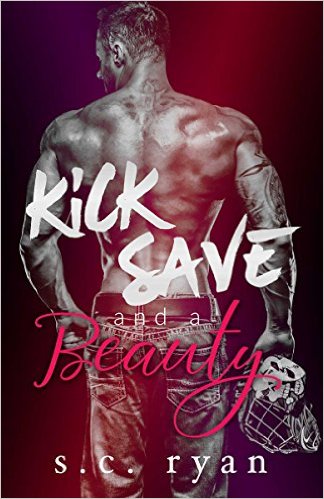
Longwood High School alumna Sue Anderson publishes “Kick Save and a Beauty!”

Hey Longwood High School folks!  Our alumna Sue Anderson has published a novella!  Its title is “Kick Save and a Beauty,” and its Kindle price over at Amazon is just 99 cents!  (Sue’s nom de plume here is S. C. Ryan.)

Give it a look!  And please pass the link along to anyone else who might be interested, to help support an alum and a new independent author!  🙂

http://www.amazon.com/Kick-Save-Beauty-Cougar-Chronicles-ebook/dp/B017AI7C8W/ref=sr_1_2?ie=UTF8&qid=1446170597&sr=8-2&keywords=s.c.+ryan

51APU4oCy-L._SX322_BO1,204,203,200_

Throwback Thursday: the Halloween “treats” you never wanted.

Let’s begin with a little contrast — any kid knows the gold standard for Halloween candy — chocolate bars.  The households that gave away Snickers, Nestle Crunch, Three Musketeers and Butterfingers were the most revered.

If you were a little bastard, as I was, you exploited such generosity.  I learned early on to carry an extra mask or even a full costume in my trick-or-treat bag, so that I could visit any particular house on Halloween twice.  I got called on it once, by a patient woman in my neighborhood who was giving away Three Musketeers; she asked me to take off my reserve mask and suggested that we had spoken only minutes before.  My lust for free candy was so strong that I actually pretended to be my own twin brother.  At the age of eight, I was the grade-school moral equivalent of a Wall Street banker before the 2008 housing crash.  I think the only thing that redeemed my greedy soul every year was the fact that I absolutely did not throw eggs or toilet paper or shoot shaving cream at houses.  (We really didn’t resent any neighbors.)  I’d like to think that my temperance redeemed my avarice.

I knew all the ins and outs of trick-or-treating.  Halloween only arrived once a year.  I planned that event with all the resolve and forethought of Rommel, even before I knew who Rommel was.  Instead of a store-bought plastic bag, I carried a sturdy pillowcase every year, as it was less likely to stretch or break under the weight of my annual bounty.  (It’s all about the tensile strength, you see.)

My carefully selected partners and I would meticulously plan which streets to invade, when to leave, and how to defend ourselves against the older kids’ pranks.  (Our own shaving cream arsenals were only for self-defense purposes, but they were well stocked and always within reach.)  We were set upon one year by some older kids at the top of my street who were wielding slings made out of socks filled with flour.  When you were whipped with them, they left long, white powdery stripes down your costume.

I absolutely was not a tough kid.  But Halloween brought something out in me that day, and I retaliated like a goddam enraged Israeli during the Six Day War, or maybe one of the infected from “28 Days Later.”  Maybe it was the rush from eating sugar all day.  Maybe it was the spirit of Samhain.  Maybe it was some deep-seated primal nature evoked into actuality by the wearing of a mask for eight hours.  But I nearly took an older boy DOWN after he got my costume all flour-striped.  He laughed and actually congratulated me after our melee for being the only younger kid who fought back.  He said that made it more fun.

But I’m getting off topic — this is a blog post about sucky Halloween treats.  My friends are all adults now, and I am arguably one.  So this is an important public service announcement about what NOT to hand out to trick-or-treaters.

There are three things that you need to avoid to prevent severely disappointing a child.  Think of them as the Trio of Terrible Treats.

First, “Candy Corn.”  The very design of this candy boggles the mind in its stupidity.  Candy Corn?  What person, not under the influence of bath salts, has ever looked at corn and opined, “You know, this corn is delicious, but would taste even better if it were made of sugary cream?”  This bizarre foodstuff manages to be both … sickly sweet and blandly creamy, with the added sensory discomfort of being hard and chewy.  Why does such a product even exist?  Why is it perennial?  Did somebody actually patent this abomination, or is it a generic and strangely cruel tradition — like some weird, timeless holdover from a medieval age the Catholic Church employed candy to punish pagans and heretics?

Second, those little boxes of “Good-n-Plenty.”  The boxes were tiny, the candy sucked; I complained loudly as a boy that they were “neither good nor plenty.”  They tasted like black licorice that was fermented in ostrich piss.  The marketing was strange too.  The boxes were … kinda fluorescent burgundy, and the candy itself looked like … pills.  Seriously, they looked like pills — check out the photos below.  As though homeowners were offering children PCP or “uppers,” because the annual Autumn de facto overdose of pure sugar wasn’t enough.  Every 80’s kid knew that “Good-n-Plenty” totally contradicted what we’d learned from the anti-drug PSA’s that were ubiquitous on television back in the day.

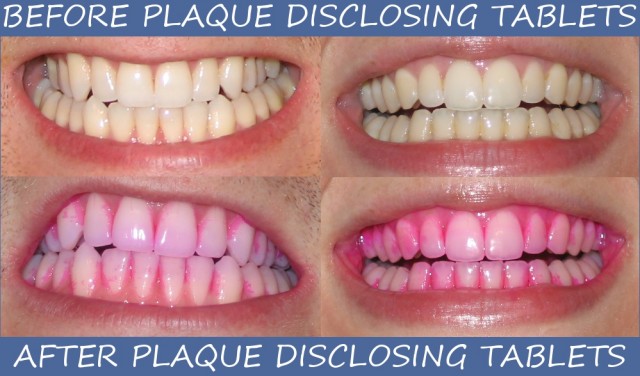
Third is a “treat” that wasn’t even candy at all.  No, it isn’t apples; people were paranoid enough by the 80’s so that everyone eschewed handing out anything that wasn’t wrapped.  I’m talking about toothbrushes and tooth capsules.  Handing out toothbrushes on Halloween is the equivalent of handing out copies of Richard Dawkins’ “The God Delusion” at the local church on Christmas morning.  The … tooth capsules were downright bizarre.  The Internet tonight informs me that they are called “plaque disclosing tablets.”  And, though they looked like they could be candy, their flavorless function was merely to stain your teeth in order to show you where you needed to brush more often.  I was always unfailingly polite to adults who handed these out (the result of a Catholic upbringing), and I always said “Thank you.”  What we all always wanted to ask, however, was, “If I cared about my teeth, why would I be carrying around a 20-pound bag of candy, mother@#$%er?!”

800px-Candy-Corn

Photo credit: “Candy-Corn” by Evan-Amos – Own work. Licensed under Public Domain via Commons.

Good-&-Plenty-Box-Small

Photo credit: “Good-&-Plenty-Box-Small” by Source. Licensed under Fair use via Wikipedia.

800px-Good_&_Plenty_licorice_candy

Photo credit: “Good & Plenty licorice candy” by Glane23 – Own work. Licensed under CC BY-SA 3.0 via Commons .

plaque_disclosing_tablets_on_teeth_before_after-640x376

THAT’S SO RAVEN.

Here is the poem that we celebrate every year as October 31st approaches, even though it actually takes place in December — “Ah, distinctly I remember, it was in the bleak December.”

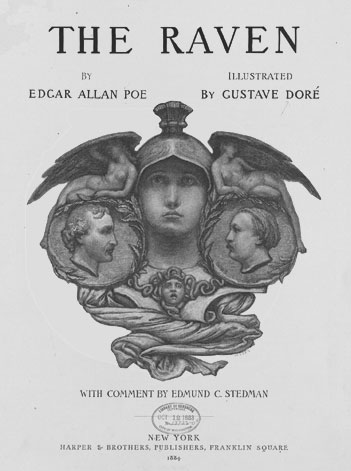
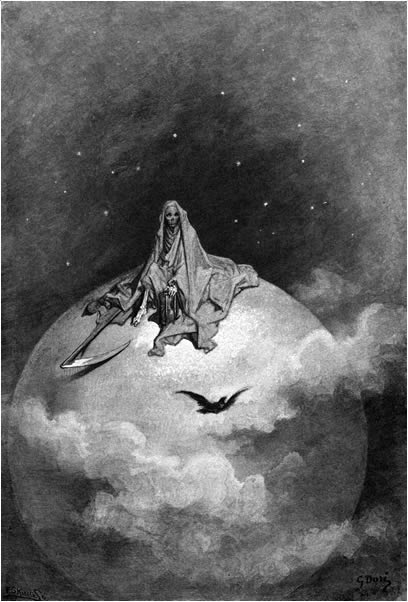
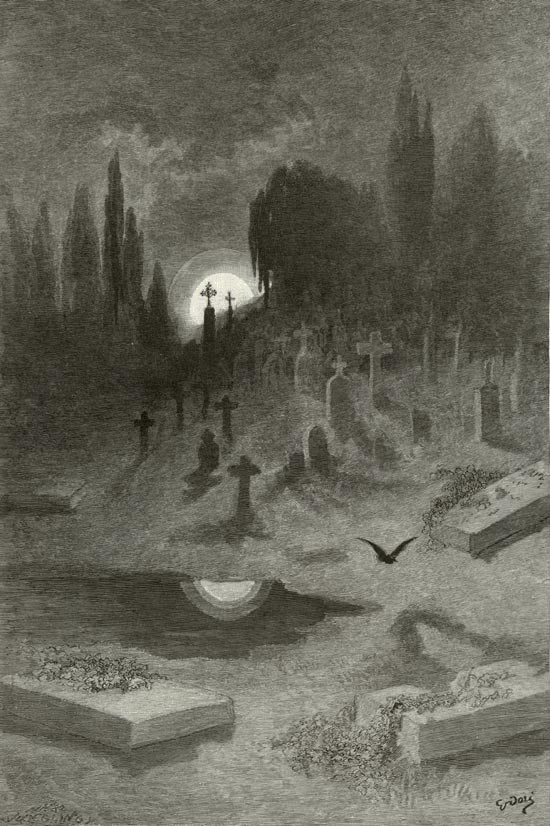
Enjoy “The Raven,” by Edgar Allan Poe.  And, if you get the chance, do peruse Gustave Dore’s amazing 1883 steel-engraving illustrations — they’re all over the Internet, and they are in the public domain.  They’re superbly haunting, and they’re beautiful.  Dore died a year later, never seeing the publication of his work with Poe’s poem by Harper & Brothers’ 1884 edition.

In fact, you can even read “The Raven” with all 25 of Dore’s illustrations, by downloading it for free in e-book format right here:

http://www.amazon.com/Raven-Illustrated-Five-Classics-Book-ebook/dp/B00FAVTEMY/?tag=braipick-20

Thanks to brainpickings.org for that wicked cool tip.

*****


“The Raven,” by Edgar Allan Poe

Once upon a midnight dreary, while I pondered, weak and weary,
Over many a quaint and curious volume of forgotten lore—
    While I nodded, nearly napping, suddenly there came a tapping,
As of some one gently rapping, rapping at my chamber door.
“’Tis some visitor,” I muttered, “tapping at my chamber door—
            Only this and nothing more.”


    Ah, distinctly I remember it was in the bleak December;
And each separate dying ember wrought its ghost upon the floor.
    Eagerly I wished the morrow;—vainly I had sought to borrow
    From my books surcease of sorrow—sorrow for the lost Lenore—
For the rare and radiant maiden whom the angels name Lenore—
            Nameless here for evermore.


    And the silken, sad, uncertain rustling of each purple curtain
Thrilled me—filled me with fantastic terrors never felt before;
    So that now, to still the beating of my heart, I stood repeating
    “’Tis some visitor entreating entrance at my chamber door—
Some late visitor entreating entrance at my chamber door;—
            This it is and nothing more.”


    Presently my soul grew stronger; hesitating then no longer,
“Sir,” said I, “or Madam, truly your forgiveness I implore;
    But the fact is I was napping, and so gently you came rapping,
    And so faintly you came tapping, tapping at my chamber door,
That I scarce was sure I heard you”—here I opened wide the door;—
            Darkness there and nothing more.


    Deep into that darkness peering, long I stood there wondering, fearing,
Doubting, dreaming dreams no mortal ever dared to dream before;
    But the silence was unbroken, and the stillness gave no token,
    And the only word there spoken was the whispered word, “Lenore?”
This I whispered, and an echo murmured back the word, “Lenore!”—
            Merely this and nothing more.


    Back into the chamber turning, all my soul within me burning,
Soon again I heard a tapping somewhat louder than before.
    “Surely,” said I, “surely that is something at my window lattice;
      Let me see, then, what thereat is, and this mystery explore—
Let my heart be still a moment and this mystery explore;—
            ’Tis the wind and nothing more!”


    Open here I flung the shutter, when, with many a flirt and flutter,
In there stepped a stately Raven of the saintly days of yore;
    Not the least obeisance made he; not a minute stopped or stayed he;
    But, with mien of lord or lady, perched above my chamber door—
Perched upon a bust of Pallas just above my chamber door—
            Perched, and sat, and nothing more.


Then this ebony bird beguiling my sad fancy into smiling,
By the grave and stern decorum of the countenance it wore,
“Though thy crest be shorn and shaven, thou,” I said, “art sure no craven,
Ghastly grim and ancient Raven wandering from the Nightly shore—
Tell me what thy lordly name is on the Night’s Plutonian shore!”
            Quoth the Raven “Nevermore.”


    Much I marvelled this ungainly fowl to hear discourse so plainly,
Though its answer little meaning—little relevancy bore;
    For we cannot help agreeing that no living human being
    Ever yet was blessed with seeing bird above his chamber door—
Bird or beast upon the sculptured bust above his chamber door,
            With such name as “Nevermore.”


    But the Raven, sitting lonely on the placid bust, spoke only
That one word, as if his soul in that one word he did outpour.
    Nothing farther then he uttered—not a feather then he fluttered—
    Till I scarcely more than muttered “Other friends have flown before—
On the morrow he will leave me, as my Hopes have flown before.”
            Then the bird said “Nevermore.”


    Startled at the stillness broken by reply so aptly spoken,
“Doubtless,” said I, “what it utters is its only stock and store
    Caught from some unhappy master whom unmerciful Disaster
    Followed fast and followed faster till his songs one burden bore—
Till the dirges of his Hope that melancholy burden bore
            Of ‘Never—nevermore’.”


    But the Raven still beguiling all my fancy into smiling,
Straight I wheeled a cushioned seat in front of bird, and bust and door;
    Then, upon the velvet sinking, I betook myself to linking
    Fancy unto fancy, thinking what this ominous bird of yore—
What this grim, ungainly, ghastly, gaunt, and ominous bird of yore
            Meant in croaking “Nevermore.”


    This I sat engaged in guessing, but no syllable expressing
To the fowl whose fiery eyes now burned into my bosom’s core;
    This and more I sat divining, with my head at ease reclining
    On the cushion’s velvet lining that the lamp-light gloated o’er,
But whose velvet-violet lining with the lamp-light gloating o’er,
            She shall press, ah, nevermore!


    Then, methought, the air grew denser, perfumed from an unseen censer
Swung by Seraphim whose foot-falls tinkled on the tufted floor.
    “Wretch,” I cried, “thy God hath lent thee—by these angels he hath sent thee
    Respite—respite and nepenthe from thy memories of Lenore;
Quaff, oh quaff this kind nepenthe and forget this lost Lenore!”
            Quoth the Raven “Nevermore.”


    “Prophet!” said I, “thing of evil!—prophet still, if bird or devil!—
Whether Tempter sent, or whether tempest tossed thee here ashore,
    Desolate yet all undaunted, on this desert land enchanted—
    On this home by Horror haunted—tell me truly, I implore—
Is there—is there balm in Gilead?—tell me—tell me, I implore!”
            Quoth the Raven “Nevermore.”


    “Prophet!” said I, “thing of evil!—prophet still, if bird or devil!
By that Heaven that bends above us—by that God we both adore—
    Tell this soul with sorrow laden if, within the distant Aidenn,
    It shall clasp a sainted maiden whom the angels name Lenore—
Clasp a rare and radiant maiden whom the angels name Lenore.”
            Quoth the Raven “Nevermore.”


    “Be that word our sign of parting, bird or fiend!” I shrieked, upstarting—
“Get thee back into the tempest and the Night’s Plutonian shore!
    Leave no black plume as a token of that lie thy soul hath spoken!
    Leave my loneliness unbroken!—quit the bust above my door!
Take thy beak from out my heart, and take thy form from off my door!”
            Quoth the Raven “Nevermore.”


    And the Raven, never flitting, still is sitting, still is sitting
On the pallid bust of Pallas just above my chamber door;
    And his eyes have all the seeming of a demon’s that is dreaming,
    And the lamp-light o’er him streaming throws his shadow on the floor;
And my soul from out that shadow that lies floating on the floor
            Shall be lifted—nevermore!


 cover


raven


raven0005


raven0010


raven0006


Dore_The_Raven_1884-24


raven16_nightlyshore