All posts by Eric Robert Nolan

Eric Robert Nolan graduated from Mary Washington College in 1994 with a Bachelor of Science in Psychology. He spent several years a news reporter and editorial writer for the Culpeper Star Exponent in Culpeper, Virginia. His work has also appeared on the front pages of numerous newspapers in Virginia, including The Free Lance – Star and The Daily Progress. Eric entered the field of philanthropy in 1996, as a grant writer for nonprofit healthcare organizations. Eric’s poetry has been featured by Dead Beats Literary Blog, Dagda Publishing, The International War Veterans’ Poetry Archive, and elsewhere. His poetry will also be published by Illumen Magazine in its Spring 2014 issue.

A quick review of Netflix’ premiere of “Between” (2015)

The first episode of Netflix’ new “Between” web series (2015) reminds me a hell of a lot of “Jericho” (2006).  It takes a frightening science fiction premise and then generally fails to execute anything terribly scary or thrilling.  “Jericho” told the story of a small town surviving a mysterious nuclear holocaust — it looked to be a serialized “The Day After” (1983), but ultimately became a chipper, too-safe family drama that almost seemed to channel “The Waltons”  (1971).

The premiere of “Between” introduces us to the small town of Pretty Lake, where a mysterious illness is killing anyone over the age of 22 … which is kind of convenient for the young-adult target audience that this show is going for.  The show sounded like an update of “The Andromeda Strain” film adaptation in 1971.  But after we see the town quarantined, it seems to borrow a page or two from the television treatment of Stephen King’s “Under The Dome” (2013).  (I really disliked that book, and have heard some pretty mixed things about the tv show.)

“Between” has a few things going for it, like well-scripted characters and capable young actors.  But it has problems with pacing and tension.  There’s a nice flourish here and there, including the shot you see below.  But for a tv show about a potentially world-ending plague, it fails to scare.  I’d give this first episode a 5 out of 10.

What’s the deal with naming the town “Pretty Lake,” anyway?  Is it intentionally generic for thematic reasons, or just lazy screenwriting?  Are neighboring towns “Big Mountain” and “Long River?”

netflix_between

“The Most Dangerous Game,” by Richard Connell

I am reblogging my post last year of the classic “The Most Dangerous Game.”

Because it is, in General Zaroff’s word, “SPLENDID!!”  And because my ol’ buddy Anna Martin told me she disliked it, and I’m passive-aggressive.

Careful about treading upon the stories venerated by New York Irish Catholic traditions, Anna!!  Don’t make me release the Saki and O’Henry hounds next!!

“The Most Dangerous Game,” by Richard Connell.

Godspeed to the people of Charleston, South Carolina …

… in light of the spree killing tonight at Emanuel A.M.E. Church.  I am only just reading reports now — the victim count is unclear; the gunman is still at large.

Charleston’s people are absolutely wonderful.  I went there a couple of times during my college days, and I do remember Calhoun Street, where the church is located.  I was amazed at how genteel and goodnatured the city’s residents were.

CNN: Charleston church shooting: 9 killed in what officials call a hate crime

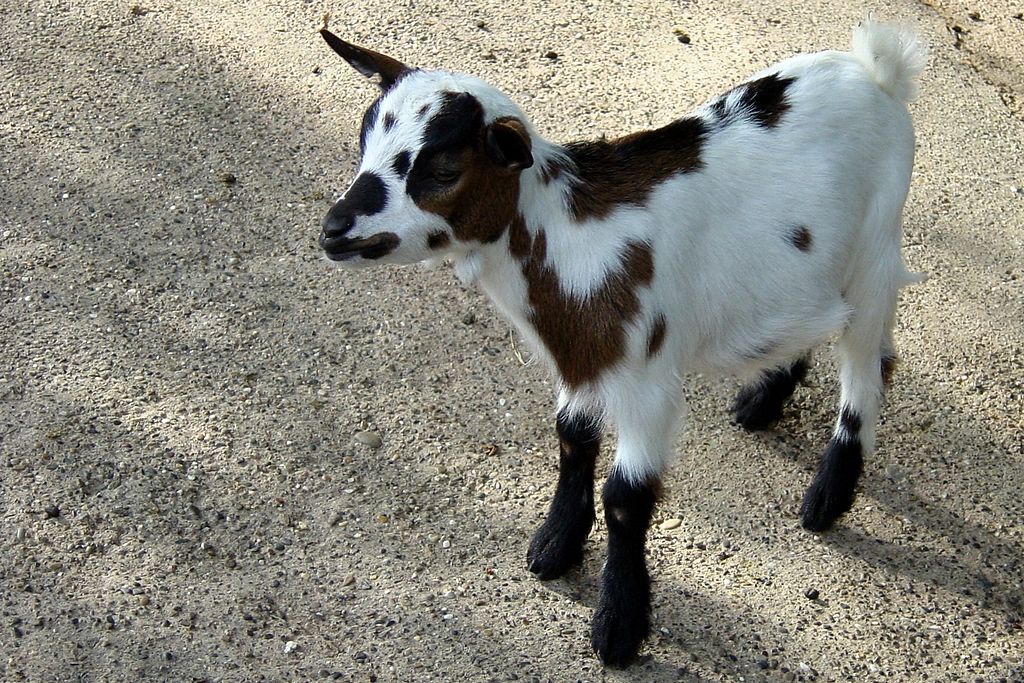
Don’t goat there.

So I received an e-mail yesterday from my Mom in New York — she said she and my sister were on their way to a “goat farm and shoppe.”

Uh … okay.

Precisely what should such a proprietor offer that would interest my family?  What does the “shoppe” sell?  Goat-themed products?  Like t-shirts and mugs?  The goats themselves?  Does the archaic spelling of “shoppe” suggest that these are medieval goats?

I mentioned this on Facebook, and a whole bunch of Virginia friends “liked” the status.  Apparently goat farming and shopping are things with which they can identify?

PLEASE do not suggest that my mother may have brought home a baby goat.

1024px-Chevreau

Photo credit:  “Chevreau”. Licensed under CC BY-SA 2.0 fr via Wikimedia Commons – https://commons.wikimedia.org/wiki/File:Chevreau.jpg#/media/File:Chevreau.jpg

My review of “Mad Max: Fury Road.”

Dear Lord, Charlize Theron is a fantastic actress.  It’s amazing what she can communicate with just her facial expressions and line delivery, even when her dialogue is sparing and simplistic.  She’s also a superb physical actress, has great scene presence and is stunningly beautiful.  Why not simply call this movie “Furiosa?”  It’s really that character’s story; the titular “Mad Max” says and does little that is plot-relevant.  He is a superfluous character who is here only to attract the fanbase for the original “Mad Max” movies.

Theron is one of two things that “Mad Max: Fury Road” has going for it.  The other is pure spectacle.  I don’t love this movie the way that everyone else seems to (I’d give it a 7 out of 10), but I really did enjoy the action, special effects, costume, prop and set design.  This is like a modern “Ben Hur” (1959) on acid — the characters, weapons, sets and vehicles look great.  This movie is like a really good heavy metal album cover made into a feature-length film.

My attention wandered, though.  The action is often difficult to follow, thanks to too much Michael Bay-type directing.  Tom Hardy is really just a one-note character as Max, despite efforts to render him in depth with cliche flashbacks of a lost family.  And I liked this guy a hell of a lot in “The Dark Knight Rises” (2012); I thought he made the masked Bane a great villain with physical acting that compensated well for an obscured face.

I submit that this is a somewhat brainless movie that barely qualifies as science fiction.  We have a sparse opening montage that tells us about world-ending wars for resources, and then the rest of the movie is really just an extended gladiator battle in the desert with baroquely costumed bad guys.  It’s like a monster truck rally.

It’s sometimes fun, but it doesn’t make a great film.  The good guys are too thinly drawn to engender viewer sympathy; the bad guys are too cartoonish to be scary.  You also need to turn your brain off, lest certain questions occur to you:

1)  Doesn’t gasoline degrade over time?  I don’t think it would be worth warring or bartering for after a year or so, unless there are oil rigs and complex refineries to seek and develop it.  We see evidence of neither.

2)  What do people eat, out here in the never-ending desert?  The disappearance of “green places” is a plot point; there is no arable land.

3)  How often does this dictator (“Big Joe” or something?) give his subjects water?  Once per day?  I thought dehydration killed or immobilized people fairly quickly.

4)  Where the heck are we?  I hear a lot of United Kingdom accents.

5)  I’m pretty sure that blood transfusions don’t work like that.  And even if they did, you’d see a hell of a lot of opportunistic infections in such unsterile conditions.

6)  Why does one young woman immediately fall in love with a sleeping barbarian whose teeth are spray-painted silver?

Whatever.  I’m not saying that this is a bad movie; I’m just suggesting that it’s a little overrated given its current accolades by fans.  It’s fun enough, if you’re in the mood for a “Mad Max” movie.

Mad-Max-Fury-Road-lovely-day

I identify as French-Lithuanian.

That is all.

“Run and find out!”

Rikki-Tikki-Tavi!!  He’s the mascot for empiricism, people.  (I wouldn’t be surprised if Michael Shermer had a pet mongoose.)  And then the little fella just kicks the crap out of poisonous snakes.

“It is the hardest thing in the world to frighten a mongoose, because he is eaten up from nose to tail with curiosity. The motto of all the mongoose family is “Run and find out,” and Rikki-Tikki was a true mongoose.”

— Rudyard Kipling, “Rikki-Tikki-Tavi”

“Rikki-Tikki-Tavi”
At the hole where he went in
Red-Eye called to Wrinkle-Skin.
Hear what little Red-Eye saith:
“Nag, come up and dance with death!”
Eye to eye and head to head,
(Keep the measure, Nag.)
This shall end when one is dead;
(At thy pleasure, Nag.)
Turn for turn and twist for twist–
(Run and hide thee, Nag.)
Hah! The hooded Death has missed!
(Woe betide thee, Nag!)”

— from Rudyard Kipling’s “Rikki-Tikki-Tavi”

Rikki-Tikki-Tavi_cover

Today America saw its first presidential candidate with his own hair as his running mate.

Whatever. It’s probably smarter than Sarah Palin.

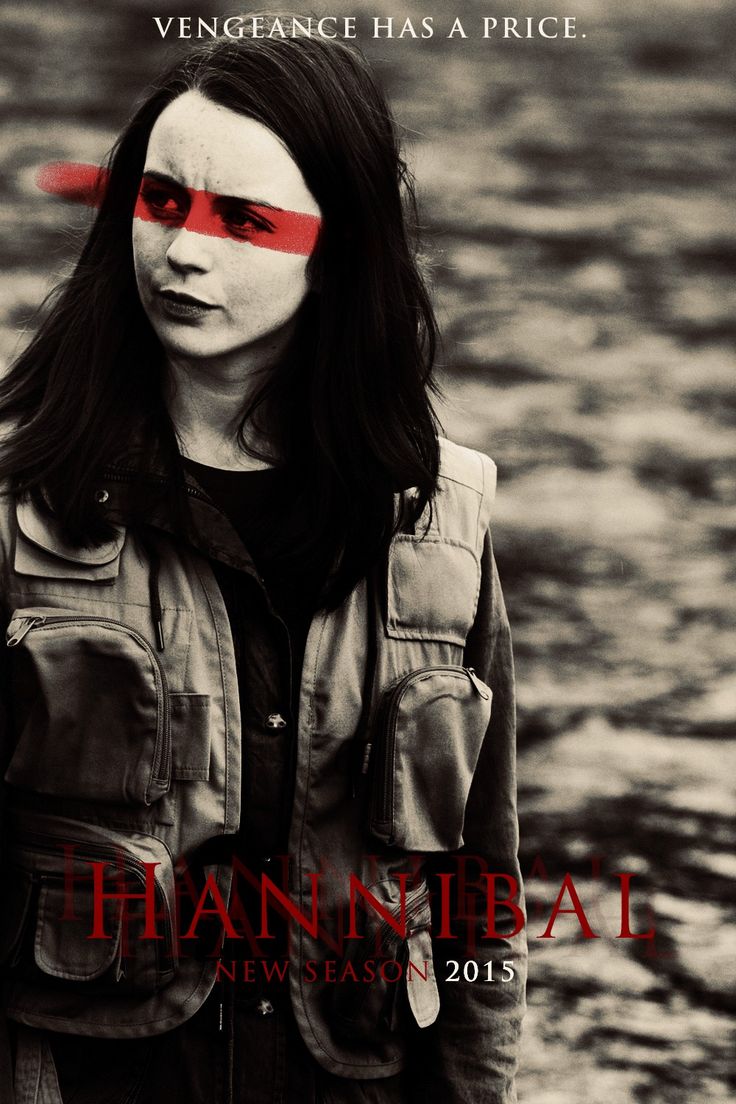
Did NBC’s “Hannibal” reference Stephen King’s “The Dark Tower” series?!

[WARNING — THIS POST CONTAINS MAJOR SPOILERS FOR SEASONS 2 AND 3 OF “HANNIBAL,” AS WELL AS STEPHEN KING’S “THE DARK TOWER” SERIES.  READ AT YOUR OWN RISK.]

*

*

*

*

*

*

*

This could be overeager nerd eisigesis, but something jumped out at me immediately in the second episode of this summer’s “Hannibal.”

When Will Graham greets Abigail Hobbes at the beginning, he wonders about “some other world.”

The doomed young Abigail responds:  “I’m having a hard enough time dealing with this world.  I hope some of the other worlds are easier.”

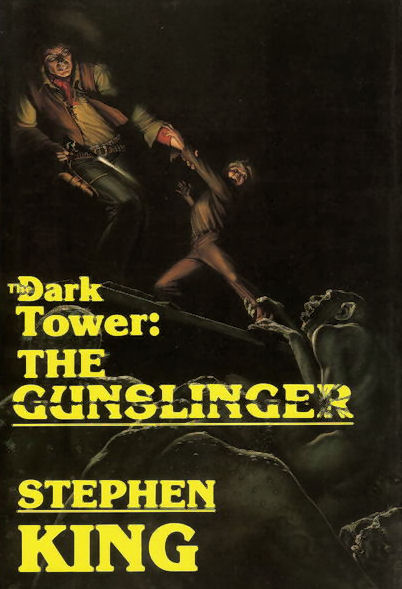
That’s “worlds,” plural — not “another world” or “the next world.”  It sounds a hell of a lot like the doomed Jake Chambers’ famous line towards the end of “The Gunslinger,” before he falls to his fate:  “Go then.  There are other worlds than these.”

Graham goes on the discuss string theory: “Everything that can happen, happens.”  This dovetails perfectly with the idea of the nearly infinite parallel universes that comprise different levels of “The Tower.”

Then other story parallels occurred to me:

1)  Both Abigail and Jake are children of surrogate fathers who are on a crusade (Graham’s pursuit of Hannibal Lecter, the Gunslinger’s quest for The Tower).

2)  Both are specialized, cold-blooded killers by training (Abigail’s bizarre tutelage by her serial killer biological father, Jake’s training by the Gunslinger).

3)  Both are willingly sacrificed by their surrogate fathers.  (NBC’s show makes it clear that Hannibal is also a father figure to Abigail.)

4)  Both characters were sacrificed by the show’s/book’s title character.

5)  The memories of both haunt the stories’ protagonists as a recurring motif.  Both appear to drive the heroes insane.

6)  Both characters are ostensibly dead at some point, and then are quasi-resurrected by a surprise plot device.  (Abigail has been secreted away by Hannibal; Jake is returned from a parallel universe to which he was consigned.)

7)  The loss of both characters are tied to themes of forgiveness.  (Jake forgives the Gunslinger for letting him fall; Graham explicitly forgives Hannibal for Abigail’s loss as part of the show’s overarching theme.)

It would be fun and perfectly viable to imagine that the show’s events transpire on a “level” of The Tower.  The differing continuities of the original books and feature films could even comprise other levels.  King makes it clear that “twinners” are character analogs living in different universes.

But I am probably just imagining things.  I also thought that Hannibal’s reference to his “person suit” in this season’s first episode was a reference to “Donnie Darko” (2001): “Why do you wear that silly man suit?”  And, in retrospect, that seems like a coincidence.

a80a802b2baea0ead4b2b8ce1e020d82          The_Gunslinger

“It is a strange world, a sad world, a world full of miseries, and woes, and troubles.”

“It is a strange world, a sad world, a world full of miseries, and woes, and troubles. And yet when King Laugh come, he make them all dance to the tune he play. Bleeding hearts, and dry bones of the churchyard, and tears that burn as they fall, all dance together to the music that he make with that smileless mouth of him. Ah, we men and women are like ropes drawn tight with strain that pull us different ways. Then tears come, and like the rain on the ropes, they brace us up, until perhaps the strain become too great, and we break. But King Laugh he come like the sunshine, and he ease off the strain again, and we bear to go on with our labor, what it may be.”

— from Bram Stoker’s “Dracula,” 1897

Dracula1st