Category Archives: Uncategorized

20190321_140820b

“Vecchio con Clessidra,”Antonio Zifrondi, circa 1717

Oil.

2017-03_Brescia_Mattes_Pana_(144)

Throwback Thursday: “The Tripods” comic strip in “Boys’ Life” magazine!

I had a subscription to Boys’ Life magazine for a couple of years when I was a Cub Scout in the early 1980’s.  My parents canceled it after a year or two, and I can’t blame them — I just wasn’t reading it.  Boys’ Life was the official magazine of the Boy Scouts of America, and it was pretty wholesome stuff … it just didn’t offer the excitement of my comic books or the occasional copy of Fangoria that I manged to get my hands on.

But there was one feature of Boys’ Life that I followed religiously — the serialized comic strip adaptation of John Christopher’s The Tripods book trilogy.  (Christopher published the first three of his books in the late 1960’s; he added a prequel novel in 1988, but that was long after the Boy Scouts and Boys’ Life was behind me.)

The Tripods was cool, dark dystopian stuff.  The story opened with the first book, The White Mountains, to find humanity settled into an agrarian, pre-industrial age in which their overlords were the titular “tripods” — massive three-legged vehicles piloted by unknown beings.  Humans were ritualistically “capped” with a brain-altering device when they reached age 14 — thereafter becoming docile and conformist and easier for the mysterious machines to subjugate.

The White Mountains followed a trio of 13-year-old boys who escaped the “capping” to seek out a human resistance movement; the second book, The City of Gold and Lead, shows two of these protagonists infiltrate the city of the tripods’ operators.  (Spoiler — they’re grotesque aliens.)  The third book, The Pool of Fire, presumably picks up from there, but my Boys’ Life subscription ran out before the magazine got to that.

I recently, however, used this Interwebs thingamajig to discover what looks like a real gem of a find — a 1984 BBC mini-series adaptation of the books.  I started the first episode and it looks quite good.  If I get around to watching the whole thing, I’ll review it here.


40da7d9da25e489860f6e1bc7bccf65a7112394a

3

4

5

2

“Spring,” Alfons Mucha, 1896

Oil on panel.

Alfons_Mucha_-_1896_-_Spring

“Yet we played last night as long ago.”

“Only in Sleep”

Only in sleep I see their faces,
Children I played with when I was a child,
Louise comes back with her brown hair braided,
Annie with ringlets warm and wild.

Only in sleep Time is forgotten–
What may have come to them, who can know?
Yet we played last night as long ago,
And the doll-house stood at the turn of the stair.

The years had not sharpened their smooth round faces,
I met their eyes and found them mild–
Do they, too, dream of me, I wonder,
And for them am I, too, a child?

― Sara Teasdale, The Collected Poems


Sara_Teasdale._Photograph_by_unknown,_1907_Missouri_History_Museum_Photograph_and_Print_Collection._Portraits_n38637

The renovated Mary Washington College Amphitheatre looks fabulous.

I’m not really clear about when the renovation was completed.  (Was it last summer?)  But it looks absolutely gorgeous.

Check out the pictures here at the Glave & Holmes Architecture website.


Cover to “Action Comics” #871, Alex Ross, 2009

DC Comics.

Action_Comics_871


Hey horror fans, check out this interview with Brialynn Massie!

Dennis Villelmi at The Bees Are Dead interviewed actress Brialynn Massie, who you may recognize from her roles in films like last year’s “Serena Waits” and “Lilith.”   It’s a terrific interview, and you can find it at the link below:

Interview with Brialynn Massie


Happy St. Patrick’s Day!

1916.

St._Patrick's_Day_card,_1916


“I have never found that sleep was a rest.”

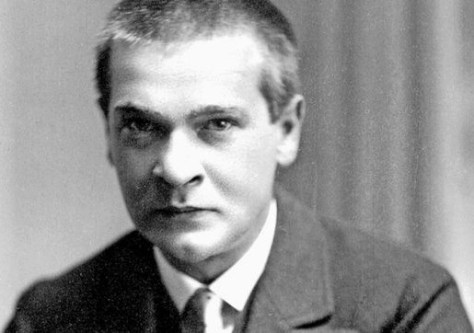
“Sleep occupies a third of our life. It is the consolation to the woes of our days or the woe of their pleasures; but I have never found that sleep was a rest. After a swoon of a few minutes a new life begins, freed from conditions of time and space, and doubtless like the life which awaits us after death. Who knows whether there does not exist a link between these two existences, and whether it is not possible for the soul now to bind them together?”

—  Gerard de Nerval, Aurélia


800px-Félix_Nadar_1820-1910_portraits_Gérard_de_Nerval