If that isn’t the Greek Pi, I don’t know what is.
Okay, maybe a howling dire wolf seen in profile. With … an RPG launcher strapped to his back? That’s f@#$ing awesome.
Or maybe it’s a continent … the magical lost empire, “Apophenia.”


If that isn’t the Greek Pi, I don’t know what is.
Okay, maybe a howling dire wolf seen in profile. With … an RPG launcher strapped to his back? That’s f@#$ing awesome.
Or maybe it’s a continent … the magical lost empire, “Apophenia.”
Believe it or not, I actually can remember Blondie’s “Heart of Glass” being played in the summer of 1979. (That would have been the summer before I entered second grade.) The song came out in September 1978; but I can pinpoint the year as 1979, because this is a vivid summer memory. I heard “Heart of Glass” being played loudly on a hot day by a house halfway down the street I grew up on, and I was playing with the first Star Wars figures I’d ever gotten. (I’d adopted R2-D2 and C-3PO the prior Christmas; they lived among shuffled papers in the top drawer of the bright blue desk that Santa had also brought me.)
Blondie was a big deal. “Call Me” and “The Tide is High” were two other hits that I heard a hell of a lot as a little boy in 1980. You could guarantee those would come up at least once on the way to school on whatever radio station the bus driver played. (The little kids sat toward the front; my best friend Shawn and I had a habit of sitting in the coveted “front seat” behind the driver, who was an adult we really liked.)
If you watch the truly Kafkaesque video for “The Tide is High,” you’ll actually see an utterly bizarre homage to Star Wars, in which Darth Vader morphs into … an upright robotic rat, apparently. I am not making this up. It’s in the second video I posted.
What’s befuddling is that I don’t think I have heard Blondie played since … the very early 1980’s, I guess. Other superstars from the era occasionally get rediscovered. In 1993 and 1994, for example, the kids at Mary Washington College were hit by a horrifying revival of the truly abhorrent ABBA, not to mention a couple of “songs” from (God help us), The Partridge Family. (If you ask me, a meth epidemic would have been less troubling.)
Why not Blondie? I don’t get that.
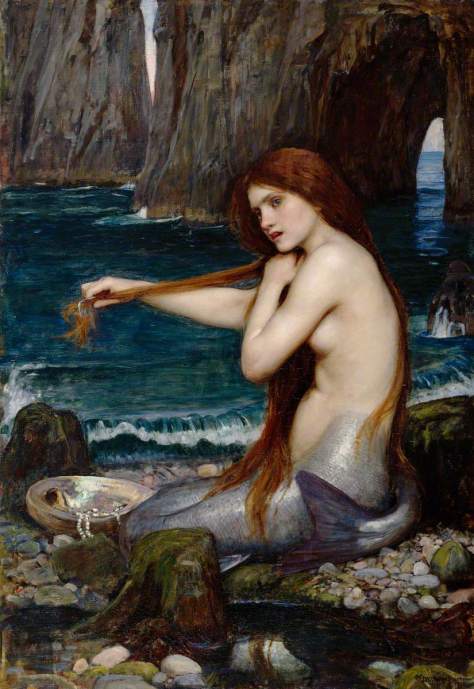
Oil on canvas.

Oil on canvas.
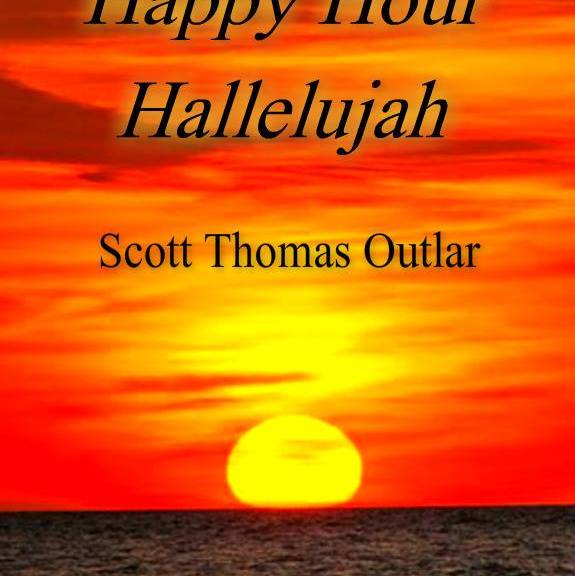
Check out “Happy Hour Hallelujah,” a book of poetry by my friend Scott Thomas Outlar!
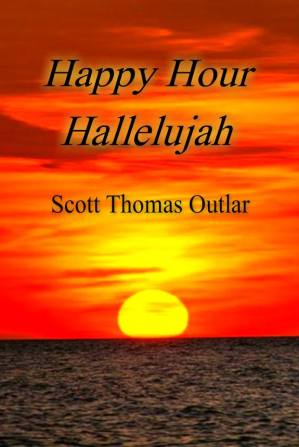
Ultimately, Happy Hour Hallelujah is a proclamation and celebration of life even while staring the suffering of existence squarely in the eyes. It is an affirmation of the Great Yes that art defiantly screams in the face of entropy’s existential core. It is a truth that seeks to puncture through deception. It is a fire that yearns to rise from out the ashes. It is the next step forward when all momentum seems to be at a standstill. It is a light piercing through the darkness. It is nothing more and nothing less than the expression of one man’s vision toward the future….
Now Available At: www.ctupublishinggroup.com/scott-thomas-outlar-.html

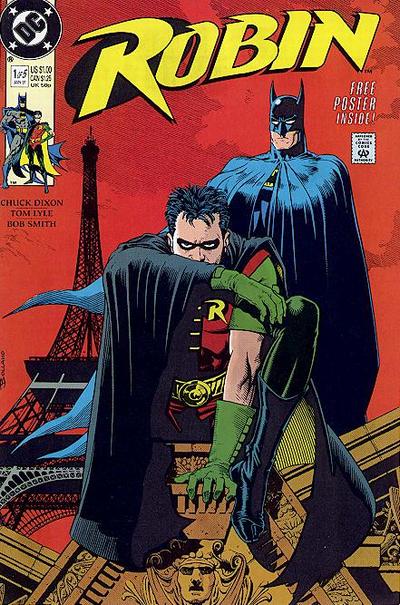
DC Comics, limited series, 1 of 5.

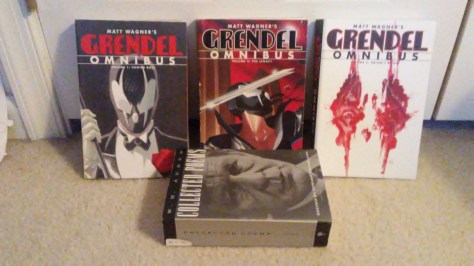
I am now the proud owner of … a goodly portion of all the “Grendel” comics Matt Wagner ever wrote. What you see in the top row are “Grendel Omnibus” Volumes 1, 2 and 3. (I believe I actually shared my review of Volume 1 on this site a while ago.) These would comprise a nearly inclusive history of Hunter Rose, Christine Spar, Brian Li Sung, Orion Assante and Eppy Thatcher. All that remains for me to collect is the fourth Omnibus trade-paperback, chronicling the possibly immortal Grendel Prime and his imperiled charge, Jupiter Assante.
The Omnibus editions do not include crossovers with heroes such as Batman and The Shadow, as those characters are obviously owned by other companies. Nor do they include the diverse dystopian future tales depicted by various artists in the 1990’s “Grendel Tales.” But I am in heaven with what you see below — or maybe hell, considering these books’ central motif.
To top it all off, that hefty tome beneath the comics is W. H. Auden’s “Collected Poems,” edited by Edward Mendelson, with the poet’s work between 1927 and his death in 1973. It’s 927 pages. It weighs 30 pounds, probably. And it is indexed by both the poem’s titles and their first lines. That is what you call a lifetime investment.
The comics will be excellent summer reading; as will Auden. But I’ll focus more on the Briton when fall arrives. Like his countryman, Doyle, he might be best enjoyed outdoors on a gray and increasingly brisk Autumn day.
I need to buy books more often.


 Eric Robert Nolan, Author