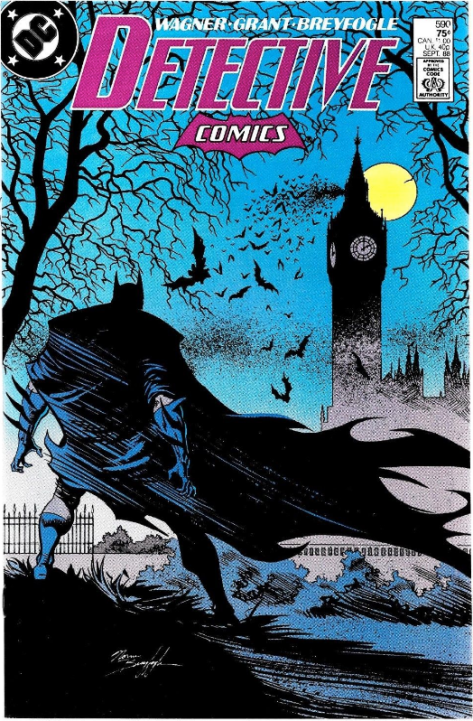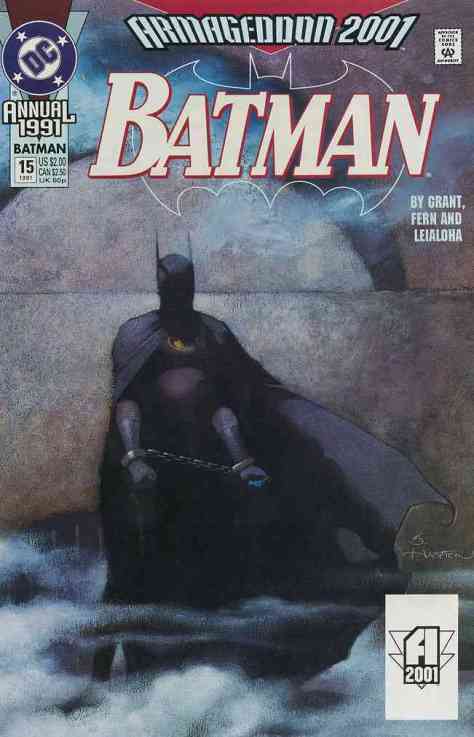
Cover to “House of Mystery” #265, Mike Kaluta, 1979

DC Comics.

House_of_Mystery_v.1_265

Am I the only guy who thinks that daffodils look like the Death Star?

I can’t be the only one.

Anyway, one of my alums just told me that photographing flowers and plants like these is called “macro-photography.”  (And, as you can see, I’m sometimes terrible at it.)  Why isn’t it called “micro-photography?”  Wouldn’t that make more sense?

It reminds me of the “miniguns” mounted within attack helicopters.  Those things are ginormous.


20180420_174958

20180421_131913

20180421_131814

20180421_131840

20180429_182541

20180429_182619

20180429_182656

20180429_182859

“Mount Vernon, The Seat of the Late General Washington,” S. Seymour, 1812

Line engraving and etching, by the American artist S. Seymour, after the English artist William Russell Birch.  Yale University Art Gallery, Mabel Brady Garvan Collection.


Mount_Vernon_The_Seat_of_the_Late_Genl._Washington_by_S._Seymour

Care to peruse my Youtube channel?

Just a reminder — if you happen to enjoy any of my poetry readings here at the blog, then you can find more over at my Youtube channel.  There is a playlist for me reading the work of other poets, and another short playlist for me reading my own work.

I hope that all you guys have had a wonderful weekend!


20180220_122250 (5)

More old-time radio — 47 hours of science fiction classics

What a find!  A poet I admire passed this along to me, and it was too good not to share — 47 hours of science fiction radio classics that Open Culture recently added to its Spotify page.  You’ve got to be a Spotify member to hear these, but signing up is free and easy.  (Spotify also makes it easy to reset your password if you’ve forgotten it, as I did.)

Right at the top of the list is Orson Welles’ famous/infamous 1938 broadcast of his radio adaptation of H.G. Wells’ “War of the Worlds.”  (Yes, this the show that made people believe that martians were actually invading.  How’s that for “fake news?”)

Welles’ broadcast was actually the first classic radio I’d ever heard, when I was a kid in the 1980’s.  I’d gotten it on a pair of cassette tapes for either Christmas or my birthday, along with an adaptation of Edgar Allan Poe’s “The Tell-Tale Heart.”  If those strike you as weird presents, I was a weird kid.

I loved those tapes — the Poe recording was so good it genuinely scared me.  (The narrator really nailed it.)  If I happen across that online, I’ll be sure to post it here.


DP-Orson-Welles-Broadcast-Hysteria-War-of-the-Worlds-Detroit-Institute-of-Arts

Illustration of Alexandria, Virginia, from the American Anti-Slavery Society, 1836

Detail of a slave ship at the Alexandria, Virginia (then Washington, D.C.) waterfront.  From broadside published by the American Anti-Slavery Society.  Original caption of the image: “View of a section of Alexandria, with a slave ship receiving her cargo of slaves.”


Alexandria_Virginia_slave_ship

Lee Hardcastle’s “Thingu” (a parody of John Carpenter’s “The Thing”)

I’ve been meaning to run this on the blog since forever — artist Lee Hardcastle’s brief, brilliant 2012 send-up of John Carpenter’s 1982 masterpiece, “The Thing.”  (It is also a claymation parody of the European children’s program, “Pingu.”  Please note, however, that the video below is NOT for children.)

Even if the animation method is crude, this is damned creative stuff — in addition to being blackly funny, according to your tastes in humor.  This went viral when it was released, and I believe it fully deserves its online fame.

Is it weird if I’d never heard of “Pingu” before this video?  I have friends who certainly recall it.  Maybe it was just a European thing.  Or maybe it’s an example of “The Mandela Effect.”  I am very much an 80’s kid, and I swear I cannot remember that “Oregon Trail” computer game either.


Old-time radio horror shows (because I need another nerdy hobby)

So I’ve discovered a fun and easily accessible treatment for insomnia, and it’s also an interesting diversion for a horror fan looking for a change of pace.  There are no small number of horror and suspense radio shows from the 1930’s, 40’s and 50’s on Youtube.  (They actually do have a significant online fandom.)

The programs are typically 30 to 40 minutes long, and the audio-only stories make you feel like you’re reading a book before bedtime (which for many people is a perfect treatment for sleeplessness).

The horror is a bit mild compared with modern films or TV shows, of course.  But it’s still fun hearing what people found spooky before the days of television.  It’s even better if the recording contains the original radio ads, which are even weirder than you might expect.

I started one last night that was narrated by the legendary Peter Lorre, and I know that Vincent Price starred in a slew of them.


“Zimmerbild” (a chamber painting), Leopold Zielcke, circa 1825

Berlin, Germany.  Early Victorian period.

30594798_176761206305334_1387612824196349952_n

Ben Crystal reads William Shakespeare’s Sonnet 29

Now this is Sonnet 29 recited properly — it’s Welsh actor Ben Crystal at the 2014 Sonnet Slam in New York.  (I am linking here to the Willful Pictures Youtube channel.)

I like Crystal’s conversational style and the way that he appears to address the audience directly.  He “speaks” the poem, instead of ostentatiously reciting it it.  It reminds me of the performances in The Guardian’s “Shakespeare Solos” series — particularly the readings by Eileen Atkins and David Morrissey.


Nurse Your Favorite Heresies in Whispers