Photo credit: By C. Cossa (Own work) [CC BY-SA 3.0 at (http://creativecommons.org/licenses/by-sa/3.0/at/deed.en)%5D, via Wikimedia Commons
Photo credit: By C. Cossa (Own work) [CC BY-SA 3.0 at (http://creativecommons.org/licenses/by-sa/3.0/at/deed.en)%5D, via Wikimedia Commons
Camp Nolan II. The anti-bobcat bat is inside beside my bed.

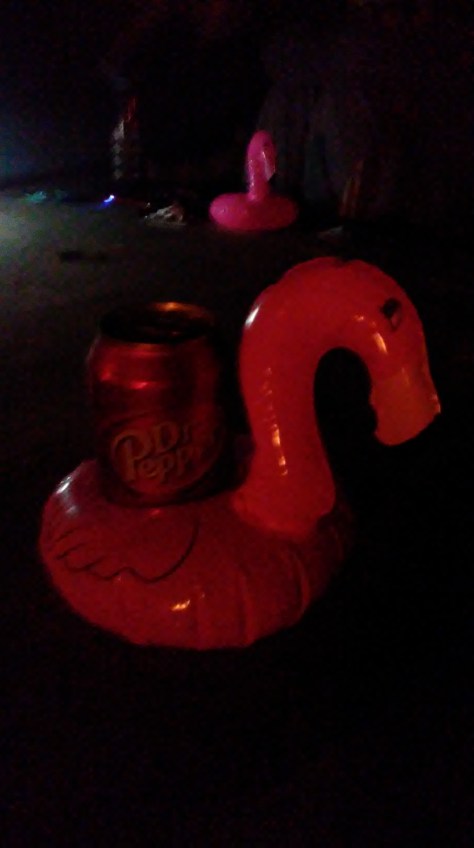
The soda-holding flamingo.
This pretty lady and I became fast friends.

She even wanted to become my bunk-mate!

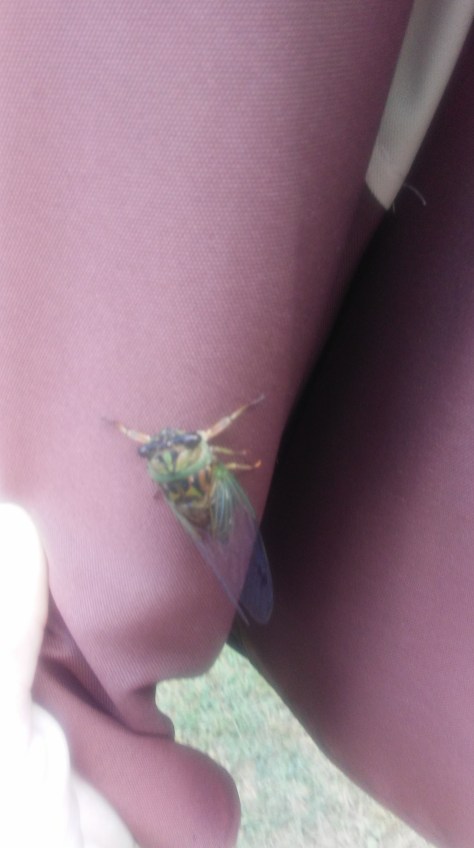
A homely locust.
CVS is selling Halloween decorations already. But it’s okay, because some of them are damned cool. This is a rat skeleton I purchased. Then a trio of us placed it inside a certain Mary Wash alum’s tent at night, with a glow-stick inside its ribcage.
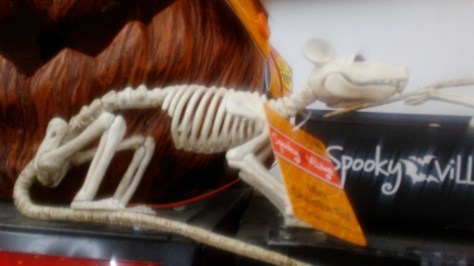
The results were somewhat lackluster, as you can see below. Our host however, ensured he received his a proper scare this weekend by firing off a starting pistol while he napped.

Flora.



“PET ME,” says the Puppy!

A butterfly joined our group for quite a while. The trick to attracting them, apparently, is organic tomato sauce.


(Dedicated to Philip K. Dick)
What if the Internet is an android’s dream,
and we are the electric sheep?
Dick would know at once
our artificial people:
every boy a Roy,
every girl a pleasure model,
trying to pass as real,
inwardly concerned with their design —
“Morphology. Longevity. Incept dates.”
On Facebook,
“More Nolan than Nolan”
is my motto.
If I, in my genuine moments,
could greet my jpeg face
hiding in his electronic words,
he’d go offworld or die.
After all,
“It’s not an easy thing to meet your maker.”
[Author’s note — the film quoted and paraphrased above is Ridley Scott’s “Blade Runner” (1982), to which this poem is an homage. “Blade Runner” is itself an adaptation of Dick’s 1968 novel, “Do Androids Dream of Electric Sheep?”]
(c) Eric Robert Nolan 2016
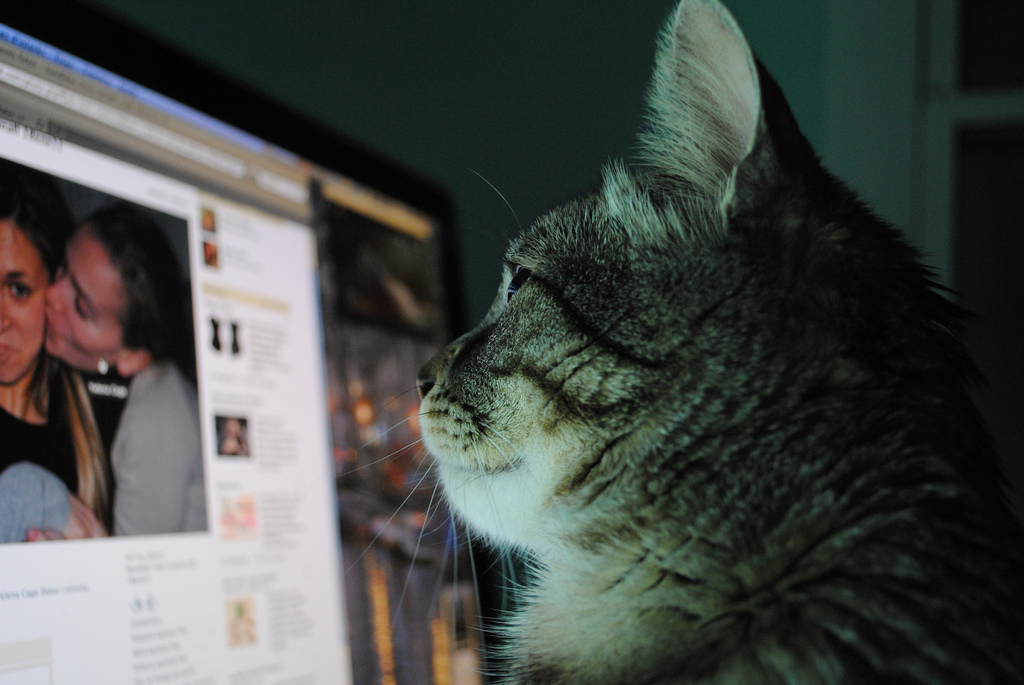
Photo credit: By olga.palma – facebook enganchaUploaded by JohnnyMrNinja, CC BY 2.0, https://commons.wikimedia.org/w/index.php?curid=16525385
What if the Internet is an android’s dream, and we are electric sheep?
Good night.
I’m trying to explain to two friends that I am terrible at playing Scrabble. And I misspelled it as “Scarbble.”
I’m pretty sure that’s the definition of irony.
Scarbble. It’s when you cut a motherfucker for cheating.
Oil on canvas.
Is “Not Being Able to Wait” an alternate title here? I’m not sure, because I don’t understand the Italian translations I’ve found online.

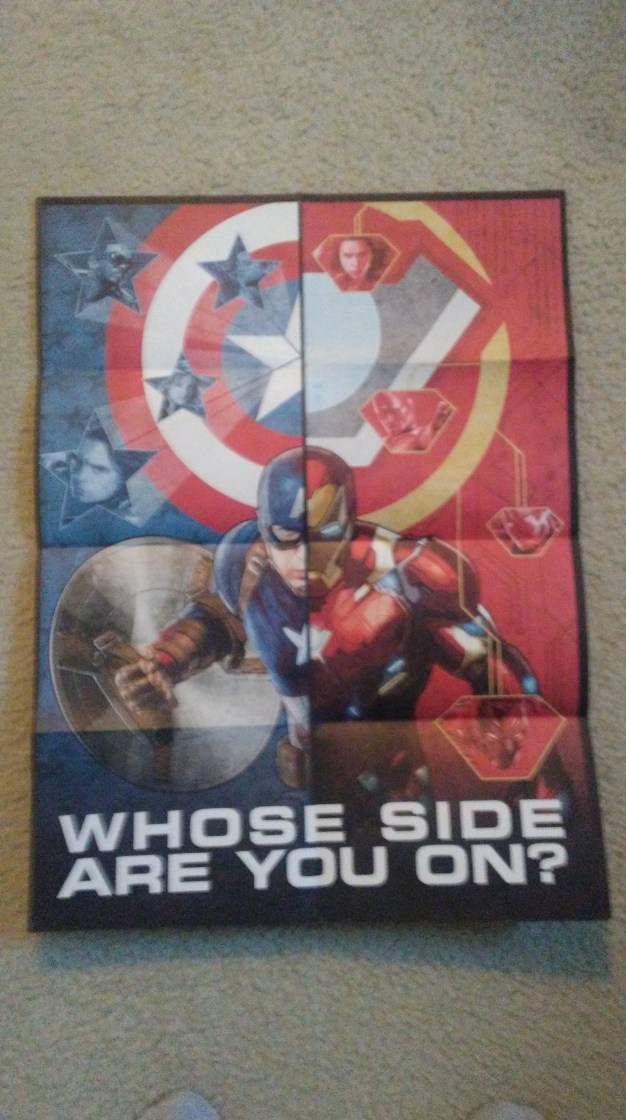
From a dear friend and her family!! It unfolds into a “Captain America: Civil War” poster! (I feel certain her boys had a hand in picking this out.)
You know you’re a weird guy when the posters you love at age 44 are the same as those you would have loved at age 14.
The question the poster poses can only be purely rhetorical, BECAUSE OF COURSE I SIDE WITH CAP.

This cover would be a reprint for an issue from the original series in the late 1980’s.

“The Strain” is zany, over-the-top, serialized comic book horror that often veers too close to high camp. I keep waiting for either “South Park” of “Family Guy” to lampoon it. It’s sometimes pretty brainless, and it often seems like the product of a group of hyperactive 14 year old boys sitting down to imagine a vampire apocalypse.
But what the hell? The damn thing works. It isn’t as smart or as grown up as the moody “The Walking Dead,” “Fear the Walking Dead” or “Stranger Things.” But it’s got a fast pace, a kinetic energy and an unpredictability that all of those shows lack. It’s just … more fun. I’d be lying if I said I didn’t love it. And, as my interest in slow-moving zombie dramas starts to wane, this might become my favorite horror show currently on television.
It’s damned ambitious. The writers here desperately want to show a full scale monster armageddon, and they don’t seem to care much that they’ve got a limited budget or a finite number of extras. (We are told, now, that the vampire plague is spreading throughout the country, and is no longer confined to New York City.)
And it’s still scary. Guillermo del Toro’s screeching, leopard-fast vampire baddies are still unnerving. They’re goddam albino apex predators and they’re repulsive. And I think their appeal is surprising after two seasons of audience exposure. I predicted a while back that this show’s horror elements would lose their momentum, and I’ve pleasantly been proven wrong. (Hey, if you’re a horror fan who loves monsters, you eventually crave story antagonists other than doomed, pitiful zombies.)
Last night’s Season 3 premiere offered little that was new. But it did offer Navy Seals fighting vampires in the NYC sewers, and that was frikkin’ sweet. I’d give it a 9 out of 10.

I purchased Lade Saint’s “Window To The Soul” last night, and I can’t wait to sit down with it.
The author just happens to be a very dear friend of mine, and she’s personally shared with me some of the extraordinary experiences she has described here in her first book.
Lade’s accounts of her childhood are occasionally frightening, sometimes quite heartwarming, and always intriguing. I think that this will be some bedtime reading that I’ll have a hard time putting down — even if it might keep me up at night.
“Window To The Soul” can be found at Amazon right here:
“Window To The Soul,” by Lade Saint


