
Photo credit: By Trailer screenshot, from DVD Bride of Frankenstein, Universal 2004 (https://www.youtube.com/watch?v=rYD3-pIF9jQ) [Public domain], via Wikimedia Commons.

Photo credit: By Trailer screenshot, from DVD Bride of Frankenstein, Universal 2004 (https://www.youtube.com/watch?v=rYD3-pIF9jQ) [Public domain], via Wikimedia Commons.
It never fails — every Halloween, at least several of my friends send me Christopher Walken’s reading of Edgar Allan Poe’s “The Raven.”
“The pessimist resembles a man who observes with fear and sadness that his wall calendar, from which he daily tears a sheet, grows thinner with each passing day. On the other hand, the person who attacks the problems of life actively is like a man who removes each successive leaf from his calendar and files it neatly and carefully away with its predecessors, after first having jotted down a few diary notes on the back. He can reflect with pride and joy on all the richness set down in these notes, on all the life he has already lived to the fullest. What will it matter to him if he notices that he is growing old? Has he any reason to envy the young people whom he sees, or wax nostalgic over his own lost youth? What reasons has he to envy a young person? For the possibilities that a young person has, the future which is in store for him?
“No, thank you,’ he will think. ‘Instead of possibilities, I have realities in my past, not only the reality of work done and of love loved, but of sufferings bravely suffered. These sufferings are even the things of which I am most proud, although these are things which cannot inspire envy.’ ”
— Viktor Frankl, “Man’s Search for Meaning”
If any of you are looking for a book recommendation, “Man’s Search for Meaning” is incredible. Frankl’s version of “existential psychotherapy” could be considered either a philosophy or a practical therapy.
I read it at age 20; it’s one of the best books I’ve ever read. Frankl’s accounts of his experiences in a concentration camp are detailed, lengthy and brutal. But if you can get past that, the following message of hope in the book’s later chapters is both easy to read and profoundly conceived.


There is one special effects sequence in Eli Roth’s “The Green Inferno” (2015) that is technically very well done. I won’t describe it, for fear of spoilers here, but if you know that Greg Nicotero was in charge of effects for this movie, and you know the TV show with which he’s associated, then you have a pretty good idea of what this sequence entails. (Hint: it’s “The Walking Dead.”)
This movie also makes excellent use of its Peruvian location, and the real tribe employed as extras.
Beyond those two things … this really is a rather mediocre horror-thriller, folks. It’s nothing to write home about. In fact, it seems amateurishly made on a few levels, especially considering the creative talent Roth exhibited with films like “Hostel” (2005), “Hostel 2” (2007) and “Cabin Fever” (2002).
This movie held my attention, and it does serve up a disturbing horror film that’s weird and different — which is what I think Roth is known for. But, regrettably, it just wasn’t especially well scripted, performed or directed. I’d give it a 4 out of 10.

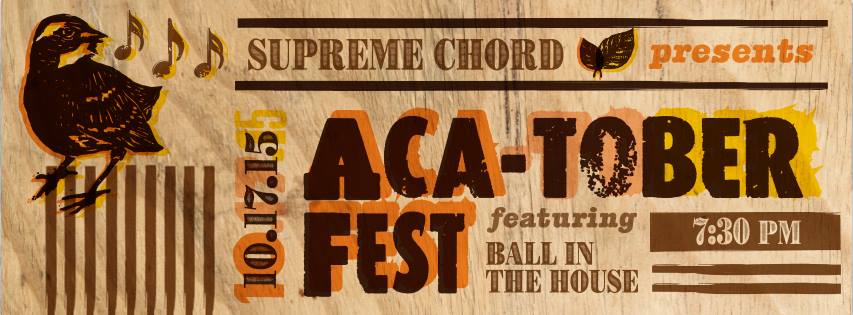
Now this looks like a heck of a lot of fun for an Autumn evening — my Mary Washington College Alumna Barbara Pando-Behnke will be performing with Supreme Chord at Aca-toberfest tomorrow night, October 17th, at 7:30 PM at Arlington Temple.
Here are the details:
“ACA-TOBERFEST will be an amazing night of music featuring the debut concert for DC-based co-ed a cappella group Supreme Chord, and will include an additional headlining performance by Boston’s a cappella sensation, Ball in the House.
“The concert will be held at Arlington Temple (1835 N. Nash Street, Arlington, VA), just steps from the Rosslyn Metro Station. Tickets are $17 in advance, and $20 at the door.
“Learn more about both groups at:
www.supremechordsings.com
www.ballinthehouse.com
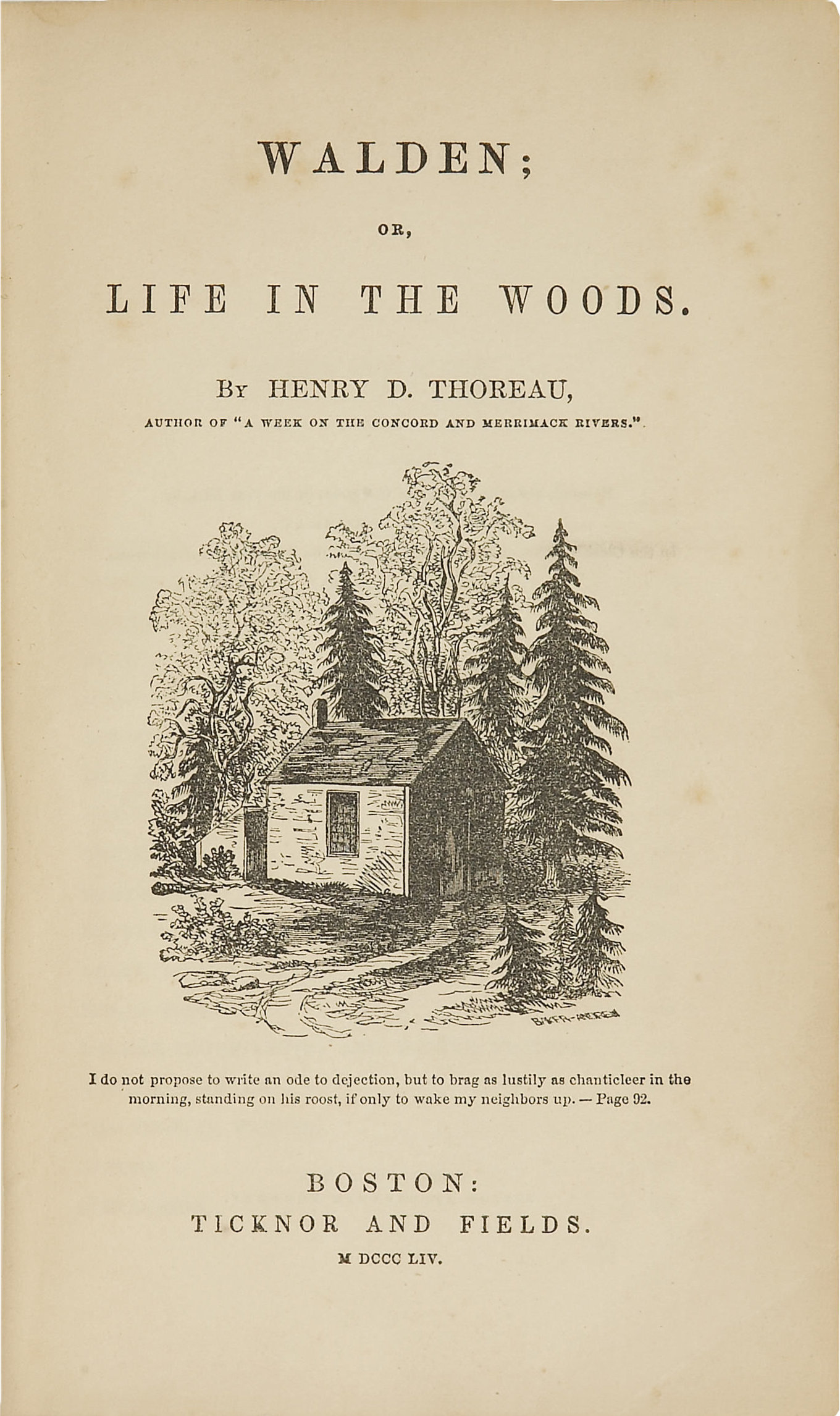
“I went to the woods because I wished to live deliberately, to front only the essential facts of life, and see if I could not learn what it had to teach, and not, when I came to die, discover that I had not lived. I did not wish to live what was not life, living is so dear; nor did I wish to practise resignation, unless it was quite necessary. I wanted to live deep and suck out all the marrow of life, to live so sturdily and Spartan-like as to put to rout all that was not life, to cut a broad swath and shave close, to drive life into a corner, and reduce it to its lowest terms.”
— from Henry David Thoreau’s “Walden”
Oh, well. Orwell’s “1984” did observe that “it was a beautiful thing, the destruction of language.”
October is Breast Cancer Awareness Month. The National Breast Cancer Foundation has two lists of healthcare providers who offer free or low-cost breast cancer screenings. One is for their partners:
http://www.nationalbreastcancer.org/national-mammography-program
And one is for other national or local referral services or programs:
http://www.nationalbreastcancer.org/about-breast-cancer/early-detection/early-detection-resources

Young people, let me try to explain what it was like for a kid who loved movies in the early 1980’s.
There was no trivia section for the Internet Movie Database. There was no Internet Movie Database. There was no goddam Internet. This meant that information about new movies came mostly from other second-, third- or fourth-graders. And that was one imperfect grapevine.
Sometimes the information was flat out wrong. Brad Fisher told me at the beach in the summer of 1980 that Han Solo dies in “The Empire Strikes Back.” (Yes, “Star Wars” fanatics, I am aware that Harrison Ford wanted the character to die. Now grow up and watch Ron Moore’s “Battlestar Galactica.”)
Other times, the information was technically accurate, but confusingly articulated. Such was the account of Jason Huhn, the kid across the street, of Ridley Scott’s “Alien.” (That was a 1979 movie, but I wasn’t even allowed to watch the bowdlerized version that was on television a few years later.) “Its head is like a tube.” Jason told me thoughtfully. “It has, like, two mouths. It has a mouth, and then a mouth inside a mouth.”
Finally, the other boys’ reviews were occasionally just too spoiler-heavy. In 1984, I had the entire rope-bridge scene in “Indiana Jones and the Temple of Doom” memorized in detail before I got to see the movie myself. (Maddeningly, most of Mr. Greiner’s sixth grade class had seen it before I did, and Jason Girnius was particularly exuberant in recounting its climactic fight.)
“Halloween III: Season of the Witch” was something of a different animal. None of the kids in the neighborhood could figure that one out.
“Michael isn’t in it!” That was the buzz. To a boy in the 1982, Michael Myers was an icon on par with “Friday the 13th’s” Jason. (Leatherface was a bit before our time, and Freddy Krueger and Pinhead hadn’t arrived in theaters just yet.) Even those of us who weren’t allowed to watch the movies had heard all about him. It utterly confused us that that a “Halloween” movie could be made in which he was absent.
It … looked pretty scary, at least. Its poster and tagline suggested that young trick-or-treaters would be victimized instead of teenagers old enough to babysit, so that was more frightening to a young boy. (As an adult today, I suggest that this movie absolutely did not turn out to be a classic horror film, despite the pretty terrifying basic plot device revealed at the end.)
Today a simple Google search would inform us of John Carpenter’s plans — an anthology series in which every subsequent “Halloween” sequel was a standalone horror story with the holiday as a theme. (I think I’d question the wisdom of that even as a kid; the studio wisely resurrected the slasher four years later.)
But the gradeschool grapevine was not so informed. There weren’t even any tentative hypotheses among the kids on my street. I think we just shrugged it off and returned to talking about “Star Wars.” We just figured that adults sometimes did some really puzzling, really stupid things. That’s a belief I still hold today. In fact, I’m pretty sure that I occasionally engender that belief in others.

I read something interesting online the other day about “Frankenstein.” The author was unattributed.
“The smart man knows that Frankenstein wasn’t the monster. The wise man knows that Frankenstein WAS the monster.”

Photo credit: By The Man in Question (Frankenstein’s monster (Boris Karloff).jpg) [CC BY-SA 4.0 (http://creativecommons.org/licenses/by-sa/4.0)%5D, via Wikimedia Commons.
 Eric Robert Nolan, Author