Throwback Thursday: the First Edition Dungeons & Dragons “Monster Manual.”

I was too young to play Dungeons & Dragons when it was in its heyday; by the time I reached high school, its ardent niche popularity had faded.  (I’ve read that tabletop role-playing games owed their decline in the 1980’s to the arrival of videogames.)

I do remember poring over my older brother’s “Monster Manual” without his knowledge, though.  (We shared a room; I wasn’t supposed to be touching his stuff.)

Dragons doubtlessly captured the imaginations of most kids who perused that book.  Older boys would probably have been fascinated by the succubus.  At the age of 9 or 10, I myself was most partial to “green slime,” the teleporting “blink dogs” and the basilisk.

I smiled when the below image of the “Monster Manual” cover began making the rounds among a group of my Facebook friends.  Believe it or not, there are still a few adults who get together to play D&D.

11781720_859296820815350_6354298475349126522_n (1)

Succubus_(Dungeons_&_Dragons)

e8283635eb6480ee9ce35e55b7fa9042     355a4676b6abd11d25df7c29f7052f47

Literally a sweet deal!

I bought TWO GIANT boxes of Cinnamon Toast Crunch at Walmart yesterday for just $5!!  Nailed it!!  I swing deals like Donald Trump!!

And hey!! I would probably make a better fucking president!!!

So … y’k’now.  I hereby announce my candidacy for the Office of the President of the United States.

[Thanks to Campaign Manager Pete Harrison for the slogan and poster below.  Share these with your friends and neighbors!]

11988548_10152973419935388_5940499264547971225_n (1)

“The Lady Clare,” by John William Waterhouse, 1900

Based on the poem “The Lady Clare” by Alfred Lord Tennyson.

The_Lady_Clare

A comic book tip conundrum: “Daredevil: Fall From Grace” (Chichester, McDaniel, Colazzo, 1993)

I was all set to plug my favorite Daredevil storyline following the success of Marvel’s show on Netflix; now I hesitate.  I absolutely loved 1993’s “Daredevil: Fall From Grace,” written by D. G. Chichester and illustrated by Scott McDaniel and Hector Collazo.  But a simple google search reveals that this is yet another thing that I loved and everyone else apparently hates.  So we can file it right alongside certain 90’s artifacts like “Alien 3” (1992), “Knightfall” (1993), and “Wyatt Earp” (1994).

Man, the reaction to this was poor, despite its high sales upon release.  I actually do understand the criticisms.  It’s a complicated story, into which various unrelated characters from the Marvel universe are shoehorned.  (A “virus” bioengineered by the Defense Department can “remake what it infects” into anything at all, granting the infected with whatever superpowers they wish.  Various Marvel villains and anti-heroes arrive in New York to compete for its discovery, after its loss decades ago in the subway system is made known.)

People hated “Fall From Grace,” describing it as convoluted and difficult to follow.  They said Chichester’s writing was incomprehensible and too wordy.  The experimental new art style by Scott McDaniel was described as “murky” and equally hard to follow.  Today, people wonder why the widely panned story was ever even collected into trade paperback.  (It’s pricey, by the way.)

Maybe I’m just nuts, but … this is one of my favorite comic book storylines of all time.  I absolutely would not recommend it to a reader new to Daredevil, as I recommended Frank Miller and John Romita Jr.’s “Daredevil: The Man Without Fear” on Monday.  In fact, it might only really be enjoyed by someone with at least a bit of familiarity with the Marvel universe.

Yes, Chichester’s writing was lengthy and verbose.  But I loved his sometimes poetic and always mood-setting exposition, and his dialogue occasionally really shined.  I forgave the story for inserting characters with whom I was unfamiliar.  “Hellspawn” (and his Jamaican accent?) was entirely new to me, but damn if that monster didn’t make a unique and frightening enemy for Daredevil.  (He’s the demonic looking, tiger-like “doppleganger” you see pictured in the first cover below.)

And look at that art.  Certainly, it wasn’t to everybody’s taste.  It was abstract, minimalist, dark, and it often lacked detail. It was almost … impressionistic?  But I loved it.  The radically altered style was perfectly suited to this new, much darker tone and story.  (There was a hell of a lot of pathos in this storyline, including torture and assassination at the hands of the government.)  It was full of shadow and dark color, served the story’s mood perfectly, and it was nothing like I’d seen in a comic book before.

I couldn’t honestly recommend buying this in trade paperback, given the fact the entire world except me seemed unhappy with it.  But, hey …  if you can borrow it from a friend or the library, then check it out.  Maybe you’ll find some of the magic in it that I did.

865251

dd321p2

dd320p7

b370ba24ac7547651854ee6ba90581a4

“Sinister 2” is goddam frightening!

For the life of me, I cannot understand how “Sinister 2” (2015) is getting such bad reviews.  It’s a well made, terrifying horror movie that actually exceeds the 2012 original, which itself was superb.  I’d cheerfully give it a 9 out of 10.

These films have a hell of a story setup.  I won’t describe it in detail here, to avoid spoilers for either movie.  Suffice to say, it is disturbing, even by horror movie standards.  If your standard fare is disposable slasher flicks, bump-in-the-night ghost stories, larger-than-life survival fantasies like zombie movies — beware!  This film take it up a notch.  (As Nigel Tufnel once expounded, “This one goes to 11.”)

The movie depicts a demon who is responsible for the ostentatious, ritualistic murders of entire families.  If that isn’t bad enough, his exact modus operandi is … gut wrenching.  I can’t imagine what kind of pathological muse spoke to screenwriters Scott Derrickson and C. Robert Cargill in coming up with this s@#$.  Yeesh!!!

I actually thought this was much scarier than the first “Sinister.”  (A caveat — I’m pretty sure I’m alone here; it seems like nearly everyone else panned this movie.)

First, the demon’s sickening systematic methods here are examined in detail.  (The first movie worked as a mystery, in which these methods are gradually discovered by an investigative journalist.)  We examine in greater depth the 8MM film strips that serve as a story device.  (I don’t think I am revealing too much here, as they are shown in every ad for the movie.)

Second, we have a protagonist here that we can actually care about.  It is none other than “Deputy So-And-So” (nicely played by James Ransone), the supporting character from the first film, who turns out to be a surprisingly likable anti-hero.  He’s got character and charm that Ethan Hawke’s arrogant true-crime writer utterly lacked in the first movie.  (It was the screenwriters’ fault, not the immensely talented Hawke’s, by the way.)  We’ve got a nice guy that we can care about and root for.  The imperiled family here is also more likable; the writer’s family in “Sinister” was portrayed in little depth.

Seriously, this is a highly disturbing horror movie, if that’s what you’re in the mood for.  The “Christmas morning” scene really got under my skin.  My fellow horror fans might skewer me for saying this, but it scared me as much as anything in “The Shining” (1980).  It … just … YEESH, man!!

One quick final note — at the very end of the movie, I came up with my own twist ending; I’m surprised they didn’t go with it.  It contains a spoiler, so I explain it after the jump beneath the poster below.

sinister2_p1

Continue reading “Sinister 2” is goddam frightening! →

“Kick back and attack.”

“If writing isn’t subversive, then it’s the most monotonous wallpaper, hung in a country club stocked with equally two-dimensional people. Subversion and blasphemy are where the really potent existence is. Kick back and attack.”

—  Dennis Villelmi

Perfect.  The above quote contains more meaningful advice than my entire English composition course in college.

11053473_10204511136879262_8670554188344622460_n

It SUCKS when I awaken past midnight full of steel resolve and grim determination …

It SUCKS when I awaken past midnight full of steel resolve and grim determination because Gotham needs me, and then I remember that I am not Batman.

Gotham-city-dark-knight

If I can’t spell “plebian,” it probably means that I am one.

COSMIC.

Spellcheck informs me that it’s “plebeian,” actually.

This isn’t me.

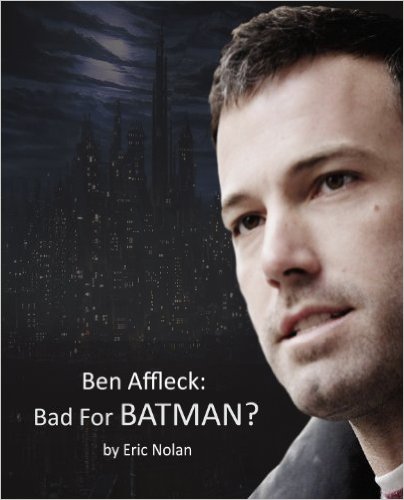
I’m a writer, my name is Eric Nolan, and I’m a comic book nerd who’s reviewed both comics and superhero movies.  And, at first, I had some reservations about Ben Affleck’s casting in the upcoming “Batman vs. Superman.”

But this is some other dude.  Weird.

41Y-toY-SkL._SX402_BO1,204,203,200_

Quick comic tip: “Daredevil: The Man Without Fear,” (Miller, Romita, Williamson, 1993)

So you saw me rave at length last night about Marvel’s “Daredevil” series on Netflix.  If you loved it, as I did, but you’re also new to the character, may I recommend the 1993 limited comic book series upon which it’s based?

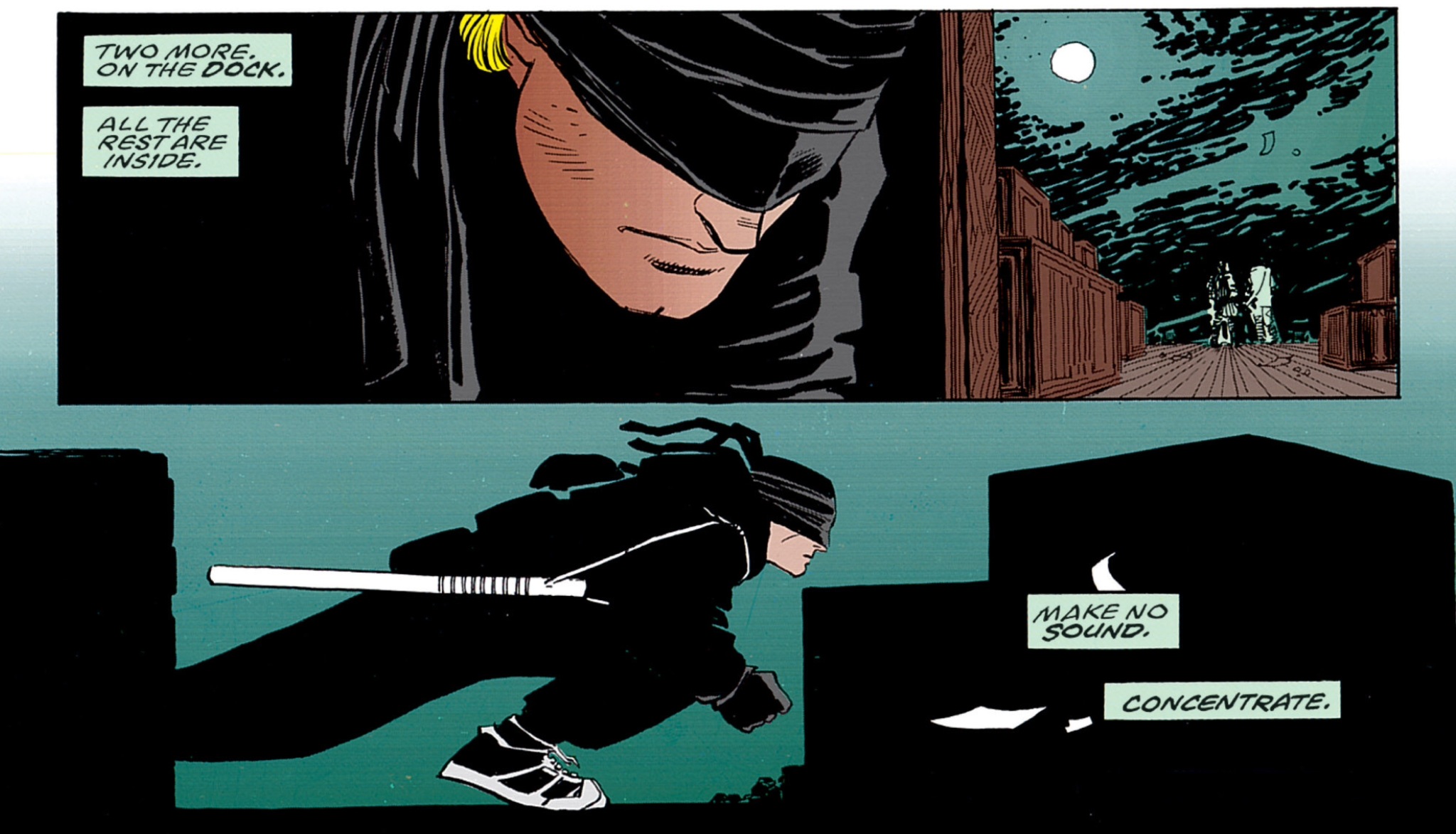
“Daredevil: The Man Without Fear” was cited by the show’s creators as their direct inspiration.  You can tell just by looking at it.

And it’s a terrific set of books.  It was penned by one legend in the comic industry, Frank Miller, and illustrated two others, John Romita, Jr. and Al Williamson.  It’s an expert recounting of his origin that is easily understood by a new reader.

Totally random thought: man, I spent a lot of money on comic books in college.  Comic books and Butterfingers, seriously.  There was a candy machine in my dorm that I just couldn’t stay away from.

jrjr-man-without-fear-101387sin-city-roofs-9ef97ManWithoutFear_03daredevil---the-man-without-fear-124662

Nurse Your Favorite Heresies in Whispers