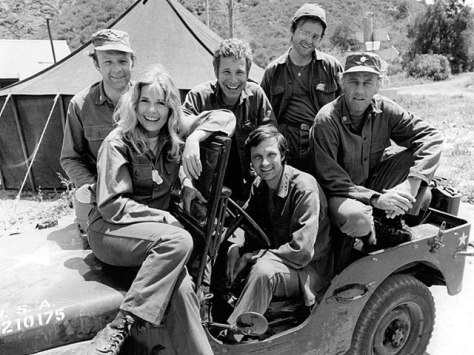
“M*A*S*H” turned 50 years old this past Saturday, folks. It debuted on September 17, 1972, and ran for 11 seasons. (The “M*A*S*H” feature film preceded it by two years — the movie was itself an adaptation of Richard Hooker’s 1968 novel MASH: A Novel About Three Army Doctors.)
So the show is as old as I am. And that’s pretty old.
This show was an institution when I was growing up. It was just one of those shows that seemed like it had always been there — like the original “Star Trek” (1966-1969). It was beloved of my dad and older siblings, even if I was too young to fully appreciate it at the time. Dear lord, did it make people laugh.
Does anyone else remember “The Odd Couple” (1970-1974) growing up? I was too young to remember its original run, but it played endlessly in reruns in the early 1980’s. For a lot of us, it was a show our parents watched. It was based on an eponymous 1965 Neil Simon play, and Tony Randall was absolutely a household name.
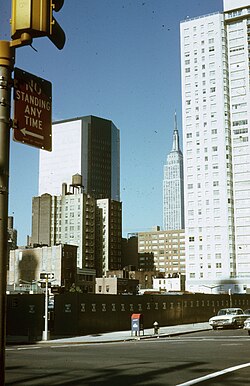
Hearing that theme song — and seeing those priceless shots of early-70’s New York in its opener — absolutely takes me back to my gradeschool years. I can practically smell dinner cooking in the kitchen.
Turns out it didn’t have a lot of cultural staying power — with my generation, at least. When was the last time you heard someone make a pop-culture reference to “The Odd Couple?” Yet people still fondly remember things like “The Partridge Family” (1970-1974), “The Six Million Dollar Man” (1973-1978) and “Voltron” (1983-1985).
So I’m introducing a dear friend tonight to “28 Days Later” (2002). It is possibly my favorite horror film of all time, maybe even narrowly beating out “Aliens” (1986), “Alien 3” (1992), John Carpenter’s “The Thing” (1982), the Sutherland-tacular 1978 version of “Invasion of the Body Snatchers,” and George A. Romero’s first three “Dead” films (1968, 1978, 1985). (Whenever “Star Wars” fans refer to their “Holy Trilogy,” I muse inwardly that those last three are its equivalent for zombie horror fans.)
My friend thinks it’s funny that I refer to “28 Days Later” as “my sacred cow.” I’ll be crestfallen if she does not like it, and I told her as much. And that’s weird for me … I usually don’t feel let down when someone doesn’t enjoy the same books, movies or music that I do. Not everything is for everyone. Art would lose its mystique if it weren’t subjective. If all art appealed to all people, it would lose all its appeal altogether.
Part of me feels, unconsciously perhaps, that “28 Days Later” is the kind of film that “redeems” the horror genre (even though no genre needs such redemption — if art is well made or if it affects people, then it’s just fine).
Most comic book fans of my generation can tell you how people can occasionally roll their eyes at their favorite medium. (Comics have far greater mainstream acceptance today than when I started reading them in the 1990’s.) For horror fans, it’s sometimes worse. Horror is a genre that is easily pathologized — and sometimes with good reason, because a portion of what it produces is indeed cheap or exploitative. I wish I could accurately describe for you the looks I’ve gotten when acquaintances find out that I’m a horror fan. They aren’t charitable.
“28 Days Later” and movies like it are so good that they elevate horror to a level that demands respect from the uninitiated. It is an intrinsically excellent film — it just happens to have a sci-f-/horror plot setup and setting. It’s beautifully directed by Danny Boyle, it’s perfectly scored and it’s masterfully performed by its cast — most notably by Cillian Murphy and Brendan Gleeson.




 Eric Robert Nolan, Author