If I could tell my 19-year-old self discovering superhero comics in college exactly how good their big screen adaptations would become, I wouldn’t believe me.
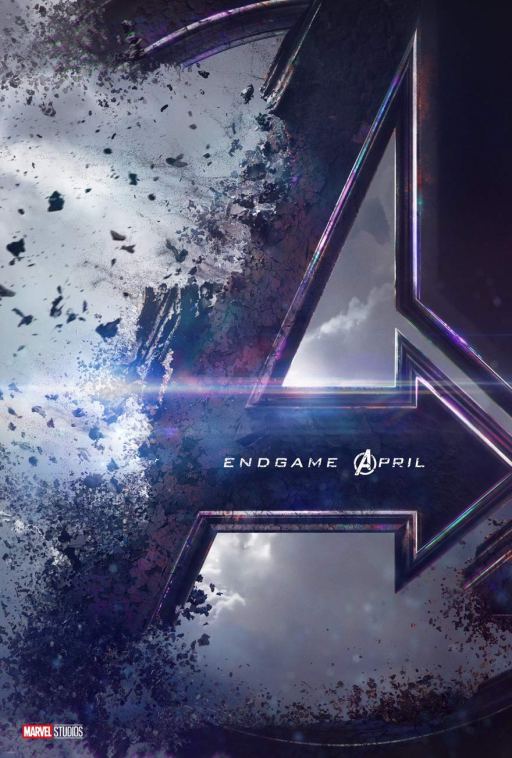
I saw “Avengers: Endgame” (2019) tonight with expectations that were very high. It was still better than I thought it would be. It was easily better than last year’s “Avengers: Infinity War” (although I think of them as two halves of the same epic movie). I don’t pretend to be a film expert, so take this as speculation — I personally think the pair of “Infinity” films have made comic-book movie history in the same manner as the original “Superman” (1978), Tim Burton’s “Batman” (1989) and Christopher Nolan’s “Dark Knight” trilogy (2005-2012).
I don’t really want to make any more observations, because I’m too afraid of inadvertently posting spoilers. But I will say that there is a massive tonal change between “Infinity War” and “Endgame.” The banter and humor of the former is largely left aside, and this concluding story is darker and far more emotionally sophisticated. It’s moving. It feels strange to write here, but I kept thinking during the movie that this was a more “grown up” Marvel film.
And it is EPIC. I honestly can’t imagine how Marvel can top it with future films. There is an action set piece that made my jaw drop. I can’t say more.
[THIS REVIEW CONTAINS SPOILERS FOR THE FILM.] “Spectre” (2015) was an impressive James Bond film, if not an unforgettable one. I’d rate it an 8 out of 10. It’s got style, terrific action sequences and absolutely gorgeous shooting locations. Daniel Craig is still a decent Bond, too, even if I always find him a little understated in the role. And Dave Bautista makes a sufficiently intimidating henchman. (The man looks gigantic, too.)
It brings little new to the franchise, however, and it doesn’t rise above being a standard action film in the same manner as its predecessor, 2012’s nuanced and surprisingly emotional “Skyfall.” (I’ve gained a greater appreciation for that movie after having watched it a second time.)
It occurs to me, too, that “Spectre” seems a little easy to nitpick — at least to someone who’s enjoyed a lot of spy films and novels that are intended as procedural thrillers. We watch Bond gain easy access to a super-secret meeting of the titular cabal, for instance — he just kinda bluffs his way in. Then the organization’s Big Bad calls him out, after apparently feeling his presence, as Darth Vader felt the presence of Luke on a passing ship in “Return of the Jedi” (1983). Later, we watch Bond employ incredibly risky and haphazard tactics to rescue a kidnap victim — it seems to me that the consequent random vehicle crashes, explosions and gunshots could just as easily kill her as they might free her.
Still, this was a fun movie. I’d recommend it if you’re looking for an enjoyable action flick.
The poem that M recites during 2012’s “Skyfall” is a section of Alfred, Lord Tennyson’s “Ulysses.” Its full text is below.
“Ulysses,” by Alfred, Lord Tennyson
It little profits that an idle king,
By this still hearth, among these barren crags,
Match’d with an aged wife, I mete and dole
Unequal laws unto a savage race,
That hoard, and sleep, and feed, and know not me.
I cannot rest from travel: I will drink
Life to the lees: All times I have enjoy’d
Greatly, have suffer’d greatly, both with those
That loved me, and alone, on shore, and when
Thro’ scudding drifts the rainy Hyades
Vext the dim sea: I am become a name;
For always roaming with a hungry heart
Much have I seen and known; cities of men
And manners, climates, councils, governments,
Myself not least, but honour’d of them all;
And drunk delight of battle with my peers,
Far on the ringing plains of windy Troy.
I am a part of all that I have met;
Yet all experience is an arch wherethro’
Gleams that untravell’d world whose margin fades
For ever and forever when I move.
How dull it is to pause, to make an end,
To rust unburnish’d, not to shine in use!
As tho’ to breathe were life! Life piled on life
Were all too little, and of one to me
Little remains: but every hour is saved
From that eternal silence, something more,
A bringer of new things; and vile it were
For some three suns to store and hoard myself,
And this gray spirit yearning in desire
To follow knowledge like a sinking star,
Beyond the utmost bound of human thought.
This is my son, mine own Telemachus,
To whom I leave the sceptre and the isle,—
Well-loved of me, discerning to fulfil
This labour, by slow prudence to make mild
A rugged people, and thro’ soft degrees
Subdue them to the useful and the good.
Most blameless is he, centred in the sphere
Of common duties, decent not to fail
In offices of tenderness, and pay
Meet adoration to my household gods,
When I am gone. He works his work, I mine.
There lies the port; the vessel puffs her sail:
There gloom the dark, broad seas. My mariners,
Souls that have toil’d, and wrought, and thought with me—
That ever with a frolic welcome took
The thunder and the sunshine, and opposed
Free hearts, free foreheads—you and I are old;
Old age hath yet his honour and his toil;
Death closes all: but something ere the end,
Some work of noble note, may yet be done,
Not unbecoming men that strove with Gods.
The lights begin to twinkle from the rocks:
The long day wanes: the slow moon climbs: the deep
Moans round with many voices. Come, my friends,
‘T is not too late to seek a newer world.
Push off, and sitting well in order smite
The sounding furrows; for my purpose holds
To sail beyond the sunset, and the baths
Of all the western stars, until I die.
It may be that the gulfs will wash us down:
It may be we shall touch the Happy Isles,
And see the great Achilles, whom we knew.
Tho’ much is taken, much abides; and tho’
We are not now that strength which in old days
Moved earth and heaven, that which we are, we are;
One equal temper of heroic hearts,
Made weak by time and fate, but strong in will
To strive, to seek, to find, and not to yield.






 Eric Robert Nolan, Author