
Tag Archives: Black Mirror

A short review of “Black Mirror” Season 3

“Black Mirror” (2011) remains the best science fiction show on television; I’d rate the six-episode third season a perfect 10.  The show continues to succeed at every level with its story concepts and their execution.  And I think it’s actually getting better.

It’s getting darker and harder hitting, too.  I’d guess that this season’s blackmailing-hackers episode (“Shut Up and Dance”) would be the one that the majority of viewers find the most disturbing.  For some reason, the man-vs.-monster story of “Men Against Fire” is the one that really got under my skin.

I was surprised to learn that nearly all of “Black Mirror’s” episodes are penned by series creator Charlie Brooker.  I’m still surprised at how many clever ideas and lean, smart scripts could spring from one writer.  I was so impressed that I looked Brooker up on Wikipedia — but was surprised to discover I’m unfamiliar with nearly all of his other work.  The one exception is “Dead Set” (2008) — the truly fantastic British zombie horror miniseries that I’ve been recommending to friends for ages.  That makes sense.

Anyway, I am fully and happily converted to “Black Mirror’s” cult following, and I enthusiastically recommend it to people who ask about it.  (The show’s popularity is still growing — I believe it appeals to the same kind of fans as those who flocked to the various iterations of “The Twilight Zone” and “The Outer Limits” of generations past.)  But I might actually suggest that newcomers begin with the second or third season, rather than the first.  Season 1 is terrific, but it’s three episodes are more subtle and thematic, while the latter seasons follow a more conventional story structure that might better appeal to more mainstream audiences.  (They have more satisfying twists and emotional payoffs, too.)

And a quick caveat — I’ll reiterate that this show is indeed dark.  There is a strictly human element to most of “Black Mirror’s” twists that is intended to surprise the viewer by provoking anxiety or dread.  For a show that relies on technological story devices, it succeeds even more with its old fashioned psychological horror.

 

1_m1

Abi’s song from “Black Mirror” Season 1, Episode 2

The Internet is a fine thing.  Below is the complete rendition of Irma Thomas’ “Anyone Who Knows What Love is,” performed by the character of Abi in “Black Mirror’s” second episode of Season 1.  It’s a beautiful song, and a real highlight of the episode, “Fifteen Million Merits.”  The talented actress here is Jessica Brown Findlay.

The song actually pops up in another episode of “Black Mirror.”  (I am new to the show, but I am enjoying it chronologically with a dear friend of mine who has already seen all the episodes.)  Season 2’s tour de force, “White Christmas,” has one character singing the song in a karaoke bar.  My friend pointed out that we briefly glimpse an in-universe TV show in the very same episode, in which dancers are seen on a stage that looks like the one in “Fifteen Million Merits.”

Do all (or some) of “Black Mirror’s” episodes take place in the same fictional universe?  It kinda feels plausible.  The variations of optically linked computers in different episodes, for example, seem to dovetail pretty nicely.


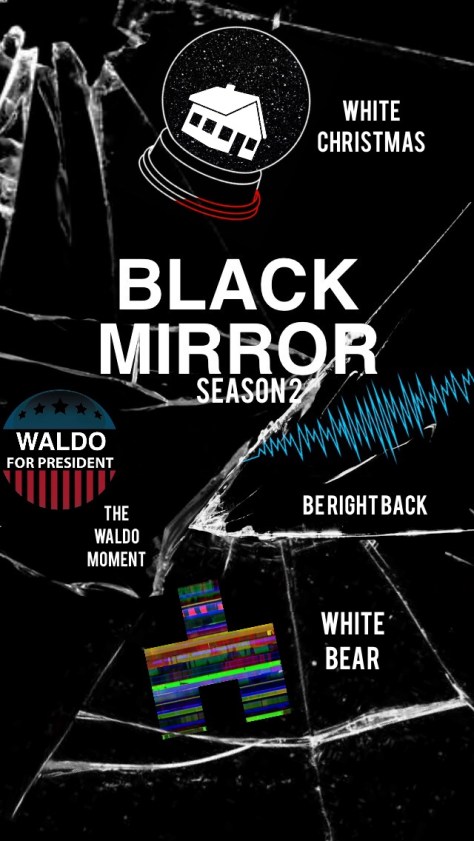
A review of Season 2 of “Black Mirror” (2013)

“Black Mirror” seems to me to be  the best science fiction show on television; I’d rate Season 2 (2013) a 9 out of 10.  (I’m never quite certain whether to group British shows by “season” or by “series,” as they do.  I’m also a little uncertain why the fourth and final episode here, “White Christmas,” is included in Season 2, as it aired nearly two years later as a 2014 holiday special.)

I commented to a friend of mine after seeing “White Christmas” the other night that the show was “brave” — it just isn’t afraid to alienate mainstream audiences by being too dark.  Not all of “Black Mirror’s”  episodes have “twists,” but they typically have an unexpected plot development, and their outcomes and implications are arguably depressing.

It’s just such a damned good show, though, in terms of its writing and acting.  My friend told me she wasn’t aware of anyone who had seen it and disliked it.

“White Christmas,” for example, was one of the best hours of science fiction television I’ve ever seen.  It consists of three blackly tragic vignettes seamlessly woven withing a wraparound story, and it employs a sci-fi plot device that is mind-bending and brutal.  I believe this is the first time I’ve seen its lead actor, Jon Hamm, and I was extremely impressed with his performance.

My only quibbles with the program are extremely minor.  As with the first season, I think that not every episode truly requires a 44-minute running length.  I thought two episodes  (“Be Right Back” and “The Waldo Moment”) seemed like they could have been tightened up into one, maybe with tighter writing allowing for shorter segments.

I’ve noticed another minor relative weakness with “Black Mirror” in general as well — the show does not always present the viewer with likable protagonists.  Occasionally, the various characters we’re asked to identify with are either slightly off-putting or even annoying.  Again, “Be Right Back” and “The Waldo Moment” spring to mind.  This wasn’t enough to greatly affect my enjoyment of the episodes, though.

What an incredible show.


black_mirror_season_2_poster_by_clarkarts24-daug6i3


A few quick words on “Black Mirror” Season 1 (2011)

Season 1 of Britain’s “Black Mirror” (2011) was absolutely terrific.  (To be clear, this first “season” consists of only three episodes, although subsequent seasons have more.)  This looks to be a truly superb dystopian science fiction anthology series — I’d rate it a 9 out of 10.

I’d point to two qualities that make this show stellar.  First, it’s truly smart stuff.  The story devices are thoughtfully invented and quite original.  (These are “near-future” -type sci-fi tales depicting how new technology or cultural trends can have unforeseen consequences.)  This show doesn’t insult the viewer’s intelligence, it relies on him or her to pay attention and think.

Second, the writers here have a firm grasp of genuine psychological horror.  There are no radioactive monsters in the sewers here, or killer robots from the future — but “Black Mirror” manages to be scary without those things.  It does just fine presenting the viewer with visions of human shame, fear, jealousy or existential loss.  These are stories that deal primarily with the psychology of their characters — and they truly get under your skin.

This is great stuff — I’d recommend it.


Black-Mirror-Logo