Tag Archives: review

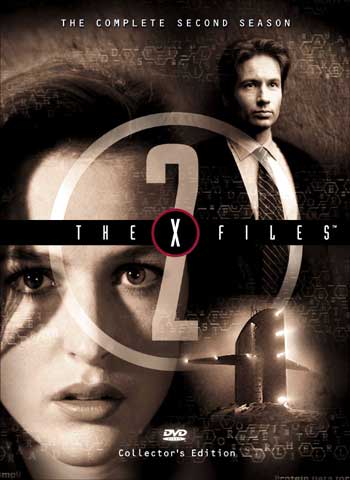
My review of “The X Files,” Season 2.

After a shaky Season 1, the second season of “The X Files” showed it coming into its own and becoming the classic sci-fi horror show that I remember. I’d give it a 9 out of 10.

The program got scarier, tighter, and better directed. David Duchovny and Gillian Anderson settled into their roles, and became the unique characters fan loved, and their trademark dry banter and sexual tension finally appeared. The overarching plotlines and themes also more or less really made their first appearance in Season 2. The conspiracy and “The Project” finally take shape, with characters like Alex Krycek, The Well Manicured Man and Bill Mulder becoming part of the story, and the sadness and sense of tragedy that pervaded the series became a part of most of the show’s episodes – even the standalone monster-of-the-week episodes.

There were really only four misfires — “Little Green Men,” “3,” “Firewalker” and “Fearful Symmetry” were weak. The rest of the season was quite good.

Some of the eps, like “F. Emasculata,” “Aubrey,” “Irresistible,” and “Our Town” were genuinely scary. Just about any fan of the show will name the hilarious “Humbug” as a classic. And the mythology episodes, while not always frightening, were at least great sci-fi thrillers – especially the fantastic and perfect classic eps, “Colony” and “Endgame.”

Great stuff.

The_X-Files_Season_2

My review of “Mad Max: Fury Road.”

Dear Lord, Charlize Theron is a fantastic actress.  It’s amazing what she can communicate with just her facial expressions and line delivery, even when her dialogue is sparing and simplistic.  She’s also a superb physical actress, has great scene presence and is stunningly beautiful.  Why not simply call this movie “Furiosa?”  It’s really that character’s story; the titular “Mad Max” says and does little that is plot-relevant.  He is a superfluous character who is here only to attract the fanbase for the original “Mad Max” movies.

Theron is one of two things that “Mad Max: Fury Road” has going for it.  The other is pure spectacle.  I don’t love this movie the way that everyone else seems to (I’d give it a 7 out of 10), but I really did enjoy the action, special effects, costume, prop and set design.  This is like a modern “Ben Hur” (1959) on acid — the characters, weapons, sets and vehicles look great.  This movie is like a really good heavy metal album cover made into a feature-length film.

My attention wandered, though.  The action is often difficult to follow, thanks to too much Michael Bay-type directing.  Tom Hardy is really just a one-note character as Max, despite efforts to render him in depth with cliche flashbacks of a lost family.  And I liked this guy a hell of a lot in “The Dark Knight Rises” (2012); I thought he made the masked Bane a great villain with physical acting that compensated well for an obscured face.

I submit that this is a somewhat brainless movie that barely qualifies as science fiction.  We have a sparse opening montage that tells us about world-ending wars for resources, and then the rest of the movie is really just an extended gladiator battle in the desert with baroquely costumed bad guys.  It’s like a monster truck rally.

It’s sometimes fun, but it doesn’t make a great film.  The good guys are too thinly drawn to engender viewer sympathy; the bad guys are too cartoonish to be scary.  You also need to turn your brain off, lest certain questions occur to you:

1)  Doesn’t gasoline degrade over time?  I don’t think it would be worth warring or bartering for after a year or so, unless there are oil rigs and complex refineries to seek and develop it.  We see evidence of neither.

2)  What do people eat, out here in the never-ending desert?  The disappearance of “green places” is a plot point; there is no arable land.

3)  How often does this dictator (“Big Joe” or something?) give his subjects water?  Once per day?  I thought dehydration killed or immobilized people fairly quickly.

4)  Where the heck are we?  I hear a lot of United Kingdom accents.

5)  I’m pretty sure that blood transfusions don’t work like that.  And even if they did, you’d see a hell of a lot of opportunistic infections in such unsterile conditions.

6)  Why does one young woman immediately fall in love with a sleeping barbarian whose teeth are spray-painted silver?

Whatever.  I’m not saying that this is a bad movie; I’m just suggesting that it’s a little overrated given its current accolades by fans.  It’s fun enough, if you’re in the mood for a “Mad Max” movie.

Mad-Max-Fury-Road-lovely-day

Did NBC’s “Hannibal” reference Stephen King’s “The Dark Tower” series?!

[WARNING — THIS POST CONTAINS MAJOR SPOILERS FOR SEASONS 2 AND 3 OF “HANNIBAL,” AS WELL AS STEPHEN KING’S “THE DARK TOWER” SERIES.  READ AT YOUR OWN RISK.]

*

*

*

*

*

*

*

This could be overeager nerd eisigesis, but something jumped out at me immediately in the second episode of this summer’s “Hannibal.”

When Will Graham greets Abigail Hobbes at the beginning, he wonders about “some other world.”

The doomed young Abigail responds:  “I’m having a hard enough time dealing with this world.  I hope some of the other worlds are easier.”

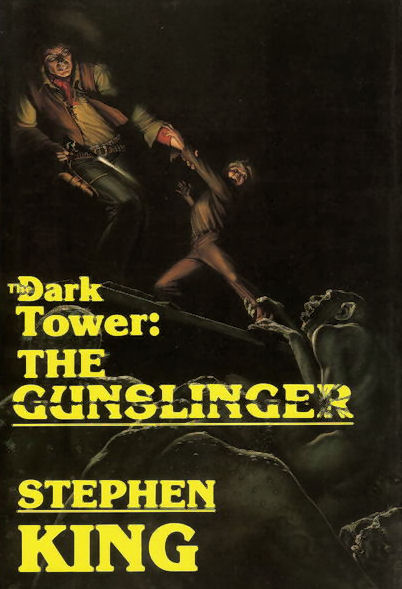
That’s “worlds,” plural — not “another world” or “the next world.”  It sounds a hell of a lot like the doomed Jake Chambers’ famous line towards the end of “The Gunslinger,” before he falls to his fate:  “Go then.  There are other worlds than these.”

Graham goes on the discuss string theory: “Everything that can happen, happens.”  This dovetails perfectly with the idea of the nearly infinite parallel universes that comprise different levels of “The Tower.”

Then other story parallels occurred to me:

1)  Both Abigail and Jake are children of surrogate fathers who are on a crusade (Graham’s pursuit of Hannibal Lecter, the Gunslinger’s quest for The Tower).

2)  Both are specialized, cold-blooded killers by training (Abigail’s bizarre tutelage by her serial killer biological father, Jake’s training by the Gunslinger).

3)  Both are willingly sacrificed by their surrogate fathers.  (NBC’s show makes it clear that Hannibal is also a father figure to Abigail.)

4)  Both characters were sacrificed by the show’s/book’s title character.

5)  The memories of both haunt the stories’ protagonists as a recurring motif.  Both appear to drive the heroes insane.

6)  Both characters are ostensibly dead at some point, and then are quasi-resurrected by a surprise plot device.  (Abigail has been secreted away by Hannibal; Jake is returned from a parallel universe to which he was consigned.)

7)  The loss of both characters are tied to themes of forgiveness.  (Jake forgives the Gunslinger for letting him fall; Graham explicitly forgives Hannibal for Abigail’s loss as part of the show’s overarching theme.)

It would be fun and perfectly viable to imagine that the show’s events transpire on a “level” of The Tower.  The differing continuities of the original books and feature films could even comprise other levels.  King makes it clear that “twinners” are character analogs living in different universes.

But I am probably just imagining things.  I also thought that Hannibal’s reference to his “person suit” in this season’s first episode was a reference to “Donnie Darko” (2001): “Why do you wear that silly man suit?”  And, in retrospect, that seems like a coincidence.

a80a802b2baea0ead4b2b8ce1e020d82          The_Gunslinger

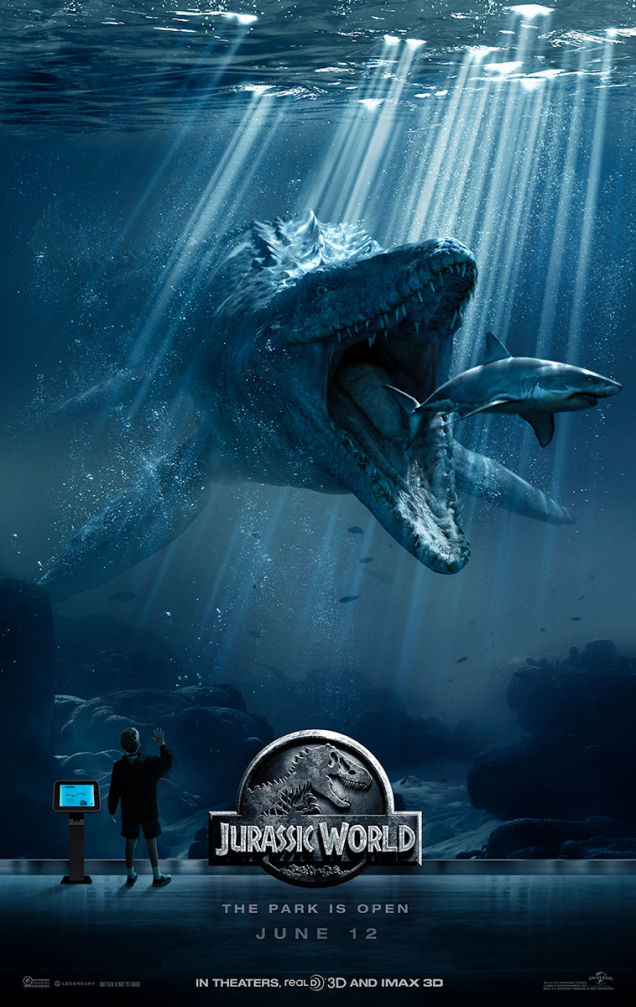
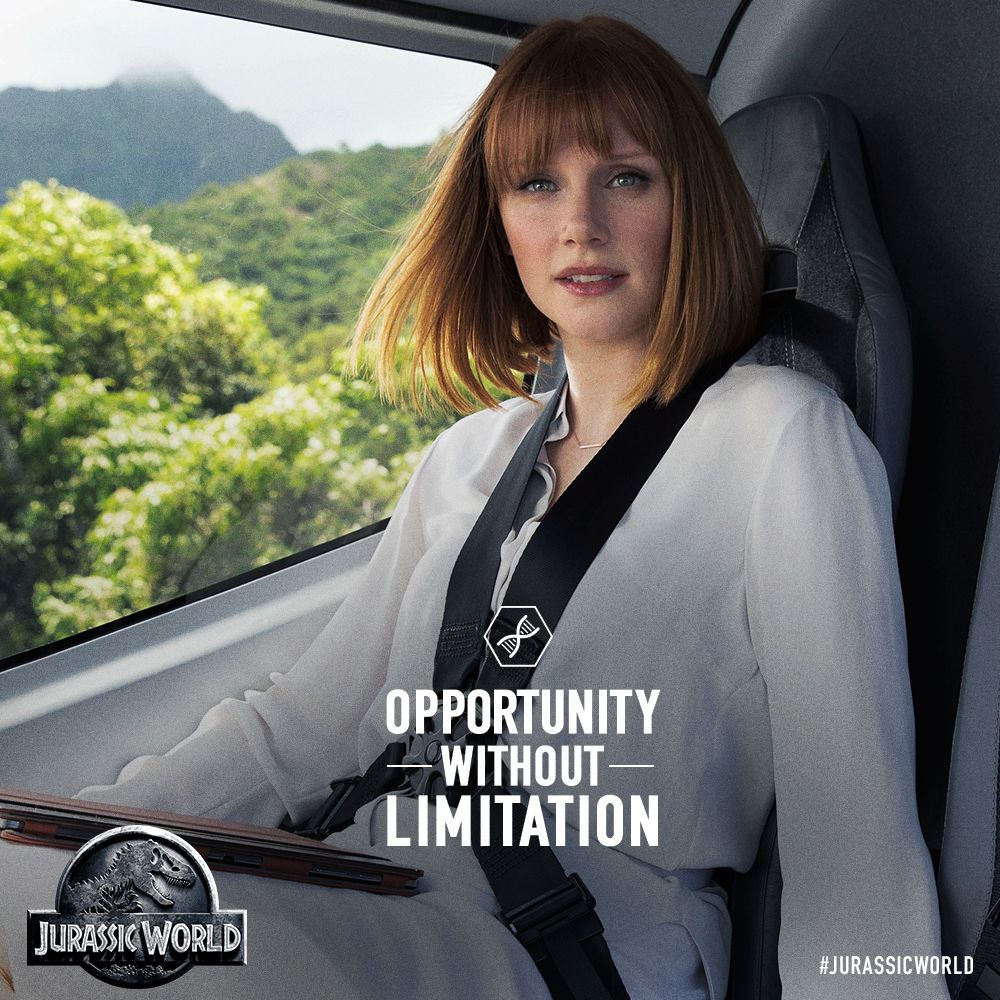
My review of “Jurassic World” (2015), with Bryce Dallas HowAreYaDarling

“Jurassic World” (2015) was raptortastic and T-Rexific.  It was also fun in another way, but I can’t think of a pun for “Indominus Rex.”  I’d give it an 8 out of 10.

Seriously — this was a fun monster movie.  (I, for one, maintain that these are horror-sci-fi movies at heart, and not the family adventure films that others seem to take them for.  Even the theme music for this entire franchise seems to insist that a zippity good time was had by all, after dinosaurs devour adults and traumatize lost children.)

The kid in me thrilled to this movie’s great special effects and abundance of monsters.  Those raptors are the coolest movie monsters since Aliens and Predators.

The action sequences were good.  Did anyone else think the initial attack/ambush was an homage to the initial attack/ambush in “Aliens” (1986)?  They have the heart rate monitors and helmet-cams and everything.  I kept waiting for Corporal Hicks to yell, “DRAKE, WE ARE LEAVING!!!”

The aerial attack by the winged dinosaurs was outstanding.  (I don’t know the difference between pterodactyls and pteranodons.  Besides, one of them looked like it had a T-Rex head, and I’m not sure that was even was a thing.)  The plight of one plucked victim was pretty damn creative and horrifying — I think that entire sequence was an example of some pretty inspired horror filmmaking.

And all of those things are good, because I honestly don’t think this film has much going for it without them.  This really is … pretty much the same story as “Jurassic Park” (1993).

Smart people do stupid things.  I got a “C” in biology freshman year, but even a guy like me immediately doubts the wisdom of the Raptor Recruiting Plan.  I also have no military experience, but I know what “cover” is, and I know what a “kill zone” is, and I wouldn’t rush from the former to stand stationary in the latter.

Chris Pratt and Bryce Dallas HowAboutADrinkLater are both very good actors; this movie’s script has them rattling off humorous lines that are typical of a mediocre sitcom.  The character concept for Pratt’s hunky-extreme-sportsman-naturalist raptor-whisperer is kind of silly.  Bryce Dallas HowDoYouJustKeepGettingPrettier plays another stock character — the uptight corporate princess who needs to be taken down a notch.  Their banter is like the dialogue of a lackluster episode of “Friends,” and it insults the viewers’ intelligence.

The movie’s two most interesting characters are the two young brothers.  Their dialogue was actually touching — this movie would be far better it had focused almost entirely on them.  (And, yes, that is young Ty Simpkins from “Insidious.”)

I keep seeing articles on the Internet alleging that the technology depicted by these movies will soon be possible, but I pretty much don’t believe anything I read on the net anymore.  Because I totally bought into that Mars One fiasco, and now I feel like an idjit.

vuljydbeefmco0ezptwh

Jurassic-World-Bryce-Howard-IG

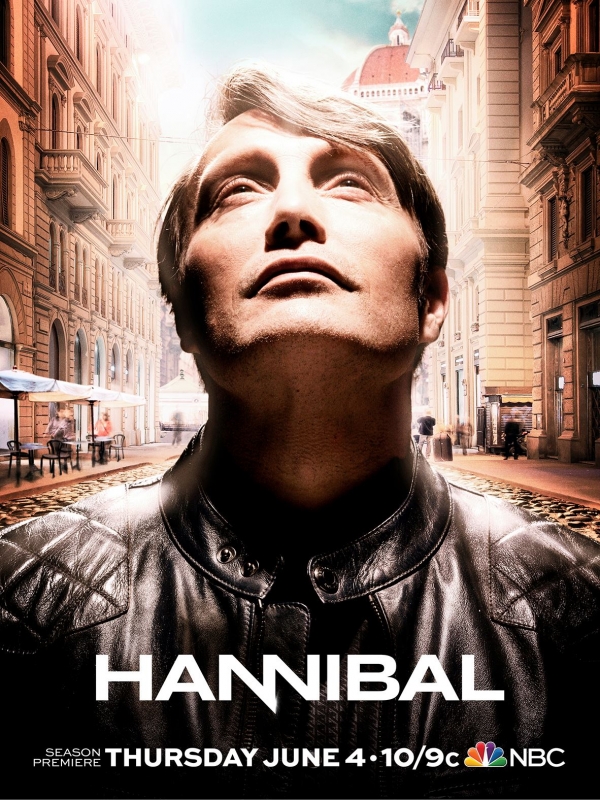
When Academics Attack — A review of the Season 3 premiere of “Hannibal.”

If you catch up with “Hannibal” via DVR or NBC.com, I might actually suggest you begin with the amazing and beautiful second episode, and not the Season 3 premiere.  I enjoyed the season opener, but not quite as much as everyone else did.  (Seriously, guys, if you think I am alone in lauding this program, google a few reviews.)  The first episode falls firmly for me into the “good, but not great” category; I’d give it an 8 out of 10.

We’ve got an interesting basic story that pays very close attention to Thomas Harris’ source novels and Ridley Scott’s 2000 film treatment, and we’ve got great directing, cinematography and acting.  Gillian Anderson shines, outperforming even the terrific Mads Mikkelsen in the title role.

It was creative and different, with dramatic changes in point of view, tone and setting, as Hannibal absconds from Baltimore to Florence with the extorted Bedelia du Maurier.  It held some nice thematic surprises, as the script humanizes Hannibal unexpectedly — and this is helped by flashbacks in which we actually get to see Eddie Izzard’s bad guy from Season 2 get one up on him in some verbal sparring.  (I am entirely unfamiliar with Izzard’s comedy performances, but damn if he doesn’t make a sweet super-villain.  The guy’s got perfect diction and line delivery, and can be damned frightening when he wants to be.)

But, for me, this episode failed in terms of momentum and tension.  It does very little to move the overarching narrative forward — so little that I suggest it could be seen as ancillary material appropriate for a webisode or DVD extra.  (Yes, I do realize that Hannibal “missing” Will Graham is important in setting up themes and character relationships for the rest of the season, but … whatever.)  This is really a kind of … “milieu” episode that establishes his arrival in Europe and the means to arrive at his cover identity.  The fates of the victims of the Baltimore massacre?  They’re unknown to us.

We can’t feel too much tension — of Hannibal’s two murder victims, one is hardly known to us, and the other is flat out unlikable.  We can’t identify with them.  Nor can we take any pathological satisfaction in Hannibal’s modus operandi.  He kinda shows up and says “Bonsoir” a bit undramatically, and we cut to another scene.

I had the occasional nitpick as well.

1)  The viewer is asked to identify with Bedelia.  For some reason this character has never worked for me.  It certainly isn’t Anderson’s fault.  She’s fantastic.  Maybe the problem is me.

2)  I actually do really like Mikkelsen.  But his stoical approach to the character is nowhere near as satisfying as Anthony Hopkins’ iconic, nuanced, expressive, darkly charming take on the character.

3)  We live in an age of Google image search.  Does no one in Florence notice that “Dr. Fell” looks nothing like an online photograph?

4)  After the climax of Season 2, shouldn’t Hannibal be easily recognized as the world’s most infamous fugitive and alleged serial killer?  Is his image nowhere on CNN.com?

5)  What about facial recognition software?  If a photo of Faux Fell is ever uploaded, might Interpol or the FBI locate him at once?

6)  Seeing Dana Scully (sorry — BEDELIA) sexually harassed at the dinner table just makes me angry.  Fox Mulder needs to appear and kick some ass.  Actually … scratch that.  Send John Dogget.

7)  I don’t like seeing Hannibal appear with even a putative “spouse.”  He’s a lone wolf, to me, anyway.

8)  The dialogue, yet again, is occasionally too overly stylized for me.  Even ingenious people communicate prosaically in their everyday lives.  Do these people sound like Shakespeare when they say “Pass the salt,” or ask what time to set the alarm clock for the next day?

9)  Once or twice, the dialogue is just … bad.  Bedelia:  “Your peace is without morality.”  Hannibal:  “There is no morality — only morale.”  (You can’t call it Shakespeare if it’s trying too hard.)

10)  The symbolism and the references to the feature films are maybe a little too heavy-handed.  I’m talking the hand-on-the-shoulder during the lecture, and seeing one character bashed over the head with a bust of Aristotle.  (“When Academics Attack.”)

Don’t let my compulsive griping get to you if you are a fan of the show, however.  This wasn’t a bad episode, just not the best.  And the second episode of Season 3 is goddam PHENOMENAL.

mads-mikkelson

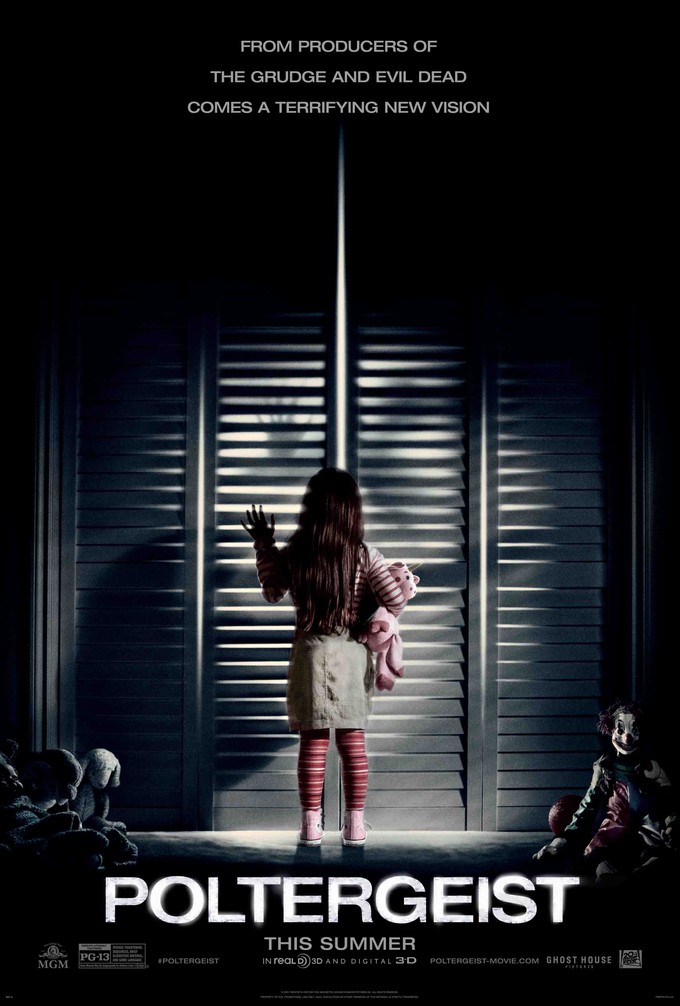
A quick review of “Poltergeist” (2015)

“Poltergeist” (2015) is an unnecessary and generally lackluster remake of the 1982 classic; I’d give it a 5 out of 10.

I wouldn’t recommend seeing this movie out of curiosity about how modern special effects might update the story.  They’re good, but not great.  The 80’s practical effects of the original worked far better.

I also wouldn’t recommend seeing this movie because you’re a Sam Rockwell fan.  The guy is amazing, but the script here doesn’t let him shine.  He’s miscast as a vaguely ineffectual and somewhat unlikable Dad.

I just can’t recommend paying the ticket price for this movie at all, if you’ve got the original lying around on DVD — the first film offered far more charm and spooky fun.

poltergeist_1sht_vera1_large

My buddy Len met Max Brooks at Phoenix Comicon!!!

At this point, I more or less consider my college alum Len Ornstein as an official correspondent for this blog, even though I hesitate to guess if he’d even care for such a distinction.  Just about anything you see here that is newsworthy or current owes to Len’s helpful vigilance and his e-mails.  (Recall, please, that I recently provided a helpful review of Season 1 of “The X Files.”  Also, I haven’t been able to watch “Gotham” or “Daredevil” because I am lately getting too into “The Lone Gunmen” from 2001.  Seriously.)

Anyway, Len attended the Phoenix Comicon this past weekend, and helpfully shared the experience with those less cool.  And he was fortunate enough to meet the one and only MAX BROOKS.  You guys know that Brooks is the author of the seminal, maybe even genre-redefining zombie apocalypse novel, “World War Z.”  (And if you don’t know that, then get off my blog and go read about Louisa May Alcott or something.)  Brooks is pictured at left below, Len is at right.

I am such a fan of the book that I’ve read it at least three times.  It was like George A. Romero meets Tom Clancy, and it is one of the most fun books I’ve ever read.  Its predecessor (and de facto prologue, I’d suggest) was “The Zombie Survival Guide.”

Len says that Brooks talked about the widespread criticism of the putative film “adaptation” of “World War Z,” namely how it had nothing in common with his book (although Brooks also did say it was entertaining and lucrative).  The author said he couldn’t really claim that Hollywood butchered his novel, because so little of the novel had been used.  After he sold the rights, he had no creative input for it.

I humbly opine that the movie gets just a little too much bad press.  Visit any Internet message boards about it, and you might get the impression that its more commonly accepted title is “The Brad Pitt Zombie Movie That Sucked.”  I myself am a die-hard fan of the original book, but I still loved the movie.

It wasn’t a Romero film, and it wasn’t “The Walking Dead.”   (And it certainly wasn’t the book.)  But … that’s just fine, in my opinion.  It was different.  It was a bangin’, epic, global monster war movie with some amazing action set pieces.  I think the siege of the walled Jerusalem (a subplot that actually WAS from the book), was alone well worth the price of a ticket.  Not every zombie movie has to have the same tone and narrative as Romero’s work or Robert Kirkman’s work.  Arnold Schwarzenegger’s recent “Maggie” film showed us, for example, that very different zombie movies can still be incredibly good.

My only real criticism of the “World War Z” movie was that its plot resolution seemed … pretty damned risky.  Isn’t there a pretty obvious danger connected with the defense employed by Pitt’s character?  Maybe I missed something.

Thanks for checking in with us, Len!!

1907742_1136036069756701_467294712973705578_n

world-war-z-579850     51a8a710d5814_51a504e52d98b_world_war_z_poster03

My slightly disappointed review of “The X Files” Season 1.

I am blogging my past TV reviews from Facebook; this was my surprisingly unenthusiastic reaction to “The X Files” Season 1.  Yes, this review is dated, as it makes no mention of the show’s impending return.  (Hooray.)

**********

I love ‘The X Files.” And I mean I REALLY love “The X Files.” It’s possibly my favorite television show of all time, running neck and neck with shows like “24,” Battlestar Galactica” and “Mystery Science Theater 3000.” So I was very surprised at my own disappointment when, via Netflix, I was able to watch Season 1 in its entirety for the first time. Taken together, I think its 24 episodes deserve a 5 out 0f 10. And bear in mind – that’s coming from a diehard fan.

I first fell in love with this show as its fourth or fifth season was currently airing. This was long before Netflix streaming, and I’m pretty sure it was before DVD’s were even a thing. (I’m old.) What few episodes I’d seen of Season 1 were from syndication and purchased VHS tapes. So I’ve been proclaiming my love for the show (which had a nine-year run) for years without ever having seen much of the early seasons.

Some great TV shows can get off to a rough start. “The Simpsons,” “MST3K” and even “Family Guy” were less than stellar when they first began. Shows like “24” and “Star Trek: The Next Generation” were good, but got much better. “The X Files” was surprisingly average.

The first nine episodes were, frankly, poor. There was little of the suspense, mystery and characterization that would eventually make the show great, with Mulder and Scully being flat, and even annoying characters that were thinly scripted and awkwardly played by David Duchovny and Gillian Anderson. Duchovny, early on, was just bad. His wooden line delivery made him seem like a Fox Network intern who was standing in for a sick professional actor. Anderson was better, but could only do so much with the clunky and simplistic dialogue.

Episodes like “Ghost in the Machine” and “Ice” seem clearly like ripoffs of sci-fi classics (“2001: A Space Odyssey” and John Carpenter’s “The Thing,” respectively), though “Ice” still manages to be fun. One episode, “Space,” was so boring that it was painful to watch. “Squeeze,” which is a favorite for many longtime fans, was good, but even it hasn’t aged all that well. I’m surprised the show lasted.

As mysteries or police thrillers, these early episodes also failed. Eager witnesses cheerfully and conveniently present themselves early on to volunteer clues and exposition. The underlying reveals seemed like elements thrown together with little exposition. And Duchovny looks like he’d never held a gun in his life. (I’m pretty sure you’re not supposed to wave it around like that.) I can’t remember the episode but, at one point, Mulder (a supposedly brilliant Oxford-trained criminal psychologist) actually confuses schizophrenia with MPD (multiple personality disorder). Sigh.

Then there was a shift in tone and quality. “Eve” is one of the all-time greats. (And it was here where the dark themes and complex overarching plotlines were truly established that would later define the show.) “Beyond The Sea” saw Anderson shine, along with the writers and directors. It was simply fantastic … even unforgettable (thanks in no small part to amazing guest actor Brad Dourif).

“Darkness Falls” and “Born Again” established their creators’ abilities to make great standalone, scary mysteries. Duchovny just seemed to … get better. He settled into the role, became more natural, and the writers seemed to begin giving Mulder the endearing quirks and idiosyncrasies that eventually grew him into an attractive, three-dimensional character that so many people would grow to love.

And the final episode, “The Erlenmeyer Flask,” clinched it. Here the show seemed to reach the greatness that I remember, with a great story with humor, pathos, creepiness, tension and seemingly plausible twists and mysteries. It was wonderful, and a great precursor of the greatness we would see in later seasons.

Don’t get me wrong. I love the show. And Season 1 was really more average than flat out bad. I’m just saying that the first season compares poorly with what longtime fans remember from the next eight years.

The-X-Files-Season-1

My review of “The Following” Season 3.

Yeah, okay, I get it.  My love for “The Following” should be considered a guilty pleasure, and not anything that would distinguish me as a connoisseur of great television.  Smarter friends than I am have repeatedly pointed out the newly cancelled program’s flaws; I myself have been able to notice weaknesses such as redundant story arcs, predictable plot points and occasionally spotty acting.

I’ve still got to give this show a 9 out of 10, simply because I enjoyed it so much — and I know one or two others who enjoyed it as well.  I’d be lying if I gave a negative review to a TV show if I kept counting the days until the next episode.

I still think this show really shined sometimes, and served up a fast-paced battle between FBI agents and serial killers that was great, episodic, horror-thriller fun.  As far as I am aware, there really wasn’t anything else on television that was quite like this.

I thought Season 3 began in a lackluster fashion.  Kyle and Daisy were flat and uninteresting characters; Mark was growing stale with his overdone split-personality shtick.  (I really missed Lily Gray and Emma from past seasons.)  Too much dialogue focused on these characters squabbling.  It did little to advance the story, and the show lacked momentum.  Yet again, the show resorted to melodramatic dialogue that beat us over the head with the news about a new big-bad being THE MOST HORRIFYING SERIAL KILLER YET.  (That well is one to which they returned a little too often.)

Then … things quickly got better.  Kyle and Daisy started taking shape; their tension with Mark became interesting.  The new villain actually became … the most horrifying serial killer yet, in some ways, as the show seemed to promise.  “Box-Man” still freaks me out, and I am surprised at the pathos that the writers must have called upon to invent his modus operandi.  The pacing improved immediately, and the screenwriters returned to doing what they had a pretty good track record for — portraying interesting and sometimes frightening bad guys.

The last major big-bad that we get to know was expertly played by Michael Ealy.  The character of Joe Carroll, by this point, had grown into a foppish caricature, which is a shame, because he was a great antagonist at first.  I blame the screenwriters for overdoing his dialogue, but I still think some blame should go to the otherwise wonderful James Purefoy’s overacting.  Where Carroll became an effete oaf, Ealy’s new villain was a controlled, calculating bad guy that seemed like a KGB agent right out of a Tom Clancy novel.  It was a game changer that really made the show great in Season 3’s later episodes.

It was also great seeing an ostensibly nerdy African American computer programmer portrayed as a master serial killer.  Here the writers were playing against type.  I was taught as an undergraduate that most identified serial killers are white males with less education (a major exception being the Atlanta Child Murderer), although this might be due to less diligent investigation and reporting by law enforcement agencies.

The ultimate arrival of the character of Iliza revealed a possible story arc reminiscent of the terrific “Hostel” horror movies.  Maybe that’s derivative, but it could still be great fun — especially considering key choices made by one main character in the last episode.  It’s a bummer that “The Following” was cancelled before we could see how that played out.

hqdefault

Wolverine does not practice safe sex.

Think about it.  He suffers from chronic nightmares, awakens in a panic attack, and then gets all stabbity-stabbity towards whichever woman happens to be closest to his bed.  We saw this in “The X-Men” (2000), but thankfully Rogue’s plot convenient powers saved her.  No mention is made of this to Mariko in “The Wolverine”  (2013).  Should he be … kinda sorta responsible for informing any women he spends the night with about his sleep disorder?

Anyway, I am blogging my past movie reviews from Facebook.  This was my take on “The Wolverine.”  I didn’t despise this movie the way so many others did, but my response was somewhat tepid for a lifelong fan of the character.

**********

I understand what the filmmakers were trying to do with “The Wolverine” (2013) – I really do. They were trying to make an X-Men movie with less flash and more substance. And it was a good plan – taking a “gritty” and clichéd dark character and humanizing him with a lot of introspective character study. Which should have been the ingredients for a great movie.

This was an average film, though – I’d give it a 7 out of 10. For one, it was a bit slow and chatty at times for an “X Men” movie. For another, some of the action sequences and villains were just too cheesy. Silver Samurai reminded me constantly of the 1980’s “Voltron” cartoon, and Viper was really just a poor man’s Poison Ivy with unimpressive powers.

This movie does do a really nice job in upgrading an old action movie trope – fighting on the roof of a moving train. That was fun.

Can anyone explain to me how Wolverine got his claws back? How the hell did that happen?!

Also … is he mortal now? That would explain the “older” Wolverine we see in the posters for “X-Men: Days of Future Past.”

2750262-coverimage