Tag Archives: W.H. Auden

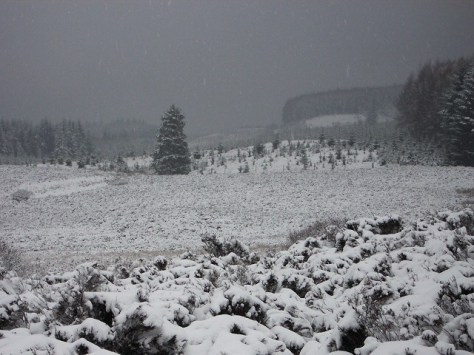
“Stone and snow, silence and air.”

Assuming you beach at last
Near Atlantis, and begin
The terrible trek inland
Through squalid woods and frozen
Tundras where all are soon lost;
If, forsaken then, you stand,
Dismissal everywhere,
Stone and snow, silence and air,
O remember the great dead
And honour the fate you are,
Travelling and tormented,
Dialectic and bizarre.

Stagger onward rejoicing;
And even then if, perhaps
Having actually got
To the last col, you collapse
With all Atlantis shining
Below you yet you cannot
Descend, you should still be proud
Even to have been allowed
Just to peep at Atlantis
In a poetic vision:
Give thanks and lie down in peace,
Having seen your salvation.

All the little household gods
Have started crying, but say
Good-bye now, and put to sea.
Farewell, my dear, farewell: may
Hermes, master of roads,
And the four dwarf Kabiri,
Protect and serve you always;
And may the Ancient of Days
Provide for all you must do
His invisible guidance,
Lifting up, dear, upon you
The light of His countenance.

— excerpt from W. H. Auden’s “Atlantis,” January 1941


Snow_at_forest_edge_-_geograph.org.uk_-_135567

Photo credit: Lis Burke [CC BY-SA 2.0 (http://creativecommons.org/licenses/by-sa/2.0)%5D, via Wikimedia Commons.

“The Shield of Achilles,” by W. H. Auden

A good buddy of mine in New York is a bit of a classical scholar; he recently finished Homer’s “The Illiad.”  That’s a task that has been beyond me so far.  I tried to read it at age 36, and it was just too thick for me.

Anyway, you and I both know the greatest poetic allegory to “The Illiad” ever written — it’s none other than W.H. Auden’s “The Shield of Achilles.”

Thanks to Poets.org for the text.


“The Shield of Achilles”

  She looked over his shoulder
       For vines and olive trees,
     Marble well-governed cities
       And ships upon untamed seas,
     But there on the shining metal
       His hands had put instead
     An artificial wilderness
       And a sky like lead.

A plain without a feature, bare and brown,
   No blade of grass, no sign of neighborhood,
Nothing to eat and nowhere to sit down, 
   Yet, congregated on its blankness, stood
   An unintelligible multitude,
A million eyes, a million boots in line, 
Without expression, waiting for a sign.

Out of the air a voice without a face
   Proved by statistics that some cause was just
In tones as dry and level as the place:
   No one was cheered and nothing was discussed;
   Column by column in a cloud of dust
They marched away enduring a belief
Whose logic brought them, somewhere else, to grief.

     She looked over his shoulder
       For ritual pieties,
     White flower-garlanded heifers,
       Libation and sacrifice,
     But there on the shining metal
       Where the altar should have been,
     She saw by his flickering forge-light
       Quite another scene.

Barbed wire enclosed an arbitrary spot
   Where bored officials lounged (one cracked a joke)
And sentries sweated for the day was hot:
   A crowd of ordinary decent folk
   Watched from without and neither moved nor spoke
As three pale figures were led forth and bound
To three posts driven upright in the ground.

The mass and majesty of this world, all
   That carries weight and always weighs the same
Lay in the hands of others; they were small
   And could not hope for help and no help came:
   What their foes like to do was done, their shame
Was all the worst could wish; they lost their pride
And died as men before their bodies died.

     She looked over his shoulder
       For athletes at their games,
     Men and women in a dance
       Moving their sweet limbs
     Quick, quick, to music,
       But there on the shining shield
     His hands had set no dancing-floor
       But a weed-choked field.

A ragged urchin, aimless and alone, 
   Loitered about that vacancy; a bird
Flew up to safety from his well-aimed stone:
   That girls are raped, that two boys knife a third,
   Were axioms to him, who’d never heard
Of any world where promises were kept,
Or one could weep because another wept.

     The thin-lipped armorer,
       Hephaestos, hobbled away,
     Thetis of the shining breasts
       Cried out in dismay
     At what the god had wrought
       To please her son, the strong
     Iron-hearted man-slaying Achilles
       Who would not live long.


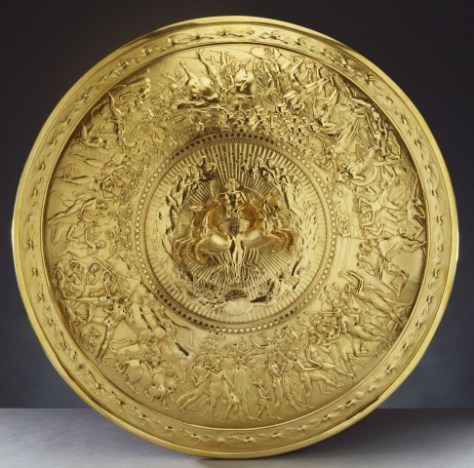
349471-1356022189

The Shield of Achilles: Supplied to George IV by Rundell, Bridge and Rundell, 1821

This poem has been rattling around in my brain …

… since maybe two weeks preceding Christmas, like a frequent, intermittent ghost.  I have no idea why.

Now it’s yours.

“Gonzalo”

—  from W. H. Auden’s “The Sea and the Mirror”

Evening, grave, immense, and clear,
Overlooks our ship whose wake
Lingers undistorted on
Sea and silence; I look back
For the last time as the sun
Sets behind that island where
All our loves were altered: yes,
My prediction came to pass,
Yet I am not justified,
And I weep but not with pride.
Not in me the credit for
Words I uttered long ago
Whose glad meaning I betrayed;
Truths to-day admitted, owe
Nothing to the councilor
In whose booming eloquence
Honesty became untrue.
Am I not Gonzalo who
By his self-reflection made
Consolation an offence?

There was nothing to explain:
Had I trusted the Absurd
And straightforward note by note
Sung exactly what I heard,
Such immediate delight
Would have taken there and then
Our common welkin by surprise,
All would have begun to dance
Jigs of self-deliverance.
It was I prevented this,
Jealous of my native ear,
Mine the art which made the song
Sound ridiculous and wrong,
I whose interference broke
The gallop into jog-trot prose
And by speculation froze
Vision into an idea,
Irony into a joke,
Till I stood convicted of
Doubt and insufficient love.

Farewell, dear island of our wreck:
All have been restored to health,
All have seen the Commonwealth,
There is nothing to forgive.
Since a storm’s decision gave
His subjective passion back
To a meditative man,
Even reminiscence can
Comfort ambient troubles like
Some ruined tower by the sea
Whence boyhoods growing and afraid
Learn a formula they need
In solving their mortality,
Even rusting flesh can be
A simple locus now, a bell
The Already There can lay
Hands on if at any time
It should feel inclined to say
To the lonely – “Here I am,”
To the anxious – “All is well.”


f05c9-auden3

“In a lonely field the rain/ Lashes an abandoned train.”

The Fall of Rome

by W.H. Auden

The piers are pummelled by the waves;
In a lonely field the rain
Lashes an abandoned train;
Outlaws fill the mountain caves.

Fantastic grow the evening gowns;
Agents of the Fisc pursue
Absconding tax-defaulters through
The sewers of provincial towns.

Private rites of magic send
The temple prostitutes to sleep;
All the literati keep
An imaginary friend.

Cerebrotonic Cato may
Extol the Ancient Disciplines,
But the muscle-bound Marines
Mutiny for food and pay.

Caesar’s double-bed is warm
As an unimportant clerk
Writes I DO NOT LIKE MY WORK
On a pink official form.

Unendowed with wealth or pity,
Little birds with scarlet legs,
Sitting on their speckled eggs,
Eye each flu-infected city.

Altogether elsewhere, vast
Herds of reindeer move across
Miles and miles of golden moss,
Silently and very fast.


and_didnt_it_rain!!_(444770889)

Photo credit:  By Ben Salter from Wales (…and didn’t it rain!!)


“The silence roared displeasure.”

“The Average” 

by W. H. Auden

His peasant parents killed themselves with toil
To let their darling leave a stingy soil
For any of those smart professions which
Encourage shallow breathing, and grow rich.

The pressure of their fond ambition made
Their shy and country-loving child afraid
No sensible career was good enough,
Only a hero could deserve such love.

So here he was without maps or supplies,
A hundred miles from any decent town;
The desert glared into his blood-shot eyes;

The silence roared displeasure: looking down,
He saw the shadow of an Average Man
Attempting the Exceptional, and ran.

auden

“One link is missing, Prospero, my magic is my own.”

“One link is missing, Prospero,

“My magic is my own;

“Happy Miranda does not know

“The figure that Antonio

“The Only One, Creation’s O,

“Dances for Death alone.”


— from Antonio’s refrain, in W. H. Auden’s

“The Sea and the Mirror”


800px-Winter_Sky_New_Jersey


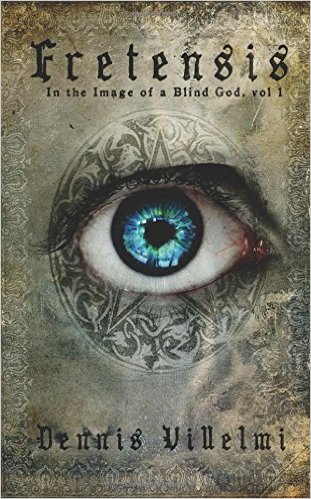
A review of “Fretensis: In the Image of a Blind God, volume 1,” by Dennis Villelmi

With “Fretensis: In the Image of a Blind God, volume 1” Dennis Villelmi expertly enmeshes the reader in a twisting, troubling narrative that is both mythic and tragically personal for the poem’s speaker. It’s a unique work, employing both arcane myth and personal impressions in equal measure. And it’s a hell of a ride.

“Fretensis” is a 56-page book of dark, modernist poetry divided into three parts and baroquely illustrated with medieval woodcuts and other images of the monstrous and the grotesque. The narrative it presents is like nothing else I’ve discovered reading poetry. Its protagonist is a rich intellect and a troubled soul. The mood of “Fretensis” throughout is striking; the overall work expertly conveys sadness, desperation and an enervating sense of struggle. (In the interest of full disclosure here, Villelmi is a valued friend and a poet whose work I have long admired.)

“Fretensis” might be challenging for the average reader. It might take a seasoned academic to understand all of its references and allusions while also understanding their significance within the poem. Villelmi draws on what appears to be an encyclopedic knowledge of ancient history, myth and religion. (He studied philosophy at Old Dominion University, but his expertise is visibly far more expansive in all of his work.) The title of this story, “Fretensis,” is the name of the Tenth Roman Legion, employed at the start of the Fall of the Roman Empire. As with Villelmi’s other published poetry, this debut book is linked intricately to those myths and symbols from which he draws inspiration.

But this is a good thing. Villelmi’s dark and antiquated iconography makes his work unique and unusually rich. This is a poem that begs for rereading and further scrutiny. I myself gleaned so much more from my second reading.

If I could name one thing about Villelmi’s style that makes his work distinctive to me, it would be how he meaningfully interweaves his esoteric symbols and references with the narrator’s personal experience. That duplexity characterizes the entire book, and it makes “Fretensis” remind me of a personal favorite, W.H. Auden’s “September 1, 1939.” That famous poem and its “accurate scholarship” also uses classical references to frame the narrator’s personal experience in context. (In Auden’s case, he called upon Thucydides, Luther and others to frame his own reaction to the 1939 German invasion of Poland.)

Villelmi’s resulting juxtaposition, which is consistent throughout the book, makes for an excellent poetic device. Memphis, Egypt, is made interchangeable with Memphis, Tennessee. References to Jeudayn are used to provide context for the death of a prostitute. A small boy plays “Deity” in “a grey dirt patch behind [a] garage.”

Consider the context that he employs to describe ravens feeding upon a dog’s carcass:

“Driving, I find it ironic, even inappropriate, that as the roadside augur is a dog on which the forest ravens have come to feast on the meat pulled out from under the fur, courtesy of other scavengers, the convent isn’t named after St. Paul. Paul and ravens both know how to seize an opportunity. Rather, it’s named for Fiacre, an old Irish woman-hater of the woods. I once read there were other Fiacres predating Christ’s arrival on Irish soil; they were warlords, predators by serendipity, much like those ravens chowing down on the mutt.”

And Villelmi’s mastery of the language is truly enviable. I found myself most immersed in “Fretensis’” prose-poetry sections. I’m not sure why, but here is where I best felt that I could identify with the narrator. These seemed the most personal to me. They’re so beautifully illustrated by the narrator’s sad, resigned voice that they have the feel of a genuine vignette spoken by a real person.

Consider the opening of “Part II: The Whore’s Afternoon.”

“On my ongoing canvas, there’s only been caricatures and carcasses, with a highway torture dividing the two. Somewhere, I took a detour of forgeries and virgins, and lost the rest of the America I was meant to see …

“Every time I try to measure the time I get a case of dry mouth. That’s how I met Ettey, Ettey Roth. She, too, had a memoir, not unlike mine, and it was over slugs in Seire’s Tavern time and again that we found the mutual souring of our lives to have been rooted in the hems of our birthplaces.”

All in all, “Fretensis” depicts a universe that is both twisting and twisted – a byzantine existence where an eloquent narrator’s darkness is informed by far greater forces that are divine, demonic or both. It’s an accomplished book of poetry that deserves not only to be read, but reread and reconsidered … assuming that you are willing to take that winding, redoubtable journey more than once.

Bravo.
51HuLmHrseL._SX309_BO1,204,203,200_

“Not universal love, But to be loved alone.”

The windiest militant trash
Important Persons shout
Is not so crude as our wish:
What mad Nijinsky wrote
About Diaghilev
Is true of the normal heart;
For the error bred in the bone
Of each woman and each man
Craves what it cannot have,
Not universal love
But to be loved alone.

— from W. H. Auden’s “September 1, 1939”

auden

An entirely fresh and original visual interpretation of “As I Walked Out One Evening.”

I am linking here to a video in the “I Didn’t Write This” series on Youtube.  I love it — director Yulin Kuang and the actors here create a visually rich, soft-spoken, and quietly contemplative treatment of of what might be W. H. Auden’s most famous poem, “As I Walked Out One Evening.”

The reader’s relaxed and conversational tone are a nice contrast to the piece’s dark imagery.

It’s beautiful work.

“Hunger allows no choice to the citizen or the police.”

All I have is a voice
To undo the folded lie,
The romantic lie in the brain
Of the sensual man-in-the-street
And the lie of Authority
Whose buildings grope the sky:
There is no such thing as the State
And no one exists alone;
Hunger allows no choice
To the citizen or the police;
We must love one another or die.

— from W. H. Auden’s “September 1, 1939”

f05c9-auden3