Tag Archives: W.H. Auden

“He … re-opened old graves in his heart to learn/ What laws the dead had died to disobey.”

“The Third Temptation,” by W. H. Auden

(Part VIII of “the Quest”)

VIII. The Third Temptation

He watched with all his organs of concern
How princes walk, what wives and children say,
Re-opened old graves in his heart to learn
What laws the dead had died to disobey,

And came reluctantly to his conclusion:
“All the arm-chair philosophies are false;
To love another adds to the confusion;
The song of mercy is the Devil’s Waltz.”

All that he put his hand to prospered so
That soon he was the very King of creatures,
Yet, in an autumn nightmare trembled, for,

Approaching down a ruined corridor,
Strode someone with his own distorted features
Who wept, and grew enormous, and cried Woe.
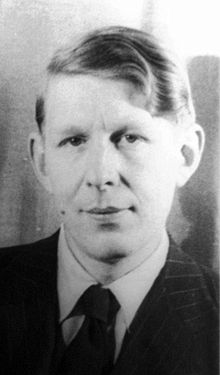
220px-AudenVanVechten1939

“The Second Temptation,” by W. H. Auden

Part VII of “The Quest,” by W. H. Auden

The Second Temptation

His library annoyed him with its look
Of calm belief in being really there;
He threw away a rival’s boring book,
And clattered panting up the spiral stair.

Swaying upon the parapet he cried:
“O Uncreated Nothing, set me free,
Now let Thy perfect be identified,
Unending passion of the Night, with Thee.”

And his long-suffering flesh, that all the time
Had felt the simple cravings of the stone
And hoped to be rewarded for her climb,

Took it to be a promise when he spoke
That now at last she would be left alone,
And plunged into the college quad, and broke.

Auden8

“One gaze points elsewhere, Prospero …”

One gaze points elsewhere, Prospero,

My compass is my own;

Nostalgic sailors do not know

The waters where Antonio

Sails on and on alone.

—  Antonio, from W. H. Auden’s “The Sea and the Mirror”

“The First Temptation,” by W. H. Auden

(Part VI of “The Quest”)

“The First Temptation”

Ashamed to be the darling of his grief,
He joined a gang of rowdy stories where
His gift for magic quickly made him chief
Of all these boyish powers of the air;

Who turned his hungers into Roman food,
The town’s asymmetry into a park;
All hours took taxis; any solitude
Became his flattered duchess in the dark.

But, if he wished for anything less grand,
The nights came padding after him like wild
Beasts that meant harm, and all the doors cried Thief;

And when Truth had met him and put out her hand,
He clung in panic to his tall belief
And shrank away like an ill-treated child.

“The City,” by W. H. Auden

(Part V. of “The Quest.”)

“The City”

In villages from which their childhoods came
Seeking Necessity, they had been taught
Necessity by nature is the same
No matter how or by whom it be sought.

The city, though, assumed no such belief,
But welcomed each as if he came alone,
The nature of Necessity like grief
Exactly corresponding to his own.

And offered them so many, every one
Found some temptation fit to govern him,
And settled down to master the whole craft

Of being nobody; sat in the sun
During the lunch-hour round the fountain rim,
And watched the country kids arrive, and laughed.

“The Traveler,” by W. H. Auden

“The Traveler,” by W. H. Auden (Part IV of “The Quest”)

No window in his suburb lights that bedroom where
A little fever heard large afternoons at play:
His meadows multiply; that mill, though, is not there
Which went on grinding at the back of love all day.

Nor all his weeping ways through weary wastes have found
The castle where his Greater Hallows are interned;
For broken bridges halt him, and dark thickets round
Some ruin where an evil heritage was burned.

Could he forget a child’s ambition to be old
And institutions where it learned to wash and lie,
He’d tell the truth for which he thinks himself too young,

That everywhere on his horizon, all the sky,
Is now, as always, only waiting to be told
To be his father’s house and speak his mother tongue.

“After Sept. 11, a 62-year-old poem by Auden drew new attention. Not all of it was favorable.”

Linking here to a great article in 2001 by Peter Steinfels at the New York Times, discussing the renewed popularity of W.H. Auden’s “September 1, 1939” after 9/11.

I knew the poem was controversial, and that it arguably could have been quoted out of context, as it references the events preceding World War II.  But I had no idea how controversial.  I can’t believe the famous piece was later so “loathed” by Auden himself.

Here is a link to the poem itself, at the website of Academy of American Poets:

http://www.poets.org/poetsorg/poem/september-1-1939

AN APOLOGY.

To all those who I regaled on Monday with my newly memorized “Song of the Master and Boatswain,” by W.H. Auden, I apologize for being an idjit and incorrectly pronouncing its title as “Master and BOAT’S-Wayne.”

Sigh … the Internet, forever helping to edumucate me, informs me that, of course, it is pronounced “Song of the Master and BO-sin.”

See this link:  

That’s “Bo-sin.”  You know … like when Bo Duke commits adultery.

This writer gig would be so much easier if I could only master this … ENGLISHY thing.

OH!  Amanda!!  That reminds me!!  I apologize also for utterly destroying your car today!!  (As the mood tonight is one of penitence, I figured I’d work that one in there …)  We can work out a payment plan, right?  And … I can, like … pay you in verse, or something … right?   

See this link, Honey:


“The nightingales are sobbing in the orchards of our mothers.”

“Song of the Master and Boatswain,” by W. H. Auden

     (a selection from “The Sea and the Mirror”)

At Dirty Dick’s and Sloppy Joe’s
We drank our liquor straight,
Some went upstairs with Margery,
And some, alas, with Kate;
And two by two like cat and mouse
The homeless played at keeping house.

There Wealthy Meg, the Sailor’s Friend,
And Marion, cow-eyed,
Opened their arms to me but I
Refused to step inside;
I was not looking for a cage
In which to mope my old age.

The nightingales are sobbing in
The orchards of our mothers,
And hearts that we broke long ago
Have long been breaking others;
Tears are round, the sea is deep:
Roll them overboard and sleep.

“The Crossroads,” by W. H. Auden

No … not “Lady Weeping at the Crossroads,” though I do need to run that one here soon, if I haven’t already.  This is Part III of “The Quest.”

I love to read darker poetry, but even a guy like me has got to admit, there are times it seems that ol’ Wystan needed to lighten up a little.  After reading this, I wish I could go back in time and buy him a beer or a cup of coffee — whichever would cheer him up.

“The Crossroads,” by W. H. Auden

Two friends who met here and embraced are gone,
Each to his own mistake; one flashes on
To fame and ruin in a rowdy lie,
A village torpor holds the other one,
Some local wrong where it takes time to die:
This empty junction glitters in the sun.

So at all quays and crossroads: who can tell
These places of decision and farewell
To what dishonour all adventure leads,
What parting gift could give that friend protection,
So orientated his vocation needs
The Bad Lands and the sinister direction?

All landscapes and all weathers freeze with fear,
But none have ever thought, the legends say,
The time allowed made it impossible;
For even the most pessimistic set
The limit of their errors at a year.
What friends could there be left then to betray,
What joy take longer to atone for; yet
Who could complete without the extra day
The journey that should take no time at all?