Tag Archives: William Shakespeare

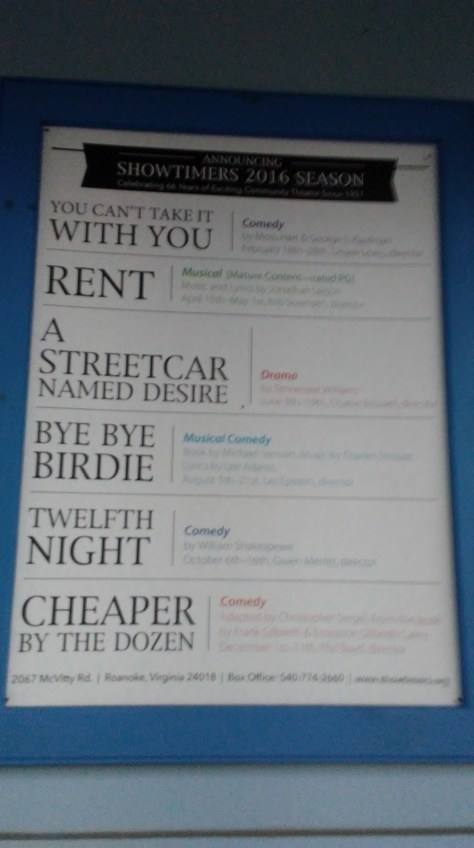
Showtimers Community Theater, Roanoke, Virginia, October 2016

I saw an absolutely fantastic production of William Shakespeare’s “Twelfth Night” in Roanoke the first weekend of October, performed by Showtimers Community Theater.

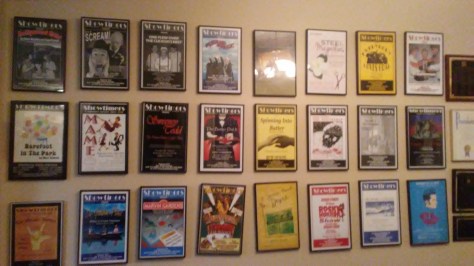
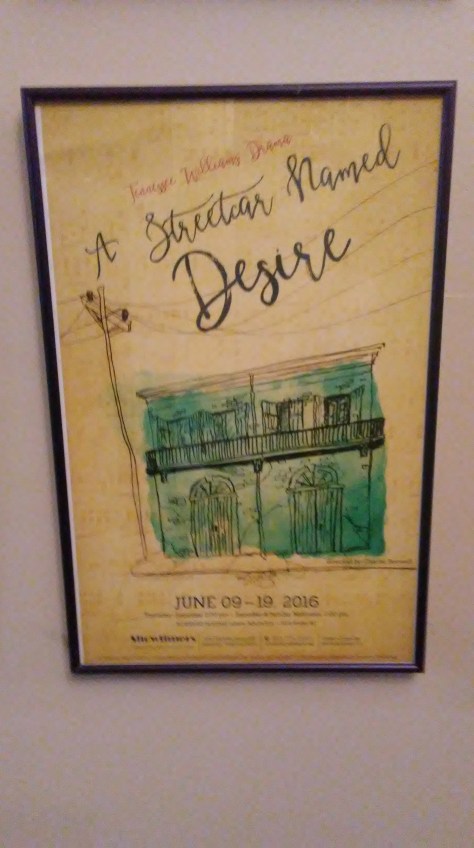
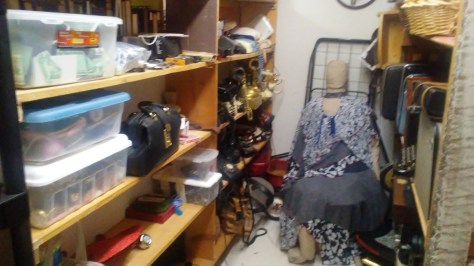
I then was treated to a  tour of the entire theater itself.   The wooded hilltop location is a renovated 1908 church secluded from its surrounding residential neighborhood — it’s a small touch of ambiance that further makes the venue an easy destination for people looking for an atmospheric night out.  (Showtimers has been operating since 1951.)


20161006_183601

20161006_183445

20161006_183701

20161006_184320

20161007_160852

20161007_160929

20161007_160637

20161007_155400

20161007_155411

20161007_155427

20161007_155436

20161007_160356

20161006_183544


“Tis but thy name that is my enemy.”

‘Tis but thy name that is my enemy;
Thou art thyself, though not a Montague.
What’s Montague? It is nor hand, nor foot,
Nor arm, nor face, nor any other part
Belonging to a man. O, be some other name!
What’s in a name? that which we call a rose
By any other name would smell as sweet.

— Juliet, in William Shakespeare’s “Romeo and Juliet”


Photo: Ignacio P. Camarlench: “Una Rosa,” 1894


“Were it not that I have bad dreams.”

“O God, I could be bounded in a nutshell and count myself a king of infinite space, were it not that I have bad dreams.”

—  William Shakespeare, “Hamlet,” Act II Scene II


Dark_corridor_(4676385338)

“Friends, Romans, countrymen, lend me your ears.”

Today is the Ides of March.

I suppose that Marc Antony’s speech from “Julius Caesar,” below, is the Western World’s definitive treatise on sarcasm?

I haven’t read it in its entirety since 10th grade English at Longwood High School.  In doing so now, I’m surprised at how many pop cultural references to it spring to mind:

  1.  The entire speech is beautifully riffed by the eponymous blade-wielding arch-villain in Matt Wagner’s incredible “Grendel: Devil by the Deed” (1993) as follows: “Friends, Romans, city folk — listen to me or I’ll lop off off your ears.  Let’s bury your Caesar and then let’s appraise him.”
  2. I’m guessing that Charles Bronson’s “The Evil That Men Do” (1984) is a reference to the third line?
  3. In at least one episode of “The X Files” in the 1990’s, the Well-Manicured Man angrily refers to the traitorous Syndicate as “these honorable men.”
  4. In one of his later novels (2002’s “The Bear and the Dragon,” maybe?) Tom Clancy describes a pregnant Chinese factory worker as being “made of sterner stuff.”  (I can’t remember which book, but for some strange reason I can remember that line.  Weird.)


Friends, Romans, countrymen, lend me your ears;
I come to bury Caesar, not to praise him.
The evil that men do lives after them;
The good is oft interred with their bones;
So let it be with Caesar. The noble Brutus
Hath told you Caesar was ambitious:
If it were so, it was a grievous fault,
And grievously hath Caesar answer’d it.
Here, under leave of Brutus and the rest–
For Brutus is an honourable man;
So are they all, all honourable men–
Come I to speak in Caesar’s funeral.
He was my friend, faithful and just to me:
But Brutus says he was ambitious;
And Brutus is an honourable man.
He hath brought many captives home to Rome
Whose ransoms did the general coffers fill:
Did this in Caesar seem ambitious?
When that the poor have cried, Caesar hath wept:
Ambition should be made of sterner stuff:
Yet Brutus says he was ambitious;
And Brutus is an honourable man.
You all did see that on the Lupercal
I thrice presented him a kingly crown,
Which he did thrice refuse: was this ambition?
Yet Brutus says he was ambitious;
And, sure, he is an honourable man.
I speak not to disprove what Brutus spoke,
But here I am to speak what I do know.
You all did love him once, not without cause:
What cause withholds you then, to mourn for him?
O judgment! thou art fled to brutish beasts,
And men have lost their reason. Bear with me;
My heart is in the coffin there with Caesar,
And I must pause till it come back to me.


 

— from William Shakespeare’s “Julius Caesar”


Grendel Devil Tales 1

That time “The Governor” performed William Shakespeare’s “Richard III”

“Now is the winter of our discontent … RICK.”

“The Walking Dead’s” David Morrissey actually is a damn fine actor.

At any rate, here’s a brain twister for you — David Morrissey looks a lot like … Morrissey, from The Smiths.  Morrissey from The Smiths looks a lot like Quentin Tarantino.  Yet David Morrissey and Quentin Tarantino look nothing alike.

You figure it out.


“The robbed that smiles steals something from the thief.”

“To mourn a mischief that is past and gone
“Is the next way to draw new mischief on.
“What cannot be preserved when fortune takes,
“Patience her injury a mock’ry makes.
“The robbed that smiles steals something from the thief,
“He robs himself that spends a bootless grief.”


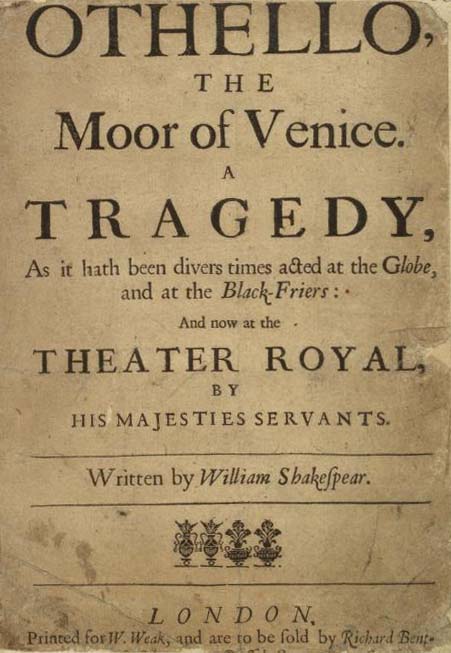
—  from William Shakespeare’s “Othello”


othello-bill

“Brave New World”

O, wonder!
How many goodly creatures are there here!

How beauteous mankind is! O brave new world,
That has such people in’t!

— Miranda, “The Tempest,” by William Shakespeare

“Sonnet 64,” by William Shakespeare

“Sonnet 64,” by William Shakespeare

When I have seen by Time’s fell hand defaced
The rich proud cost of outworn buried age;
When sometime lofty towers I see down-razed,
And brass eternal slave to mortal rage;
When I have seen the hungry ocean gain
Advantage on the kingdom of the shore,
And the firm soil win of the watery main,
Increasing store with loss, and loss with store;
When I have seen such interchange of state,
Or state itself confounded to decay;
Ruin hath taught me thus to ruminate
That Time will come and take my love away.
This thought is as a death which cannot choose
But weep to have that which it fears to lose.

download