For the line “Merely this and nothing more.”

Photo credit: By Gustave Dore (dore.artpassions.net/) [Public domain], via Wikimedia Commons.
For the line “Merely this and nothing more.”
Photo credit: By Gustave Dore (dore.artpassions.net/) [Public domain], via Wikimedia Commons.
The Manchurian candidate is a common trope. A Manchurian candidate hidden within a neurotic, drug addled, underachieving comic book creator is actually pretty creative.
That’s just one of the reasons that “American Ultra” (2015) had the makings of a great movie. This film has more going for it too. The soft spoken Jesse Eisenberg is extremely talented, being both quite funny and bizarrely likeable in the role. Kristen Stewart is also just great. (I haven’t seen her in the “Twilight” films that made her famous/infamous, but she really impressed me as a child actress in 2002’s terrific “Panic Room.”) And, like Eisenberg, Connie Britton has perfect comic timing and delivery. (I’m still smiling at her offhand “Hey!” to the guy in the barn.)
Regrettably, maybe just past the halfway mark, this film loses its way just a bit. The humor stops being character- and dialogue-driven, and the fish-out-of-water comedy sort of segues into a generic (and not terribly well executed) action –thriller. There are some half-hearted action set pieces that aren’t especially well staged, or even well conceptualized. And precisely nobody acts as though they have any sort of government or military training — either conventional or subliminally hidden. Does EVERYONE in hollywood movies ALWAYS cluster together in a clear field of fire without seeking cover?
There is another miscalculation, too, that makes “American Ultra” less than great. Our bad guys are cartoonish. Eisenberg’s pursuers turn out to be (sigh) former mental patients who have received the same mental conditioning. One is code-named “Laugher” because he cackles hysterically. (That’s something out of a mediocre comic book.) And, like everyone’s least favorite Spiderman movie from the 2000’s, Topher Grace is cast against type as a raging psychotic. (Am I the only one who thinks he was far funnier as the mild-mannered, relatable everyteen in “That 70’s Show?”)
How much funnier would this movie have been overall if Eisenberg’s quirky antihero (and maybe his weird friends) were the only comedic characters? What if all their antagonists were “straight men” characters who ironically struggled in vain to defeat them? This film could have been a classic.
Oh, well. I still liked this well enough. I’d give it a 7 out of 10.
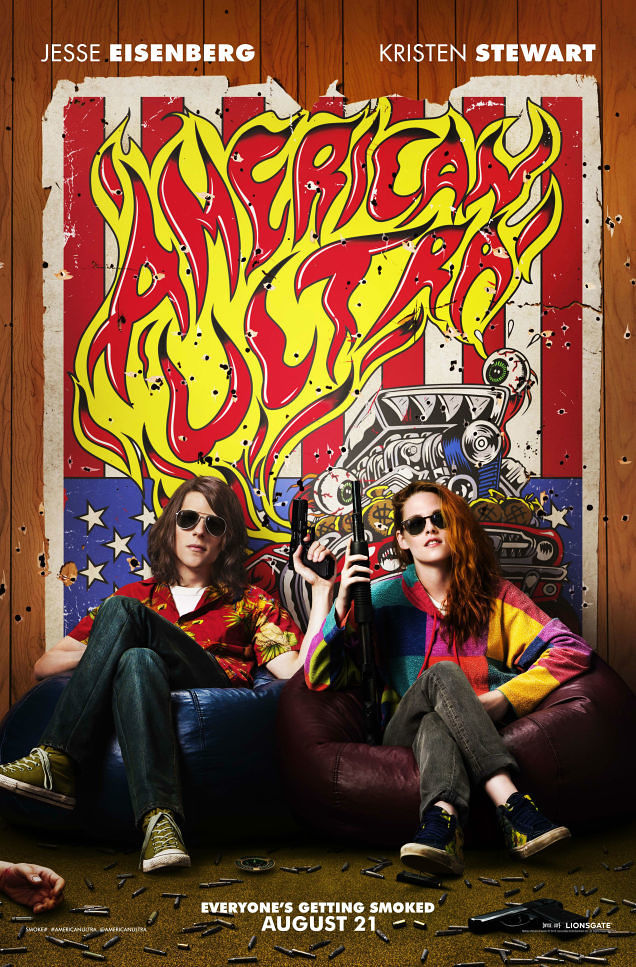

Photo credit: By Gustave Dore (dore.artpassions.net/) [Public domain], via Wikimedia Commons.
This is a national embarrassment.
“ZADROGA ACT THAT HELPS 9/11 ATTACK VICTIMS AND FIRST RESPONDERS NOT EXTENDED BY CONGRESS,” Eyewitness News, ABC7NY:
Illustrations by H. C. Selous and M. Paolo Priolo.

I shared this popular poem a couple of days ago when I found it on Facebook, as I have several female friends who it fits to a tee. Author Meg Haney was kind enough to permit me to copy it and run it here.
“This is a Poem for the Monster Girls”
by Meg Haney
This is a poem for the monster girls
The ones who have no stars in their skin
Only fire and iron and rhinoceros hides
For the ones who have walked fire alone
Into those dark forests and shouting storms
On those deep dark and endless nights
This is a poem for those who didn’t emerge
With that crown of gold or prince charming
No Disney choruses or extended dance numbers
The ones who stayed in the wild strengthening their soul
and forging their hearts to a brand new and different sheen
for the ones who didn’t remain in their beds
pulling the covers overhead hoping for rescue
but Stood facing the monsters and storms
they walked the fire and faced the dragons
and often made peace with those that lived inside
Those who struck at the fiends at the gate
The invading forces and the wicked pain
whipping with wild blows, shouting their own storm
This is for the not Princesses, the unroyal and deposed
For the wild warriors and mythic goddesses
Those who will never stoop to be a simple queen
Never don an insipid crown or sit on a cushioned throne
This is for those who know that this story is for you to write
You and you alone this is for you to craft as a tale of hero or woe
This is for those who have learned to breathe fire
letting it shine through their scars and light the way for others.
Stop waiting for Prince Charming…
Get up and go, find him, the poor fool may be in need of a good rescue
Heck he could be stuck in a tree or something
(c) Meg Haney 2014

So I’m working on a poem, and I need to ascertain that the martin and the raven are indeed two different species of birds.
Google shows me this. Holy crap, do I ever need this animal as a pet.
Evidently, this animal is called a “pine marten?” So some mammals are also “martens” with an “e?”
Whatever. As a guy who just doesn’t get sports, the agent provocateur here is far more entertaining than the actual game.
“Pine marten” is a pretty name. But I think proper adherence to scientific nomenclature better suggests “funnier wolverine” or “disruptive weasel” or even just “AWESOME BASTARD.”
Weird world: I had no idea that a “rook” was a crow until I read “Wizard and Glass.” (Cuthbert Allgood wears a “rook’s skull” as a pendant, as a gag.) You can learn a lot from Stephen King.
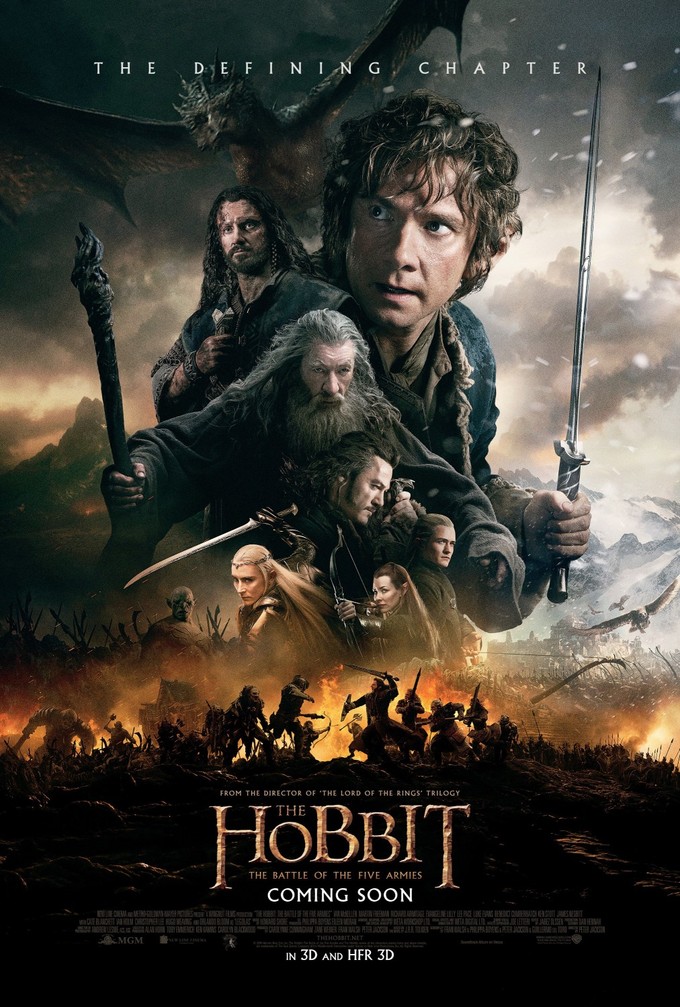
I think that “The Hobbit: The Battle of the Five Armies” (2014) is the best of Peter Jackson’s prequel trilogy, and not only because of its predictably terrific climactic battle. I’d give this movie a 9 out of 10.
First, it’s less cartoonish and far more adult than its predecessors, in everything from its themes to its fight choreography. (Compare the beautifully staged final melees here, for example, with that Warner Brothers-esque sequence in the second film, in which the dwarves dance across barrels and river rapids to repel their orc pursuers.)
It also seems like a better peek at a larger fantasy universe, with different races, armies and cultures working at cross purposes before needing to align, and with more than one protagonist’s real failings factoring in to that.
And … HOT DAMN! That’s GOTTA be the greatest depiction of a dragon I’ve ever seen. One small quibble I’ve had throughout all of Jackson’ Tolkien films was that the stories’ antagonists sometimes seemed too silly and clownish to be truly menacing. (The orcs, trolls and goblins seemed cartoonish and are too easily defeated by beings sometimes half their height; only the Nazguls and the Uruk-Hai hybrids managed to impress.) Jackson’s depiction of Smaug ravaging Laketown makes dragons look like Middle Earth’s equivalent of a goddam nuclear device.
[Edit: I just realized that in both this film and NBC’s “Hannibal,” the amazing Richard Armitage costars with a “Red Dragon.]
Halloween season is almost upon us. (I’m the kind of purist who thinks it begins on October 1. My neighbors have shown surprising restraint; I’ve only seen one decorated house.) And Halloween is the season for Edgar Allan Poe.
I’m running “Annabel Lee” today, however, because I was chatting with a Mary Washington College Alumna the other day who named her daughter “Annabelle.” The conversation came up after my review of last year’s surprisingly good horror movie of the same name. (My New Hall friend arrived at “Annabelle” after researching the name, but not after this poem. That would be weird.)
“Annabel Lee,” by Edgar Allan Poe
It was many and many a year ago,
In a kingdom by the sea,
That a maiden there lived whom you may know
By the name of Annabel Lee;
And this maiden she lived with no other thought
Than to love and be loved by me.
I was a child and she was a child,
In this kingdom by the sea,
But we loved with a love that was more than love—
I and my Annabel Lee—
With a love that the wingèd seraphs of Heaven
Coveted her and me.
And this was the reason that, long ago,
In this kingdom by the sea,
A wind blew out of a cloud, chilling
My beautiful Annabel Lee;
So that her highborn kinsmen came
And bore her away from me,
To shut her up in a sepulchre
In this kingdom by the sea.
The angels, not half so happy in Heaven,
Went envying her and me—
Yes!—that was the reason (as all men know,
In this kingdom by the sea)
That the wind came out of the cloud by night,
Chilling and killing my Annabel Lee.
But our love it was stronger by far than the love
Of those who were older than we—
Of many far wiser than we—
And neither the angels in Heaven above
Nor the demons down under the sea
Can ever dissever my soul from the soul
Of the beautiful Annabel Lee;
For the moon never beams, without bringing me dreams
Of the beautiful Annabel Lee;
And the stars never rise, but I feel the bright eyes
Of the beautiful Annabel Lee;
And so, all the night-tide, I lie down by the side
Of my darling—my darling—my life and my bride,
In her sepulchre there by the sea—
In her tomb by the sounding sea.

Photo credit: By Edgar Allan Poe, “Annabel Lee”, 1849 fair copy. [Public domain], via Wikimedia Commons
Dear LORD. Watch it. For the full effect, click to enlarge and play it with the sound on.
I don’t know how to describe it, except that it follows a man who has donned a kind of flying squirrel suit that allows him to glide over half an everlovin’ MOUNTAIN RANGE before deploying a parachute. It’s basically a big “F YOU” to the laws of physics and anything resembling a sense of self preservation.
It’s extraordinary:

