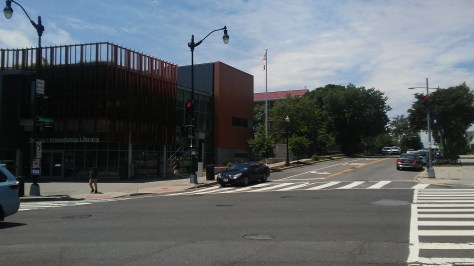
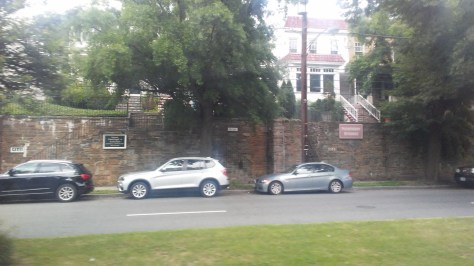
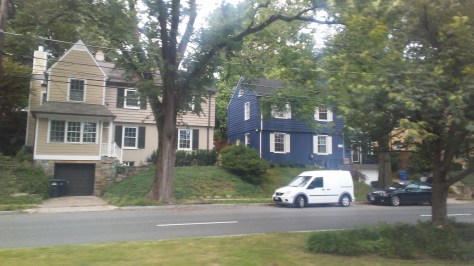
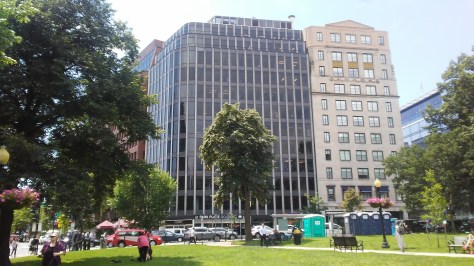
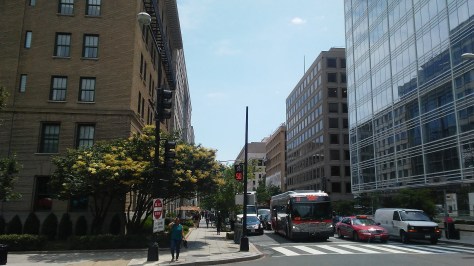
This is Tenleytown, in Washington, D.C.’s Northwest, just a couple of blocks from a campus of American University — where I almost went to school, instead of Mary Washington College in Virginia. I even (somewhat hilariously) received “honors admission” there. (I was never actually a true “honor student,” even in high school, because my grades in math and science were fair at best — and anyone who knew me at age 18 could tell you that I was not exactly the brightest bulb in the socket.)
I remember being pretty excited as a high school senior at that admission letter. American U. was my first choice; I was only seduced away to small-town Virginia by a generous financial aid package from the good people at Mary Washington. (Yes, young people, Fredericksburg was indeed a small town in 1990, even if it now looks like downtown frikkin’ Fairfax.)
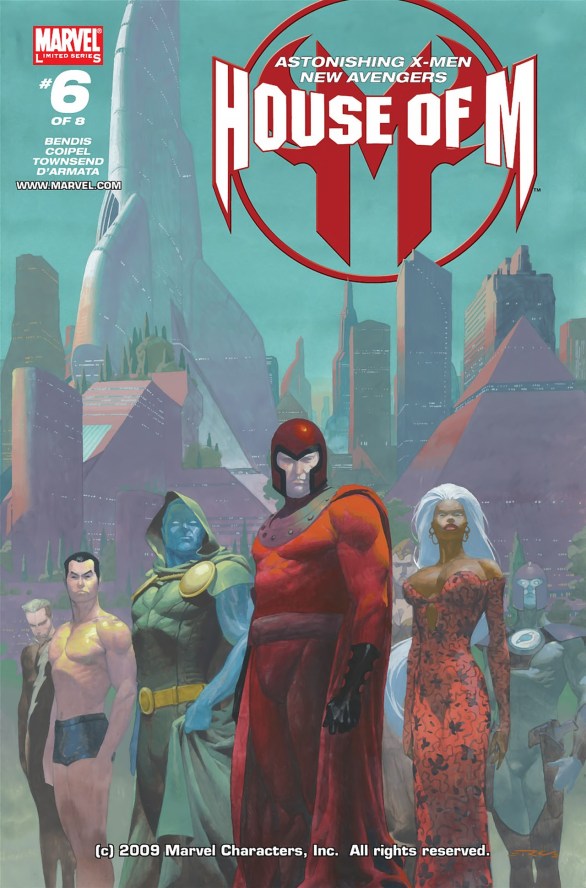
It was freaky sipping coffee in Tenleytown and pondering some other parallel-universe me who lived and studied and partied there as a kid. (Where would I have bought my comic books?) Most people don’t think about string theory when they travel, but I am both a science fiction fan and a really weird guy with a lot of time on his hands. (Where is that other Eric right now? Is he married? Is he writing? Is he equally irritated by Star Wars obsessives, the religious right, Orwellian language, people who push “healthy snacks,” the dumbing down of America, “fun-sized” candy, and the gradual decline of “The Walking Dead?”)
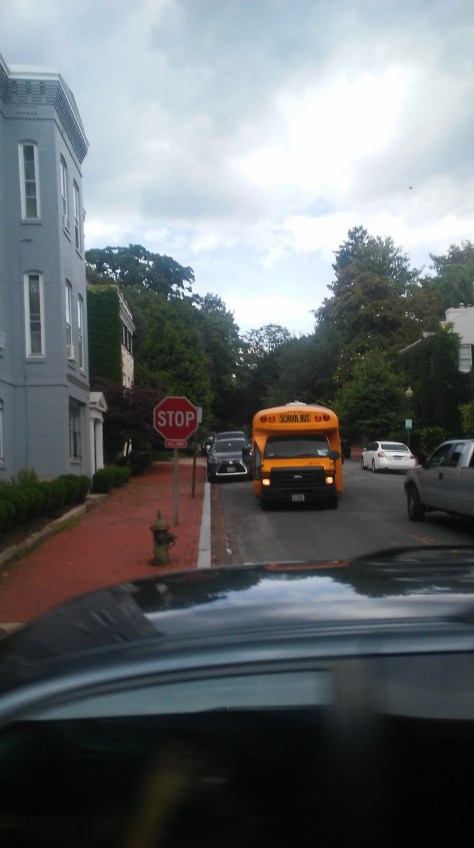
Anyway, Tenleytown a pleasant neighborhood with a brisk, college-town vibe to it. DC consistently surprises me by how friendly its people can be.
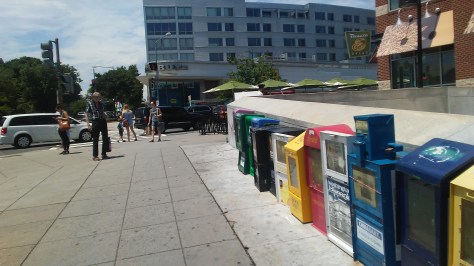
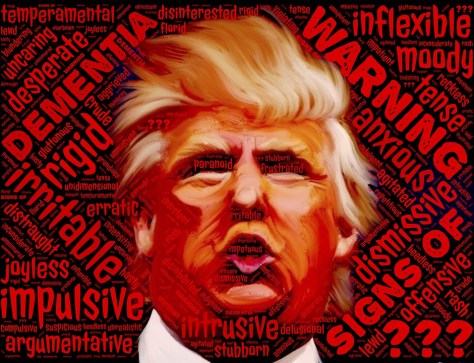
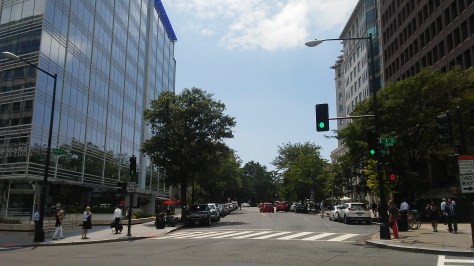
I left some poetry mini-books beside some news-stands on Albemarle Street, a cross-street with Wisconsin Avenue. The stands alternately inform readers in Greek, Spanish, Chinese and English about how DC’s most deplorable resident has most recently embarrassed our country. (I admire the Spanish-language papers’ predictable special antipathy for the president.) No matter how sad the news is, this town will not let you hide behind a language barrier.
Am I nuts, or does that Best Buy look like it was designed with the Watergate in mind? I keep wondering if that is someone’s idea of an obscure joke.






















 Eric Robert Nolan, Author