Hot Cop
protects the Pentagon.
She’s the Lovely Blue Line, people.
You sure can’t call it
“Homely Security.”
If glances were misdemeanors
I’d be a suspect.
(c) Eric Robert Nolan 2016

Hot Cop
protects the Pentagon.
She’s the Lovely Blue Line, people.
You sure can’t call it
“Homely Security.”
If glances were misdemeanors
I’d be a suspect.
(c) Eric Robert Nolan 2016
Marvel Comics.

“Blue Wolves Move In An Indigo Wood”
“Show me a sane man and I will cure him for you.”
— Carl Gustav Jung
All the colors are off —
Blue wolves move in an indigo wood
Their cobalt backs arrive, arising
Like coarse dorsal fins over
low-lying orange flora,
their beryl heads hung low — every
aquiline cerulean nose is angled down —
tracing the escape of a flaming hare —
their racing red rabbit has evaded them again.
Dreams leave all our long nights’ inner canvases
in singular tints and incongruous
strange iridescence.
Reason, here, is pariah.
Senses are its surrogates.
Vision its impostor
in the illogic’s ether:
Slow stars arc in scarlet.
Racing sable comets
make black wakes against
blinding white night.
A full moon rises in violet —
the fat and full and low-lying fruit of a
dark and overripe plum.
Yellow bucks bounce
high and away in the wolves’ wake —
sun-colored stags beat bright retreat
a running herd of burning gold —
all sunlit sinewed limbs and flashing hooves.
Flurries of green quail flutter,
flushed from fushia grasses —
alate bladed emeralds, blazing away.
The verdant birds burnish silhouettes —
angles on lunar lavender.
But ever all the blue wolves ignore the moon.
Each arrows forth in formation
ardently advancing —
oblivious to bucks and disregarding birds.
It’s the hare that they’re after —
its crimson prints
lure azure noses
and bait the ordered forward pace
of the great broad and blue padded paws.
In a surprising eloquence,
one predator’s head
rises and sonorously
sounds its disinterest.
“See, then, dreamer, see,
“what evades the lucid wit at dawn.
“The obvious moon is the obvious girl;
“your love is a glaring suggestion —
“as bare-faced and as common
“as a hundred thousand loves that came before — her face
“turning and facing away is as plain
“as a routine moonrise, but we,
“we are the Jungian Shadow.
“And our red hare is your red hare
“And hare for one and all.”
The predator’s head is an arrow —
its broad blue ears angle back
as its blue nose rises and scents.
And its voice is song.
“See then, dreamer, see
“what confounds the heart at noon.
“The stags to which we’re indifferent
“Are the heroes of your childhood.
“The flight of every bird is your every
“moment of loss, but we,
“we are the Jungian Shadow.
“And our red hare is your red hare
“and hare for one and all.”
Then the blue nose dips
to sniff the ground again
in the predator’s diligence. If
this wolf’s tones were physical,
they would be blue tears.
“See then, dreamer, see
“what escapes the brain at day, see,
“Arriving at your reservoir,
“that its pedestrian waters
“though shallow, still may drown
“in existential death, so rather
“hunt at its circumference
“the red of a Collective hope.
“We are the Jungian Shadow.
“And our red hare is your red hare
“and hare for one and all.”
Finally its eyes soften,
running from burning blue cobalt
to the warm sky-blue of hopeful new boyhood summers, and yet,
its sad irises reflect
a distant dancing red:
a spinning flame –a prancing hare.
“See, then, dreamer, see
“what renders your pain as prosaic —
“the racing red flame of the hare.
“It might have tempted Ovid once
“or pained the painters of caves,
“baiting them as their discovered fire
“first turned stone to a nocturnal
“canvas — the clay
“reddened their hands but they
“could only glimpse an inner quarry,
“as you glimpse it, now,
“turning away
“from your minutiae.”
“See, then, dreamer, see.
“See a universal grief
“and a shared catharsis
“rendered in red in your sleep:
“blood red, the color of prey,
“sunset red at end of day,
“flame, the color of pain
“and, yet, created light.
“See, then, dreamer, see.
“Hunt with us and hear our call.
“Our red hare is your red hare
“and hare for one and all.”
— (c) Eric Robert Nolan 2016
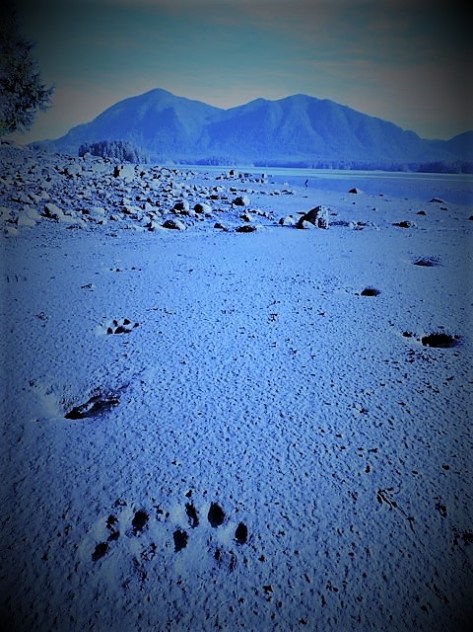
Photo credit: Mathieu.S.Addison [CC BY-SA 4.0 (https://creativecommons.org/licenses/by-sa/4.0)%5D, with changes (colorization) by Eric Robert Nolan
Warner Bros. Pictures.

“Insanity in individuals is something rare — but in groups, parties, nations and epochs, it is the rule.”
— Friedrich Nietzsche

I wrote this four years ago, during another insomniac March.
“March Midnight Window,” by Eric Robert Nolan
Cold glass.
One white palm against
A March midnight window.
The hour is struck.
In blackness an indistinct
Day is made another.
Clouds seclude the moon.
To those outside,
The lithe, pale “L” of my hand may be
An alabaster letter,
A sign to other sleepless.
Each, in eisegesis,
Divines its meaning in
Their own midnight hearts —
Whether love or loss I do not know.
(c) 2015 Eric Robert Nolan
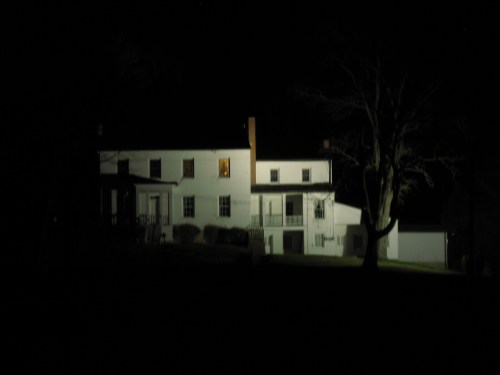
Photo credit: Nyttend [Public domain]
What are heavy? Sea-sand and sorrow:
What are brief? To-day and to-morrow:
What are frail? Spring blossoms and youth:
What are deep? The ocean and truth.
— Christina Georgina Rossetti

EC Comics.

“The individual has always had to struggle to keep from being overwhelmed by the tribe. If you try it, you will be lonely often, and sometimes frightened. But no price is too high to pay for the privilege of owning yourself.”
— Rudyard Kipling
This quote is often mistakenly attributed to Friedrich Nietzsche. Kipling said it in a 1935 interview with Reader’s Digest.

Margery Williams’ “The Velveteen Rabbit” was another book that made a big impression on me when I was a young kid; I think I was given this when I was in kindergarten or the first grade. It’s funny how memories can be bizarrely specific about some things, but silent about others — I know this was a birthday present, but I cannot remember from whom.
You can find the whole book online, complete with the original illustrations right here at the University of Pennsylvania Digital Library.


