America is with you.

Photo credit: Robert Dimov [CC BY-SA 3.0 (https://creativecommons.org/licenses/by-sa/3.0)%5D, via Wikimedia Commons.

America is with you.
Photo credit: Robert Dimov [CC BY-SA 3.0 (https://creativecommons.org/licenses/by-sa/3.0)%5D, via Wikimedia Commons.
When, in disgrace with fortune and men’s eyes,
I all alone beweep my outcast state,
And trouble deaf heaven with my bootless cries,
And look upon myself and curse my fate,
Wishing me like to one more rich in hope,
Featured like him, like him with friends possessed,
Desiring this man’s art and that man’s scope,
With what I most enjoy contented least;
Yet in these thoughts myself almost despising,
Haply I think on thee, and then my state,
(Like to the lark at break of day arising
From sullen earth) sings hymns at heaven’s gate;

From William Shakespeare’s “The Tempest.” For Emily. 🙂
Full fathom five thy father lies;
Of his bones are coral made;
Those are pearls that were his eyes:
Nothing of him that doth fade,
But doth suffer a sea-change
Into something rich and strange.
Sea-nymphs hourly ring his knell:
Ding-dong.
Hark! now I hear them,—ding-dong, bell.
Oil on canvas. This painting is at the National Gallery of Art in Washington, D.C.

“Miracle Mile” (1988) actually came highly recommended to me. And that’s perplexing, because this is a pretty bad nuclear war thriller that I’d only grudgingly rate a 4 out of 10.
The script is terrible. We know that from the film’s opening minutes, when it attempts to establish Anthony Edwards as a likable protagonist by showing him performing impromptu stand-up for schoolchildren on a field trip to a Los Angeles natural history museum. (He is not a chaperone for the field trip, or connected with these schoolchildren in any way. He apparently just hangs around alone at museums to inexplicably crack jokes for children he does not know.)
From there, we follow an abortive, cloddishly written romance between two mostly unappealing characters. (Mare Winningham is the other half of the romance doomed by the impending apocalypse.) I won’t bore you with the details about the ensuing end-of-the-world thriller, except that an implausible plot device gives the nascent couple and a handful of secondary characters advance knowledge of the nuclear missiles that will hit Los Angles in just more than an hour.
Even the acting was mostly poor. Surprisingly, this includes the performance by Edwards himself, who has shown nothing but talent in every other role in which I’ve seen him.
The movie comes close to redeeming itself near the end. Its obligatory chaos-in-the-streets set-piece is surprisingly well done for an otherwise mediocre film, and there are a few good lines when the couple reunites at the movie’s finale. I suppose you can also have a lot of fun spotting a bevy of other character-actors from the 80’s and 90’s.
I … can’t actually recommend this, though. I can’t remember the last time I was this disappointed by a film that my friends insisted was great. Check out 1983’s “Special Bulletin,” instead. Or, better yet, hunt down Britain’s superb nuclear war mini-series, “Threads” (1984).

This is only 20 seconds long; it consists of just one stanza from Auden’s poem. Despite their brevity, however, I think that these few lines comprise one of the greatest breakup poems ever.
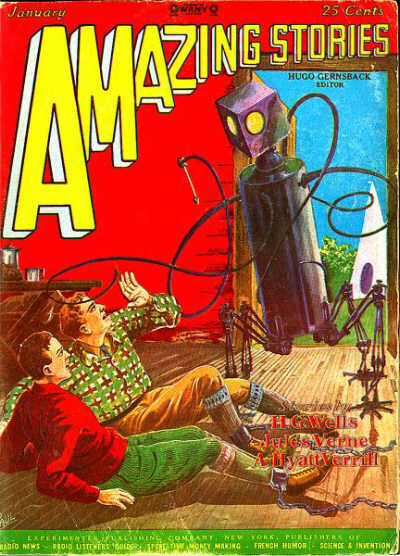
Experimenter Publishing.
Marvel Comics.

“Man’s search for meaning is the primary motivation in his life and not a ‘secondary rationalization’ of instinctual drives. This meaning is unique and specific in that it must and can be fulfilled by him alone; only then does it achieve a significance which will satisfy his own will to meaning… Man, however, is able to live and even to die for the sake of his ideals and values!”
— Viktor Frankl

Marvel Comics.


