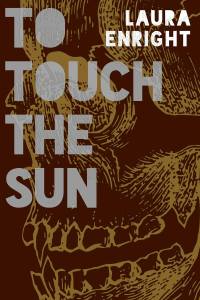
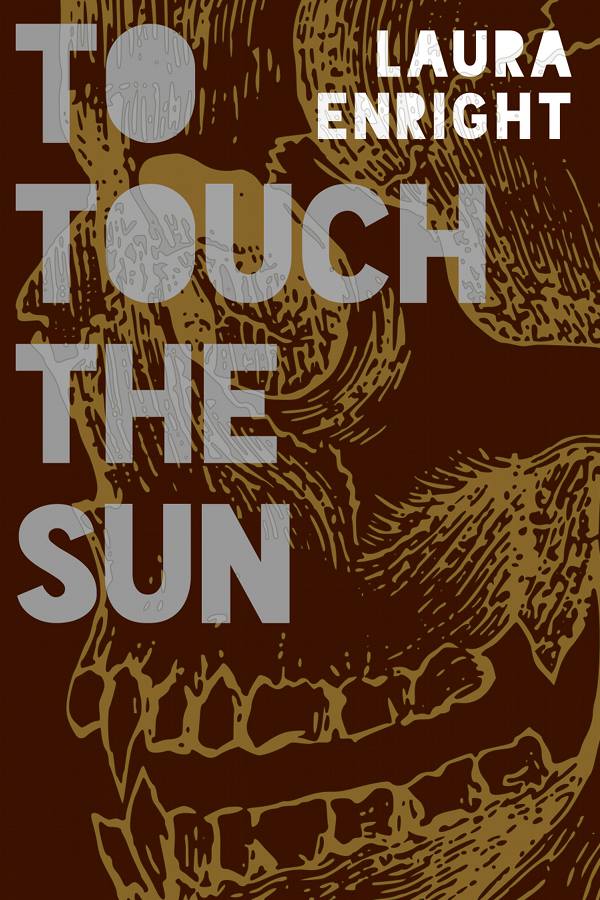
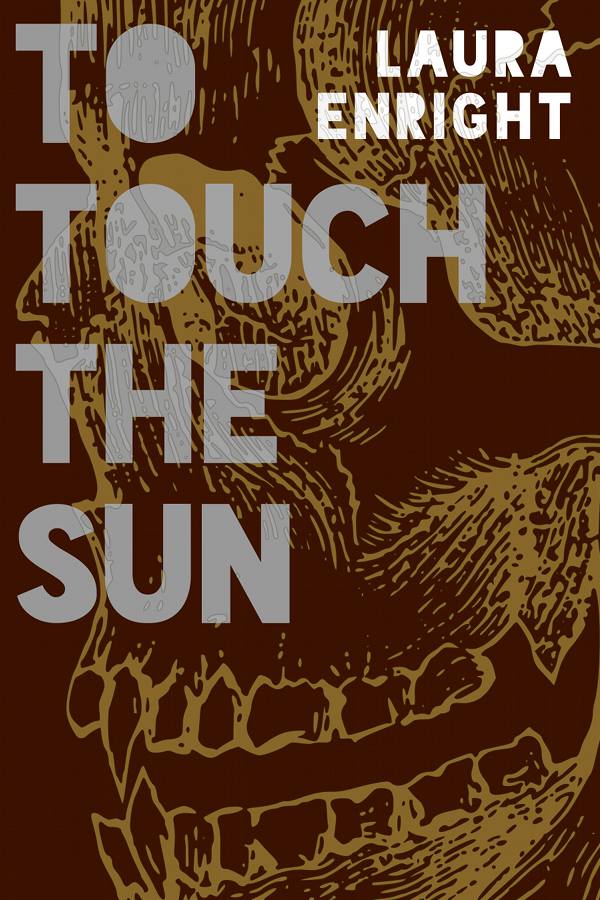
We have a real treat here at the blog today; I had the pleasure of interviewing author Laura Enright about her vampire novel, “To Touch The Sun,” recently released by Dagda Publishing.
In addition to TTTS, Laura is the author of “”Chicago’s Most Wanted:™ The Top 10 Book of Murderous Mobsters, Midway Monsters, and Windy City Oddities” and “Vampires’ Most Wanted: The Top 10 Book of Bloodthirsty Biters, Stake-wielding Slayers, and Other Undead Oddities.”

Are you a Chicago native? Both “Chicago’s Most Wanted” and “To Touch The Sun” take place in the Windy City. To what extent does the city inspire you creatively?
I grew up in a suburb bordering Chicago called Harwood Heights. Chicago is a fantastic city. And researching “Chicago’s Most Wanted” really impressed upon me how important a city it has been to the growth of the nation. There’s so much to it, both culturally, politically – heck, even on the paranormal front. I read in a book years ago that Chicago is on some big paranormal ley line. It does have its share of great ghost legends. Part of the reason I set “To Touch the Sun” in Chicago was for logistics. I’m familiar with the city, so I can use it better than I could another city with which I’m not as familiar. But I also wanted to utilize the great energy that Chicago has about it. And as I’ve joked before, Chicago is a food town and Narain is a chef.
Care to tell us in a few words what “To Touch The Sun” is about?
“To Touch the Sun” tells the story of Narain Khan, who at age 25 left his native India to fight in the trenches of the Western front during World War I, hoping to attend European culinary schools after the war. Instead, an attack by feral vampires on the field of No Man’s Land altered his plans and his life. Turned into a vampire, Narain wandered until later he met Sophie Grayson, daughter of a wealthy industrialist. With her help, he was able lead a relatively normal life, once it was discovered that she was immune to the vampire condition and she became his food source. When the novel opens, Narain has reached a crossroads. Sophie has died the year before, and the blood she had stored up for him in the hopes of making easier his transition back to hunting is gone. He must now hunt for his food, and while he doesn’t need to kill to take blood, he still finds so intimate an act immoral. He also fears passing the condition on to someone dangerous. If he doesn’t feed though, he may lose control, and the last thing he, as a well-respected chef in Chicago, or his normal business partner, Dom Amato need is for him to lose control.
Your book is a tremendous hit with readers. How does the success feel?
I think with this book it is particularly gratifying because it was such an experiment. I’d never had a burning desire to write a vampire book before, so I wasn’t sure if I could pull it off. It’s nice to see reviews in which the reviewer appreciates what I was going for.
You’ve said that the genesis for “To Touch The Sun” began with two words: “vampire chef.” Where did that idea come from?
A coworker and I were joking around about an “evil chef” one night. I can’t remember what made the chef evil. I think I just liked the absurdist possibilities. Well, as time went on, the “evil” part was replaced with “vampire” and it was filed away in my head until I decided to write a vampire novel and thought to use it.
In the beginning, it was just a quirky idea for the novel—“ooh let’s make the chef a vampire.” (And his love interest was going to be a female cop who frequented the restaurant). But the more I experimented, it began to evolve (it evolved a lot from what it originally was, in plot, characters, tense-style, etc.). And while I still liked the quirkiness of the idea, Narain’s desire to be a chef became the reason he left his family in India to fight in Europe during WWI, where his life would change forever. It’s a dream he’s at last able to achieve, despite his condition, thanks to Sophie. So while the vampire chef pretense allows me to have some fun, there’s also a poignancy to the story.
Why vampires? Are they your favorite monster?
Honestly, I’ve always liked vampire stories (Anne Rice was a particular favorite) though I don’t know if they’re my favorite monster. Between “Dracula” and “Frankenstein,” for example, I prefer the latter novel. As I mentioned above, I never really thought to write a vampire novel. I wrote it in the hopes of interesting an agent that I’d been in correspondence with, whose agency represented a vampire series. I thought I’d give it a try. I don’t mind experimenting. When I told him the premise, he liked the idea and told me to send him a proposal when I was done with the novel (I was midway through it). By the time I could do so, though, I found out he had left the business altogether. Never found out why. But also, by the time I had finished, I was so in love with this novel that it became something I desperately wanted to see published. Perhaps more than any other novel I’ve written.
And I’ve since come up with another idea for a different vampire story (this time more focused on the vampire hunter), so maybe I had a little ember to tell vampire stories inside me after all.
Were you influenced by any of the major films and books about vampires in recent years? Why or why not?
When it came to themes I wanted to examine, I think a few influenced me. I love the movie “Let the Right One In” (haven’t had a chance to read the book). In it, the vampire was created when the girl was a child, so she really needs someone to care for her (to act as the responsible adult). Her “Renfield” (as I call a vampire assistant) dies, and she’s kind of on her own eternally in the form of a child. (Another movie that examines what a child vampire might go through, aside from “Interview with the Vampire,” with the character of Claudia, is “Near Dark,” in which a vampire must go through life in the body of a young boy).
The child issue isn’t a factor in my novel, but I wanted to examine how vampirism would change a life. – the inconveniences that might be brought to that life.
Catherine Jink’s “The Reformed Vampire Support Group” addresses the issue of the vampire’s life changing (though the condition causes her vampires physical infirmity rather than strength). One of the vampires is a young woman who lives in her mother’s house, and relies on her because she can’t do what’s necessary to live in society with her condition. She’ll outlive her mom. Then what?
So often in fiction, the vampire is gorgeous, strong, and rich. I wanted to address what it would be like if a normal, unassuming person had this happen to him – the challenges he’d have to face both physically and emotionally. Narain is very handsome, and he’s rich, in part, thanks to Sophie. But I wanted to examine the inconveniences of vampirism. When he and Sophie discover he can feed off her and she wouldn’t turn, that solves a huge problem with his feeding issues. She’s helped him achieve a normalcy in life that he might not otherwise have. Well, now (in the opening of “TTTS”) she’s gone, and he has to go back to the old ways of getting sustenance. If he doesn’t, he risks becoming dangerous, and that could destroy all he’s worked for all this time.
That’s an aspect that fascinated me about vampirism.
One movie-related thing that did definitely inspire something in the book was something I read, I think, about Albert Grau, who produced “Nosferatu: Symphony of Terror.” I read that he served in, I think, Bosnia, in the First World War, and the locals would tell the soldiers the local legends about vampires. It’s what inspired him to make a vampire movie. For some reason, in my head when I remembered this, I had this idea that the locals were talking about vampires hanging around the battlefield. So I found wonderfully creepy the idea of soldiers looking out over the darkened fields at night, seeing shapes (which would be vampires) roaming about. That’s where the idea of the feral vampires came from. And that’s why I had the idea of Narain being attacked as he lay wounded in No Man’s Land.
What makes your vampire story different?
I think it might be Narain himself. He’s a bit awkward. He never really reconciled that vampire part of his life (and for decades hasn’t really had to). In fact, he admits that some of his vampire skills have atrophied. It’s kind of an intimate story in that regard. A story about a guy trying to keep his life together. I think that’s one reason I wanted to make vampirism a physical thing rather than metaphysical.
While you were searching for a publisher for “To Touch The Sun,” you actually went ahead and wrote three additional books in the series. Was it challenging to continue the story before the first novel was even published?
Actually, by the end of the first novel, I was so pumped about the characters and such that an idea for a second novel came really quickly. It was kind of neat because ideas really flowed like water on the next books. In a lot of ways, I’m glad I wrote the next three books before the first novel was published, because it gave me a chance to change anything I needed to in the first novel to fit with the “universe” I was establishing in the next books. It gave me a chance to get to know the characters and be a bit more confident. I didn’t change a lot, but I was able to alter a few things.
The reader reviews on Amazon.com clearly show that they want to know what happens next for Narain. With three sequels written, is it difficult not to provide readers with spoilers?
When I do interviews for the novel, I sometimes have to watch myself. I want to entice people to be interested in further stories, but I don’t want to give too much away because there are a couple of surprises in each book. By the same token, I’m excited about the direction the series has gone, so I’d love to share.
Are there any hints you’d care to drop here about what we can expect from your series?
In a way, there’s an arc to the first three books in regards to Narain’s coping with circumstances. We see in the first novel that the loss of Sophie knocked him off balance a bit. In the second book, he’s still trying to realign, but then things come up in the second novel that aren’t very helpful in this regard. By the third novel, he’s much more on an even keel when forces beyond his control, forces that sort of come out of nowhere, threaten that peace he’s attained. We also see an arc in Reg Jameson’s character. I knew after I started writing the scenes with him and Narain in the first one that I wanted him as a reoccurring character, but I also wanted to make his character a bit more rounded. He does some nasty stuff, but in his mind, it’s all about survival, not for the sake of doing bad. His character has a bit of an evolution also by the third novel.
The first three novels are very much like a trilogy (one leading to another). The fourth novel is a bit of a prequel that takes place in 1930s Chicago and concerns the mob. I can’t say too much about that, due to spoilers in the second novel, but I can say that it particularly addresses the issue I tried to address a bit with the first novel: What if you become this creature and you don’t have a castle in Transylvania to flee to? What if you don’t have money to ease over some of the inconveniences of vampirism (such as not being able to go out in the daylight)? Narain was lucky, in as far as meeting Sophie, and her wealth (and later her willingness to let him feed off her) helping smooth over those inconvenient realities of his condition. The character in the fourth novel doesn’t have that luxury. He’s very much left on his own to figure it all out.
What inspires you?
Wanting to share my work. Whether it’s a fiction or nonfiction story, the desire to share it with people really gets me going. And finding out people like it, of course, really inspires me.
Can you name any authors or books that are a direct influence on you?
I like to put it this way in regards to both authors or books: As a kid I fell in love with reading with Albert Payson Terhune’s “Dogs of Sunnybank” series (that also led me into the habit of spelling the shade “grey” instead of “gray” as we do in America). I realized how inspiring biographies could be by reading “The Autobiography of Frederick Douglass” in second grade. The collected short stories of Edgar Allan Poe made me appreciate horror, while I got into science fiction through “The Invisible Man” by H.G. Wells. I fell in love with fantasy through “The Dragon Riders of Pern” series by Anne McCaffrey, and Piers Anthony’s “Xanth” series is the first series I collected obsessively (until I fell behind by about book number 425 or so). The full range of possibilities for vampire stories became apparent through Anne Rice’s take on the genre in “Interview with the Vampire.” And I saw how easily science fiction and humor could mix with Harry Harrison’s “Stainless Steel Rat” series and Douglas Adams’ “Hitchhiker’s Guide” series. On a more recent note, “The Warmth of Other Suns” by Isabel Wilkerson reminded me of the importance of well told history. And I saw through “Sarum” by Edward Rutherfurd how entertaining history could be in fiction. I’ve been reminded of that by reading Ken Follett’s historical series lately.
Your novel obviously reflects great emphasis on characterization. Is that how stories begin in your mind — with characters?
I think so. When I reflect on the times I’ve come up with ideas for novels, yeah, there was always a character that really propelled it. Now, the funny thing, as I’ve mentioned with “TTTS,” is that I didn’t really have a character in mind when I decided to write the novel. But as I played with the idea and fiddled with the characters, the character of what would be Narain Khan really took on a life of his own. And understanding him helped me build the plot around him.
Where do your characters come from? Are they influenced by people you’ve known?
I’m not really sure, actually. I’m sure that there are some traits I might witness in others that I use for characters, but I don’t really think about it. Sometimes the story inspires the character, as it did with two characters to be found in the second novel. And the third one for that matter.
I did find a curious connection with Narain’s story (one I didn’t realize until well after the book was written and I was trying to explain it). I had three siblings. My brother Dennis and sister Barbara, 9 and 7 years older than me, and my brother Robert, a year younger. Dennis was always a bit older in a lot of regards — an old soul, I guess. But he started working with my dad when he was 13 or so. Factor into that him going to high school, hanging around his own friends after work, etc., and I rarely saw him. He moved out when he was 21. So Barb (who stayed at home longer), myself and Robert were more of a unit, and Dennis was a bit on the outside of that. In many respects, I didn’t know him. That’s not far from Narain’s relationship with his siblings, although age-wise, he’s much older than them (25 when he leaves for war, where Aziz is 13, Zaheer 11 and Ujaali 5). Dennis died of lung cancer when he was 42. Not 25, as when Narain was “killed” (or taken from his family), but still young. So I can’t help but wonder if somehow I incorporated that sibling dynamic into the story. Maybe on a subconscious level it explains why there are four siblings in the Khan house and the one who’s so much older gets taken away. Not sure, but I did find it interesting.
You have a visible love of storytelling. Have you always been a storyteller? At what age did you decide you wanted to write your own stories?
I think I always had it in me. I was always a bit of a daydreamer. I told myself all sorts of stories to help me sleep at night, or keep me occupied when I was bored. I wrote a lot of unfinished novels in high school. My first novel I wrote when I was 10, I think. It was about a woman who finds a dog on a beach. I wrote it on notebook paper, designed a cover, and bound it all up with staples (I guess it was a self-published novel). I don’t know whatever happened to it.
Tell us about your creative process. Can you point to anything that helps you feel creative, such as books, films, music, time alone?
I don’t really have anything in particular. I’m pretty lucky. Again, it goes with that daydreaming ability. I can dream up ideas or scenes anywhere. Standing in line, sitting in the car, etc. Which is good, because, for a decade or more, I’ve had a situation in my life where I don’t get a lot of time to myself to concentrate. So I dream up what I can and then try to pull it all together when I do have a little time to myself.
Do you ever experience writer’s block? How long does it last, and how do you beat it?
I’ve never really had a problem with writer’s block. My big problem now is finding time to write (that’s the only blockage). I think I just always have a way to think my way out of it. But really, when I’m pumped about a project, I am too excited for the creativity to stop flowing.
Would you prefer to write a screenplay for “To Touch The Sun” if it were adapted to a feature film? Who would you like to see as director? How about a cast?
I don’t know if I’d want to write the screenplay only because I don’t have any experience with screenplays. I would definitely want to be in on the writing of it (to have “okay” over the script). I’m not really sure about the director. Joss Whedon might work well. I love what he did with “Marvel’s The Avengers,” and he does have some experience with vampires. It would have to be someone able to balance horror, humor and drama. (I’d love Sia to do the music though. I think she’s brilliant!)
As for cast, the person I had in my head while I was writing it is Indian actor Shah Rukh Khan. In fact, it was while watching one of his movies (“Main Hoon Na”) that I was able to figure out a problem I was having with the character and his motivations. Unfortunately, while he gives off a very youthful vibe, he might be too old to play a guy turned into a vampire at age 25. But who knows? A little Hollywood magic…
For Reginald Jameson, it would be great to have David Tennant play him. Or Tom Hiddelston. Both can pull off the sympathetic bad guy role that I think would be needed for this character. He’s not completely evil. He’s pragmatic in many respects. And one of his motivations in this book, truly, is to protect himself and other vampires. Unfortunately, he’s arrogant and often times believes the end justifies the means.
For Cassie, I would need someone who is down to earth, even a bit of a geek in some respects (especially about science), but very grounded, and realistic, which is what Narain needs, considering what he is. She has a wicked sense of humor, too – I think because she understands the condition so well. Tatiana Maslany from the TV show “Orphan Black” might be good, and judging from her work on “Orphan Black” she can portray anyone.
Dom is a bit like Cassie. Very grounded. Doesn’t get flustered easily. Again, a good trait when you’re business partners with a vampire. He’s a really decent person. Very protective of Narain. Not sure who would play him, but whoever it would be would also have to have the Chicago twang. That’s very much a part of Dom.
For Blythe, the person would need to convey a sense of loss. Confusion. Someone decent at heart, thrust into a world he doesn’t understand. A lost soul in a way. Blythe is probably the most sympathetic character in the book, both as a soldier and as a vampire.
For Boris, you’d need someone who can just do crazy. Boris was a street punk that was turned into a vampire. Not fully feral, but psychopathic. I describe him as having a sort of vampiric ADD. He enjoys killing. But he had that sort of cruelty in him even before he was turned.
Which do you enjoy more — writing fiction or nonfiction? Has your experience writing nonfiction books helped you develop as a fiction writer?
Fiction was my first love. Nonfiction was a surprise love that came much later. I think I enjoy both fairly equally. I think that in many respects, fiction can be easier to write, only because you’re the master of your project on that. Especially with fantasy. You want the sky to be green, you write the sky green. Nonfiction can usually take up a lot of time with research before you even get to the writing part of it. Though, I did research for my novels, including “TTTS.” It isn’t the same. I do think my experience researching the nonfiction books has helped me know how to do the research for the novels. And, while time-consuming, research can be really fun – like trying to solve a puzzle.

What advice would you care to offer aspiring novelists?
I think the biggest piece of advice I’d give to writers in general is to know what you want from it. Be very clear what you want to do with the writing. If you like to write for a hobby, that’s great. With the internet, there are great forums on which you can publish your work so that people can get a chance to see it. But if you want to write to sell your work, it’s going to take a great deal of effort. Be prepared for that. My friend who turned me onto the “Most Wanted” publisher said that the business end of writing can be the same as a full-time job. It’s definitely worth it if you can get some success, but it does take a lot of work. A lot of people may have this idea that you write “The End” and the work will sell instantly. You have to market your work and yourself. Some people can get discouraged and give up if the success doesn’t start immediately.
Another bit of advice I’d give to those who want to make a name for themselves is not to shoot any idea down. I’ve had a strange little ride when it comes to writing. Early on, my heart was in fiction. Never had a plan to do nonfiction. But then when I was complaining about how hard it was to find a publisher for my work, my friend suggested that I write something for the publisher he was working with for his “Most Wanted” books. I must have been in the right frame of mind, because I decided I would try it, figuring, well, it would get me published, get my foot in the door. I ended up falling in love with the project. Then I never intended to write a vampire novel, but I decided to give it a try, and here I am with a series (and in the hopes of getting my name out there in that genre, I took Potomac Publishers up on their offer to allow me to write another “Most Wanted” book and suggested “Vampires’ Most Wanted,” another fun experience). You can have a goal, but sometimes you have to zig-zag to that goal. Be ready to do that. And sometimes it might work out great.
To what extent do you pursue your own marketing or promotion for your books? Is this a part of your career that you like or dislike?
I learned with “Chicago’s Most Wanted” that even with an established publisher, you really have to work on your own promotion (for example, I didn’t realize at first that the author has to plan out book signings and such … unless you’re J.K. Rowling or someone like that). If I had the money, I would hire a publicist, because it does take a great deal of effort and sometimes it can take away from actually writing the next book. But what can you do? I think it’s important for the author to be involved in that end of it. And it’s important to get your name out there.
I generally like promoting the books. I get frustrated because my time to work on marketing is so limited, and I would love to investigate more ways to do it. But I enjoy talking about the books. I’ve done quite a lot of talks on “Chicago’s Most Wanted,” which is an easy book to do talks on. And people are enthusiastic.
Are there other kinds of writing that you enjoy — poetry, short stories, news, reviews, or screenwriting?
I used to write poetry when I was in high school, but I’m not as into it now. Same with short stories. (I’m not known for my brevity. Just check out my blogs.) I like reviewing, and news is fun but I believe you really have to be careful. It’s too easy to put out incorrect facts. I’ve never tried screenwriting. I wouldn’t mind trying it one day. In my twenties I used to write a lot of both serious and parody songs. The parody songs were for a parody punk band called The Dead Punkheads. We used to put on shows in my house. It was a lot of fun. I even have some recordings lying around somewhere (from my eight-track recorder). I wouldn’t mind doing music again. I love comedy writing. There’s a lot of humor in my novels, even the serious ones. I just view the world that way. I can see the ridiculousness in things, even serious things.

What’s your next big project?
Well, I’m hoping Dagda will go ahead with the next novel in the series. I have to discuss that with the editor. I have to clean that up. I’ve written the next three books but they’re in various stages of drafts.
I also have an Asian dragon novel that I’m trying to find a home for. I wrote that a few years before “TTTS.”
The project I’m in the midst of now, though, is a nonfiction book that I’m writing with the son of a man whose father was wrongly accused of being a loan shark for the mob in 1960s Chicago. It’s a compelling story. But again, it’s a lot of research involved.
Where can readers discover more about you and your books?
They can check out my website at laura-enright.com, which has links to my blogs and to the books on Amazon. They can also drop me a line through that if they like. If they want to know more about “TTTS” (plot, characters, etc.), they can check out my Sentient/Feral Vampire Series blog at http://enrightvampires.blogspot.com/.












 Eric Robert Nolan, Author