(Even if NBC doesn’t reverse its decision in some manner, signing this online petition to “save Hannibal” can still alert other potential carriers to the show’s committed fanbase.)


(Even if NBC doesn’t reverse its decision in some manner, signing this online petition to “save Hannibal” can still alert other potential carriers to the show’s committed fanbase.)
“Congress shall make no law respecting an establishment of religion, or prohibiting the free exercise thereof; or abridging the freedom of speech, or of the press; or the right of the people peaceably to assemble, and to petition the Government for a redress of grievances.”

Photo credit: “Bill of Rights Pg1of1 AC” by 1st United States Congress – This media is available in the holdings of the National Archives and Records Administration, cataloged under the ARC Identifier (National Archives Identifier) 1408042.
Which one of you put that particular bee in my bonnet??
This sucks.
Although I absolutely love the name “Jethro Nededog.” I’m tempted to change MY name to that.
http://www.businessinsider.com/hannibal-season-4-isnt-moving-forward-with-amazon-netflix-2015-7
Whether you’re sitting down in front of the silver screen or the television screen, see here for all your nerd needs:
My movie and television reviews.
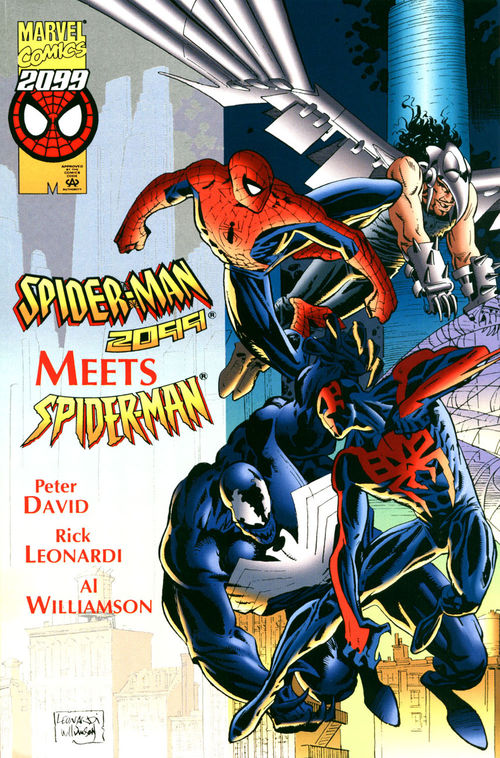
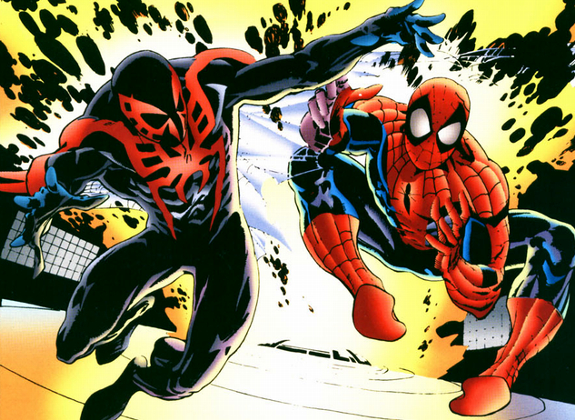
“Gotta go!! This is a Disco world and I am STRICTLY Ballroom.”
— Peter Parker, shortly after arrival in the “Marvel 2099” universe’s New York, in “Spider-Man 2099 Meets Spider-Man,” Marvel Comics, November 1995. Written by Peter David and illustrated by Rick Leonardi and Al Williamson.


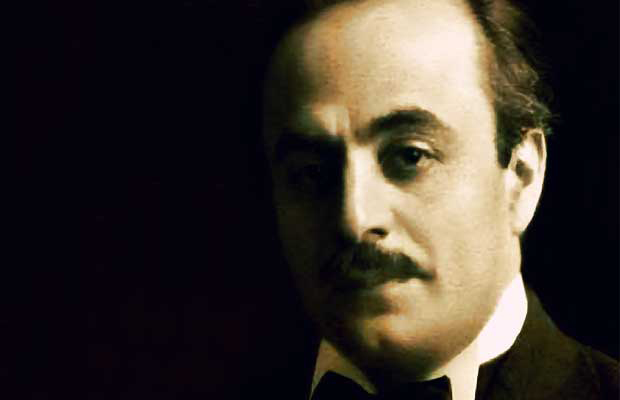
“Oftentimes we call Life bitter names, but only when we ourselves are bitter and dark. And we deem her empty and unprofitable, but only when the soul goes wandering in desolate places, and the heart is drunken with overmindfulness of self.
“Life is deep and high and distant; and though only your vast vision can reach even her feet, yet she is near; and though only the breath of your breath reaches her heart, the shadow of your shadow crosses her face, and the echo of your faintest cry becomes a spring and an autumn in her breast.
“And life is veiled and hidden, even as your greater self is hidden and veiled. Yet when Life speaks, all the winds become words; and when she speaks again, the smiles upon your lips and the tears in your eyes turn also into words. When she sings, the deaf hear and are held; and when she comes walking, the sightless behold her and are amazed and follow her in wonder and astonishment.”
— Kahlil Gibran, “The Garden of the Prophet”
(for Kathleen Nolan!)
(Grudgingly Agreeing With Len Ornstein.)
Stop CHALLENGING my preconceptions, you articulate conservative bastard!!
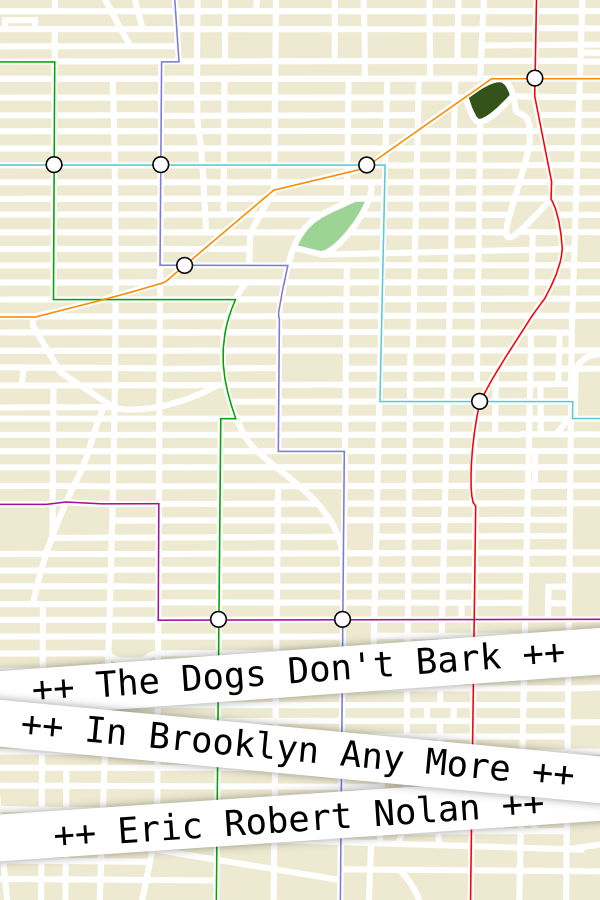
Following up on yesterday’s blog post about Nathan Hale for July 4th — I actually wrote briefly about Hale and New York’s revolutionary history in “The Dogs Don’t Bark In Brooklyn Any More.” It was background information about Brooklyn’s Prospect Park; the novel’s story, of course, takes place in a fictional future.
I actually made up the “local legend” about Hale’s ghost brooding around the arch. I have no doubt that the park has its share of ghost stories, but this one was only a bit of poetic license on my part:
“[Prospect Park] is a haunted place. Many men have died in the vicinity of its gently rolling hills, though the occasion of their passing predates the park’s mid-nineteenth century creation. The area around Prospect Park is the site of the Revolutionary War’s first and largest major battle, fought in the waning summer of 1776, not two months after the signing of the Declaration of Independence.
“The fledgling United States fielded its first official army there, with heartbreaking results. The Battle of Brooklyn was a disaster for America, whose sons were outnumbered two-to-one by 22,000 English and Hessian soldiers. George Washington, flush with his victory at Boston, found his forces routed. He barely escaped to Manhattan in a desperate, stealthy evacuation of more than 9,000 troops. On the morning of August 30, he and his retreating men were met along the Brooklyn hills with a miraculous surprise – a dense morning fog that concealed their perilous exit. To Washington and his war-weary comrades, it must have seemed like nothing short of divine intervention.
“Those were the dark days of America’s infancy – Nathan Hale would not long after be captured on a mission of espionage in Manhattan, disguised as a Dutch schoolteacher, and would be hanged, after his immortal lament that he had but a single life to give for his country. The defeat in Brooklyn also cleared the way for the Crown’s capture of all of New York City. The Great Fire of 1776 would ravage Manhattan. And the city would remain in England’s hands until the end of the war.
“Ironically, the park’s principal monument is devoted to another war entirely – one in which America turned upon itself. This is the Soldiers’ and Sailors’ Memorial Arch, a massive structure dedicated to the Union Army during the Civil War. If there is an afterlife, then perhaps it might break Washington’s heart – and Hale’s – to see the Arch as it stands today, a memorial to Americans killing Americans. Indeed, a local legend holds that Hale’s ghost occasions the site of the Arch and hangs his gaze upon it, glum with the knowledge of a nation divided and torn.”