Tag Archives: 1977

“Throwback Thursday: “Bigfoot and Wildboy” (1977 – 1979)

“Bigfoot and Wildboy” (1977 – 1979) is another obscure TV show that is perhaps best forgotten.  It was a segment on something called “The Krofft Supershow” in 1977, I think, before the segments were re-edited into a half-hour program.  I became a fan of it as second grader in the fall of 1979.  (Or maybe I watched its reruns in third grade, in 1980 — to be honest, this was so long ago that I hardly remember.)

They don’t make TV shows like they used to.  And that’s a good thing.  “Bigfoot and Wildboy” seemed to rely heavily on three ingredients: an utra-cheesy 70’s score; truly terrible special effects (even for the time); and lots of shots of its two title characters either jumping, or running at the camera in slow motion.  (I actually just watched a few minutes of the full episode you see posted below.)

I was pretty preoccupied with “Bigfoot and Wildboy” when I was very young.  I remember having to make journal entries in the classroom, in which we could write and illustrate anything we wanted.  (It was precisely the sort of open-ended journal writing exercise with little academic value to which I’d be subjected, occasionally, throughout my school career — even in my college poetry class.)  But we were allowed to select our own topic in the second grade, and that was at least some fun for an imaginative kid.  The nuns (it was a Catholic school) sometimes prodded us to write about real-world events; 1979’s Space Shuttle Columbia, for example, was high on their list of suggestions.

Given a blank slate, though, I tended to write almost exclusively about imaginary characters and monsters — peppered, perhaps, with intermittent entries about dogs.  I distinctly remember drawing Bigfoot and Wildboy one day.  (If memory serves, we wrote and drew in our journals after recess, maybe to get us refocused.)  I drew them leaping over a fence and running toward the viewer.  (Seriously, the show had a lot of shots like that.  Check out the opening credits below.)

I remember a nun looking over my shoulder and inquiring delicately about the giant hairy humanoid and the half-naked boy … when I explained the characters to her, she suggested with (uncharacteristic) patience, “Tomorrow, let’s try to write about something from the real world.”


A review of Season 1 of “The Exorcist” (2016)

I liked the Fox’s take on “The Exorcist;” I just didn’t love it the way that I thought I would.

It has a lot going for it.  It’s easily the most intelligent horror show on television — its characters and plotting are detailed, thoughtful and well developed.  It actually occupies the same universe as the classic 1973 and 1990 horror films.  (We won’t mention the 1977 abomination here.)  And, like those movies, this is a skilled, methodical screen adaptation of the universe imagined in William Peter Blatty’s source material.  (This show establishes its continuity with the movies in ways that are interesting and surprising, too.)

The script takes archaic theology and otherworldly events and makes them seem plausible in its real-world setting.  It also succeeds in giving a distinct and frightening voice and personality to its demon.  I was impressed — I’ve seen a lot of movies with this plot device, but I’ve never seen this kind of antagonist so fully realized into a distinct character.  This owes a lot to Robert Emmet Lunney’s outstanding portrayal as the demon personified.

The rest of the cast is also roundly excellent.  Geena Davis shines as the mother of the afflicted girl; I had no idea that she was this good of an actress.  So, too, does Alan Ruck, who stars as her kindly father who is affected by a traumatic brain injury.  Ben Daniels is also very good as the experienced half of the duo of priests who serve as the story’s heroes.  By the end of this first season’s ten-episode arc, both priests seemed like three-dimensional characters that I could like and root for.  I was impressed again — priests in stories like this usually tend towards stock characters, and I can only imagine that it would be challenging for a screenwriter to make them relatable to the average viewer.

Why didn’t I love “The Exorcist?”  First, the show’s story elements felt too familiar.  Once again, we have a possessed young girl, a desperate mother beseeching the church for help, and a pair of priests, one of whom is experienced and one of whom requires instruction.  Once again, we see that the personal lives and the metaphorical demons of both clergymen can be used against them.  Once again, we find the girl secured to a bed while the story’s protagonists pray and shout at her possessor.  I do realize that these tropes are to be expected.  (This is “The Exorcist,” after all.  Do we really expect the writers to not depict an exorcism?)  I can’t deny, however, that my attention wandered.

Second, it was sometimes too slow for me.  I do understand that the show’s creators are probably being faithful to the storytelling pace and style originally established by Blatty, as well as William Friedkin, the director of 1973’s “The Exorcist.”  (Blatty actually wrote the screenplay for that seminal film, two years after his novel was published.)  The tension sometimes builds slowly in its realistic milieu, and events gather momentum over the course of the story.  The show also goes to great lengths to offer us more than its boilerplate exorcism story.  (There are some major demon-related events happening elsewhere in its troubled setting of Chicago.)

Still … I again found my attention wandering.  I might have enjoyed this more if it were edited down to six episodes instead on ten.  And I can’t write a glowing review for a show for which my interest occasionally waned.  (Admittedly, I have a terrible attention span when it comes to TV shows.)

All things considered,  I would rate “The Exorcist” an 8 out of 10 for being a smart, grown-up horror series, even if its slower pace and familiar story elements detracted slightly from my enjoyment of it.  I would recommend this show — especially to those who enjoyed the better “Exorcist” movies.


ordoguzo-1evad-kritika-1

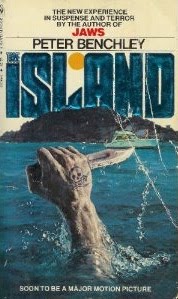
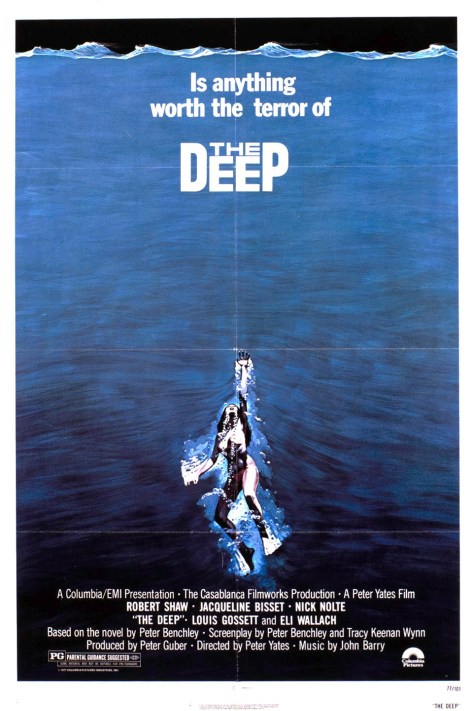
Throwback Thursday: Peter Benchley’s “The Deep” and “The Island”

I mentioned these late-1970’s seafaring novels last week — they could be considered the “other” Peter Benchley classics.  Neither “The Deep” nor “The Island” had nearly the broad-based cultural impact of “Jaws,” of course.  But they were still pretty damned good.

I got my hands on the paperbacks in the 1980’s, after my Dad left them lying around the house.  (It’s funny how much of my reading material I inherited from my father or older brother during my formative years.  I wonder how many kids grew up like that and were thus influenced.)  Both books leaned toward being horror-thrillers, as “Jaws” did.

I saw the the 1980 film adaptation of “The Island” on broadcast television when I was in early gradeschool, and it freaked me the hell out.  It’s actually a pretty bizarre tale about a colony of throwbacks who murder modern boatgoers in the manner of 18th Century pirates.  (Check out the trailer below.)  It stars none other than Michael Caine, and also an Australian actress Angela Punch MacGregor.  (If that isn’t a badass Australian name for a lady, I don’t know what is.)

I read the original book when I was older — in some ways, it was even freakier.  There were some weird sexual undercurrents and potty humor that weren’t even necessary for the plot; Benchley was a little more out there than you might gather from the more traditional thriller that “Jaws” was.

“The Deep” was a scuba diving thriller; the book and the 1977 movie filled my adolescent head with ambitions of becoming a professional treasure-hunter.  I remember devoting a lot of thought around age 13 or so to trying to figure out if that was a realistic career aspiration.  (I supposed it all depended on what I found.)  There is a moray eel in the movie, and it is unpleasant.  It prompted me to adopt the neurotic habit of bringing a knife along on the summer snorkeling expeditions behind my friend Brian’s house.

Interestingly enough, Wikipedia informs me that Benchley returned to writing books in the late 1980’s; his last two novels in the early 1990’s sound pretty damn cool.  They’re both seafaring monster stories — “The Beast” and “White Shark.”  The latter even selects its victims from my native Long Island, New York.  Maybe I’ll pick those up this summer.


DeepCover

2344832

p1883_p_v8_aa

A review of “Damnation Alley” (1977)

I’m not sure how to review “Damnation Alley” (1977).  I can’t call it a classic.  Portions of it are just too poorly made for that — even to the point where it deserves the “Mystery Science Theater 3000” treatment.  But it is an extremely enjoyable 1970’s end-of-the-world flick, it has some notably successful key scenes and it’s nothing less than venerated by people who love 70’s science fiction.

The movie’s story sounds as though it were conceived by scientifically illiterate teenagers who were passing a joint around … and the joint was laced with hallucinogens, and it was the crazy 70’s.  A nuclear war with Russia has actually tilted the earth on its axis, so it’s spinning askew.  This (and apparently not radiation or nuclear winter) has caused all sorts of cataclysms, and mankind’s best hope is that, through an act of God or something, the correct axis just sort of … reasserts itself.  In the meantime, the same threats you’d usually expect are inhabiting 70’s cinema’s postapocalyptic America: sick hillbillies and mutant fauna.

A trio of United States Air Force servicemen are forced to leave a protected California missile silo that has allowed them to survive the holocaust.  (It burns down after a drunk commanding officer passes out and drops a lit cigarette.  Seriously.)  Our heroes embark across America in the desperate hope to reach the one city that has apparently survived the nuclear fire.  And that’s Albany, for some reason.

I’m pretty sure Roger Zelazny’s 1967 novel, upon which this is ostensibly based, has little to do with this simplistic and head-scratching screenplay.  The book sounds much smarter and more interesting.

The movie gets off to a rocky start, in an ineptly blocked scene in which the director can’t even manage to get the three principal actors to make their faces visible during their conversation with one another.  (These would be a pre-“The A-Team” George Peppard, a pre-“Airwolf” Jan Michael Vincent, and a pre-“Terminator” Paul Winfield.”)  Just after this is an action sequence with “giant” scorpions that are composited onto the action via blue-screen.  The special effects here are embarrassingly bad; for a frame of reference, consider that this is the same year that the studio, 20th Century Fox, also released “Star Wars.”

Still, this ridiculous movie rises above its failings with some elements that were damn good.  For starters, I inexplicably found myself liking Peppard’s stern, laconic, Southern-drawled leader, and Winfield’s likable sidekick.  Even Vincent’s mimbo antics weren’t too grating.  He must have been a fan-favorite heartthrob back in the 70’s; the writer and director keep him front and center — saving girls, cracking jokes and riding a dirtbike.  (His character, “Hell Tanner,” was actually the main protagonist of Zelazny’s book.)

Here is where “Damnation Alley” actually reminded me of some of the better George A. Romero films.  Despite thin and slightly offbeat characterizations, the protagonists still managed to turn out cool and likable.  I identified with them.  (Is it just because this and the “Dead” movies seem to portray real, regular people instead common tropes?)

Second, certain scenes worked beautifully.  A no-budget scene depicting the inside of a casino was perfectly atmospheric and haunting.  The abandoned-town-with-a-secret scene was perfect, horrifying and unforgettable.  (And it had some nicely conceived antagonists.)  What should have been a by-the-numbers, cliched, post-apocalyptic hillbilly gang turned out to be genuinely frightening.  (The actors in these minor roles were quite competent.)  Don’t these prosaically characterized evildoers menace us more effectively than the clownish supervillains of the “Mad Max” films?

And, crappy scorpions notwithstanding, some of the period special effects actually worked.  The centerpiece of “Damnation Alley,” for a lot of fans, is the “Landmaster” — the  quite genuine 12-wheel, seven-ton, futuristic amphibious armored personnel carrier constructed specifically for the movie.  (That’s it in the second photo below.)  Seeing the actual (badass) vehicle instead of a model for the film should appeal to the kid in a lot of filmgoers, even today.  (I’m not even a gearhead, and I had fun with it.)  The custom vehicle cost $350,000 to build in 1976, and it’s still a legend in the 70’s science fiction fan community.

Another “special effect” that strangely holds up over time is the movie’s depiction of “radioactive skies.”  It’s a gaudy visual effect that would be cheap and low-tech by today’s standards, and it absolutely screams “1970’s cheese.”  Yet, as a modern movie fan, I loved it.  It’s perfect for setting the film’s unintentional clumsy-yet-creepy mood; it sets the tone for a beloved vintage B-movie classic, and it’s just neat to look at.  Wikipedia has some interesting information on the back ground for “Damnation Alley” — the radioactive skies effect actually took up 10 months of post-production, despite a final result that paled in comparison to “Star Wars.”  It was a troubled production, and its story is interesting reading.

Seriously, I had fun with “Damnation Alley.”  If it isn’t quite a “classic,” then it’s at least a really fun movie to which I’m sure I’ll return.  I’d give it an 8 out of 10, and I’m going to label it a Triple F — it’s a Forgivably Flawed Favorite.

Image result for damnation alley

Landmaster.jpg

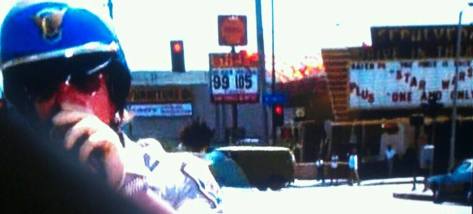
Throwback Thursday: the most 70’s-tastic screenshot ever!

How’s this for a pop-culture artifact?   It was shared recently on Facebook by my friend Conrad.

This is a screenshot from 1977’s “CHiPs,” that weekly, family-friendly, primetime police dramedy in which a pair of affable California Highway Patrolmen would never even draw their sidearms over the course of an hour-long episode.

And, yes, the period marquee in the background is indeed advertising the original “Star Wars.”

Even at the age of five or six, CHiPs was too goofy for me — despite the fact that Shawn Degnan, my best friend next door, frequently recommended it.   Shawn and I did agree on the show’s contemporary, however — “Buck Rogers in the 25th Century” (1979-1981).


12644974_1176892385657014_4057738141963244086_n (1)

Ye olde Nolan

I’m becoming concerned …  I keep seeing more troubling signs that I am getting older.

I can’t eat pizza and Ben & Jerry’s ice cream all day without feeling yucky.  And I have gone shopping and DELIBERATELY looked for vegetables.

I bitch inwardly about the quality of America’s public education system all the time.  (Don’t even get me started.)  I actually begin some of my (admittedly peculiar) inner monologues with the words, “There was a time in this country when …”  I have also lamented that “things were different 20 years ago.”

It recently dawned on me that my longstanding idolization of Kevin Smith may be waning …  last year’s “Tusk” just didn’t do it for me, and his recent appearance on “The Talking Dead” just seemed to feature too much childish sex humor.  I cringed.  (Lengthy analogies about oral sex aren’t THAT hilarious, people.  I suggest they have a 10-second half life.)  I still think that Smith is brilliant; I just think maybe his particular style of humor might better appeal to a guy in his 20’s.

In the Marvel movies’ upcoming “Civil War” storyline entries, I’m firmly on the side of Captain America, and not Iron Man.  Yeah, Tony Stark has the wit and the charm and the girls and the cash.  But Cap has character and good American values, with an emphasis on civil liberties.  Cap would never subject black people to an unreasonable search and seizure.  He wouldn’t enter a private home without a warrant.  And he would uphold a legal wall of separation between church and state.  Dunno about Tony.

Tori Amos is still cool, but she sounds NUTS in her interviews.

I played with a friend’s little girl on the swings the other day … and I actually got DIZZY after donning a swing myself, and trying to swing as high as her.  THAT was disconcerting.

My doctor told me to knock off all the sugar, and I am totally taking her seriously.

My buddy shared a picture today of the original Star Wars cast in 1977.  When I was a tot, I looked up to Luke Skywalker, Han Solo, and Princess Leia.  When I was in fifth grade, “Return of the Jedi” Leia was my heart’s desire.  (I need not even mention in which outfit.)  Today, 1977 Carrie Fisher looks like a sweet girl who could be my college sophomore daughter.  (Seriously, she looks YOUNG, people.)  Harrison Ford looks like that older kid in our hometown with the camaro, who I need to keep away from her.  Mark Hamill looks like that sweet kid down the block who wants a date with her, but won’t get one.

My friends from Longwood High School are now teachers at Longwood High School.  The cognitive dissonance connected with that is significant.

And tonight it has dawned on me that (I can’t believe I am saying this) Depeche Mode is getting maybe a little played out for me.  Oh God, I can’t believe I just typed that.  I still love MODE, I swear it!  I just think that after “Violator” has been in my playlist for two decades, it’s maybe time to retire the lesser songs like “World In My Eyes” and find some more new music.

But not “Policy of Truth.”  THAT SONG WILL LIVE FOREVER.  (And never again is what you swore the time before.)

WIN_20151028_17_08_10_Pro

the-one-big-thing-about-leia-s-episode-vii-appearance-we-hadn-t-thought-of-694022

Pete Harrison recommends 10 horror movies for Halloween!!!

Among the many unique Internet resources for horror fans, the best just might be blog correspondent Pete Harrison. Pete’s got an encyclopedic knowledge of horror, whether it’s films, books, comics, classic short stories, or even vintage radio broadcasts.  The guy’s priceless.

Pete regularly swaps tips online about the best movies to watch — including fright flicks that are older or more obscure.  So he’s the ideal candidate for suggestions about Halloween viewing.  I asked Pete to name ten great fright flicks for October, and the list below is what he recommends.

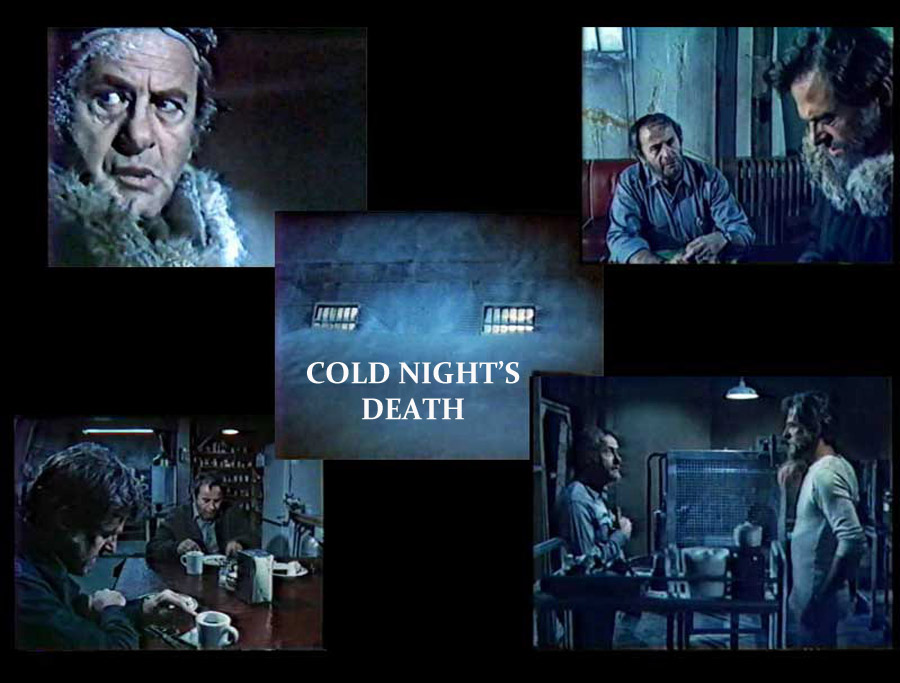
I love that he’s included 1973’s made-for-tv movie, “A Cold Night’s Death.”  You’ve probably never heard of it.  But I know it.  It was one of the features that my “movie uncle,” Uncle John, screened for me back in the pre-Internet days of VHS — when hard-to-find thinking-man’s horror films were even harder to find.  It’ll get under your skin.  If it’s any indication of quality of the rest of the films that Pete has listed here, then this is advice for some damned fun late-night viewing.

11745853_10152885290765388_8012902720658506198_n

From Pete Harrison:

Per your request, SIR!!!!! There’s a million more!

TEN HORROR MOVIES I DEARLY LOVE, NO PARTICULAR ORDER!

1) JOHN CARPENTER’S “PRINCE OF DARKNESS” (ALL TIME CLASSIC!)
2) “RITUALS” (HAL HOLBROOK)
3) STEPHEN KING’S “THE NIGHT FLIER” (WAY BETTER THAN ANYONE THINKS)
4) “SHOCK WAVES” (NAZI ZOMBIES! PETER CUSHING!)
5) “A COLD NIGHT’S DEATH” (1973 TELEFILM)
6) “THE INNOCENTS” (OOZES WITH GOTHIC DREAD)
7) “THE SENTINEL” (1977)
8) “NIGHT GALLERY” (1969 TV PILOT- PORTIFOY? PORTIFOY!!!!!!!!!!)
9) “DEAD AND BURIED” (HELLUVA TWIST ENDING!)
10) “THE SATANIC RITES OF DRACULA” (SPIES, VAMPIRE BRIDES, PLAGUE, KITCHEN SINK!!!!!!)

Thanks, Pete!

orig