Tag Archives: 1989

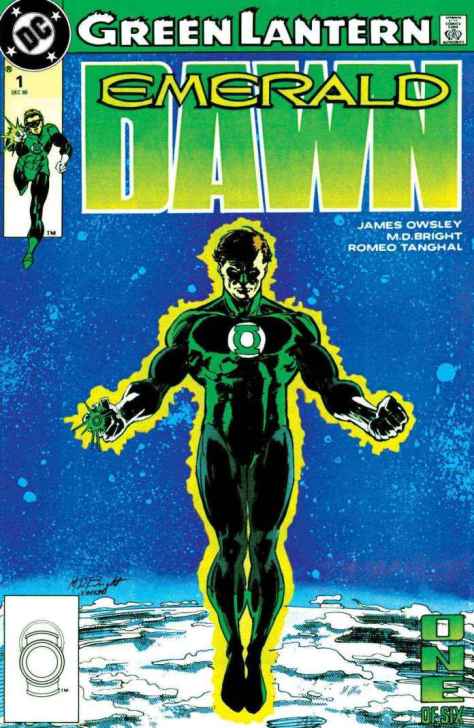
Cover to “Green Lantern: Emerald Dawn” #1, Mark Bright and Klaus Janson, 1989

DC Comics.

5b1f236341649_copyOfFirstPage

Cover to “Detective Comics” #608, Norm Breyfogle, 1989

DC Comics.

146538906615171733

Throwback Thursday: “Omni” magazine in the late 1980’s (and that weird Stephen King cover)

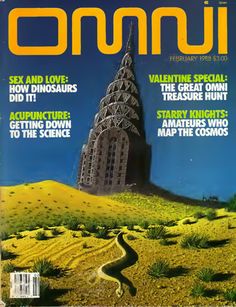
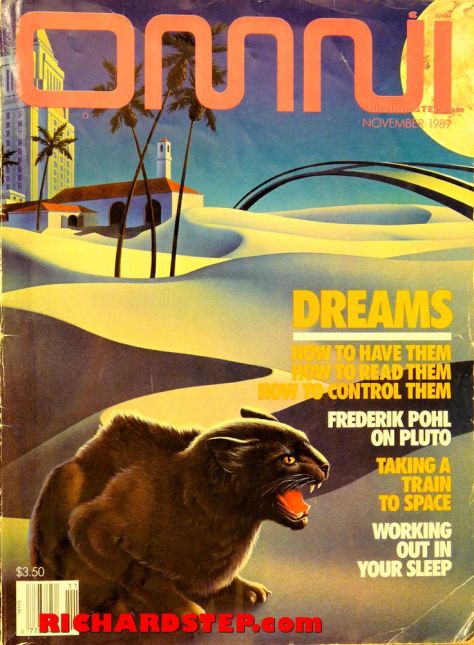
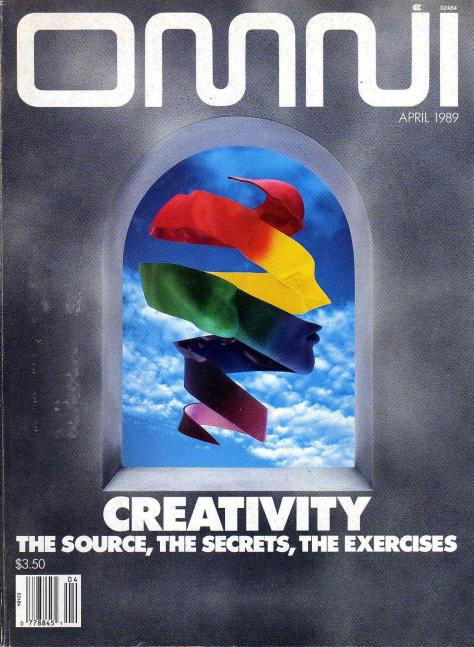
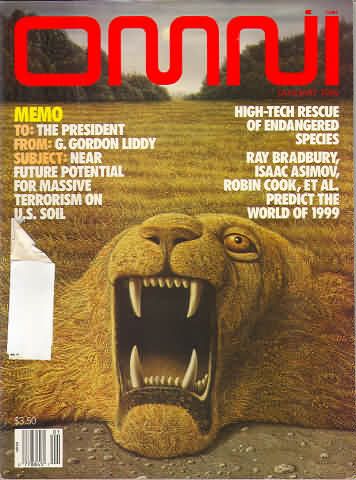
Omni in the 1980’s was an absolutely unique magazine dedicated to science fiction and science fact — it was always weird and occasionally wonderful.  Its content was consistently a good deal trippier than anything you’d find in more mainstream contemporaries like Scientific American or Discover — futurism, the paranormal, and short stories that were pretty damned abstract.  (I remember Patricia Highsmith’s “The Legless A” being a real head-scratcher for me.)  And the covers to Omni were frequently awesome.

I had a subscription around 1989 or so — I believe I got a year’s subscription as either a Christmas or birthday present.  I still remember it arriving in the mailbox.  I think I had all of the issues you see below — except the third one.  That issue is from January 1983, and I never had it.  I’m including it here because it’s too interesting not to share.

Stephen King fans will recognize Don Brauitgam’s artwork for the cover of King’s classic 1978 short story collection, “Night Shift.”  Brautigam apparently sold it to the magazine later.  (Interesting, too, is the similarity of the artist’s name to a key character in King’s subsequent “Hearts in Atlantis” and his “The Dark Tower” series — the kindly psychic, Ted Brautigan.)

Anyway, if you were geeky enough to enjoy this back in the day, the entire run of Omni is currently available at Amazon for $3 a pop.  It was available online for free for a while, and I think you can still find all of the short stories uploaded in pdf if you google them — I found a bunch, including Highsmith’s story.  (I wonder if I’d get a better sense of it if I read it today.)


be72939e64ff7df733c03244383ce5f9--futurism-film-posters

df6ffdc5e4e3ba597cd55df5230f615c--magazine-editor-magazine-art

1c0ecb344901ba309cc659ae896f7ce8

d6f679bf67711d1a0993827f3cc8f4af--magazine-art-magazine-covers

ff439bc98faf2a2ccd88a65ac67c338c--control-your-dreams-retro-futurism

omni_1989_04_0000

0016b03f6bbbddec98768905a4ee7c15

omni-1989-august


Throwback Thursday: NBC’s “Knight Rider” (1982 – 1986)

NBC’s “Knight Rider” might be the granddaddy of all 1980’s high-tech super-vehicle shows — if I had to guess which one was the most popular or most fondly remembered, this would be it.  (I suppose the other leading contender would be “Airwolf,” which we talked about a couple of months ago — but that was aimed at an older audience.)

“Knight Rider” was cheesy.  But most 80’s action shows were cheesy, and I still remember it as being decent enough.  Lord knows I and Mikey Wagner, the kid on the next block, were fascinated by it.

As anyone who remembers this show can attest, there is a key character that isn’t even hinted at in the intro below.  The car was sentient.  His name was K.I.T.T. (Knight Industries Two Thousand), and he was an artificial intelligence who actually who had a hell of a lot of personality.  K.I.T.T. was a super-intelligent, talking, futuristic, sleek, black sportscar, and he was an incongruous damned hero to us kids.

The other star was Davis Hasselhoff as Michael Knight.  We looked up to him too.  Hasselhoff, of course, is now better known for his subsequent starring role as a moronic lifeguard on the categorically awful “Baywatch” (1989 – 2001).  I remember seeing snippets of “Baywatch” in the 1990’s — it was constantly playing in the newsroom at my first job as a cub reporter.  (The guys there loved it.)  I remember being disappointed that one of my childhood heroes had somehow morphed into a male bimbo on the most saccharine and brainless TV show I had ever seen.  Hey, “Knight Rider” was a show for kids … but it was goddam “Masterpiece Theater” when compared with “Baywatch.”

Weird trivia — the voice actor for K.I.T.T. was none other than William Daniels, who also gave a stellar performance as John Adams in 1972’s film adaptation of Broadway’s “1776.”  It’s so weird seeing that movie and hearing the voice of K.I.T.T. come out of Adams’ mouth.


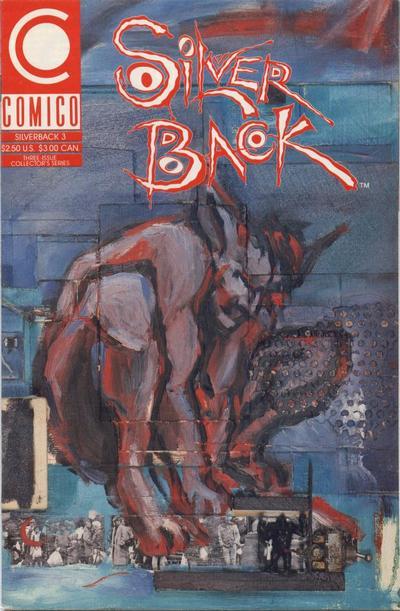
Cover to “Silverback” #3, Matt Wagner, 1989

Comico.


silverback3

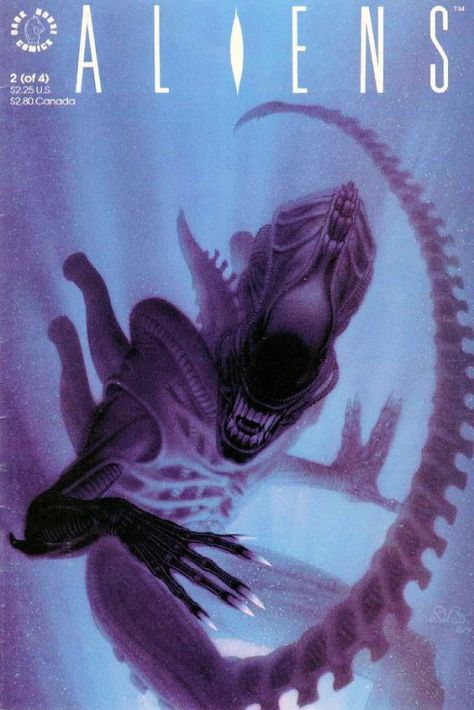
Cover to “Aliens” Vol. 2, #2, Den Beauvais, 1989

Dark Horse Comics.

11ed7d396cd3f9d6c43ca2ca85f3464c


A short review of Season 4 of “The Strain”

The fourth and final season of “The Strain” was easily its weakest, but was still fun enough to merit an 8 out of 10.

Season 1 was a unique, detailed, methodically assembled techno-thriller crossbred with vampire mythology — you could tell that it was adapted from a pretty decent book series by Guillermo del Toro and Chuck Hogan.  The show’s subsequent seasons progressively meandered farther and farther into comic book territory … the fourth felt loosely and hastily plotted, with spotty and confusing exposition.  (I was considerably confused until late in the game about who deployed nuclear weapons in the war between vampires and humans, when they did so, and what their strategy was.)

But what the hell.  I still enjoyed this.  The writers here still know where their bread is buttered, and gave survival-horror fans more of the screwball guilty pleasures they were tuning in for.  There was plenty of blood and gore (even if it’s only the white, worm-infested vampire blood that I suspect was easier for the censors to approve). There were more of the show’s creepy, cringe-inducing monster effects.  And there was plenty of action — right up until a finale that was predictable but cool.  (If you’ve been following the show the way I have, do you not want to see machine guns, explosions, swords and severed vampire heads?)

Richard Sammel consistently outshined everyone in his role as the WWII Nazi turned vampire Himmler.  What an extraordinary villain.)  It’s a further testament to his talent that the man actually appears sublimely good-natured in real life.  (He interacts with his fans from time to time on Facebook.)

The show actually surprised me, too, by how attached I got to its characters.  It hasn’t always been a show that is strong on its characters, but … I’m going to miss them.  Vasily Fet (Kevin Durand) and “Dutch” (Ruta Gedmintas) were two in particular that I found myself surprisingly attached to — especially considering that Dutch was a superfluous character that seems to have been added only for sex appeal and romantic tension.  I was rooting for both of them.

So I’d still recommend “The Strain,” despite Season 4’s failings.  To quote Jack Nicholson’s Joker in 1989’s “Batman,” “I don’t know if it’s art, but I like it.”  (Yes, I do know that Walt Disney said it first.  Whatever.)


Season4Banner

Cover of “The Sandman” Vol. 2, #1, Dave McKean, 1989

Sandman_no.1_(Modern_Age).comiccover

Photo credit: By Source, Fair use, https://en.wikipedia.org/w/index.php?curid=1493037

Cover to “Silverback” #1, Matt Wagner, 1989

siverback

A very short review of “Cell” (2016)

The lower-budget “Cell” (2016) wasn’t quite the spectacular horror movie that I was hoping for.  (A Stephen King zombie film?!)  But it was still pretty good — I’d give it an 8 out of 10.

The screenwriting and directing are average.  The acting seems uneven too.  And, yes, that includes its curiously low-key performances by John Cusack and Samuel L. Jackson.  But the opening action set piece was well done, and it succeeds in capturing the creepiness and originality of King’s 2006 novel.  What a neat genre-buster too — this is zombie movie meets sci-fi film meets supernatural horror epic meets art-house road movie.  It really is an interesting (and quite divergent) variation of the zombie subgenre.

I’ll go ahead and answer the million dollar question for those who have read the book.  Yes, that widely unpopular ambiguous ending has been changed, and what we are shown is far more conclusive and satisfying.

By the way, this isn’t King’s first venture into zombie horror.  He wrote an excellent short story entitled “Home Delivery,” which I cheerfully recommend.  It’s far closer to mainstream zombie horror, and I think it would appeal to “The Walking Dead” fans.  I first read it in a worn copy of 1989’s “Book of the Dead” zombie anthology; it also appears in 1993’s “Nightmares & Dreamscapes.”