America is with you.

Photo credit: Robert Dimov [CC BY-SA 3.0 (https://creativecommons.org/licenses/by-sa/3.0)%5D, via Wikimedia Commons.
America is with you.
Photo credit: Robert Dimov [CC BY-SA 3.0 (https://creativecommons.org/licenses/by-sa/3.0)%5D, via Wikimedia Commons.
Godspeed to her and her people.

Today is the first day of Autumn. Why not stop over at The Bees Are Dead, and mark the encroaching cold with a few dark futuristic visions?
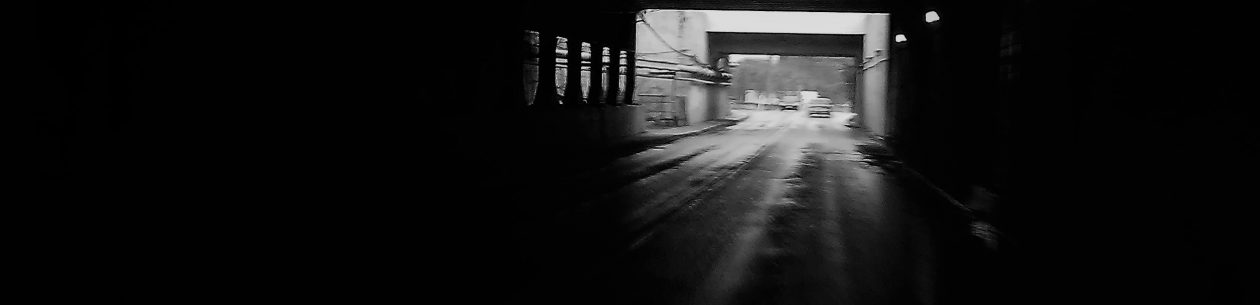
There you’ll find Gary Glauber’s “After the Deluge”, which is a sanguine twist on the usual narrative of the post-apocalyptic poem. There is also some truly arresting photography — Paul Gerrard’s “Monochromatic Beginnings” is shudder-inducing and delightfully monstrous, and Kathryn Nee’s ““Windows into the End” is a haunting exhibition of abandonment art.

El Pueblo de los Estados Unidos le desea paz, seguridad y fortaleza durante esta crisis.

Teotitlán de Valle. Tapestry shop. Photo credit: By Wolfgang Sauber (Own work) [GFDL (http://www.gnu.org/copyleft/fdl.html) or CC BY-SA 3.0 (http://creativecommons.org/licenses/by-sa/3.0)%5D, via Wikimedia Commons
I’m so pleased to share here that Peeking Cat Poetry Magazine has selected “Roanoke Summer Midnight” to appear in its 2017 Anthology. I’m always honored to have my poetry selected for the magazine, but seeing my work appear in the annual anthology really is a special distinction.
The anthology will be published in October. I’ll post ordering information here as it develops.
Thank you, Editor Samantha Rose!
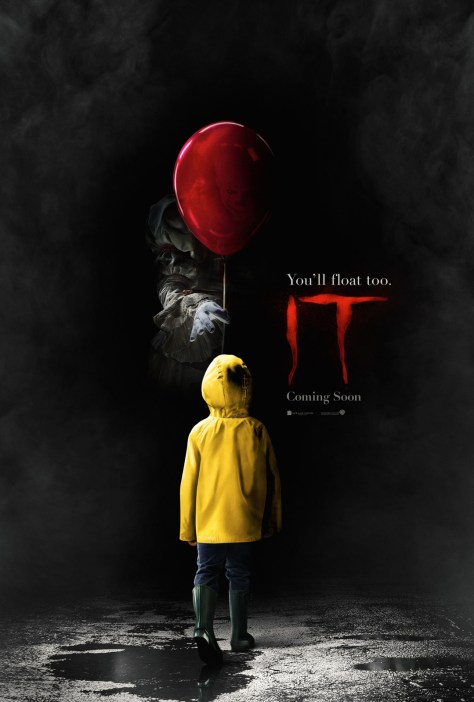
“It” (2017) succeeds on a number of levels; it’s both an excellent horror movie in its own right and a faithful adaptation of Stephen King’s incredible 1986 novel. It’s rate it a 9 out of 10.
The movie works so well because it captures the book’s key juxtaposition of sweetness with horror. There is a gentle innocence about the story’s circle of adolescent protagonists, who remain kind and good in King’s story — despite facing an incredibly powerful monster while being alienated by adults who are shifty, feckless, or monstrous themselves. The screenwriters understand that juxtaposition, and successfully bring it to the screen. The kids here feel real, three-dimensional, quirky and damned likable. (My favorite was Eddie, the wisecracking hypochondriac, played by Jack Dylan Grazer.) It adds great tension to the story.
And the monster itself is truly terrific, thanks to an inspired, menacing portrayal by Bill Skarsgard and startling visual direction that nicely summons summons both coulrophobia and grotesque (yet sometimes subtle) body horror.
The film might suffer just a little from something its makers couldn’t avoid — so many of its basic story elements are overly familiar tropes. King wrote his novel more than 30 years ago. “Scary” clowns are now omnipresent in popular culture. (It’s something I’ll never understand. Clowns are mysteriously and positively irritating to me. They’re a lot like David Tennant before “Jessica Jones.”) We’ve also seen more than a few alienated adolescents, period settings and shape-shifting monsters that impersonate our worst fears, in everything from “The X-Files” to “Stranger Things” to … other Stephen King adaptations. We don’t want the filmmakers to neglect these key story components. That would ruin the movie. But they feel like overly common tropes in 2017.
Still, this was a great fright flick. I can’t wait for Part 2.


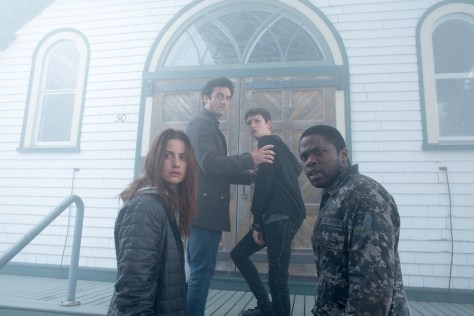
Although it often seemed to show far greater promise, “The Mist” TV series ultimately proved to be pretty average stuff. I’d rate the 10-episode first season a 6 out of 10.
It started strongly, with real efforts to develop compelling characters, significant tension and a tight plot. Most of the characters remained compelling. I found myself liking even Morgan Spector’s protagonist Dad, who I originally thought was milquetoast. (Spector himself isn’t a bad actor when his character is properly motivated.) And I found myself really liking Danica Curcic’s troubled, drug-addicted antiheroine. (She’s one of the best things about the show.) The young Russell Posner also does some fine work as Adrian.
But the tension that the show created with its eponymous, plot-driving “mist” fizzled toward the end, and just set me up for disappointment. Fellow monster fans, this is not a creature-feature. It directly contrasts Frank Darabont’s wonderful 2007 film adaptation of Stephen King’s novel, by featuring mostly supernatural threats instead of physical ones.
Our heroes facing the mist are confronted mostly by phantoms, and various iterations of … sentient snoke. (I’m guessing they are … demons? Or some other non-corporeal bad guys? At one point, are we actually meant to see the four horseman of the apocalypse kill somebody? Huh?) The antagonists’ portrayal is confusing and poorly delineated, and the scare factor consequently wears off toward the end of the season. And the preponderance of CGI-smoke monsters suggests a fog machine and a limited special effects budget.
This is complicated by confusing and unexpected character decisions, which I can only suggest result from poor writing. The viewers are expected to believe that nearly everyone in a small northern town — save for maybe six or seven characters — quickly succumb to elaborate, new-age fantasies in order to turn on one another. (I’m inclined to think they’d more quickly divide along racial, economic and traditionally religious lines.)
It wasn’t all bad. There were some character twists that I quite liked, and the show assiduously sets up a lot of interesting subplots. It also moved at a brisk pace, even if its scattered ending left me nonplussed. It was occasionally pretty creepy in parts, too. I certainly tuned in every week.
I think maybe I’m just a little disappointed because the trailer made this show look amazing, and, by the end, “The Mist” proved to be an average viewing experience.
Roanoke College.

College Lutheran Church.

I keep telling people on my native Long Island how hilly it is in Southwest Virginia. Depending on where you live, you might need to walk up or down just to visit your nextdoor neighbor. It seems like nothing to people who raised here. But it can feel utterly strange at first to anyone who grew up in a region that is almost uniformly flat.



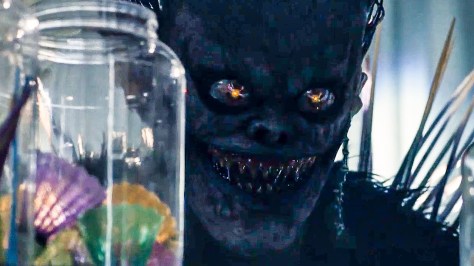
True to its manga origins, Netflix’ “Death Note” (2017) seems cartoonish and sometimes intentionally silly. That doesn’t stop it from being a lot of fun, though — this is the most original, offbeat horror tale I’ve seen in a while, and I’d rate it an 8 out of 10.
It’s definitely a genre-buster — it’s one part comic book, one part horror tale, one part eastern theological fantasy and one part dark teen romance. It succeeds in part because it has an interesting supernatural story setup that seems reminiscent an episode of “The X-Files.” (A magical notebook allows it owner to sentence anyone to death, simply by writing the victim’s name down, and describing how they die.)
It also succeeds because it has a great bogeyman — a seemingly omnipotent demon named Ryuk. His visual design is creative and wickedly creepy, and his character is menacingly voiced by none other than Willem Dafoe.
Finally, Shea Whigham is very good as the teen protagonist’s tough but likable dad. I thought I remembered him only from his relatively minor role in this year’s “Kong Skull Island.” But, as it turns out, he was actually the sympathetic escaped convict from 2008’s criminally underrated monster movie, “Splinter.” He’s a great actor.
I really liked this. I’d recommend it.