Tag Archives: 2017

Cover to “The-X Files, Volume 3: Contrarians,” Menton3, 2017

IDW Publishing.  “Menton3” is a pseudonym for Menton J. Matthews III.

XFILES_ONGO2016_VOL3_CVR-copy

A short review of “The First Purge” (2018)

“The First Purge” (2018) isn’t the best horror-thriller I’ve ever seen, but it certainly isn’t the worst, either.  I thought that I would be all purged out by now, but this fourth entry in the film series is a solid prequel — I’d rate it an 8 out of 10.  (There is also a TV show set in “The Purge” universe, which USA has renewed for a second season, and I’m told that it’s pretty good.)  I suppose this is a durable franchise because its premise could be explored through countless different characters.

The movie has some weaknesses.  The pacing is off, and you could argue that the political theme of “The Purge” films, though compelling, is getting redundant by now.  (There are some specific jabs this time out at Donald Trump and his following; they’re heavy-handed, but they’re fun to spot.)

But “The First Purge” is still a suspenseful and disturbing dystopian horror film.  It’s got a terrific bad guy in Rotimi Paul’s “Skeletor” psychopath and some surprisingly damned good action sequences.  There is another difference here, too — this “Purge” is far less campy than the second and third films.  There are fewer plot twists, fewer over-the-top characters, and far fewer trippy visuals — it feels more like a straight horror film instead of a zany one.  Depending on your preferences, you might find it superior.

One more thing — given its obvious love for Staten Island, this film would make a great double-feature with “Bushwick” (2017), another thriller which seems like a love letter to its own setting in Brooklyn.  And they are both urban neighborhood thrillers with a similar storytelling style.


purge3-1068x1691

A review of the “Black Mirror” episode, “Bandersnatch” (2019)

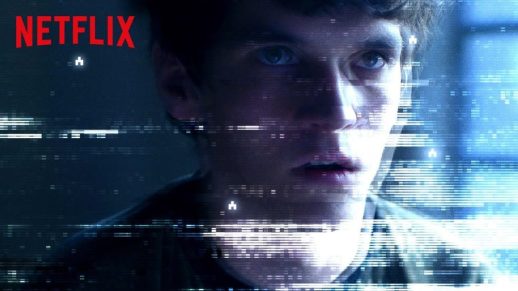
“Bandersnatch” is a difficult episode of Netflix’ “Black Mirror” to review — it isn’t really an “episode” or a “movie;” it’s more of an interactive online game that is reminiscent of the “Choose-Your-Own Adventure” young-adult books of the 1980’s.  (I believe they are actually name-checked in “Bandersnatch’s” main narrative, before it branches off into multiple stories.)  This main narrative follows a troubled young computer programmer (expertly played by Fionn Whitehead) as he begins to question his own reality while struggling with demons from his past.

From there, “Bandersnatch” unfolds according to the viewer’s choices.  (Netflix has configured the episode so that viewers control the protagonist simply by clicking options with their computer’s cursor.)  The meta-fictional twist here is that Whitehead’s protagonist is himself developing a groundbreaking multiple-choice style video game for his employer.  (The episode is set in 1984, when interactive games had not yet developed alongside arcade-style games.)  What follows is a seemingly indeterminate number of stories, with “Black Mirror’s” predictably disturbing surprises.

I’ve read that there are four “main endings” at which the show’s writer, Charlie Brooker, thinks most viewers will arrive.  There are supposedly a great number of other endings, as well — and the viewer can reverse the course of a narrative and follow a different path.  It’s all interesting stuff, even if it’s a little complicated.

So I’m not sure how to review it.  And I’m not sure I’m the best guy to offer such an opinion, as I am not the target audience for an experiment like this.  I’ve always been a “movie guy,” and not a “video game guy” — I’m the kind of milquetoast man that would rather be passively entertained by a story than involved, in real-time, in its creation.  I want a cohesive story with a clear denoument that was intended by the writer and director — not a mongrelized story that I helped come up with myself.  (Yes, I know that makes me sound like the precise opposite of cool and fun and creative, but I’m just being honest.)   I trust “Black Mirror” to knock my socks off with it’s storytelling — Brooker is a goddam genius, and this show is nothing less than the 21st Century’s “Twilight Zone.

I certainly liked “Bandersnatch.”  A key expository sequence in the first pathway I selected made me smile and laugh (due to the show’s intended black humor, of course).  I’d rate this viewing experience an 8 out of 10, for the fun I had with it.

But I do hope this is the only episode of its kind.  There are disadvantages that this experimental format probably cannot escape.  Pacing, plot structure and story cohesion all typically go right out the window after “rewinding” and story options are introduced.   I also had the compulsion, upon completing my first story arc, to return to the action and find an ending that was “correct” or possibly better.  And when my next narrative meandered, I wondered whether I was “doing it right.”  This lacked the cinematic quality that is characteristic of “Black Mirror” episodes, and ultimately felt like a video game.

I had another quibble too, and it’s admittedly a strange one.  Many elements of “Bandersnatch’s” 1980’s setting here are garish, bizarre or unpleasant.  (Some of the characters — particularly the father — were so off-putting that they made revisiting a story sequence almost irritating.)  I suppose that this was probably a deliberate choice by Brooker and by episode director David Slade — possibly to capture the vibe of the Philip K. Dick stories that are this episode’s obvious inspiration.  But I don’t think it was necessary to the plot.  Consider how different a story like this might be if it were filmed with the starkly beautiful visuals of the 2017 “Crocodile” episode directed by John Hillcoat.

Postscript — there was one metafictional twist that only I could enjoy.  And that’s a shame, because it was pretty neat.  When Will Poulter’s character here tells Whitehead’s that they’ve “met before,” that struck a chord with me personally — because Poulter, who has blond hair here, looks a lot like an old pal of mine from college.  That was weird.
 

maxresdefault-2-1-1068x601

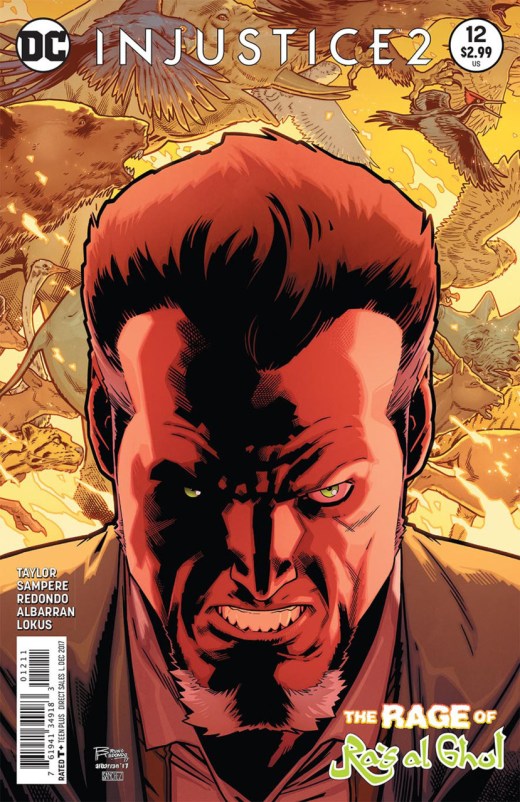
Cover to “Injustice 2” #12, Bruno Redondo, Juan Albarran, Alejandro Sanchez, 2017

DC Comics.

injustice_2_issue_12_cover

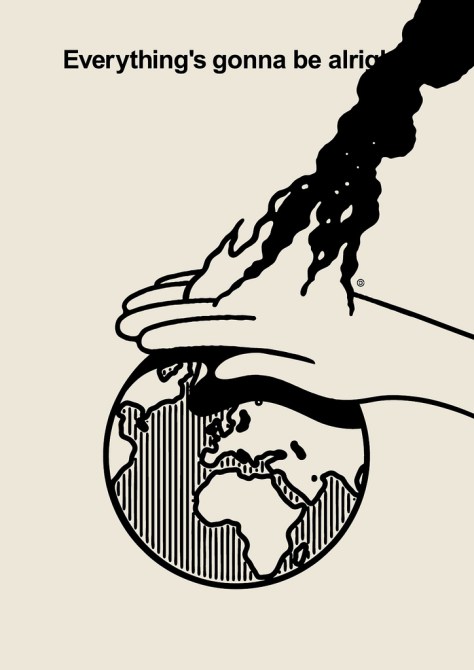
“Everything’s gonna be alright.” Christopher Dombres, 2017

Global_warming_illustration

By Christopher DOMBRES [CC BY-SA 4.0 (https://creativecommons.org/licenses/by-sa/4.0)%5D, from Wikimedia Commons

“Sir,” Ante Wessels, 2017

“In the autumn of 2016, I read that at places around the North Pole the temperature was 20 degrees Celsius (36 F) higher than in other years. With such a rise in temperature we can expect the pole to melt rapidly. In a dark fantasy, I saw the end of humanity, not in a distant future, but during my lifetime. Fear overwhelmed me. The anxiety attack lasted about 10 days. The experience was intense, as if I had felt all the fear people feel over climate change. First painting in the series “tempest.”  50 x 50 cm, oil on linen.” — A. Wessels


Sir,_a_painting_by_Ante_Wessels

By Ante wessels [CC BY-SA 4.0 (https://creativecommons.org/licenses/by-sa/4.0)%5D, from Wikimedia Commons

Cover to “Cable” #1, Dale Keown, 2017

Marvel Comics.

494347._SX1280_QL80_TTD_

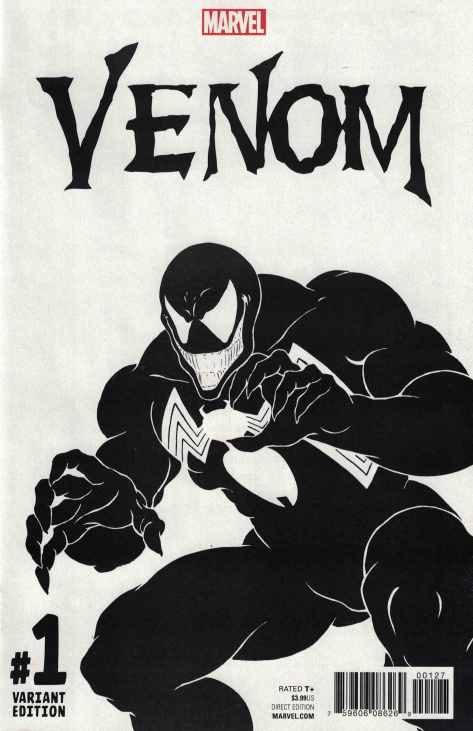
Variant Cover to “Venom” #1, Todd McFarlane, 2017

Black and white sketch variant.  Marvel Comics.

12-7-2016-7

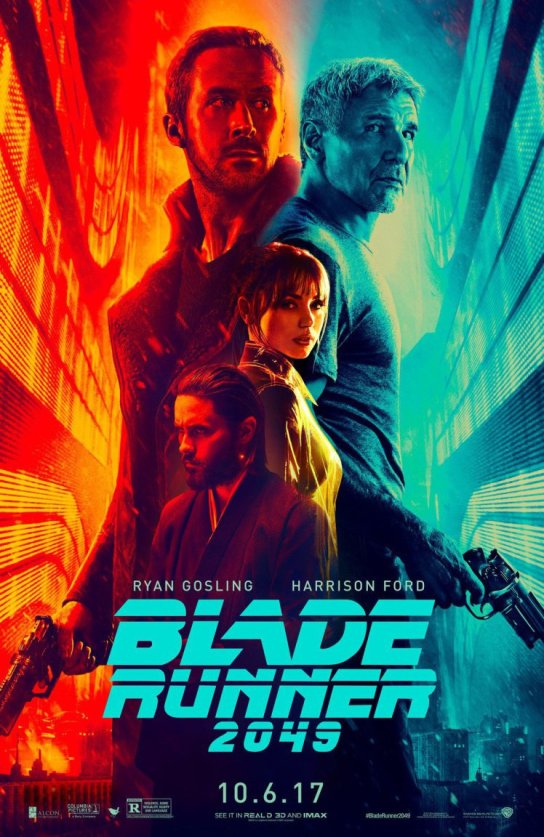
A review of “Blade Runner 2049” (2017)

Denis Villeneuve’s “Blade Runner 2049” (2017) is indeed a worthy sequel, even if it cannot equal Ridley Scott’s seminal 1982 original film.  (And this is absolutely understandable — I opine that Scott’s dour, challenging “Blade Runner” is arguably the greatest movie of all time.)  Some of it worked, and some of it didn’t — but I sufficiently enjoyed this movie to rate it a 9 out of 10.

There is a lot going on here in terms of plot.  I won’t be specific about what I liked and what I didn’t like, because I want to avoid spoilers.  (There are definitely some surprise plot developments, and this is a relatively recent film that fans have waited no fewer than 35 years to see.)  But I’m happy to report that “Blade Runner 2049” satisfies by being a direct and logical follow-up in terms of character, plot and setting.

I do think that this would be a stronger standalone story if it had included the material that was relegated to the online short films that serve as its companions.  (You can find all three of them at Open Culture right here.)  The first one, “Black Out 2022,” is probably necessary to understanding the feature film’s story and ought to be required viewing.

The visuals were vivid and arresting, the action sequences were generally satisfying, and the acting across the board was quite good.  Harrison Ford was predictably perfect.  Jared Leto and Sylvia Hoeks are suitably intense and make terrific bad guys.  (I’ve always loved Leto’s work — even his criminally underappreciated, spot-on interpretation of DC Comics’ “The Joker.”)  And Carla Juri nearly steals the entire movie with her mesmerizing performance in a supporting role.

What I liked best about “Blade Runner 2049” was how surprisingly well it captured the … vibe, I guess, of the first film — its existential angst and the surprising tragic nobility of its characters.  Simply put, this film got the feeling right.  For me, this was best evidenced by a poetic subplot between the characters played by Ryan Gosling and Ana de Armas.  It’s great dystopian science fiction — a fusion of troubling futurism and genuine human emotion.  And the mood was greatly enhanced by an evocative score by Hans Zimmer and Benjamin Wallfisch.

There are were a couple of things that I didn’t like — they were plot points that I won’t detail here.  The pacing also felt too slow, at times.  (This is a long movie, at two hours and 44 minutes.)  And the the climactic fight scene felt just a bit claustrophobic and awkwardly executed.  (It’s a far cry from the epic feel of the original’s rainswept rooftop confrontation.)

I’d still cheerfully recommend “Blade Runner 2049” to fans of Scott’s film.  I’d caution them to sit down with it with as few expectations as possible, though, and to just enjoy this second chapter on its own merits.  It’s mostly great stuff.


pri_50481883

“Redbud Leaves,” by Eric Robert Nolan (read by the author)

Redbud Leaves

Falling early, in July,
are perforated tapered spades,
or the honeycombed arrows of hearts —
beetle-bitten redbud leaves.

— first published by Poetry Pacific, 2017