This is for 1991’s “Batman: Holy Terror.” It was one of the first graphic novels I ever read, and it was one of the books that got me hooked on comics.

This is for 1991’s “Batman: Holy Terror.” It was one of the first graphic novels I ever read, and it was one of the books that got me hooked on comics.
Rest in peace, Sir, and thank you for all the fun, magic and imagination that your pencils brought to the readers of “Batman.” You made study breaks endlessly more enjoyable for a stressed-out 1990’s undergrad. And you made weekend discoveries of your work at the shops in downtown Fredericksburg a pure joy.

DC Comics. “Elseworlds” issue.

DC Comics.

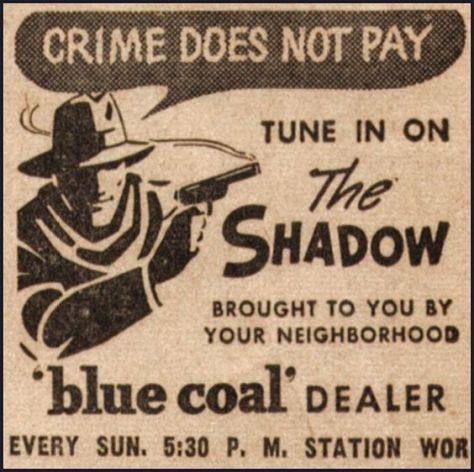
The weed of crime bears bitter fruit. Crime does not pay.
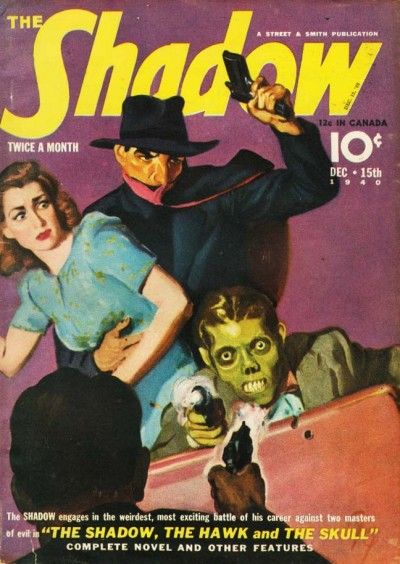
Dabbling in old time radio inevitably brought me to “The Shadow” — a character I’d heard about periodically when I was growing up. My Dad had been a fan of the radio program and film serials when he was a kid, and he was fond of rattling off that tagline you see in this blog post’s headline. (The radio shows were broadcast in to the mid-1950’s, long after they started in 1937.) I also remember the character from the truly unfortunate 1994 feature film with Alec Baldwin, which I actually saw in the theater with my college girlfriend. (The less said, the better. About the movie, I mean.) The Shadow is also cited periodically as an influence in the creation of my own favorite iconic dark detective, Batman.
The Shadow has a loooooooong, varied and occasionally confusing history – spanning radio, pulp magazines, comic books, television and film. He’s still being portrayed in comics. DC Comics released a crossover with Batman last year that looks interesting, and the incomparable Matt Wagner produced a couple of books in 2015 and 2016 that I’d love to get my hands on. (He fights Grendel!!!)
The radio shows are a lot if fun, just like the antique horror and mystery programs that I’ve linked to here at the blog. And, just like those, they’re easily found on Internet. (How my Dad might have marveled at that!) They’re definitely more campy. And I suppose that makes sense, as they seem aimed at children, whereas the horror shows seem intended for general audiences or just adults. The period commercials for Blue Coal are a weird glimpse into the past, too. If I had to name one thing that I found annoying about all of the old time radio shows I’ve found, it’s the omnipresence of that damned organ music. (Was it just a cultural staple of the time?)
If “The Shadow’s” stories are a bit hokey, the show’s voice acting and production are just terrific. I particularly like the actor performing The Shadow for the episode in the first link below — “Death is a Colored Dream” (1948). I believe it is Bret Morrison. (And I was surprised to learn that the famous Orson Welles only voiced the character for a year or so a decade earlier.)
But what’s most interesting is the character’s inception. He didn’t start out as a character in a story at all … “The Shadow” was simply the name of the generic host for a series of unrelated mystery stories comprising “The Detective Story Hour” in 1930. After a surprising fanbase developed around the creepy-sounding host (voiced at the time by Frank Readick, Jr.), people started asking for stories featuring “The Shadow” at the news stand. Street & Smith commissioned writer Walter B. Gibson to write up some tales featuring a supernatural detective; the first came out in 1931. The iconic character was just sort of made-to-order for confused customers who might have thought he already existed. That “Shadow” later arrived at the airwaves in 1937, with Welles voicing him.
Seriously, though, I totally need to get my hands on “Grendel vs. The Shadow.”

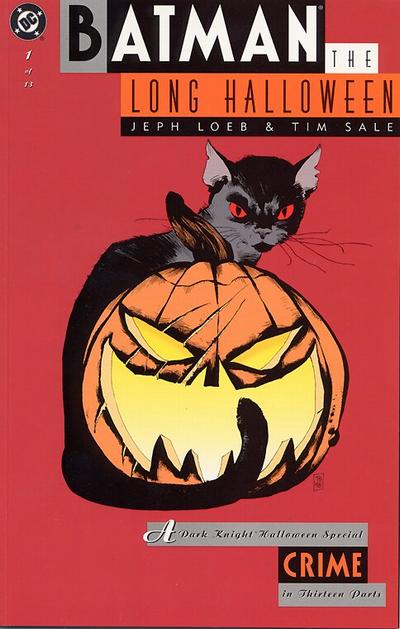
DC Comics.

DC Comics.

DC Comics.

“I believe in Harvey Dent.”
The fourth and final season of “The Strain” was easily its weakest, but was still fun enough to merit an 8 out of 10.
Season 1 was a unique, detailed, methodically assembled techno-thriller crossbred with vampire mythology — you could tell that it was adapted from a pretty decent book series by Guillermo del Toro and Chuck Hogan. The show’s subsequent seasons progressively meandered farther and farther into comic book territory … the fourth felt loosely and hastily plotted, with spotty and confusing exposition. (I was considerably confused until late in the game about who deployed nuclear weapons in the war between vampires and humans, when they did so, and what their strategy was.)
But what the hell. I still enjoyed this. The writers here still know where their bread is buttered, and gave survival-horror fans more of the screwball guilty pleasures they were tuning in for. There was plenty of blood and gore (even if it’s only the white, worm-infested vampire blood that I suspect was easier for the censors to approve). There were more of the show’s creepy, cringe-inducing monster effects. And there was plenty of action — right up until a finale that was predictable but cool. (If you’ve been following the show the way I have, do you not want to see machine guns, explosions, swords and severed vampire heads?)
Richard Sammel consistently outshined everyone in his role as the WWII Nazi turned vampire Himmler. What an extraordinary villain.) It’s a further testament to his talent that the man actually appears sublimely good-natured in real life. (He interacts with his fans from time to time on Facebook.)
The show actually surprised me, too, by how attached I got to its characters. It hasn’t always been a show that is strong on its characters, but … I’m going to miss them. Vasily Fet (Kevin Durand) and “Dutch” (Ruta Gedmintas) were two in particular that I found myself surprisingly attached to — especially considering that Dutch was a superfluous character that seems to have been added only for sex appeal and romantic tension. I was rooting for both of them.
So I’d still recommend “The Strain,” despite Season 4’s failings. To quote Jack Nicholson’s Joker in 1989’s “Batman,” “I don’t know if it’s art, but I like it.” (Yes, I do know that Walt Disney said it first. Whatever.)

 Eric Robert Nolan, Author