Tag Archives: Eric Robert Nolan

Throwback Thursday: “Streethawk” (1985)

“The man.  The machine.  STREETHAWK.”

I mentioned “Streethawk” (1985) a couple of weeks ago during that discussion of that 80’s fad where futuristic vehicles were the stars of TV shows.  This ran for a single season and depicted the adventures of a police officer riding “an all-terrain attack motorcycle designed to fight urban crime.”

This was the very height of 1980’s cheese — or the very nadir, depending on how you look at it.  (I was a pretty impressionable kid, though, and I loved “Streethawk.”)  And star Rex Smith was not an ugly man, but always seemed to have dopey expression permanently plastered to his face.

Wasn’t there sort of special signature move that Smith’s character had, where he popped a wheelie and actually spun the bike like a dradle at the same time?  So that the bullets or whatever it was firing would fly in every direction?  (Because cops typically require indiscriminate suppressing fire in every direction in order to “fight urban crime.”)  I could almost swear that was a recurring action sequence on this show.


“Darkening Autumn Walkway Haiku,” by Eric Robert Nolan

A coldly burning,

darkening autumn walkway

dims a hidden door.


20171126_171018 (2)

Site update — My video and audio recordings

Hi, gang.  This is just a quick note to let you know I’ve added a new page here at the site to sort of round up my poetry recordings.  You should be able to find any one of them right here:

My video and audio recordings

The page includes a link to my Youtube channel.  I hope you all had a terrific Thanksgiving yesterday!


Throwback Thursday: More of the WOR-9 Thanksgiving Monster Movie Marathon!!!

As I explained last year, monster movies were simply a part of Thanksgiving if you lived in the Tri-State region around New York City between 1976 and 1985.  This was due to WOR-9’s “Holiday Film Festival” broadcast, which actually also extended to the day following the holiday after the lineup’s first year.  (People just called it the “Monster Movie Marathon.”)

As a kid, I was a hell of a lot more thrilled with the monster movies than anything being served for dinner.  (Remember, video stores only began arriving the early 1980’s.  Before that, you usually had to catch a movie on television if you wanted to see it at all.  It’s why every house had a “TV Guide.”)

“King Kong vs. Godzilla” (1962) was one gem in the marathon.  (Or, at least, it seemed like an amazing film to a gradeschool boy.)  I was raised with the enduring myth that this Japanese film had two endings — an American version where King Kong prevailed, and a Japanese version where its native Godzilla was the victor.)  My Dad told me that, and I remember being fascinated that a movie could have two different endings.  I actually only learned just now, writing this blog entry, that it was a particularly widespread urban legend — stemming from an erroneous report in “Spacemen” magazine.  The American version of the film had tons of alterations, but the outcome was essentially the same — King Kong won.

There were always a few more Godzilla movies on the day after Thanksgiving, too.  “Son of Godzilla” (1967) was one of them; that was always hit with the kids.  (I could swear at some point there was a cartoon adaptation in the early 80’s.)  It was weird how 80’s kids apparently loved that ostensibly “cute” character; the adult in me today swears that “Son of Godzilla” looks like an upright, reptile-shaped poop.  (Seriously, check out the second clip below.)

“Godzilla vs. Megalon” (1973) was another one I seem to remember being pretty thrilled with.  I was even occasionally scared of the giant monsters in flicks like these.  (Hey, I was a little kid.)  Even as a first- or second-grader, though, I was smart enough to question why these movies were weirdly inconsistent.  (Why was Godzilla a bad guy who destroyed Tokyo in one movie, but the “good monster” that the Japanese rooted for in another?)

I’m learning now that “Godzilla vs. Megalon” was the target of a Mystery Science Theater 3000 episode.  I’m going to have to hunt that one down.


A few quick words on the premiere of “The End of the World” (2013)

An Pan-Seok’s “The End of the World” miniseries (2013) appears to be an intelligent, if a little understated, Korean epidemiological thriller.  I was engaged enough by the first episode to rate it a 7 out of 10, and I’ll probably keep watching it to give the show a chance.

It reminded me of Steven Soderbergh’s “Contagion” (2011), though the dramatic elements here are even more underplayed — at times the first episode even felt like a documentary.  It’s a bit slow, but it really looks like screenwriter Park Hye-Reon has done his homework.  (The miniseries was based on the novel “Infectious Disease,” by Bae Young-Ik.)

Assuming the series retains the tone and pace of its pilot episode, I believe this would appeal to only serious fans of disease thrillers.  To them, I’d recommend it.


The End of the World

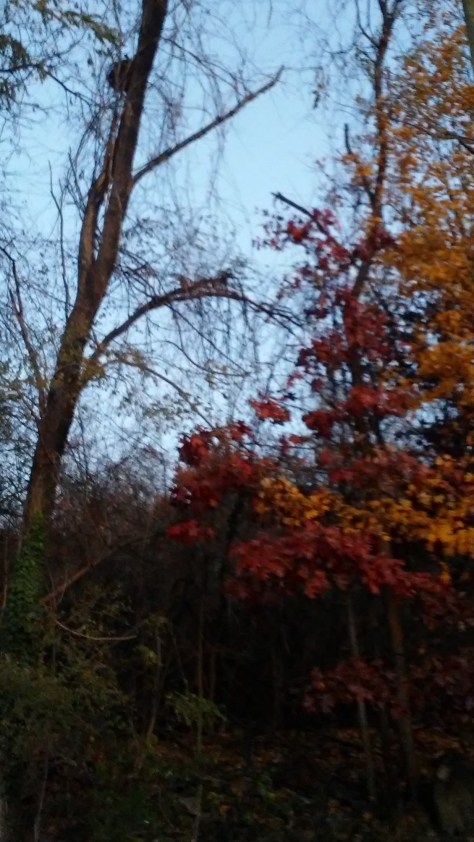
“All Our Faults Are Fallen Leaves,” by Eric Robert Nolan

“All Our Faults Are Fallen Leaves”

Again an annual angled auburn hand
announces advancing Autumn —
fingers aflame, the first Fallen leaf,
As slow in its descent, and as red,
as flailing Lucifer.

Hell in our sylvan vision
begins with a single spark.
The sting of the prior winter
subsided in July,
eroded at August.
Now, as at every September,
let new and cooler winds
fan a temperate flame.

May this nascent season only
bring brick-tinted perdition
and carmine Abaddon.
Where flames should burn, may there be
only rose tones on wide wine canvasses,
tormentless florid scarlets,
griefs eased in garnet trees.

What I hold in my heart to be true
is Edict at every Autumn:
Magentas may not make
forgetful a distracted God,
unless we ourselves forget
or burn to overlook.

Auden told us “One Evening”
to “Stand, stand at the window,”
and that we would love our neighbor,
but he didn’t counsel at all
about how we should smolder there.

Outside my window, and yours,
if the Conflagration itself
acquits us all by claiming only
the trees upon the hill,
the Commonwealth a hearth,
Virginia an Inferno,

Then you and I
should burn in our hearts to absolve
ourselves and one another,
standing before the glass,
our curtains catching,
our beds combusting,
our bureaus each a pyre.
Take my hand, my friend, and smile,
there on the scorching floor,
beneath the searing ceiling and
beside the blackening mirror
that troubles us no longer,
for, about it, Auden was wrong.

God’s wrathful eye
will find you and I
incandescent. The damned
are yet consigned to kindness.
All our faults are Fallen leaves.
Forgive where God will not.

Out of our purgatory
of injury’s daily indifference,
let our Lake of Fire
be but blush squadrons of oaks,
cerise seas of cedar, fed
running ruby by sycamore rivers,
their shores reassured
by calm copper sequoias,
all their banks ablaze
in yellowing eucalyptus.

Let the demons we hold
harden into bark
holding up Inferno.
All their hands are branches now;
all their palms are burning.

There, then, softly burning, you and I,
may our Autumn find
judgmentless russets,
vermilion for our sins,
dahlia forgiveness,
a red for every error,
every man a love,
every love infernal,
and friends where devils would reign.

(c) Eric Robert Nolan 2015

— Author’s note: the poem to which I’ve responded above, with its images of standing at the window and the mirror, is W. H. Auden’s “As I Walked Out One Evening.”


Maple_leaf_structure

Photo credit: Steve Jurvetson.


“Operation Staffhound,” by Philippe Atherton-Blenkiron

Hey, gang — if you missed its appearance last week over at The Bees Are Dead, here is the audio for my reading of Philippe Atherton-Blenkiron’s “Operation Staffhound.”  The poem is from his superb 2014 dystopian science fiction novel in poetry format, “The Pustoy.”

“Operation Staffhound” describes the brutal domestic police force employed by Lev Solokov, the future dictator of Britain and the novel’s central antagonist.


“Our Drive Home,” by Eric Robert Nolan

“Our Drive Home,” by Eric Robert Nolan

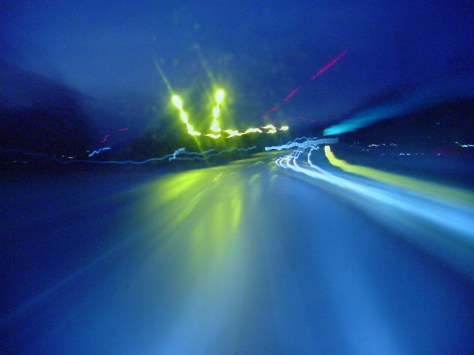
On our drive home,
your voice was song. Your lips
pursed to form the perfect overture.


Highway_at_night_slow_shutter_speed_photography_02

Photo credit: By Rick Doble (Own work) [GFDL (http://www.gnu.org/copyleft/fdl.html) or CC BY-SA 4.0-3.0-2.5-2.0-1.0 (https://creativecommons.org/licenses/by-sa/4.0-3.0-2.5-2.0-1.0)%5D, via Wikimedia Commons


“Lullaby,” by W. H. Auden (recited by Eric Robert Nolan)

A few quick words on the premiere of “The Defenders” (2017)

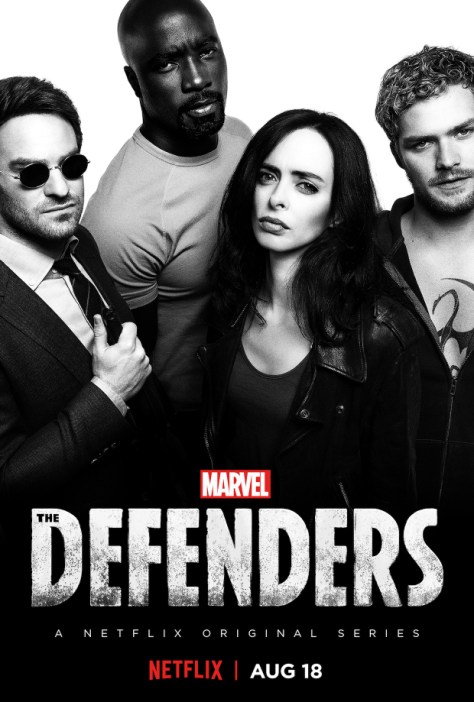
I certainly wasn’t as thrilled with the premiere of Marvel’s “The Defenders” (2017) as I thought I’d be.  I’d somewhat grudgingly rate it a 7 out of 10.

The show’s first episode suffers a bit from an inescapable challenge — how to satisfy the fanbase for each of four superhero characters who have had their own shows.  I’d honestly say that this show so far interests me about 50 percent of the time — I love Daredevil and Jessica Jones, but I don’t much care about Luke Cage or Iron Fist.  Complicating things further is the show’s need to logically tie together all of their respective storylines, while arousing interest in a new overall story for this nascent ensemble team.  (It … looks a lot like Daredevil’s story from both the second season of the Netflix series and the original comics.)

I’m optimistic I’ll enjoy it more as I catch the rest of the series.  Marvel properties almost always have good writers.  And the large cast here (including none other than Sigourney Weaver) is uniformly excellent.


charlie-cox-mike-colter-krysten-ritter-finn-jones-defenders