I told a friend in an e-mail tonight that I was “just trying to be intellectually honest.”
But I misspelled “intellectually.”
Irony, people.
I told a friend in an e-mail tonight that I was “just trying to be intellectually honest.”
But I misspelled “intellectually.”
Irony, people.
Netflix’ “Jessica Jones” (2015) is easily one of the best things in the Marvel Cinematic Universe; I’d rate it a 9 out of 10. It’s smart, it’s funny and it’s extremely dark — I don’t want to spoil too much by revealing the modus operandi of Season 1’s villain, but his manner of destroying his victims is utterly disturbing. (I’ve mentioned before how his powers seem like a plot device from a Stephen King novel.) Although this series excellently retains a “comic book” feel (due in part to its episodic format), its story elements frequently feel like something out of a John Carpenter film. And, although I know I’m repeating myself yet again, this Hell’s Kitchen niche of the MCU feels like its chosen stage for horror-thrillers.
The cast is excellent. Krysten Ritter is perfect as the titular, hard-drinking, antihero private detective. Mike Colter is nearly as good in the role of Luke Cage, another low-level hero in the Marvel universe. Colter’s talent is evident by the fact that Cage could so easily come across as a one-dimensional character. (And, Jesus, doesn’t the guy look the part?)
The story’s villain, Kilgrave, is played by fan-favorite David Tennant. (Yes, the name “Kilgrave” is stupid and is lifted from the comic book source material. Its silliness is lampshaded in the series several times by other characters making fun of it.) Tennant is an actor I’ve abhorred in the past. There was no logical reason for it — there used to be just something about his voice and his face that made me cringe. It was a running joke for a while among me and my female sci-fi friends. (Good Lord, how the ladies adore that man.) My admittedly irrational dislike of the man even detracted from my enjoyment of the otherwise quite enjoyable 2011 “Fright Night” remake.
He’s phenomenal here. He’s perfect for the part, as Ritter and Colter are for theirs, and he was alternately menacing and quite funny. (He has perfect timing and line delivery, as Ritter often does.) I really liked watching him.
“Jessica Jones” might succeed more than any other MCU property in terms of dialogue and character development — although the “Iron Man” and “Daredevil” series also do great work there. (It’s a tough call.) The show also seems to flesh out the MCU into a kind of “lived in” universe in a way that other Marvel properties usually haven’t — by creating detailed, three-dimensional protagonists out of characters that have no superpowers whatsoever. They’re not “sidekicks” (a trope that the script that slyly winks at); they’re realistic characters that affect the plot. When one or two actually appear to develop superpowers toward the end of the season, the consequences are unexpected and dire. (There is a truly kickass Easter egg here that will please longtime readers of Marvel Comics.) Furthermore, Jones, Cage and most of the other characters have power sets that pale in comparison to M.C.U. heavy hitters like Thor, the Hulk or the Vision. The result is that the MCU feels more … integrated and nuanced, with a blurrier line between superheroes and everyday people. I liked that a hell of a lot.
The show is not entirely without its failings. Despite what I said above about the show’s attention to ordinary characters, I still think it went a bit overboard here. The character of Malcom (nicely portrayed by Eka Darville) began as a hugely interesting supporting character. So, too, did other residents of the heroine’s apartment building. It was a nice touch that expanded the show’s scope and depth … until the law of diminishing returns kicked in. By the end of Season 1’s 13-episode arc, I felt that they’d received far too much screen time. The support group that one character attends started out as an intelligent subplot, but then eventually grew tiresome. (Again, I’m being necessarily vague here to avoid spoilers.) Towards the finale, I actually felt that these minor characters were padding the plot and dragging down the narrative.
Which brings me to another criticism — the narrative’s length. This is yet another show that I felt could be edited down a bit. As much as I loved Tennant here and found Kilgrave to be an interesting villain, I’m not sure that Jones’s conflict with him warranted 12 52-minute episodes. This could have been abridged to eight or ten, I think.
Another criticism I had of “Jessica Jones” was its fight choreography. For a show that succeeds on so many levels, the action sequences were sometimes surprisingly poor. Why do brawls between superpowered individuals include so much polite (and bloodless) grabbing and throwing? Especially when a single punch or kick could easily kill or incapacitate an opponent? The answer, of course, is that those kinds of melees are easy to film, with minimal training for the actors. It’s especially noticeable here because this show’s sibling, “Daredevil,” has fight choreography that is some of the best I’ve ever seen. (If you’re curious, then search for “Daredevil stairwell fight” on Youtube sometime.)
The rudimentary effects were usually even poor when depicting the title character’s “jumping” scenes. (She has super strength, so she can virtually “fly” short distances by literally jumping.) These shots looked like something out of a primetime 80’s action show.
All in all, though, this was indeed a great show. Don’t shy away from it, as I initially did, because you’re unfamiliar with the title character. It’s among the best that Marvel has to offer.

This is a poem I fell in love with at the age of 19. My mother and I had rented a house on a Virginia pond; the home’s wealthy owners had left its basement shelves lined with books. They were a bit musty, as books are wont to be when found in the basements of homes by the water. I pulled a hefty tome off a high shelf when I was bored on a summer day.
I’ve loved this poem ever since. It would be great to do a reading of this at the ocean.
*****
“On the Verge,” by Algernon Charles Swinburne
Here begins the sea that ends not till the world’s end. Where we stand,
Could we know the next high sea-mark set beyond these waves that gleam,
We should know what never man hath known, nor eye of man hath scanned.
Nought beyond these coiling clouds that melt like fume of shrines that steam
Breaks or stays the strength of waters till they pass our bounds of dream.
Where the waste Land’s End leans westward, all the seas it watches roll
Find their border fixed beyond them, and a worldwide shore’s control:
These whereby we stand no shore beyond us limits: these are free.
Gazing hence, we see the water that grows iron round the Pole,
From the shore that hath no shore beyond it set in all the sea.
Sail on sail along the sea-line fades and flashes; here on land
Flash and fade the wheeling wings on wings of mews that plunge and scream.
Hour on hour along the line of life and time’s evasive strand
Shines and darkens, wanes and waxes, slays and dies: and scarce they seem
More than motes that thronged and trembled in the brief noon’s breath and beam.
Some with crying and wailing, some with notes like sound of bells that toll,
Some with sighing and laughing, some with words that blessed and made us whole,
Passed, and left us, and we know not what they were, nor what were we.
Would we know, being mortal? Never breath of answering whisper stole
From the shore that hath no shore beyond it set in all the sea.
Shadows, would we question darkness? Ere our eyes and brows be fanned
Round with airs of twilight, washed with dews from sleep’s eternal stream,
Would we know sleep’s guarded secret? Ere the fire consume the brand,
Would it know if yet its ashes may requicken? yet we deem
Surely man may know, or ever night unyoke her starry team,
What the dawn shall be, or if the dawn shall be not: yea, the scroll
Would we read of sleep’s dark scripture, pledge of peace or doom of dole.
Ah, but here man’s heart leaps, yearning toward the gloom with venturous glee,
Though his pilot eye behold nor bay nor harbour, rock nor shoal,
From the shore that hath no shore beyond it set in all the sea.
Friend, who knows if death indeed have life or life have death for goal?
Day nor night can tell us, nor may seas declare nor skies unroll
What has been from everlasting, or if aught shall alway be.
Silence answering only strikes response reverberate on the soul
From the shore that hath no shore beyond it set in all the sea.


My new gangsta rap name is E-Clipz.
Also, one of you guys has to check me for ticks now.

Okay, so my photos of the eclipse itself didn’t turn out so hot. But they are kind of interesting in that you can view the eclipse via a weird lens flare effect in these photos.
Look at the first two shots. If you look past huge, blurry, distorted image of the sun, and look just above and to the right of it, you can see a smaller, better image of the entire eclipse. It looks like the top portion of a glowing ring. In the third photo, the effect is all the way toward the bottom of the shot.


Friend: “Gotta love Facebook. Less than 6 hours to find my dog. 🙂 )
Me: “Your dog opened a Facebook account?! That’s amazing!”
If it doesn’t start raining frogs on Tuesday, I’m going to be very disappointed.
And the apocalypse will be especially depressing given how happy and unified our country is today.
Who invented pumpkin spice latte? Gonna tear that mother****er’s statue down.

If you haven’t visited the The Bees Are Dead recently, then why not stop by this weekend? There is some terrific poetry from Wren Tuatha, Allison Grayhurst and Randall Rogers, as well as some truly amazing “Masters of the Universe” fan art by celebrated film art concept designer Paul Gerrard. (80’s kids will love it.)
The newest item featured over at B.A.D. is an official response by Beth Fukumoto, who is a member of the Hawaii House of Representatives, to a racist hate letter that she recently received. Fukumoto, who switched her party affiliation earlier this year from Republican to Democrat, has been a target of racially motivated antipathy since then. (Fukumoto was actually interviewed by B.A.D.’s own Dennis Villelmi in April.)
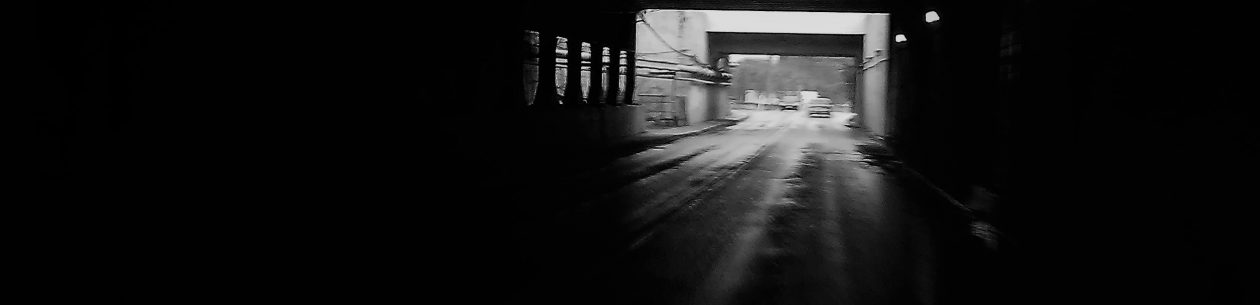
These were taken from a moving car — my friends and I were headed for dinner in Salem. As I’ve explained before, I have a weird thing about blurry pictures taken from a moving vehicle. And the foreboding and colorless quality of these shots makes them extra trippy.
The disembodied black blurs that you see are actually trees close to the roadway; I thought the effect was pretty damned cool — especially in that last shot. The second-to-last shot would be great to accompany a haunted house story.


I DO care about the nazis and the KKK in Charlottesville.
Pointing out that most violence is intraracial is an example of “whataboutism.” I’ve heard this argument made by conservatives before, and it is based on a logical fallacy known as the “false dilemma.” The incidence of intraracial crime has no bearing on whether we should be outraged about neo-nazis and white supremacy. We can easily be outraged by both; it isn’t a choice between one or the other. I can be concerned about the murder rate in Chicago, and also outraged about the Nazis killing a woman in nearby Charlottesville a town that I have adored since I discovered it as a student in my youth.
Red Pill Black’s references to others decrying a “race war,” in my case at least, is a straw man argument. I have not seen evidence of a broader “race war,” nor am I concerned about it. Nobody I know is saying that. I am concerned about the potential rise of a fascist political movement that has historically demonstrated that it has tremendous appeal to certain whites — nazism.
Nazism is a genocidal political ideology, with proven potential for overtaking a nation, if the economic and social conditions are right. Again, history has shown that it is potentially powerful stuff for gaining traction and propelling its leaders to power. Consider the rise of neo-nazism in Russia, for example, after the fall of the Berlin Wall, which I understand has been underreported in the western press. (Human rights activists claim that its power there is derived largely from right-wing leaders who condone it.) Nazis aren’t a street gang like “the bloods” or “the crips.” Nor are they just another white hate group. They wield a far more dangerous weapon — an ideology with a terrifying track record for seizing power in western nations.
If this woman is thinking critically about how media coverage can engender or increase the likelihood of violence, then I totally understand the questions that she is asking. But … what is the alternative? Less coverage? No coverage? After the nazis marched on Charlottesville, right through the UVA campus in a blatant attempt to intimidate students, I would be furious if the media failed to cover that extensively.