Tag Archives: Logan

A few quick words on “The Rogue Cut” of “X-Men: Days of Future Past”

If you are a die-hard “X-Men” fan, then I do recommend checking out Bryan Singer’s non-canonical “The Rogue Cut” of “X-Men: Days of Future Past.”  You might enjoy it just for its novelty — it actually is a very different version of the original movie.  It has a lot of scenes that are either entirely new or shot and edited quite differently.  (The most notable difference, obviously, is an entire subplot concerning the rescue of Anna Paquin’s Rogue, which was deleted from the 2014 theatrical release.)

I get the sense that this will come across as a better film to “X-Men” purists.  There is greater attention to a multitude of characters, far more character interaction, and greater detail about the apocalyptic future segments.  (I myself was happy to finally figure out why the dystopian mutants were housed in such a strange looking building.  It turns out they were hiding in a Chinese temple as part of an ongoing global evasion strategy.)  “The Rogue Cut” also has greater continuity with more of the prior films — it feels integral to the films’ ongoing mythos, and less like a standalone adventure.

But “The Rogue Cut” might not be better at pleasing general audiences.  It clocks in at just under two and a half hours, and the overall result did feel far slower to me.  There is a reason why movies are edited down — their unabridged versions have problems with pacing that really can affect the average viewer’s enjoyment.

I will also point out that this version of the film fails to rectify what I’ll reiterate is the theatrical version’s biggest story flaw — why would the shape-shifting Mystique be the key to developing the Sentinels power-stealing technology.  Why not the power-stealing Rogue herself?

Anyway … speaking of what is canon and what is not, there is a damned interesting fan theory floating around about the “X-Men” movies following this year’s release of “Logan.”  That movie stood out for many reasons, but two in particular are relevant here.  The first is the radical change in its tone and storytelling, which makes it feel like it takes place in “the real world.”  The second is its odd, apparently meta-fictional inclusion of the “X-Men” comics themselves within the story.  (Copies of the comic books are discussed by the characters, and even serve as an important plot element; Wolverine complains that they are horribly inaccurate.)

Many fans are having fun wondering if there has, in fact, been only one canonical “X-Men” movie — and that is “Logan” itself.  The brutal, subdued reality of “Logan” alone is “the real world” of the X-Men; all of the fantastical prior films (which occasionally contradict one another anyway) are merely the stories inside the last movie’s comic books.  I thought that was pretty damned clever.


newcut2_by_joseelizondo-d901c11

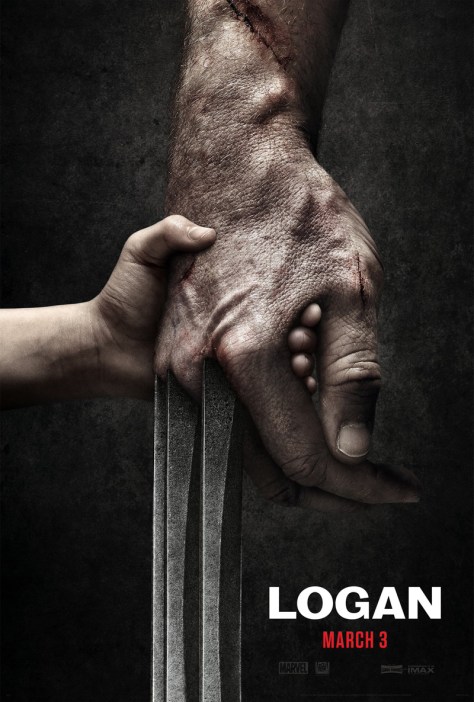
A review of “Logan” (2017)

I’m not sure I agree with quite all of the accolades that “Logan” (2017) has been receiving.  (It’s being compared with Christopher Nolan’s “The Dark Knight,” for example, as well as Frank Miller’s medium-altering 1986 graphic novel, “The Dark Knight Returns.”)  It’s still a damn good movie, though, and easily among the best of Fox’s “X-Men” series.  I’d give it a 9 out of 10, and I’d firmly recommend it.

This absolutely doesn’t feel like a “comic book movie.”  It feels more like a brutally violent, sometimes introspective, road-trip drama — though all of the comic book elements are still there.  I’d caution comic book fans that “Logan” was actually much darker than I expected — and, no, it wasn’t just because of the visceral violence that could only be afforded by this movie’s unusual “R” rating.  There was a lot more that went on here that got under my skin … I just can’t say more for fear of spoilers.

There is one thing I can tell you — there is none of the escapism of past “X-Men” films.  (C’mon, for being about a supposedly oppressed group, those movies always made being a mutant look fun as hell, and even glamorous.)  This film follows an aging, ailing Wolverine, and an even worsely afflicted Professor X — subsisting in secret in the Mexico desert.  What’s more, they and their aging friend, Caliban, appear to be among the last of their kind, thanks to an unexplained, decades-long absence of new mutant births.  And what little exposition is given about the other X-Men suggests that they are dead.  If you’ve been a fan of these iconic characters for a long time, then seeing Wolverine and Professor X being so painfully not larger than life is jarring, and even sad.  No matter what is the outcome of its story, this movie’s plot setup alone can make an “X-Men” fan a little despondent.

The action is damned good.  The movie surprised me by how smart it was, too.  Its examination of violence and its consequences is unflinching.  Also, we’ve been instructed through so many “X-Men” movies that humans should not seek to contain the mutants out of fear … yet “Logan” adroitly and subtly questions such one-sided moralizing.  The acting, across the board, is extremely good — predictably from Hugh Jackman and Patrick Stewart, and surprisingly from 11-year-old Dafne Keen.  She’s perfect as the young, imperiled, yet ferocious Laura.

My complaints with “Logan” were minor.  One thing that irked me was my own confusion about whether it was “canon.”  Are we to assume that this takes place in the “X-Men” movies’ “main continuity?”  Or is this a parallel universe or a different timeline?  The feel of this film is so radically different that I found it difficult to imagine it following the previous films (although the post-credits sequence in 2016’s “X-Men: Apocalypse” seems to set up “Logan.”)  I thought that this was based on Marvel Comics’ “Old Man Logan” storyline … wasn’t that an alternate universe story?

Maybe adding more to my confusion, “X-Men” comic books actually exist in the universe of this film.  Laura carries a bunch of them, and they are a minor plot point.  Does this mean that the humans in this universe have finally accepted mutants, enough to create comic books about them being heroes?  How did that come about?

My second criticism of “Logan” is that the character of Laura is thinly rendered.  Saving her is the plot device for the entire film, and Keen is absolutely talented.  Shouldn’t we know more about her, and about her relationship with Logan and Charles?

All in all, this was a superb film, though — with an unexpected tone and a surprisingly sober, risk-taking approach to Jackman’s avowed last appearance as Wolverine.  If you like the “X-Men” movies at all, then you should definitely see it.


logan