All posts by Eric Robert Nolan

Eric Robert Nolan graduated from Mary Washington College in 1994 with a Bachelor of Science in Psychology. He spent several years a news reporter and editorial writer for the Culpeper Star Exponent in Culpeper, Virginia. His work has also appeared on the front pages of numerous newspapers in Virginia, including The Free Lance – Star and The Daily Progress. Eric entered the field of philanthropy in 1996, as a grant writer for nonprofit healthcare organizations. Eric’s poetry has been featured by Dead Beats Literary Blog, Dagda Publishing, The International War Veterans’ Poetry Archive, and elsewhere. His poetry will also be published by Illumen Magazine in its Spring 2014 issue.

Cover of “Adventure,” Vol. 15, No. 4, November 18, 1917

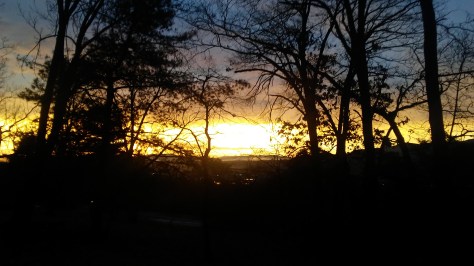
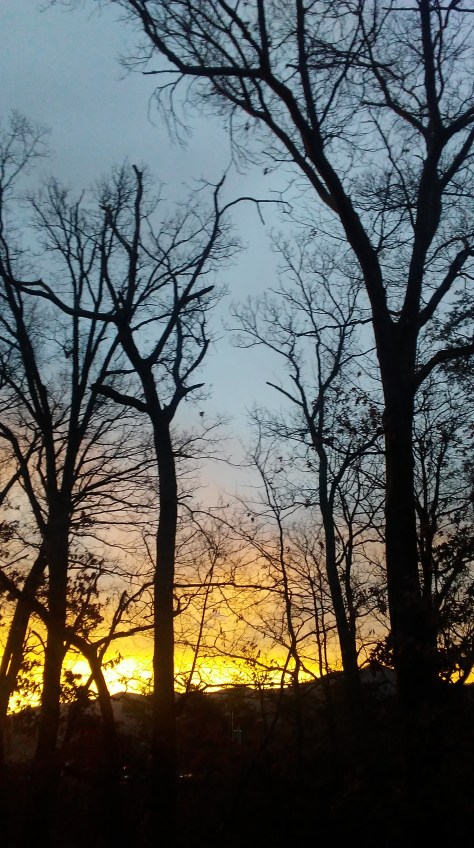
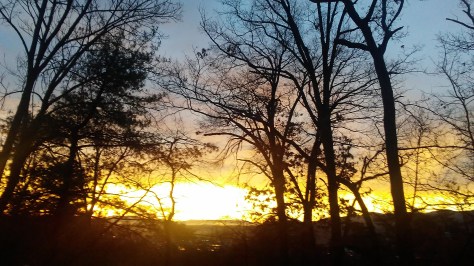
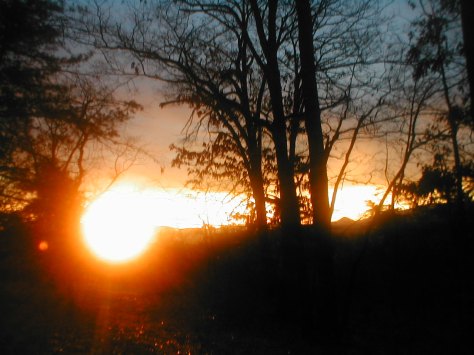
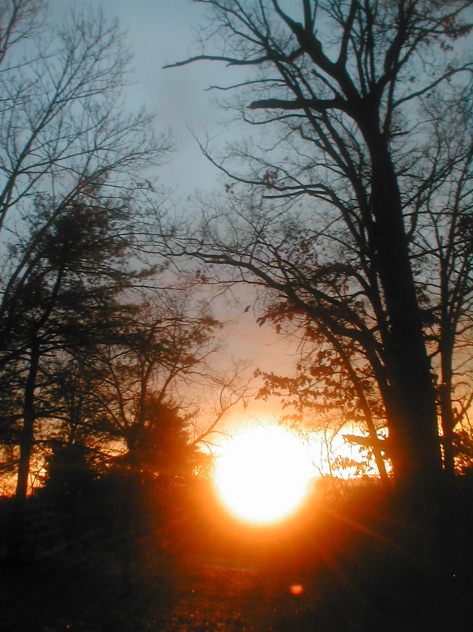
Blue Ridge Mountains Sunrise, December 2016

These were taken just after Christmas.  The last and nicest shot was taken by the lady of the house.


20161227_073657

20161227_073701

20161227_073722

20161227_073735

OLYMPUS DIGITAL CAMERA

OLYMPUS DIGITAL CAMERA

20161227_073744

20161227_073750

15748013_10212393198571626_1122845749_o


“Fantasia” double-feature today!

I just finished watching Disney’s “Fantasia” (1940) this snowy afternoon with my girlfriend — she gave me the boxed set with “Fantasia 2000” (1999) this Christmas.  This is the first time I’ve seen the entire film in … 26 years?  If memory serves, I last saw it at Mary Washington College’s Dodd Auditorium when I was a freshman in 1990.

I loved it just now even more than I loved it then.  My favorite segment will always be the final one — Modest Mussorgsky’s “Night on Bald Mountain,” with a coda of Franz Schubert’s “Ave Maria.”  (The accompanying animation is Gothic horror; I’ve posted about it here at the blog before.)

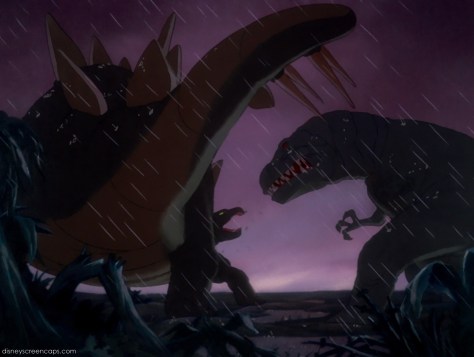
I felt for sure that my second favorite would be Igor Stravinsky’s “Rite of Spring.”  Pictures of those animated dinosaurs startled and thrilled me as a tot after Christopher Finch’s “The Art of Walt Disney” (1975) somehow appeared magically among my baby books in Queens, New York.  As an adult, however, I liked the segment mostly because of its cool depiction of lower life-forms.  The dinosaurs were stylized and interesting to see, but I don’t think the quality of the animation has held up very well — especially considering what we know about the dinosaurs has changed so much in 80 years or so.

Instead, my second favorite was Ludwig von Beethoven’s “The Pastoral Symphony,” and its whimsical, beautiful depiction of centaurs, gods, and other figures from Greek mythology.

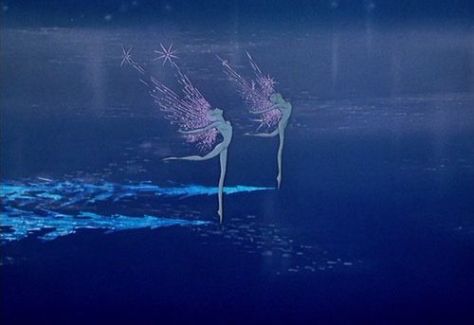
My girlfriend’s favorite segment was Pyotr Ilyich Tchaikovsky’s “Nutcracker Suite,” with its dancing fairies.  “Fantasia” was actually a favorite movie of hers growing up; she’s seen it several dozen times in her childhood.

There is some bizarre trivia about “Fantasia” from Wikipedia, which has a lengthy entry for the movie: “In the late 1960s, four shots from The Pastoral Symphony were removed that depicted two characters in a racially stereotyped manner. A black centaurette called Sunflower was depicted polishing the hooves of a white centaurette, and a second named Otika appeared briefly during the procession scenes with Bacchus and his followers.”  That’s so nuts.


fantasia-locandina-1940


fantasia-disneyscreencaps-com-4506-1


frost-fairies-fantasia


download


Antonio Vivaldi’s “Winter,” from “The Four Seasons”

Konstantin Korovin’s “Tatiana Larina’s Dream,” 1899

Tatiana Larina's dream by K. Korovin.jpg

Potomac Mills Mall, Woodbridge, Virginia, November 2016

20161116_152213-1

Cover to “Grendel: Devil’s Legacy,” Issue #6, Matt Wagner, 2000

Dark Horse Comics’ millennial reprint of Comico’s release in the 80’s.


Cover to “Grendel: Devil’s Legacy,” Issue #12, Matt Wagner, 2001

Dark Horse Comics’ reprint of the 80’s original series.


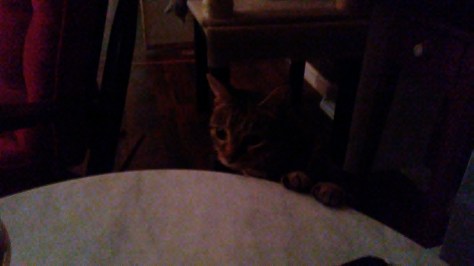
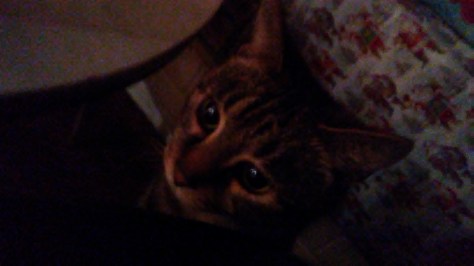
She’s krazy.

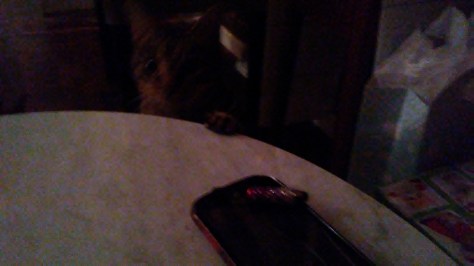
Forget the legend of Krampus.  This past Christmas Eve, I encountered the Kleptomaniac Kristmas Kitty.

She’ll swipe at any presents or candy you might place upon a coffee table.


20161224_183638

20161224_183636

20161224_183634

20161224_183633

20161224_183631

20161224_183629

20161224_183647

Near the fiercely azure, scattered clutches of hot-bright blue wildflowers.

2017 will be an uncertain future.

The past year closed with the passing of luminaries. As it turns out, the musicians and actors who were larger than life to us were not larger than death. While we mourned their seemingly strange succession of losses, level-headed statisticians among us pointed to numbers — these famous people were the aging “edge” of the “Baby Boomer” generation, and an increase in their passings was predictable. But this does little to assuage the sadness that “70’s kids” and “80’s kids” feel at what seems so much like literal constellations of stars simply winking out.

For us Americans, there were changes for our nation. Its proponents see it as the rise of the common man. Its opponents see it as the rise of some malignancy, pressing up against the skin — a cancer in our national character. There is a dichotomy in our still-quite-young country that we can’t truly say is newly discovered, because of course it has always been there. But its vigor and power to divide us now is more than daunting. Even stranger still, we see that same collective dichotomy mirrored in the home of our brothers and sisters across the Atlantic. (The people of Britain have grown to be so loved by me that I can no longer think of them as mere “cousins,” or “friends.”) But I believe that we Americans are being ushered into our New Year not by Lincoln’s “better angels of our nature,” but by the worst ghosts of our prior century.

I myself would confront the changes in our world alone in a way that I’d never been before. I said goodbye to my mother for the last time almost a year ago, as she lay in a hospital bed, chatting about books and poems and stories — very much as we had done when I lay in my boyhood bed, when my father was also still with us, and where she had once read to me. A parentless world is always an altogether new one. It is immutably sadder, even in its brightest spots. It is to be born again on a new globe that is infinitely emptier for the absence of two people.

But there was unexpected good this past year year, too. I discovered for the first time how happy it could make me to embrace an old classmate for the first time in 25 years.

I saw the Allegheny Mountains for the first time — I truly saw them, maybe in the only way that they were meant to be seen, waking outdoors beside lifelong friends near the fiercely azure, scattered clutches of hot-bright blue wildflowers.

I met the single dearest girl that I have ever known, along the hot July banks of a winding Southern river. I love her with abandon. She is an actress — someone who masterfully convinces happy audiences that she is someone else. She is habitually generous in her appraisal of me. She sees the good in me — even some good that is not truly there, I think, and her kindest performance is in convincing me that I, and not she, am actually someone else.

I toured the National Gallery of Art in Washington D.C., and discovered that I loved Vermeer. I found theater-going again, and new friends, and ravening violet skies over the Autumn peaks of Southwest Virginia — due to the fall’s strange manner of making its blustery plum night skies here seem inexplicably hungry. I celebrated Christmas with Southerners, and an old drinking buddy prepared a truly delicious holiday meal for me in my teetotaling old age.

One of the last things that my mother told me was, “Don’t worry.”

And I won’t. Maybe because it does little good in affecting the future. Maybe because, just once, an unruly little boy would like to finally do just what his mother has asked him to do.

I would rather focus only on finding more good in 2017. We all should, with the time that fate allows us. Whatever the differences among us, we all have something in common — we, too, are all eventually destined to be like stars winking out.