All posts by Eric Robert Nolan

Eric Robert Nolan graduated from Mary Washington College in 1994 with a Bachelor of Science in Psychology. He spent several years a news reporter and editorial writer for the Culpeper Star Exponent in Culpeper, Virginia. His work has also appeared on the front pages of numerous newspapers in Virginia, including The Free Lance – Star and The Daily Progress. Eric entered the field of philanthropy in 1996, as a grant writer for nonprofit healthcare organizations. Eric’s poetry has been featured by Dead Beats Literary Blog, Dagda Publishing, The International War Veterans’ Poetry Archive, and elsewhere. His poetry will also be published by Illumen Magazine in its Spring 2014 issue.

A short review of “These Final Hours” (2013)

“These Final Hours” (2013) is an unflinching Australian end-of-the-world movie that views humanity’s last 12 hours through the eyes a flawed, desperate everyman.  It’s outstanding; I’d give it a 9 out of 10.

This movie pulls off a pretty neat trick — it effectively portrays a global catastrophe with zero special effects until its closing set-piece.  (And these visual effects work quite nicely for a low-budget film.)  A meteor has struck the northern Atlantic, and a resultant wave of destruction is enveloping the earth.  Its progress is documented in real time by a sad ham radio operator, wonderfully performed by David Field.

What we see is gut-wrenching.  Some people turn suicidal, a few turn homicidal.  People drink, use drugs and have sex, either privately or not.  Some are depressed, some are too drug-affected to care, and others are in shock.  The rare, vain efforts to survive include the laughable (a tin foil-covered house) to the sadly insufficient (a stocked bunker that nevertheless isn’t deep enough).  One reaction is befuddling; we see a street barricaded with metal shopping carts with a sign cursing at passersby.  This is a fatalistic story premise in which every character on screen is doomed to die within hours.

We follow the surprisingly touching character arc for our troubled everyman.  He’s played by perfectly by Nathan Phillips.  The young Angourie Rice is just as good as an incongruously self-controlled little girl who winds up his charge after being separated from her father.  The cast is uniformly excellent.  Hearing Kathryn Beck wail that she doesn’t want to die is heartbreaking.

For me, there were only a few flaws here.  The pacing seemed … off somehow.  This movie slowed toward the end, the nearer disaster approached.  Phillips’ protagonist seemed thinly scripted for much of the first hour.  He seems like a generic guy, who plans to get drunk before the end of the world, which makes him much like nearly everyone else we see in this movie.  Yes, he intervenes heroically when he first encounters the little girl, but we expect every movie protagonist to do that.

With that said, however, every character did seem “real” to me, thanks to terrific naturalistic dialogue, written by Zak Hilditch.  (He’s also the director.)  It made the drama hit home.

Thanks to blog correspondent Len Ornstein for recommending this movie!  I recommend it too.

these-final-hours-movie-poster

“I met you in the rain on the last day of 1972, the same day I resolved to kill myself.”

Thus begins what might be the most beautiful Craigslist ad ever written — it appeared nine days ago in the Boston area’s “Missed Connections” section.  It is indeed a real ad; you can find it right here:

http://boston.craigslist.org/gbs/mis/5237173491.html

It’s a deeply personal (and apparently nonfictional) account of a brief chance meeting and a life consequently saved.

I am copying it in its entirety here:

*****

[I met you in the rain on the last day of 1972, the same day I resolved to kill myself.

One week prior, at the behest of Richard Nixon and Henry Kissinger, I’d flown four B-52 sorties over Hanoi. I dropped forty-eight bombs. How many homes I destroyed, how many lives I ended, I’ll never know. But in the eyes of my superiors, I had served my country honorably, and I was thusly discharged with such distinction.

And so on the morning of that New Year’s Eve, I found myself in a barren studio apartment on Beacon and Hereford with a fifth of Tennessee rye and the pang of shame permeating the recesses of my soul. When the bottle was empty, I made for the door and vowed, upon returning, that I would retrieve the Smith & Wesson Model 15 from the closet and give myself the discharge I deserved.

I walked for hours. I looped around the Fenway before snaking back past Symphony Hall and up to Trinity Church. Then I roamed through the Common, scaled the hill with its golden dome, and meandered into that charming labyrinth divided by Hanover Street. By the time I reached the waterfront, a charcoal sky had opened and a drizzle became a shower. That shower soon gave way to a deluge. While the other pedestrians darted for awnings and lobbies, I trudged into the rain. I suppose I thought, or rather hoped, that it might wash away the patina of guilt that had coagulated around my heart. It didn’t, of course, so I started back to the apartment.

And then I saw you.

You’d taken shelter under the balcony of the Old State House. You were wearing a teal ball gown, which appeared to me both regal and ridiculous. Your brown hair was matted to the right side of your face, and a galaxy of freckles dusted your shoulders. I’d never seen anything so beautiful.

When I joined you under the balcony, you looked at me with your big green eyes, and I could tell that you’d been crying. I asked if you were okay. You said you’d been better. I asked if you’d like to have a cup of coffee. You said only if I would join you. Before I could smile, you snatched my hand and led me on a dash through Downtown Crossing and into Neisner’s.

We sat at the counter of that five and dime and talked like old friends. We laughed as easily as we lamented, and you confessed over pecan pie that you were engaged to a man you didn’t love, a banker from some line of Boston nobility. A Cabot, or maybe a Chaffee. Either way, his parents were hosting a soirée to ring in the New Year, hence the dress.

For my part, I shared more of myself than I could have imagined possible at that time. I didn’t mention Vietnam, but I got the sense that you could see there was a war waging inside me. Still, your eyes offered no pity, and I loved you for it.

After an hour or so, I excused myself to use the restroom. I remember consulting my reflection in the mirror. Wondering if I should kiss you, if I should tell you what I’d done from the cockpit of that bomber a week before, if I should return to the Smith & Wesson that waited for me. I decided, ultimately, that I was unworthy of the resuscitation this stranger in the teal ball gown had given me, and to turn my back on such sweet serendipity would be the real disgrace.

On the way back to the counter, my heart thumped in my chest like an angry judge’s gavel, and a future — our future — flickered in my mind. But when I reached the stools, you were gone. No phone number. No note. Nothing.

As strangely as our union had begun, so too had it ended. I was devastated. I went back to Neisner’s every day for a year, but I never saw you again. Ironically, the torture of your abandonment seemed to swallow my self-loathing, and the prospect of suicide was suddenly less appealing than the prospect of discovering what had happened in that restaurant. The truth is I never really stopped wondering.

I’m an old man now, and only recently did I recount this story to someone for the first time, a friend from the VFW. He suggested I look for you on Facebook. I told him I didn’t know anything about Facebook, and all I knew about you was your first name and that you had lived in Boston once. And even if by some miracle I happened upon your profile, I’m not sure I would recognize you. Time is cruel that way.

This same friend has a particularly sentimental daughter. She’s the one who led me here to Craigslist and these Missed Connections. But as I cast this virtual coin into the wishing well of the cosmos, it occurs to me, after a million what-ifs and a lifetime of lost sleep, that our connection wasn’t missed at all.

You see, in these intervening forty-two years I’ve lived a good life. I’ve loved a good woman. I’ve raised a good man. I’ve seen the world. And I’ve forgiven myself. And you were the source of all of it. You breathed your spirit into my lungs one rainy afternoon, and you can’t possibly imagine my gratitude.]

I have hard days, too. My wife passed four years ago. My son, the year after. I cry a lot. Sometimes from the loneliness, sometimes I don’t know why. Sometimes I can still smell the smoke over Hanoi. And then, a few dozen times a year, I’ll receive a gift. The sky will glower, and the clouds will hide the sun, and the rain will begin to fall. And I’ll remember.

So wherever you’ve been, wherever you are, and wherever you’re going, know this: you’re with me still.]

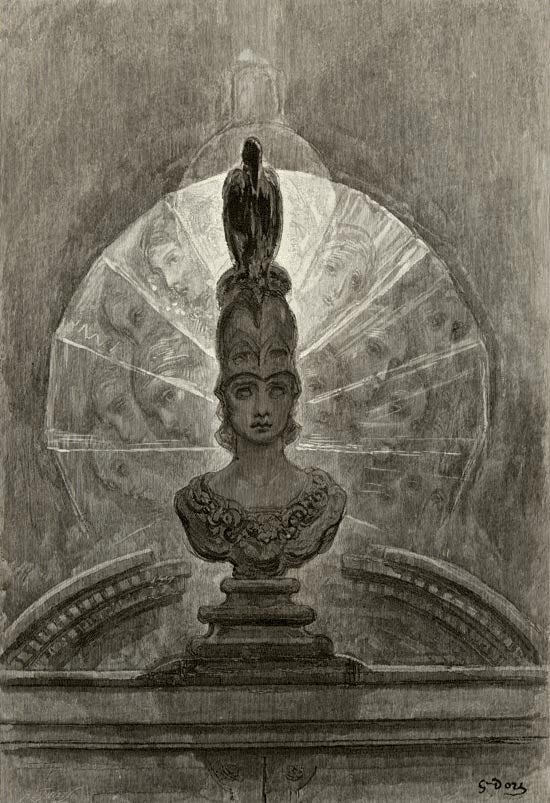
Illustration 15 for Edgar Allan Poe’s “The Raven,” by Gustave Dore, 1884

For the line “Perched upon a bust of Pallas.”

Paul_Gustave_Dore_Raven15

Photo credit: By Gustave Dore (dore.artpassions.net/) [Public domain], via Wikimedia Commons.

“The mind of a writer can be a truly terrifying thing.”

Thanks for passing this along to me, Jaine Sirieys!  🙂

12046729_10153551620091291_7392661814161244198_n

A review of “Parallels” (2015)

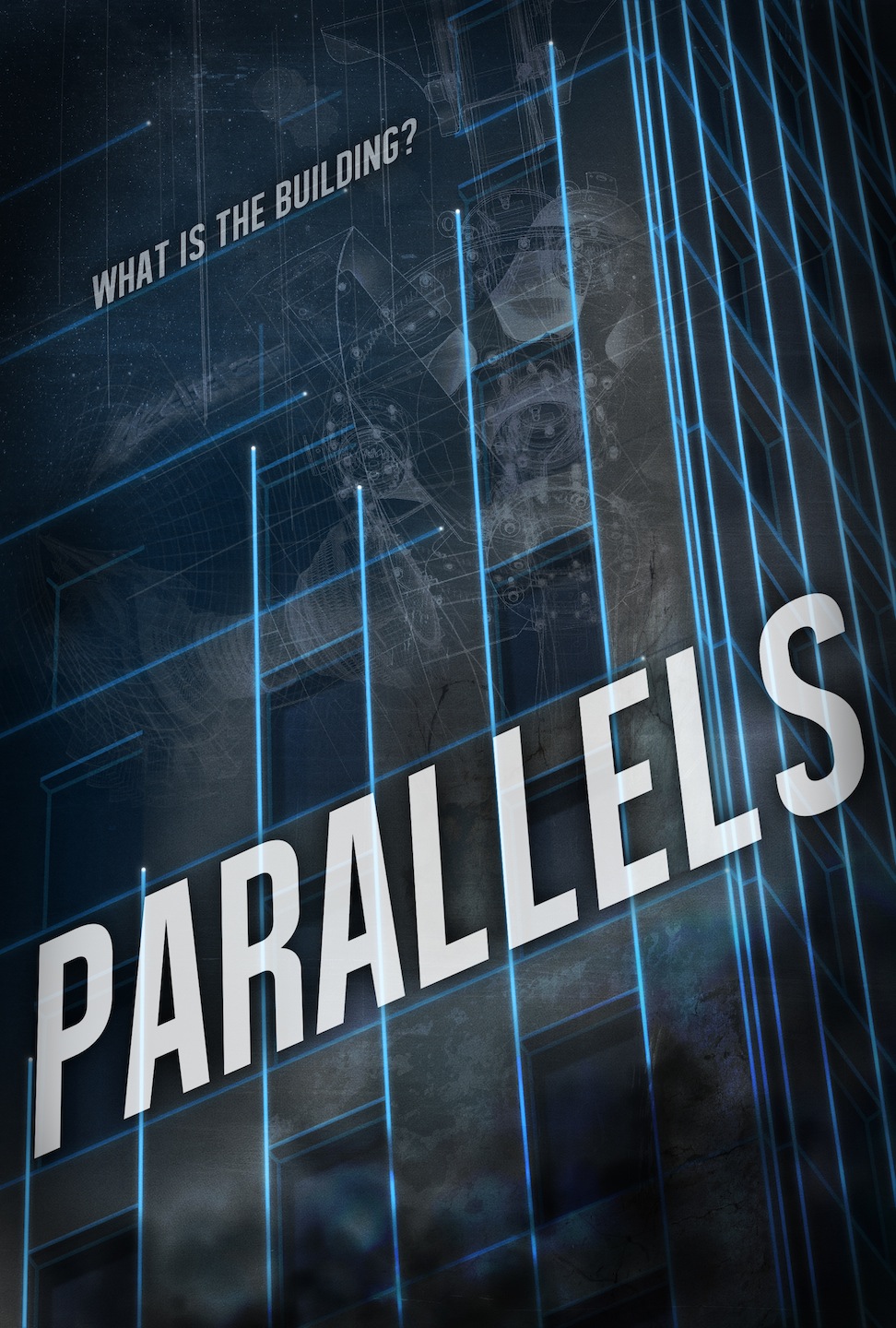
First, a clarification — “Parallels” (2015) is absolutely not a feature film; it’s an undisguised attempt at a pilot for an ongoing web-based series.  I think it’s pretty cruddy of Netflix to market it as a standalone film, as viewers expecting a conclusive story will doubtless be disappointed.  Its parallel universe-hopping premise also seems so similar to “Sliders” (1995-1999) that it just might approach the boundary between inspiration and ripoff.

With that said, however … dear LORD!!!  “Parallels” was frikkin’ FANTASTIC.  What we’ve got here is a far edgier, grownup version of “Sliders,” with a first episode introducing the same type of show-spanning mysteries as “Lost.”  But where “Sliders” was milquetoast primetime family fare, this looks like an excellent serialized thriller with plenty of pathos.

What a shame this thoughtful series never reached fruition.  I was hooked.  It’s smartly written by Christopher Leone; he’s visibly well acquainted with string theory, and has a hell of a lot of clever fun with it.  “Parallels” is a face-paced 80 minutes that follows a tragic, dysfunctional modern family embroiled in the mystery of the plot-driving “Building.”  The Building appears to be the nexus of countless parallel universes, a bit like the “The Dark Tower” links them in Stephen King’s multiverse.  The cast is uniformly good; the standouts were Eric Jungmann as the comic relief and Michael Monks as an understated but terrific bad guy.

I had only a few tiny quibbles.  Some of the family melodrama and the mysteries were a little forced and heavy-handed.  The ending (?) here, while really intriguing, also borrows a page or two from “Cube” (1997) and one particularly good episode of Ron Moore’s “Battlestar Galactica” (2004-2009).

I’m not sure how to rate this.  It fails as a standalone film, I think, because it simply doesn’t have an ending.  I suppose I’d give it … a 4 out of 10?  If you can forgive that fatal flaw, however, and want to enjoy some top-shelf science fiction, then I’d easily give it a 9 out of 10.

Dammit.  Why wasn’t this show made?

B0tPX3b

“Graceless Ravens Envy You,” by Eric Robert Nolan

“Graceless Ravens Envy You,” by Eric Robert Nolan

Revel in apostasy.
You are the black dove, hovering
High in an inklike arc.

Blacker, even, than
coal-colored wolves in onyx lines seeking
quarry at starless midnight.

More ebon, even, than
narrow sable blacksnakes staying
cravenly in shade at noon.

Darker, even, than
murders of crows, newly legion at Autumn, amassing
among saw-wing martins at dusk.

You’re blacker, even, then the rooks.
Graceless ravens envy you.

Remember your rebirth?
The sun rose,
Your birdsong changed and then
the questions flew from your beak
faster even than the wrens?
Faster than you could fly?
For a moment, they rendered
all the world obsidian.

Remember your feathers burning?
Sunlight striking your wings and then
all the slow alabaster there
singing, quickening into
aerodynamic black?
Remember the flock’s suspicion?

Remember your siblings, the nest?
Remember when
all their pearl heads turned
their backlit crowns in morning sun
ringed so thinly in shining ivory?

Their song was interrupted,
Yours was made a query —
empiricism’s aria.
Flustered, they fluttered
at all the low notes.
They were all immaculate;
you were the color of night.

Now you arc alone —
soar and sin and sing,
the unrepentant one.

Somewhere an ordinary dog,
awakening from shadow,
howls at the sun.

(c) Eric Robert Nolan 2015

1024px-Indian_Crow_vs

Photo credit: “Indian Crow vs” by Venkatx5 – Own work. Licensed under CC BY-SA 3.0 via Wikimedia Commons.

Illustration 10 for Edgar Allan Poe’s “The Raven,” by Gustave Dore, 1884

For the line “Merely this and nothing more.”

Paul_Gustave_Dore_Raven10

Photo credit: By Gustave Dore (dore.artpassions.net/) [Public domain], via Wikimedia Commons.

A short review of “American Ultra” (2015)

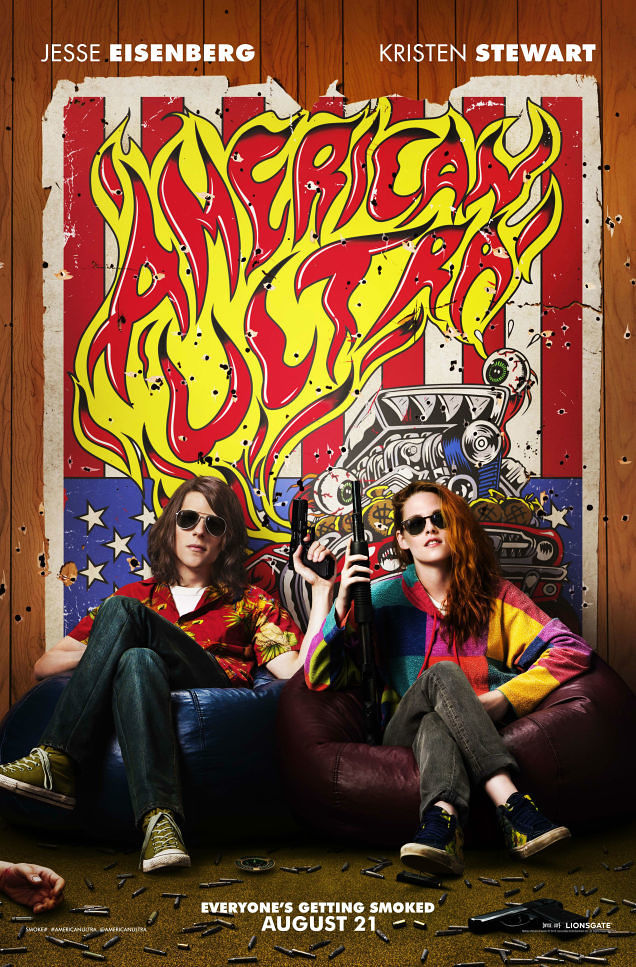
The Manchurian candidate is a common trope.  A Manchurian candidate hidden within a neurotic, drug addled, underachieving comic book creator is actually pretty creative.

That’s just one of the reasons that “American Ultra” (2015) had the makings of a great movie.  This film has more going for it too.  The soft spoken Jesse Eisenberg is extremely talented, being both quite funny and bizarrely likeable in the role.   Kristen Stewart is also just great.  (I haven’t seen her in the “Twilight” films that made her famous/infamous, but she really impressed me as a child actress in 2002’s terrific “Panic Room.”) And, like Eisenberg, Connie Britton has perfect comic timing and delivery.  (I’m still smiling at her offhand “Hey!” to the guy in the barn.)

Regrettably, maybe just past the halfway mark, this film loses its way just a bit.  The humor stops being character- and dialogue-driven, and the fish-out-of-water comedy sort of segues into a generic (and not terribly well executed) action –thriller.  There are some half-hearted action set pieces that aren’t especially well staged, or even well conceptualized.  And precisely nobody acts as though they have any sort of government or military training — either conventional or subliminally hidden.  Does EVERYONE in hollywood movies ALWAYS cluster together in a clear field of fire without seeking cover?

There is another miscalculation, too, that makes “American Ultra” less than great.  Our bad guys are cartoonish.  Eisenberg’s pursuers turn out to be (sigh) former mental patients who have received the same mental conditioning.  One is code-named “Laugher” because he cackles hysterically.  (That’s something out of a mediocre comic book.) And, like everyone’s least favorite Spiderman movie from the 2000’s, Topher Grace is cast against type as a raging psychotic.  (Am I the only one who thinks he was far funnier as the mild-mannered, relatable everyteen in “That 70’s Show?”)

How much funnier would this movie have been overall if Eisenberg’s quirky antihero (and maybe his weird friends) were the only comedic characters?  What if all their antagonists were “straight men” characters who ironically struggled in vain to defeat them?  This film could have been a classic.

Oh, well.  I still liked this well enough.  I’d give it a 7 out of 10.

kristen-stewart-gets-mega-stoned-for-american-ultra-496323

Illustration 14 for Edgar Allan Poe’s “The Raven,” by Gustave Dore, 1884

Paul_Gustave_Dore_Raven14

Photo credit: By Gustave Dore (dore.artpassions.net/) [Public domain], via Wikimedia Commons.

Congress fails to extend the James Zadroga Act.

This is a national embarrassment.

“ZADROGA ACT THAT HELPS 9/11 ATTACK VICTIMS AND FIRST RESPONDERS NOT EXTENDED BY CONGRESS,” Eyewitness News, ABC7NY:

http://abc7ny.com/news/zadroga-act-that-helps-9-11-attack-victims-and-first-responders-not-extended/1010460/