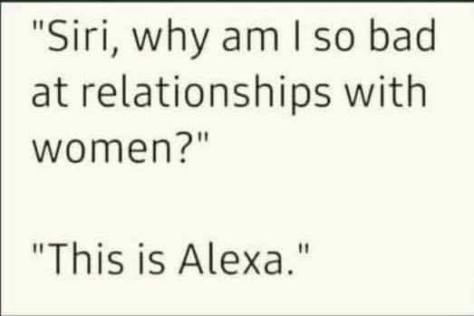
There are two immutable rules I have learned about women.

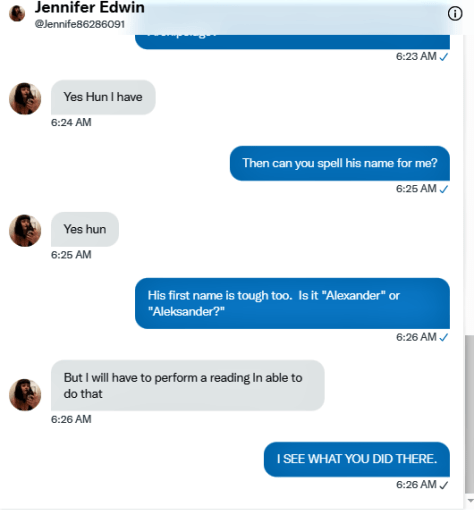
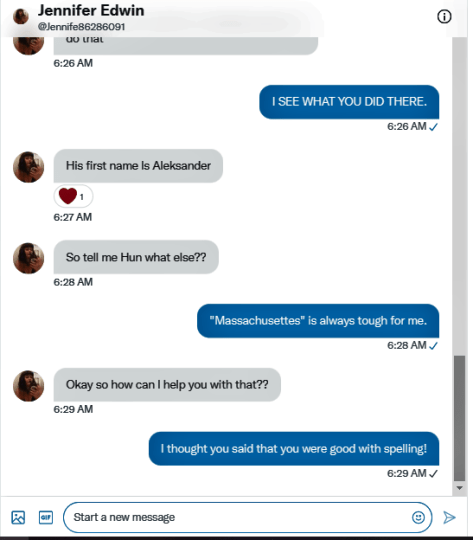
There are two immutable rules I have learned about women:
1) Never call a woman by the wrong name, and
2) Never date an actress.

Siri


*PLEASE NOTE — the second rule above is an obvious jest.  I’m sure that there are countless actresses out there who are lovely people!  Actors too.  I was an actor at one time, seriously.

I can never be “overeducated.”

So … the term “overeducated” has gained currency in the national discourse.


I myself can never be “overeducated.”


The more that I learn, the more I understand how much more I have to learn. The greater my knowledge, the smaller a fraction it seems of the vast and sprawling sum of knowledge to be gained.

It is like cresting a tall hill at the edge of my neighborhood, only to lay eyes for the first time upon distant ranges of mountains, lining a dawn horizon like endless, luminous, upward serrated silver. I am richer for having seen them there — no matter how paltry my hilltop now seems when I imagine it measured against them. And now that I know the mountains are there, there is a chance that I will someday depart to reach their feet.

I hope I never call myself an “expert” in any subject. The word is fool’s gold. Hubris clings like oil to the circumference of its rounded letters.

But shaming the pursuit of knowledge? Chiding those who’ve worked to attain it, as though their diligence and curiosity were character flaws? That is worse.


Let me tell you something that I have learned in my nearly half century on this planet. When people tell you not to think, then you should think. When people tell you not to ask questions, then you should ask questions. There is always information or a new perspective that the people behind such admonitions do not want you to gain.

And why should we trust those who would deny us so?

Adams_The_Tetons_and_the_Snake_River

Photo credit: By Ansel Adams – This media is available in the holdings of the National Archives and Records Administration, cataloged under the National Archives Identifier (NAID) 519904., Public Domain, https://commons.wikimedia.org/w/index.php?curid=118192

Detail from “Monastery of Innisfallen Island and Ross Castle Killarny,” William L. Walton after Frances Emilia Crofton, 1854

Lithograph.

Frances_Emilia_Crofton_Ross_Castle_tinted_III_(1)

Spellchick.

She blinded me with science.

A- st

B -- st (2)

c

d

e

More on Page 2 …


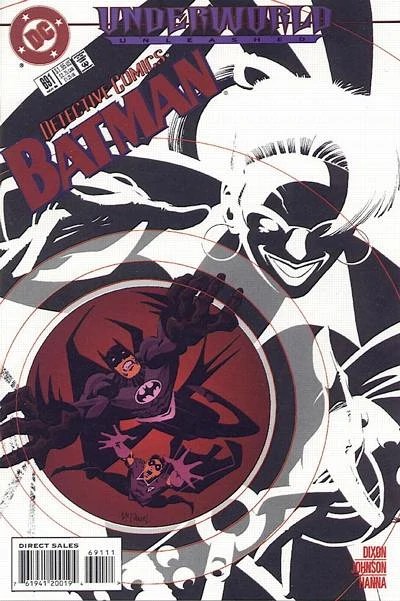
Cover to “Detective Comics” #691, Scott McDaniel & Bob LeRose, 1995

DC Comics.

691

Keep ’em separate.

I’ve said it before, and I’ll say it again …

Church and State are like chocolate and tuna fish.  Either one of those things can be just fine on their own — but not when they’re combined together.


Nolan’s Insomnia Theater Presents: “Frankenstein” (1931)

I watched “Frankenstein” (1931) last night, as it was one of those immeasurably frustrating nights when I couldn’t sleep.  No, this movie obviously can’t be considered frightening by modern standards — but I still had fun finally seeing a Universal Pictures monster movie I’ve heard about all my life.

Here are a few fun Frankenfacts, courtesy of Wikipedia:

  1. If the story here feels static and dialogue heavy, there’s a reason for that.  Like “Dracula” (which Universal Pictures released the same year), “Frankenstein” was adapted from a stage play, which itself had been adapted from its classic novel source material.
  2. The makeup effects for Boris Karloff’s monster might seem simple by today’s standards, but people went nuts for them in 1931.  I can’t imagine what a Depression-era filmgoer might think of a modern tv  show like “The Walking Dead.”
  3. If you think Hollywood relies too heavily on cheesy sequels today, take a look at the B-list stuff that followed this classic movie: “Bride of Frankenstein” (1935), “Son of Frankenstein” (1939), “The Ghost of Frankenstein” (1942), “Frankenstein Meets the Wolf Man” in 1943 (which was also a sequel to 1941’s “The Wolf Man”), “House of Frankenstein” (1944), and “Abbott and Costello Meet Frankenstein” (1948).  Dr. Frankenstein’s monster also showed up in “House of Dracula” (1945).
  4. “Frankenstein” has something else in common with “Dracula” — the talented, hyperactive character actor, Dwight Frye.  Here he is the scene-stealing assistant to the doctor — he is Dracula’s minion, Renfield, in the other film.
  5. Frye’s character is not named “Igor,” as countless homages and references to this movie might lead you to believe.  His name is “Fritz.”  There is a deformed, graverobbing henchman named “Ygor” in the later “Son of Frankenstein,” and I am guessing the two movies are just easily conflated in popular memory.  Also … the mob of townspeople never storm Frankenstein’s castle with torches and pitchforks.  They instead chase the monster to an abandoned windmill at the top of a mountain, and destroy him there.  (I am guessing that the denouement I thought I’d see also comes from a sequel.)
  6. I … might have noticed a major plot hole for the movie.  (Yes, I realize that it is almost certainly absent from Mary Shelley’s 1918 novel, which I have not read).  The townspeople want to hunt down the monster for his accidental drowning of  little girl.  But … how did they know the monster was even involved?  We are shown nobody witnessing the tragedy.  In fact, how do the townspeople even know that the monster exists — and that it was loose from the laboratory if its birth?  Granted, I might have missed something — it was a sleepless night for me, after all.

Let me close with two observations:

  1.  The castle housing Frankenstein’s laboratory would be a wicked cool place to live if it were properly renovated.  Think about it.  You’d need to wire it everywhere with reliable heat and electricity, and then somehow keep it dry — no small feat for an abandoned castle.   But could you imagine how amazing it would be to have a home office there?  A library?  A home theater?  A dining room?  You could have a whole Victor von Doom thing going on.
  2. I really want to see “Abbott and Costello Meet Frankenstein.”  I think that will be next for a sleepless night.


Frankenstein_(1931_teaser_poster_-_Style_B)

Variant Cover to “Doctor Fate” #1, Ibrahim Moustafa, 2015

DC Comics.

Fate

“The line dividing good and evil cuts through the heart of every human being.”

“If only it were all so simple!  If only there were evil people somewhere insidiously committing evil deeds, and it were necessary only to separate them from the rest of us and destroy them.  But the line dividing good and evil cuts through the heart of every human being.  And who is willing to destroy a piece of his own heart?”

Aleksandr Solzhenitsyn, The Gulag Archipelago 1918 – 1956


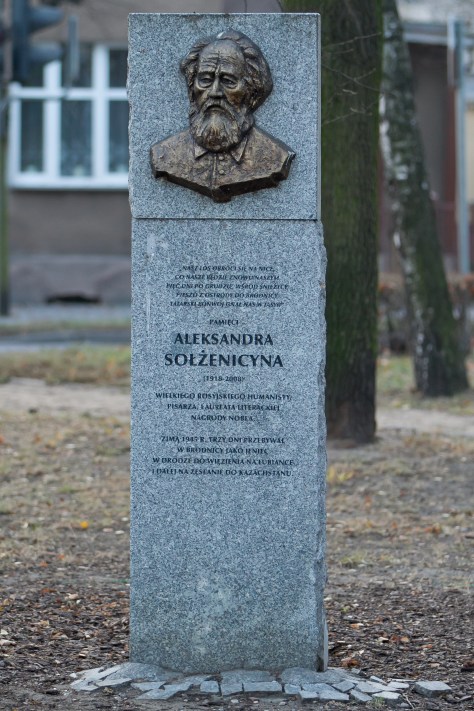
Brodnica_sołżenicyn

A monument dedicated to Solzhenitsyn in Brodnica in Poland.  Photo credit: Czonek, CC BY-SA 4.0 <https://creativecommons.org/licenses/by-sa/4.0&gt;, via Wikimedia Commons

The Salem Times-Register prints my letter about the defenders of Ukraine.

I learned a little while ago that the Salem Times-Register printed my recent letter about the courage of the Ukrainian people protecting their homeland.  You can find it right here.

Thank you, Editor Shawn Nowlin, for allowing me to share my thoughts with my neighbors in Southwest Virginia.


Nurse Your Favorite Heresies in Whispers