DC Comics.
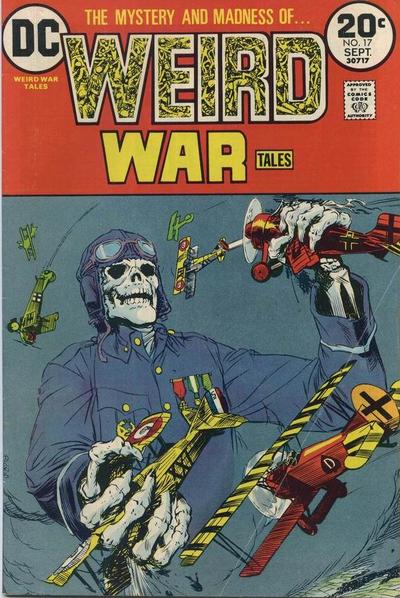
1970’s horror comic art is truly in a class by itself, isn’t it? Even the printing and coloring has its own distinctive look.
DC Comics.
1970’s horror comic art is truly in a class by itself, isn’t it? Even the printing and coloring has its own distinctive look.
I was only a baby when ABC debuted the original “Don’t Be Afraid of the Dark” in 1973, but I caught it when it was rebroadcast around the end of the decade, when I was … six or seven years old? And dear GOD did it scare the crap out of me.
Since then, it’s become a minor legend in the horror fan community as one of the rare made-for-television movies that is easily as scary as something you’d see in a theater. This was the film that was remade in 2010, produced by Guillermo del Toro and with Katie Holmes in the lead role. (And I thought that the remake was a fun horror fantasy, even if it wasn’t terribly scary.)
I actually caught the film again about ten years ago, courtesy of Netflix’ DVD-by-mail service. And it was still creepy enough.
DC Comics.
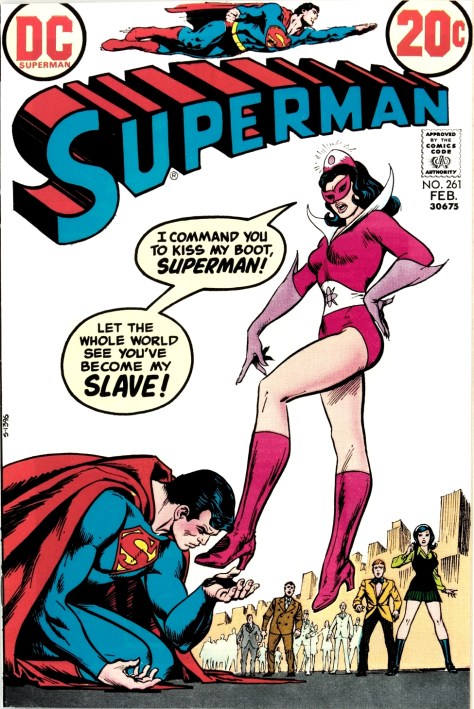
Some trivia — the lady depicted here is Star Sapphire, Hal Jordan’s ex-girlfriend-turned-celestial-nemesis. (Hey, we’ve all been there.) She was traditionally a Green Lantern villain. I’m not sure why she’s in Metropolis giving Superman a hard time — although she’s sufficiently super-powered to conceivably be a decent adversary for him.)
I’m linking here to a terrific documentary produced by BBC Four to celebrate the centenary of W. H. Auden’s birth in 1907. It’s a superb biopic — thanks to Youtube user Andrey Shulyatyev for uploading this.
One thing that occurred to me as I watched this was the resilience of Auden’s pursuit of love and beauty despite his first-hand witness of the most terrible and ugly things — the violent rise of fascism in Germany, the Second Sino-Japanese War, and the devastation of post-World War II Germany. And this resilience was reflected in his work ethic even until his death in 1973.
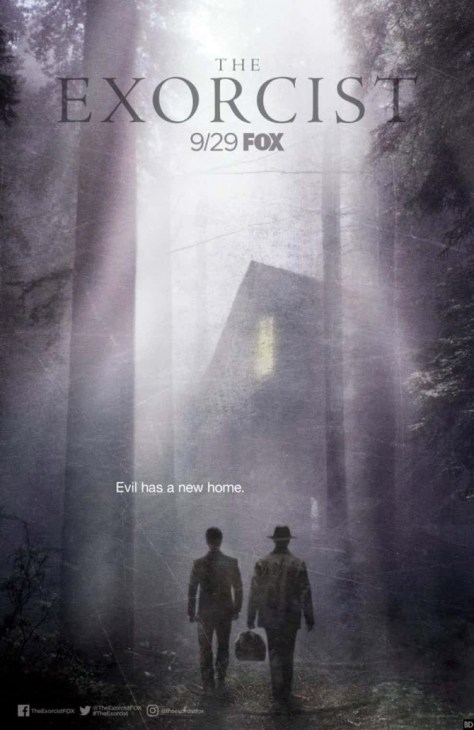
A show like “The Exorcist” must be difficult to write. It stands in the shadow of some of horror’s greatest films (William Friedkin’s 1973 original and the third movie in 1990). Its plot device is inevitably redundant. (How many possessed innocents can we see strapped to beds while priests pray at them?) It seems easy to stray into camp. And it seems like a story concept that is tough to structure into a serialized format.
But the second season of “The Exorcist” was … fantastic. It surpassed the first season, and I’d rate it a 9 out of 10.
The ten-episode arc wisely changes things up a bit from Season 1, which was maybe a bit too reminiscent of the films. Our priestly dynamic duo are on the road in America’s northwest, and on the run from a Vatican that has been infiltrated by followers of the demon Pazuzu. (As stupid as all of that sounds, the show actually depicts it quite well.) As the story proceeds, there are a couple of surprise plot developments that will contradict most viewers’ expectations. (I won’t spoil them here.)
The characters are all likable and all well played. Ben Daniels remains possibly the show’s strongest asset as the senior priest; he’s just a superb actor. John Cho also gives a fine performance as the head of a foster home where a demon runs amok. Alfonso Herrera is quite good as the apprentice priest — his character is better written this time around, and isn’t saccharine to the point of annoyance. And Herrera himself seems more comfortable in the role. The kids are damned cool — all of them, and their interaction with their foster father was surprisingly sweet and funny — which raises the stakes emotionally when the entire household is besieged by a sadistic force.
The weaknesses here were minor. I think the ten episodes could have been shortened to seven or eight, to make them tighter. (I realize I write that about a lot of shows, and I’m not sure why.) The first five episodes were tightly plotted, while the second five were a little loose. I think better editing would have entirely excised the flashback scenes depicting Daniels’ character and this season’s new female exorcist, played by Zuleikha Robinson. (Yes, that is indeed Yves Adele Harlow from “The Lone Gunmen” and “The X-Files.”)
The flashbacks were cheesy, even if they gave Daniels a chance to show his range. They depict his tutelage of Robinson’s character decades prior, complete with some cliche pulp novel stuff. (Ugh.) We’re shown that the priest is younger because of his blond, surfer-esque haircut. (Really?) The flashbacks were out of place, and a little too campy. They reminded me of the comic book style of the “Highlander” films and TV series — this show could have done without them.
I also found myself slightly annoyed by a dearth of exposition about the process of exorcism itself. After the films and now two seasons of the show, I wanted to know more about the key actions here that affect the story’s resolution. Do some prayers or methods work better than others? Then why not use them all the time? Why are some interventions more lengthy or difficult? We are told that the demon attacking this family is different than Pazuzu, who we’ve seen in the past (though Pazuzu still puts in an appearance this season). Can the demons coordinate their efforts, or at least communicate with each other? If not, why not? These seem like logical questions to ask, both for the characters and the viewers.
But there is something more that bothered me. If a demon is intelligent and wants to harm people, then why make its presence known — and why torment or kill only a few people? Why not remain undetected until it can commit a mass murder? Or even perpetrate an act of terrorism, and harm far greater numbers of people by causing riots or wars? That would suit evil’s purposes far more than the garish individual spectacles we find them performing in horror tales like these. (Maybe I’m just analyzing too much.)
Anyway, I cheerfully recommend “The Exorcist.” It might be the most grownup horror show on television.
And one more thing — there’s some fun to be had here recognizing actors from other roles. Daniels was a member of the Rebel Alliance in “Rogue One: A Star Wars Story” (2016). And there is actually another “The X-Files” alum here — even if it was only a small role. I thought that Harper’s mother looked familiar — the actress playing her was Rochelle Greenwood. She’s none other than the teenage waitress who witnessed Walter Skinner getting shot waaaaay back in 1996’s classic episode, “Piper Maru.” (Can I remember faces or what?)
As I explained last year, monster movies were simply a part of Thanksgiving if you lived in the Tri-State region around New York City between 1976 and 1985. This was due to WOR-9’s “Holiday Film Festival” broadcast, which actually also extended to the day following the holiday after the lineup’s first year. (People just called it the “Monster Movie Marathon.”)
As a kid, I was a hell of a lot more thrilled with the monster movies than anything being served for dinner. (Remember, video stores only began arriving the early 1980’s. Before that, you usually had to catch a movie on television if you wanted to see it at all. It’s why every house had a “TV Guide.”)
“King Kong vs. Godzilla” (1962) was one gem in the marathon. (Or, at least, it seemed like an amazing film to a gradeschool boy.) I was raised with the enduring myth that this Japanese film had two endings — an American version where King Kong prevailed, and a Japanese version where its native Godzilla was the victor.) My Dad told me that, and I remember being fascinated that a movie could have two different endings. I actually only learned just now, writing this blog entry, that it was a particularly widespread urban legend — stemming from an erroneous report in “Spacemen” magazine. The American version of the film had tons of alterations, but the outcome was essentially the same — King Kong won.
There were always a few more Godzilla movies on the day after Thanksgiving, too. “Son of Godzilla” (1967) was one of them; that was always hit with the kids. (I could swear at some point there was a cartoon adaptation in the early 80’s.) It was weird how 80’s kids apparently loved that ostensibly “cute” character; the adult in me today swears that “Son of Godzilla” looks like an upright, reptile-shaped poop. (Seriously, check out the second clip below.)
“Godzilla vs. Megalon” (1973) was another one I seem to remember being pretty thrilled with. I was even occasionally scared of the giant monsters in flicks like these. (Hey, I was a little kid.) Even as a first- or second-grader, though, I was smart enough to question why these movies were weirdly inconsistent. (Why was Godzilla a bad guy who destroyed Tokyo in one movie, but the “good monster” that the Japanese rooted for in another?)
I’m learning now that “Godzilla vs. Megalon” was the target of a Mystery Science Theater 3000 episode. I’m going to have to hunt that one down.
I liked the Fox’s take on “The Exorcist;” I just didn’t love it the way that I thought I would.
It has a lot going for it. It’s easily the most intelligent horror show on television — its characters and plotting are detailed, thoughtful and well developed. It actually occupies the same universe as the classic 1973 and 1990 horror films. (We won’t mention the 1977 abomination here.) And, like those movies, this is a skilled, methodical screen adaptation of the universe imagined in William Peter Blatty’s source material. (This show establishes its continuity with the movies in ways that are interesting and surprising, too.)
The script takes archaic theology and otherworldly events and makes them seem plausible in its real-world setting. It also succeeds in giving a distinct and frightening voice and personality to its demon. I was impressed — I’ve seen a lot of movies with this plot device, but I’ve never seen this kind of antagonist so fully realized into a distinct character. This owes a lot to Robert Emmet Lunney’s outstanding portrayal as the demon personified.
The rest of the cast is also roundly excellent. Geena Davis shines as the mother of the afflicted girl; I had no idea that she was this good of an actress. So, too, does Alan Ruck, who stars as her kindly father who is affected by a traumatic brain injury. Ben Daniels is also very good as the experienced half of the duo of priests who serve as the story’s heroes. By the end of this first season’s ten-episode arc, both priests seemed like three-dimensional characters that I could like and root for. I was impressed again — priests in stories like this usually tend towards stock characters, and I can only imagine that it would be challenging for a screenwriter to make them relatable to the average viewer.
Why didn’t I love “The Exorcist?” First, the show’s story elements felt too familiar. Once again, we have a possessed young girl, a desperate mother beseeching the church for help, and a pair of priests, one of whom is experienced and one of whom requires instruction. Once again, we see that the personal lives and the metaphorical demons of both clergymen can be used against them. Once again, we find the girl secured to a bed while the story’s protagonists pray and shout at her possessor. I do realize that these tropes are to be expected. (This is “The Exorcist,” after all. Do we really expect the writers to not depict an exorcism?) I can’t deny, however, that my attention wandered.
Second, it was sometimes too slow for me. I do understand that the show’s creators are probably being faithful to the storytelling pace and style originally established by Blatty, as well as William Friedkin, the director of 1973’s “The Exorcist.” (Blatty actually wrote the screenplay for that seminal film, two years after his novel was published.) The tension sometimes builds slowly in its realistic milieu, and events gather momentum over the course of the story. The show also goes to great lengths to offer us more than its boilerplate exorcism story. (There are some major demon-related events happening elsewhere in its troubled setting of Chicago.)
Still … I again found my attention wandering. I might have enjoyed this more if it were edited down to six episodes instead on ten. And I can’t write a glowing review for a show for which my interest occasionally waned. (Admittedly, I have a terrible attention span when it comes to TV shows.)
All things considered, I would rate “The Exorcist” an 8 out of 10 for being a smart, grown-up horror series, even if its slower pace and familiar story elements detracted slightly from my enjoyment of it. I would recommend this show — especially to those who enjoyed the better “Exorcist” movies.

I feel the same way about “The Conjuring” (2013) as I did about its prequel, “Annabelle” (2014) — it has all the earmarks of a bad movie, but it inexplicably succeeds anyway.
Seriously — this film has clunky exposition, cheesy dialogue and over-the-top plot developments (toward the end), not to mention a plot setup that’s in questionable taste. (The movie suggests that the innocents condemned by the infamous 1692 Salem witch trials were indeed witches. This feels a bit awkward to anyone who read Arthur Miller’s “The Crucible” in high school.) “The Conjuring” also plays out like a love letter to Ed and Lorraine Warren, the controversial paranormal investigators who are largely the subject of the film (played by Patrick Wilson and Vera Farmiga). This last offense is forgivable, I suppose — the film was made with the Warrens’ blessing, and Lorraine Warren was even present as a “consultant” during its production.
Strangely, however, these flaws were barely noticeable to me when I watched it. I had a good time. “The Conjuring” just happens to be a decent fright flick that delivers on the scares.
I think James Wan’s skilled directing has a lot to do with that; the film works visually. (I could name specific instances where it works especially well, but I want to avoid spoilers.)
The acting helped a lot too — Wilson and Farmiga are both damned good, as is Lili Taylor as the afflicted family’s mother. (I’ve admired Taylor’s acting since her long ago 1998 guest appearance on “The X-Files,” and she was equally good as a bad guy in 1996’s “Ransom.”) Ron Livingston was also quite good in the role of the father — if you have trouble placing his face, as I did, he also played Captain Nixon in HBO’s “Band of Brothers” (2001). He seems to have a talent for playing the likable everyman — he’s great here as the somewhat feckless father, and functions well as a kind of viewer surrogate. I should also mention the young Joey King as one of the family’s daughters — she played the role of a terrified child to perfection, and really raised the stakes emotionally.
Despite really enjoying most of the movie, some of my enthusiasm for “The Conjuring” flagged a bit toward the end. The denouement here includes an exorcism, and those are almost always boring. There are only so many ways that scenario can play out, and we’ve seen them all — and I shouldn’t even need to name that certain 1973 film that did it best. Furthermore, we see our story’s demon do some pretty extraordinary things, even by demon standards. It can apparently transport itself great distances (using an inanimate object as a kind of fax machine?), and can manipulate both the laws of physics and the area’s wildlife. It was all a little too much for my willing suspension of disbelief.
Again, though — this was a good movie. I’d give it an 8 out of 10, and I’d recommend it to anyone looking for a good scare.

The premise for HBO’s “Westworld” sounds like a bad situation comedy — robot cowboys entertain the rich at a futuristic theme park. There are showdowns and shootouts, and hilarity ensues when the guests fall in love with the coy robot ladies.
But “Westworld” is an arguably brilliant serial science fiction thriller, far transcending its gimmicky central plot contrivance. It is occasionally weighted down by some challenges with pacing, story structure and exposition. But I still loved it enough to get hooked on it immediately, and I’d give it a 9 out of 10.
I think it’s the smartest science fiction show I’ve seen in a long time. Its brilliance doesn’t stem from its kitsch premise. (I haven’t seen the original 1973 film based on Michael Crichton’s screenplay, but I’ve seen it lampooned at least once.) It generally doesn’t extend from the show’s many twists and surprises, however well executed they are. Nor does it stem from the show’s ambitious discussions of the nature of consciousness.
Its brilliance, in my opinion, stems from its nuanced and surprisingly disturbing depiction of human evil. Of course there’s the obvious — the theme park exposes human depravity by allowing people to rob, rape and murder lifelike human surrogates with impunity. But there is far more that the show has to say. To get a sense of it, you have to watch the entire 10-episode season, and see several key character arcs reach completion. One of these arcs was so dark and cruelly contemplative that it’s stayed with me long after I watched the final episode.
The show is well made at every level. It’s gorgeously shot, at locations throughout California, Utah and Arizona. The special effects are great. Anthony Hopkins is characteristically perfect as the park’s patriarch, and Jeffrey Wright is terrific as his well meaning right hand. (That actor is starting to grow on me.) The entire cast is quite good — even those in relatively minor roles, like the two hapless technicians (nicely portrayed by Leonardo Nam and Ptolemy Slocum) who become entangled in the events connected with the park’s malfunctions.
Ed Harris, however, consistently steals the show as “the Man in Black,” a park guest who vacations as a brutal rapist and murderer (and who we learn has another agenda, as well). He’s chilling. I never really saw Harris as an amazing actor before, despite seeing him in many roles, including his memorable turn in “A Beautiful Mind” (2001). But he was incredible here.
I wanted to give this show a perfect 10, but even someone who loves it as much as I do can see the weaknesses of this first season. Overall, “Westworld” is sometimes too drawn out. I feel the plot moves forward rather slowly, and I think Season 1 would be perfect if only it were carefully edited down from ten to maybe seven episodes. I found myself getting a little frustrated by the the fifth episode, when we see two major characters follow arcs that seem redundant. (I’m being intentionally vague here to avoid spoilers.)
The problem is compounded by the deliberately superficial nature of “Westworld’s” setting. This is a theme park with stereotypical stock characters associated with Hollywood westerns. Accordingly, its inhabitants have overly stylized speech and behavior. Furthermore, these androids are programmed to follow the same “loops” repeatedly, as the same preconceived story “narratives” are reused to entertain new patrons of the park.
It gets annoying. Yes, I know it makes perfect sense and is necessary in the context of the story. But it can be grating to someone who tunes in to see a science fiction show, and not a cheesy western. James Marsden is a decent enough actor, and he’s well cast as “Westworld’s” prototypical “good guy” cowboy. But seeing this character’s shtick over and over was irritating. So, too, were the sassy ladies at the brothel and some other minor characters.
Finally, I suggest that, for some viewers, “Westworld” may be hard to follow. I occasionally found it that way. There are twists that are wonderfully well crafted, gradually deciphered mysteries, and a very layered backstory. Finally, the show’s discussions of things like consciousness, morality and artificial intelligence can sometimes border on the didactic. (It helps a hell of a lot, though, when the actor delivering the exposition is the priceless Hopkins.) It’s a lot to take in. People tuning in should be prepared for some challenging, cerebral science fiction instead of easily digested, escapist fantasy.
All in all, this show was superb. If you’re a science fiction fan, you need to at least give it a try.
Unnecessary postscript: actor Jimmi Simpson sure looks a hell of a lot like a young Christian Slater.

Blog Correspondent Pete Harrison suggested I give the Westworld” series (2016) a try, and I’m damn glad he did. The first episode was superb, and it’s safe to say it’s reeled me in. I’d give the pilot a 9 out of 10; this seems like it could be the best science fiction television show I’ve seen in a long time.
I still think the premise is just slightly cheesy — grown men and women spending a fortune to visit a western-themed amusement park with interactive android cowboys. (I think maybe westerns were a more mainstream genre in 1973, when Michael Crichton’s original film was in theaters.) And there are times when the show’s central western-themed motifs are a little annoying to me … even though I know the park is supposed to appear superficial and cliche.
But “Westworld” is a highly intelligent thriller — it looks like a hell of a lot of thought went into the script. Just about every aspect of the show seems like it was well developed — everything from the actors’ performances to the set design. And don’t let the gorgeous, idyllic, sunny landscapes fool you — there is no shortage of pathos here. It’s brutally dark in its storytelling. (By the way, if you happen to be a fan of this show, I must recommend 2014’s “Ex Machina” film — it is similarly cerebral and dark in its outlook.)
Anthony Hopkins is fantastic, as usual; Jeffrey Wright, James Marsden, Evan Rachel Wood and Thandie Newton are all very good. They’re all overshadowed here, though, by two stellar performances.
The first is Ed Harris as a black-clad psychopathic visitor to the park — I had no idea he could be so frightening. Dear God. Has he played bad guys before? I’ve always associated him with nice-guy roles — even his antagonist in 1996’s “The Rock” was misguided and sympathetic. I’d love to see him get a role in an upcoming “The Dark Tower” film, maybe as one of the Big Coffin Hunters, if they are ever featured.
The second is Louis Herthum, the ostensible “father” of Wood’s heroine. (They are both androids within the park — I don’t think that’s much of a spoiler, as it’s all over the show’s advertising.) Herthum may be a lesser known actor, but he stole the show in a tour-de-force performance, in my opinion. And that’s no small feat in a cast including Hopkins and this surprisingly vicious Harris. I haven’t seen a performance that good on television since NBC’s “Hannibal” went off the air.
Anyway, I noticed something funny here. Steven Ogg plays a bandit who invades people’s homes and murders them … this is basically the same role he plays as Negan’s chief henchman on “The Walking Dead.” It must be weird to be typecast like that.
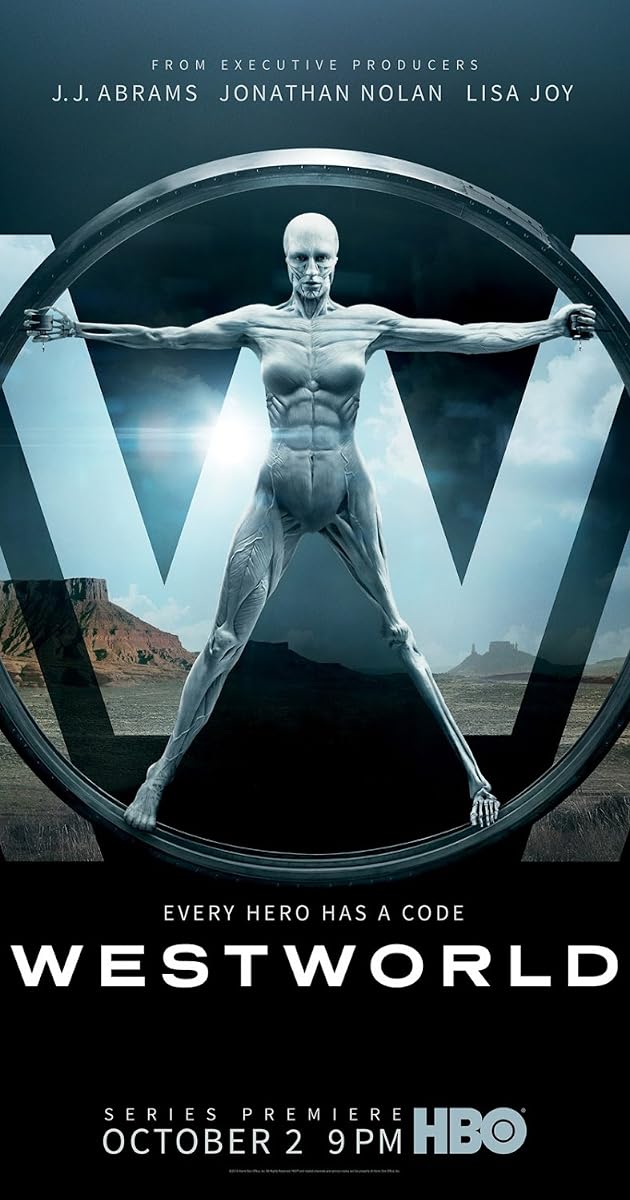
Hey … it is only just now that I realized the logo below is a riff on Da Vinci’s “Vitruvian Man.”
 Eric Robert Nolan, Author