Tag Archives: 2002

A review of “Goodbye World” (2013)

“Goodbye World” (2013) is technically a post-apocalyptic drama.  I say “technically” because this sometimes misguided movie contains little tension associated with its apocalyptic event.  (A cyber-attack destroys the technological infrastructure of America and possibly the world.)  Indeed, this catastrophe doesn’t even truly drive the plot — it’s more of a background subplot that fails to even affect the tone of the film.  (The poster you see below is misleading.)

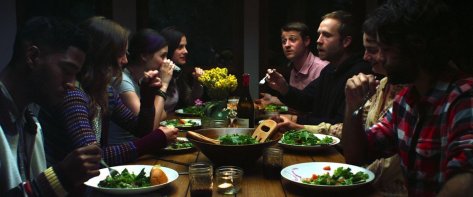
Instead, the film scrutinizes the personal lives of a group of thirtyish college alumnae who have an informal reunion at a mountain cabin — one of their number is a plot-convenient intellectual-turned-survivalist.  They’re portrayed by an (admittedly quite good) ensemble cast.  I think a lot of my friends would smile at “Gotham’s” Jim Gordon (Ben Mckenzie) being a rather meek, feckless husband.  And Caroline Dhavernas here is no longer the alpha female we saw in NBC’s “Hannibal,” but is rather an insecure, overly sensitive young wife who immaturely pines that she was the student “everyone hated.”

And there lies a problem that the movie has … few of these characters are terribly likable.  Only Gaby Hoffmann’s surprisingly tough civil servant made me root for her.  And Kerry Bishe’s perfectly performed, chatty neo-hippy eccentric was also pretty cool … Bishe might have given the best performance in the film.  Finally, Linc Hand is a surprise standout, arriving halfway through in a menacing supporting role.  It’s a far smaller role, but damn if he doesn’t nail it.  (Please, Netflix, cast this guy as Bullseye in Season 3 of “Daredevil.”)

The others all seem either self-absorbed, self-righteous and preachy, or inscrutable and vaguely dumb.  Dhavernas’ character actually steals a child’s teddy bear (which she herself had brought as a gift) and … sets it free in the forest.  It was a belabored character metaphor when written.  Worse, it just seems jarringly weird when it plays out on the screen.

All the characters seem strangely detached about the watershed national or global crisis. Some cursory dialogue is devoted to the imagined welfare of their family, colleagues or other friends; the character interaction is devoted mostly to  marriage issues and personal emotional crises that I have mostly forgotten as of this writing.  And those seem maudlin and slightly selfish compared to the Fall of the United States.  The characters mostly failed at engendering viewer sympathy in me.

The screenwriters’ juxtaposition of personal matters and the end of the world also seemed tone deaf.  We follow what the writers hope are educated, successful and endearingly quirky fun people, and we’re asked to worry about their love triangles and spousal communication issues.  But … we’re then asked to view this in the context of a pretty frightening collapse of society, complete with plot elements that are interchangeable with those of AMC’s “The Walking Dead.”  (One secondary character turns violent over the issue of resources, then charismatically justifies his violence to  a crowd using a half-baked ideology that seems to channel “The Governor.”)

I felt like I was watching two movies at once, and not in a good way.  The opening motif is brilliantly creepy — the virus causes cell phones everywhere to receive a text reading the titular “Goodbye World.”  Our laconic, uniformly telegenic protagonists kinda just shrug at it.  And even when suspicions arise in the group about whether one character is connected to the cyber-attack, there is dry, dialogue-driven humor instead of any real consequent tension.  It was like John Hughes wrote a thirtysomething dramedy, but then tried unsuccessfully to sprinkle in the human pathos of one of George A. Romero’s more pessimistic zombie films.

But don’t get me wrong.  This wasn’t even really a bad movie.  I didn’t hate it.  It held my interest, its actors gave good performances, and I am a shameless fan of Dhavernas in particular.  The cinematography was very good too, and the story’s tonal differences were occasionally interesting.  (This is definitely a unique end-of-the-world tale, if nothing else.)

I’d honestly give “Goodbye World” a 7 out of 10.  I think my expectations sitting down with it were just unusually high, seeing Dhavernas attached to what looked like an independent, cerebral, apocalyptic science fiction thriller.  I might even recommend it if you’re in the mood for a really unusual doomsday movie.  Just don’t expect “28 Days Later” (2002) or “The Divide” (2012), and you might like this.


Goodbye_World_Theatrical_Poster

hero_GoodbyeWorld-2014-1

“The Revenant” (2015) was astonishingly good.

“The Revenant” (2015) changed the way that I see movies.  This utterly immersive, jaw-droppingly gorgeous period thriller is easily one of the best films I’ve ever seen, and I plan to see it again, soon.  I’d rate it a perfect 10.

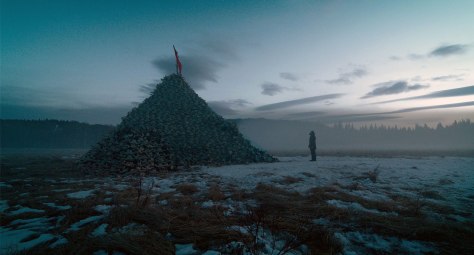
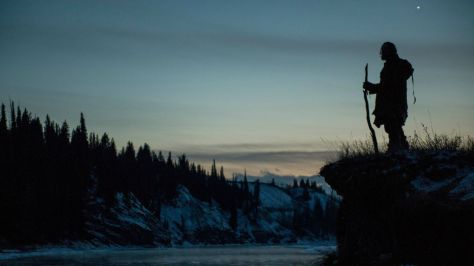
It’s a visual masterpiece.  Its cinematography renders its mountains, valleys and plains both dreamlike and lucid, and its action is unflinchingly visceral.  Shot mostly in Alberta, Canada (standing in for 1823 Montana and South Dakota), the film’s visuals are more stunning than anything I’ve ever seen.  You truly do feel that “you are there.”  But “there” is an absolutely brutal 19th century middle American winter wilderness.  It’s fatally dangerous, both with its unforgiving elements and with the human violence that seems to erupt casually and constantly over its land and resources — not to mention bloody retribution among groups and individuals.  This isn’t a movie for the faint of heart.  I won’t spoil the subject of its gut-wrenching action sequences for fear of spoilers — most of these sequences arrive as frightening surprises, thanks to Alejandro G. Inarritu’s expert direction.  It is this juxtaposition of beauty and brutality that define the movie.

Leonardo DiCaprio plays Hugh Glass, an American trapper who begins as one of the seemingly few characters that do not quickly resort to unnecessary violence, prejudice or revenge.  He later does seek vengeance for his son’s death against fellow trapper John Fitzgerald, played by Tom Hardy.  (Glass was a real frontiersman who was the subject of Michael Punke’s 2002 biography, “The Revenant.”  But a cursory Google search suggests to me that this is not actually “a true story;” I think of it as loosely based historical fiction.)  Like DiCaprio and Hardy, Domhnall Gleeson and Will Poulter also excel in their supporting roles.  (Gleeson seems to specialize in playing reluctant innocents; I remember him from his skilled performance as the gentle young computer genius in last year’s outstanding science fiction thriller, “Ex Machina.”)

But the main star of “The Revenant” is the setting itself, beautifully shot by Emmanuel Lebezki and masterfully employed by Inarritu as a kind of character unto itself in the story.  It’s lovely.  I’ve never seen a movie like this.  And while I’m no film connoisseur, or even a genuine critic, I’ve seen a lot of good ones.

The direction most reminds me of Francis Ford Coppola’s work in 1979’s “Apocalypse Now.”  I was also reminded of Stanley Kubrick’s “The Shining” (1980) — that was a film that also depicted threatening snowscapes as dreamlike and eerily beautiful.  There was one shot near the end, following DiCaprio’s vengeful hero on his path through immense firs on either side — it reminded me a lot of Jack Nicholson’s murderous Jack Torrance on his path through the hellish hedge labyrinth.

There is also a central action set piece involving an attack on one group of characters on another — it actually reminded me of Oliver Stone’s work in “Platoon” (1986).  Like Stone’s finale, the battle is staged so that the viewers have no sense of which direction the attack is coming from, paralleling the experience of the confused defenders.  There are countless long tracking shots throughout this film, with fewer cuts — and amazing circular surrounding shots of the action.  I’ve read that Inarritu actually had to transport cranes to his mountaintop shooting locations in order to execute those.

If you had to find a flaw with “The Revenant,” I suppose you could complain that its story and characters are thin.  We know little more about DiCaprio’s Glass beyond that he is competent, patient and slow to fight — then merciless and unrelenting in seeking justice.  Poulter’s Jim Bridger  is loyal, but not as strong as the hero.  Hardy’s Fitzgerald is a greedy, opportunistic bully whose murder of an innocent drives the plot.  That’s … little more than the plot and characters of a lot of throwaway westerns, isn’t it?  (I’ve indeed seen this movie categorized as a western in reviews.  That’s technically correct, I guess, but it feels too unique to pigeonhole that way.)

You could easily read the movie for moral ambiguity.  There are the obvious issues connected with revenge, of course, underscored by a final shot in which one character appears to break the fourth wall.  I found myself wondering about Glass’ compatriots.  Yes, it is Fitzgerald who acts villainously, but all of Glass’ fellow trappers also consign him to death by abandoning him after his injuries.  I do understand that they feel they can’t survive themselves if they try to carry him back to their staging area at Fort Kiowa.  But … is what they do “right?”  What would you or I do?

I think I am coming too close here to revealing too much about the film.  The best way to experience “The Revenant” is to walk into it knowing little about it.  I strongly recommend you do so.


revenant-poster

The-Revenant-03

the-revenant-trailer-screencaps-dicaprio-hardy6

revenant-horse-xlarge

revenant

24115986425_3e247de327_b

“Friends, Romans, countrymen, lend me your ears.”

Today is the Ides of March.

I suppose that Marc Antony’s speech from “Julius Caesar,” below, is the Western World’s definitive treatise on sarcasm?

I haven’t read it in its entirety since 10th grade English at Longwood High School.  In doing so now, I’m surprised at how many pop cultural references to it spring to mind:

  1.  The entire speech is beautifully riffed by the eponymous blade-wielding arch-villain in Matt Wagner’s incredible “Grendel: Devil by the Deed” (1993) as follows: “Friends, Romans, city folk — listen to me or I’ll lop off off your ears.  Let’s bury your Caesar and then let’s appraise him.”
  2. I’m guessing that Charles Bronson’s “The Evil That Men Do” (1984) is a reference to the third line?
  3. In at least one episode of “The X Files” in the 1990’s, the Well-Manicured Man angrily refers to the traitorous Syndicate as “these honorable men.”
  4. In one of his later novels (2002’s “The Bear and the Dragon,” maybe?) Tom Clancy describes a pregnant Chinese factory worker as being “made of sterner stuff.”  (I can’t remember which book, but for some strange reason I can remember that line.  Weird.)


Friends, Romans, countrymen, lend me your ears;
I come to bury Caesar, not to praise him.
The evil that men do lives after them;
The good is oft interred with their bones;
So let it be with Caesar. The noble Brutus
Hath told you Caesar was ambitious:
If it were so, it was a grievous fault,
And grievously hath Caesar answer’d it.
Here, under leave of Brutus and the rest–
For Brutus is an honourable man;
So are they all, all honourable men–
Come I to speak in Caesar’s funeral.
He was my friend, faithful and just to me:
But Brutus says he was ambitious;
And Brutus is an honourable man.
He hath brought many captives home to Rome
Whose ransoms did the general coffers fill:
Did this in Caesar seem ambitious?
When that the poor have cried, Caesar hath wept:
Ambition should be made of sterner stuff:
Yet Brutus says he was ambitious;
And Brutus is an honourable man.
You all did see that on the Lupercal
I thrice presented him a kingly crown,
Which he did thrice refuse: was this ambition?
Yet Brutus says he was ambitious;
And, sure, he is an honourable man.
I speak not to disprove what Brutus spoke,
But here I am to speak what I do know.
You all did love him once, not without cause:
What cause withholds you then, to mourn for him?
O judgment! thou art fled to brutish beasts,
And men have lost their reason. Bear with me;
My heart is in the coffin there with Caesar,
And I must pause till it come back to me.


— from William Shakespeare’s “Julius Caesar”


Grendel Devil Tales 1

A tiny review of “Southbound” (2015)

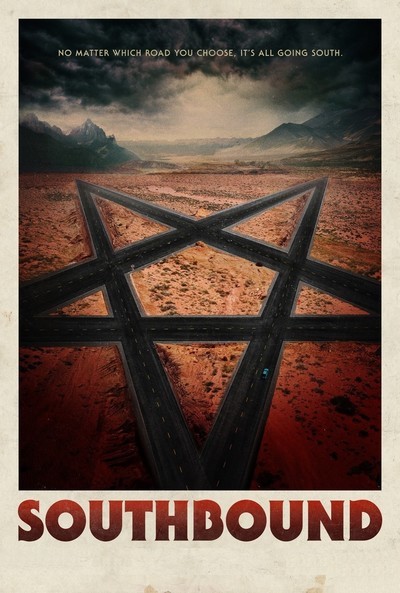
I can’t quite muster the same enthusiasm as everyone else for “Southbound” (2015) — I’d give it a 7 out of 10.  Yes, it’s clever how the five interlocking tales of this horror anthology are finally shown to weave together at the end (and it nicely parallels the equally clever movie poster below).

But the tales themselves were sometimes a little difficult to follow, with too little exposition.  One seemed incoherent.  And … exactly what was the role of the woman we see using the pay telephone?

It does have a few things going for it.  The tone is right — it’s a definitely a serious horror anthology for adults, with no camp and no gratuitous gags.

This movie was largely saved for me by the flying baddies to which we are introduced in the first entry.  (I don’t think that’s much of a spoiler, since we see them assailing us in the film’s trailer.)  They’re entirely originally, artfully grotesque, and possibly nightmare inducing.  You know what would have been an amazing movie?  A well-scripted horror-mystery in the same vein as “The Ring” (2002) or “The Grudge” (2004), focusing entirely on these antagonists.   Or maybe a supernatural desert-chase survival-horror movie.  I’d watch that.


large_ly6llsbUvXnKVnjmLrUwsbtkY5b

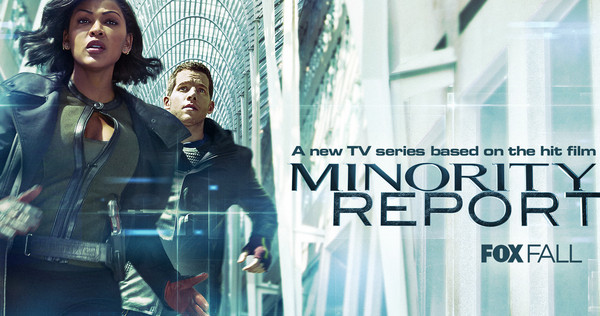
A quick pan of “Minority Report’s” pilot episode (2015)

The first episode of television’s “Minority Report” (2015) has all the bells and whistles of its 2002 cinematic source material, but little of its skilled storytelling.  I’d rate it a 6 out of 10, and that probably reflects my positive bias connected with my love for the classic film.

The show looks great — the special effects are well thought out, well rendered, and in abundance.  Visually and in terms of its fictional technology, this is terrific way to revisit the future that was painstakingly envisioned for the fantastic movie.  The show is an earnest follow-up, too; you can tell that the writers respect the film and were reaching for its unique vibe and its fast-paced suspense.

Regrettably, the pilot here just doesn’t suggest that this will be an unusually good show.  The writing and directing are average, at best, and some of the acting is downright poor.  A hastily conceived plot features one of the movie’s plot-driving psychic “precogs” rushing to intervene in future murders, which he can still predict, like some kind of lone, nonviolent, pre-emptive vigilante.  A cheesy covert partnership develops between him and a tough-and-sassy-but-sexy, single, female cop.  And blah, blah, blah, blah, blah.  Cue the bad dialogue.  I honestly think my friends and I could have come up with something better than that.

Oh well.  It can’t all be “A” material.  At least, that’s what I’ve been telling people who bitch about my jokes on Facebook.  And this was just the pilot — maybe the show will get better.

MinorityReportFOX-ad

A review of “Fear the Walking Dead,” Season 1 (2015)

I know that love for “Fear the Walking Dead” (2015) is not universal, but I needed to pipe in at least once to say that I thought that “Season 1” was terrific.  (I feel funny calling six episodes a “season,” but I’ve heard that de facto miniseries like this are a new trend in television.)  I’d give this apocalypse story a 9 out of 10.

For me, “Fear the Walking Dead” satisfied a longstanding itch.  If you grow up a fan of post-apocalyptic horror, you are constantly exposed to the aftermath of the end of the world.  In the vast majority of films and fiction, horror fans are treated to flashbacks, at best, of how it all went down.  Here we (partly, at least) get to see it all go down.

I’ll bet that stories so expansive in scope are a little harder to conceive and write convincingly.  Very few writers of prose or screenplays have expertise in disaster management, disease control, mass psychology or homeland security.  How much easier is it to have protagonists roam a landscape of burned out buildings, with only graffiti, snippets of conversation, and occasionally a blown newspaper offering hints of exactly how the end came about?

“Fear” deserves a hell of a lot of credit just for trying (as does “The Strain” over at FX).  It’s also why the globally plotted “Contagion” (2011) was such a frighteningly interesting thriller, and why Max Brooks’ stage-by-stage zombie pandemic easily made “World War Z” the greatest zombie novel ever written.  Through the eyes of an average family, “Fear” at least tries to show us meaningful glimpses into how police, emergency and military authorities would react.  The result is some interesting stories.  A nerdy high school student is the first to prepare, for example, due to his attention to the Internet’s alternative media.  And a doomed compact between a civilian neighborhood and their putative military protectors concludes in a particularly horrifying way.

Soooooo many viewers complained that there were “no zombies.”  Well, there were always a couple, at least — we got a great one in the first episode’s earliest minutes.  But that wasn’t the point.  The creators of “Fear” told us that this would be a different type of show, with a “slow burn” -type horror.  For me, that worked.  Look at it this way — we routinely see “zombie swarms” over at that other show (what was its name again?).  We’ve been seeing them for five whole seasons — the first repelled Rick Grimes’ ill advised solitary horseback exploration of Atlanta.  That’s fun for a zombie horror fan, but it’s nothing new.

“Fear” offers us something much different — a kind of “creeping horror.”  This seemed like the “Psycho” (1960) of onscreen zombie tales.  No, we don’t see zombies everywhere, but watching even one episode of “The Walking Dead” (2010) lets us know that these lackadaisical everyday people are in for a hell of a ride.  We, the viewers, know what they do not.  That’s what our high school English teachers taught us was “dramatic irony,” and it makes this a nice little companion show to “The Walking Dead.”  In fact, ALL the characters we see are probably doomed to die, given what we know of the statistics established by “The Walking Dead.”  That’s pretty dark stuff.

Other viewers complained about the characters being boring or unlikable.  I do get that.  Nobody here, I think, will ever gain the same viewer loyalty as Rick, Michonne or Daryl Dixon.  (If it were put to a vote among the women of the world, I’m pretty sure they’d rename “The Walking Dead” as “The Norman Reedus Show.”)  But “Fear’s” average (and, yes, sometimes boring) people seemed far more “real” to me — I think they functioned better as viewer surrogates, and better allowed me to imagine how I might react in a world like this.  I almost started viewing this as an end-of-the-world docudrama in the same manner as the BBC’s little known “End Day” (2005).

Besides, two characters in particular do show great promise.  I just can’t say who or why without spoiling that they survived.  Yet another character who appears suicidal in the final episode is one that I thought was pretty interesting, and we do not actually see this person’s death.

Sure, I had my own quibbles.  Los Angeles is remarkably empty for a city of nearly 4 million people.  I’m inclined to think that, even after an unlikely evacuation attempt, it would still be swamped either with people who still needed help, or with zombies.

Also … the sparse information we’re given about the zombie phenomenon here seems disappointingly contradictory.  We’ve established that a universal, invisible illness means people will return into undeath, regardless of how they died.  But we also see a flu-like illness affect some people (who are doomed to die shortly thereafter), but not all people.  Are these two different manifestations of the same disease?  Is it even technically a contagion, or is it an environmental illness?  (I know my questions here are absurdly silly, but this is precisely the sort of thing that horror nerds argue about over at the Internet Movie Database.)

Oh, well.  My recommendation here is to give this a chance, with the caveat that it definitely isn’t “The Walking Dead.”  It’s damn good.

Oh!  One more thing!  Keep an eye out for occasional homages to “28 Days Later” (2002).  And watch closely — one such plot arc is devilishly turned on its head in a subtle thematic twist.

tumblr_ntb25ok2ex1t7b5qro1_1280

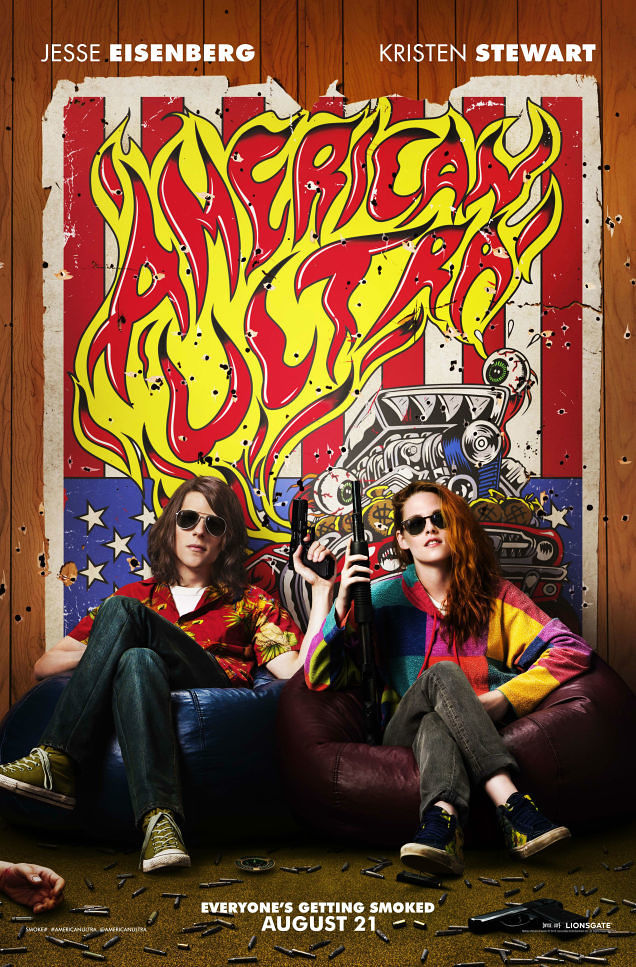
A short review of “American Ultra” (2015)

The Manchurian candidate is a common trope.  A Manchurian candidate hidden within a neurotic, drug addled, underachieving comic book creator is actually pretty creative.

That’s just one of the reasons that “American Ultra” (2015) had the makings of a great movie.  This film has more going for it too.  The soft spoken Jesse Eisenberg is extremely talented, being both quite funny and bizarrely likeable in the role.   Kristen Stewart is also just great.  (I haven’t seen her in the “Twilight” films that made her famous/infamous, but she really impressed me as a child actress in 2002’s terrific “Panic Room.”) And, like Eisenberg, Connie Britton has perfect comic timing and delivery.  (I’m still smiling at her offhand “Hey!” to the guy in the barn.)

Regrettably, maybe just past the halfway mark, this film loses its way just a bit.  The humor stops being character- and dialogue-driven, and the fish-out-of-water comedy sort of segues into a generic (and not terribly well executed) action –thriller.  There are some half-hearted action set pieces that aren’t especially well staged, or even well conceptualized.  And precisely nobody acts as though they have any sort of government or military training — either conventional or subliminally hidden.  Does EVERYONE in hollywood movies ALWAYS cluster together in a clear field of fire without seeking cover?

There is another miscalculation, too, that makes “American Ultra” less than great.  Our bad guys are cartoonish.  Eisenberg’s pursuers turn out to be (sigh) former mental patients who have received the same mental conditioning.  One is code-named “Laugher” because he cackles hysterically.  (That’s something out of a mediocre comic book.) And, like everyone’s least favorite Spiderman movie from the 2000’s, Topher Grace is cast against type as a raging psychotic.  (Am I the only one who thinks he was far funnier as the mild-mannered, relatable everyteen in “That 70’s Show?”)

How much funnier would this movie have been overall if Eisenberg’s quirky antihero (and maybe his weird friends) were the only comedic characters?  What if all their antagonists were “straight men” characters who ironically struggled in vain to defeat them?  This film could have been a classic.

Oh, well.  I still liked this well enough.  I’d give it a 7 out of 10.

kristen-stewart-gets-mega-stoned-for-american-ultra-496323