Tag Archives: books

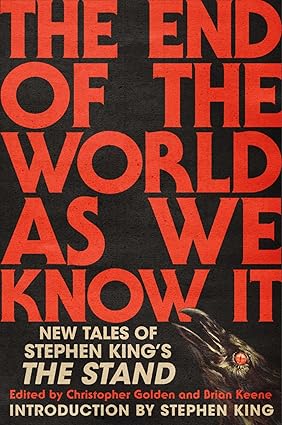
A review of “The End of the World As We Know It: New Tales of Stephen King’s The Stand,” 2025

The End of the World As We Know It: New Tales of Stephen King’s The Stand (2025) isn’t a sequel; it’s a hefty companion volume to King’s apocalyptic classic. I had a lot of fun with it, and I cheerfully recommend it to those who love The Stand.

There are 34 stories here, set concurrently with the events of The Stand or afterward. The contributing authors include a few names you are likely to recognize from genre fiction, including Joe R. Lansdale and Chuck Wendig. (Brian Keene actually chimes in with the anthology’s afterward.)

One of the things that I liked most about the book was the multitude of viewpoints, which really flesh out The Stand’s global catastrophe. The reader is introduced to all manner of individuals who witness this world’s pandemic, the ensuing dreams, and the longstanding consequences of Captain Trips and the showdown in Las Vegas.

It’s a diverse group — from cops (both good and bad), to children orphaned by disease, to astronauts aboard the space shuttle, to exotic animals trying to escape their zoo enclosures. (Catriona Ward’s brutal, beautiful “The African Painted Dog” might be my favorite in the bunch.) We even follow the ordeal of people who were never immune to Captain Trips, but who survive in hidden seclusion. The survivors we meet are in such far-flung places as Puerto Rico, Britain, Pakistan … and even other universes.

The anthology suffers once or twice when its entries stray a bit too far logically from the main narrative of The Stand. The stories I enjoyed a little less were those that felt like conventional horror stories shoehorned into our familiar, favorite end of the world.

This book often reminded me of Max Brooks’ World War Z (2006), which depicted a global zombie holocaust through the eyes of a wide variety of survivors around the world. I mean this as a favorable comparison, because I also loved Brooks’ opus.

Most of the stories have no impact on the events of The Stand. But a few do. And if you loved King’s plague-ravaged universe, it’s fascinating to see what was going on “in the background” while the major events unfolded in the original story. Some of the authors took just a single line or minor location from the novel and created an entire tangential story around it.

The authors even continue King’s tradition of linking his books and stories. There are references to a number of past tales: at least two stories from Night Shift; the The Dark Tower series; and possibly Hearts in Atlantis and The Eyes of the Dragon. (I’m sure there were a few that I missed.) This connectivity makes more sense than you’d think, considering the inclusion of a certain plot device — but I will avoid spoilers by saying no more about it.

If you are a King fan, this is really a good read. Grab it if you can.


“My Mother’s Apartment” appears at The Piker Press.

I’m honored to share here that a short poem of mine, “My Mother’s Apartment,” was published today over at The Piker Press.  You can find it at the link below.

As always, I am grateful to Editor Sand Pilarski for allowing me to share my voice with the readers of The Piker Press.

“My Mother’s Apartment”


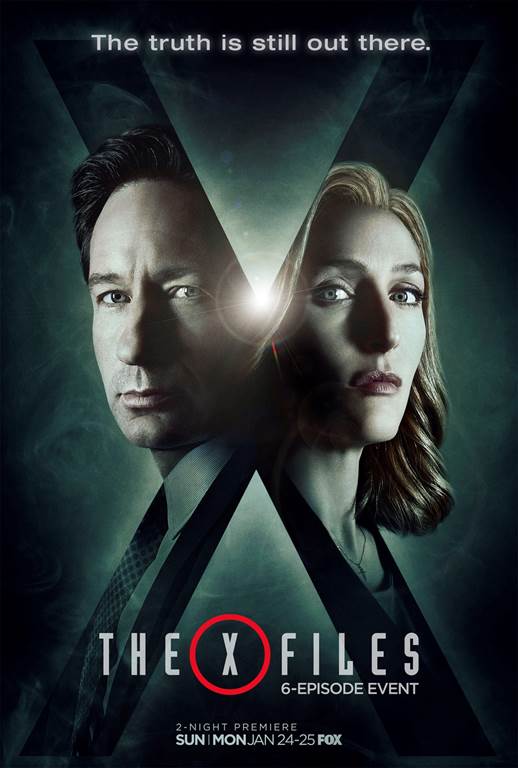
A review of “The X-Files” Season 10

I breaks my heart to say this, but 2016’s long-awaited return of “The X-Files” was not a triumphant one.  (Indeed, I am writing this review nearly two years after its conclusion because I only recently got around to watching the last of its six episodes.)  I’d rate the brief season a 4 out of 10 — the lowest rating I’ve ever given to a season of the show.

I hope this year’s Season 11 proves me wrong, but I’m finally starting to wonder of “The X-Files'” time has come and gone.  (This is coming from someone who was a lifetime fan.  I even thoroughly enjoyed seasons 7 through 9, which was when much of the show’s loyal fan-base began truly eroding between 1999 and 2002.)

So many of the show’s core elements seem outdated now.  The character arcs of its two heroes and their relationship were resolved seasons ago.  Its central overriding story arc — an elite cabal’s conspiracy about (and with) aliens — appears to have been milked for most or all all of its entertainment value.  And the show’s format of mixing a handful of “conspiracy episodes” with standalone “monster-of-the-week” episodes feels awkward compared with contemporary programs that better integrate multiple plot lines.  (Consider HBO’s “Game of Thrones,” for example, or even the various Netflix and television series that are part of the Marvel Cinematic Universe.)

The truly fatal blow to “The X Files'” staying power, though, runs a bit deeper — network television just isn’t as positioned as it used to be to tell the scariest stories to a wide audience.  There is too much competition from sources less beholden to censorship or to the milquetoast sensibilities of mainstream appeal.  The first is easily accessible cable channels like HBO and AMC, which can shock viewers with visceral violence.  The second is subscription services like Netflix.

And third is simply the Internet at large, with its endless cornucopia of morbid or bizarre content.  “The X-Files” was created before the Internet was a common household utility.  Part of the show’s appeal was that it offered people the creepiest stories they’d watch anywhere anywhere outside of a movie theater.  And those stories at least seemed well researched by the program’s writers, who did a tremendous job for most of the show’s run.

Today’s Internet-connected entertainment marketplace is different.  No matter how much weirdness “The X Files” can pack into a 43-minute episode, the average consumer can find material online that is darker or more frightening in less time than that.  Compare the average “X-Files” episode, for example, to the array of material devoted to real-life “paranormal” subjects, like “Slender Man,” alleged UFO footage, or tragedies like the mysterious death of Elisa Lam.  (That last one is truly shudder-inducing.  Google it at your own peril.)

The only way a show like “The X-Files” can hope to compete is with excellent attention to tone, tension and character — something I thought that seasons 7 through 9 did pretty well with, despite a gradual fan exodus after David Duchovny’s awkward departure from the series.  Season 10 just didn’t follow suit.  It really was as though a range of previous “X-Files” episodes has been thrown in a blender, so that their component parts could be served yet again.  The conspiracy stuff, in particular, was poorly executed, too hastily paced, and just a bit too campy for my taste.  Mulder and Scully’s return was also too self-conscious — as though Duchovny and Gillian Anderson were reunited for a tongue-in-cheek reunion special.

It wasn’t all bad.  These two leads are always fun to watch.  The fourth episode was superb — “Home Again” served up both a creepy, macabre story and a meaningful character arc for Dana Scully.

Episode 3, “Mulder and Scully Meet the Were-Monster,” was also fun enough.  But while a lot of other fans absolutely loved this humorous entry, I personally didn’t feel its central joke merited a full episode.  Besides, this particular twist has been done before, in a 1989 book by a well known speculative fiction author.  (I won’t name the book or the author here, in order to avoid spoilers.)

The rest of the episodes were … fair, I suppose.  Oh, well.

I’m thrilled that we’re currently being given Season 11 of “The X-Files.”  As someone who was a longtime fan, I never envisioned the show lasting this long, even after a hiatus of many years.  I just hope the show matures and grows in quality after this disappointing rebirth.


XFilesStillOutThere

Hope it never happens …

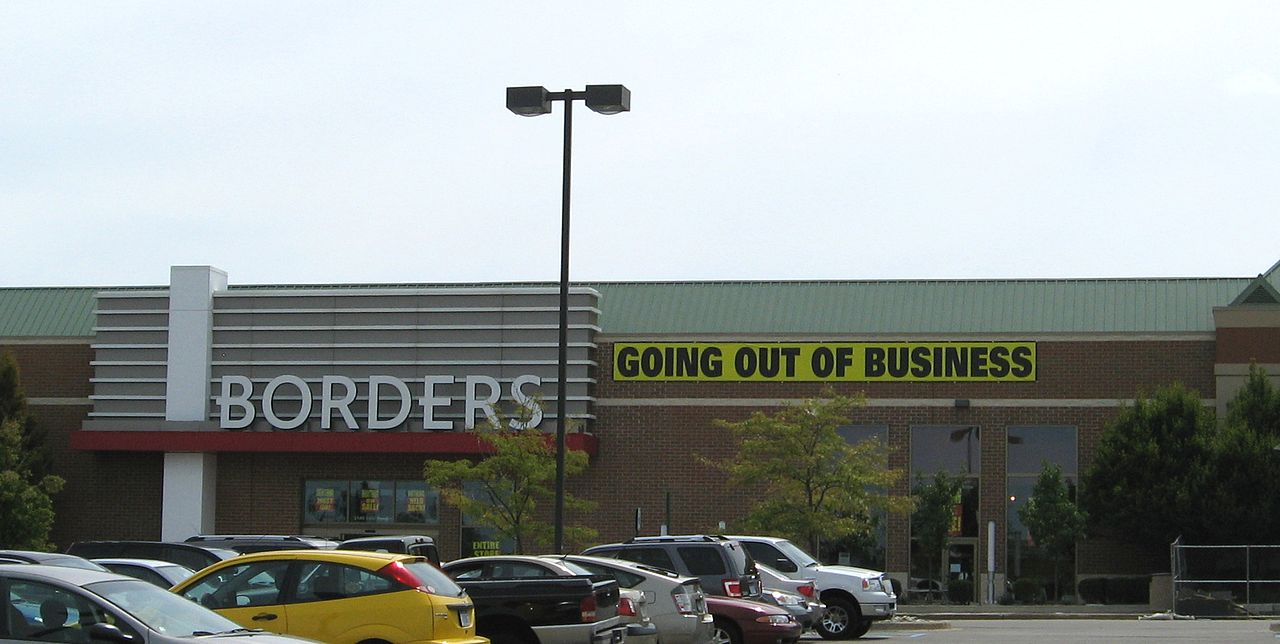
When bookstores finally go out of business, will all we bibliophiles be Shoppers Without Borders?


1280px-Borders_store_closing_Pittsfield_Township_Michigan

Photo credit: By Dwight Burdette – Own work, CC BY 3.0, https://commons.wikimedia.org/w/index.php?curid=16277167