Tag Archives: Eric Nolan Mary Washington College

“Industrial Revolution,” by Eric Robert Nolan

“Industrial Revolution,” by Eric Robert Nolan

1.

Did Leonardo Da Vinci 
Endlessly dream of machines?
Not his own baroque creations, those 
Wood and wire winged artworks 
That hung over his study:
Alate and ordered, latticed contraptions,
Each a suspended symmetry,
Gargoyles in geometry.

Did he dream of machines to come?
I picture him up late,
Poring over his own illustrations first, then
Ushered into Euclidean sleep 
By soothing mathematics — 
The soft and ordered blossoms of
His own woodwork designs
Were flower-petal angles in his brain.

Could he, asleep, have foreseen
The assembly line, Ford’s
Ant-like Model T production?
Did he have an artist’s abhorrence 
For its linear, dull, and utilitarian order?
Was it a nightmare for him?

2.

How did farmers feel
In the Industrial Revolution?
Staid agrarian men, their disapproving eyes 
On the newfangled factories
Lining the horizon.

A rising scent of sulfur announces an age —
The new ripe stink
Of an advancing century.

The lined and coal colored fortresses, 
Of an impregnable era.
Were castles for the Barons
In a new, feudal America —
Only burning – their smoke
Seeding a virgin sky
Up from the wide black loins and the lined, cracked skin
Of a newly darkened Earth.
Did they resent or marvel at
The New Century’s soot Aesthetic – 
The black castles of iron?
A lined and ordered Hell — 
Souls among the smokestacks,
And bellies full of conflagrations?

To the later observers of old photographs,
The blackening symmetry 
At ninety-degree angles might
Resemble the rise of circuits.
Can you imagine farmers
Having prescient dreams?
What would one have thought, all tucked under
A homespun quilt at dark
Resenting advancing fortunes?
Might even one, once, in his antipathy
Have predicted, asleep,
The microchip’s square face?

I know no etymology
For the word, “Revolution.”
Is its root “revolt?”
To rise up against?
Or “revolve,” as in a circle?
“Revolve” as in “return?”

3.

Could Edison or Tesla
Have envisioned television – its great glass eye
Like Homer’s Cyclops,
Dull and full of vulgar visions,
Its mood made capricious
With changing channels?

We ought to pluck it out, or, at least,
Turn away at dinner.
We should cling to the books of our childhoods 
Like the bellies of great sheep.
But we are not as sly
As Odysseus.

4.

During the old Cold War
In my 1980’s childhood
My father said he believed
Machines could prevent The End.

The Communist Revolution,
The Bolshevik revolt,
Had made its rising Bear
America’s enemy, in
A Nuclear Exchange, but Reagan
Marshaled forth our own machines in greater numbers.

I feared them —
The ICBM’s — 
As a boy I imagined them
Rising in the sky in perfect symmetry
To make the new, black backcloth
Of the Atomic Age.

At the age of 13
I wrote a poem describing 
Their blossoming explosions.
In my childhood dreams
Their interlocking contrails
Looked like lattice work
Or angled flower petals.
In nightmares they are prescient
The warheads already know
The name of every child turned to soot.

My father, however, envisioned
Devices on all our wrists
Connecting us all – we’d know
That distant Russian farmers
Were no Politburo.
Finally realizing
That we were all the same
We’d be reluctant to push 
The Button.
Before the 90’s advent
Of The Internet
Was this a kind of prescience?
My father was a poet too. 
Today, in his absence,
After I write this
I’ll share it with Eugene, my friend,
In Russia.

5.

My mother’s best machine
Is a tablet on her lap
Looking ironically like
Half the Christian commandments.
She asks me how I am. 
I lie and say I’m fine.
In my heart, I am a farmer
Tucked under a quilt.
Circuits rise in the East; 
In the West, 
Missiles rise and arc at dusk.

My own machine
(with which I write this now)
Is full of distant visions:
The new and chic and sinful interests — 
Zooey Deschanel and Richard Dawkins,
The New Girl and the erudite Briton,
Lust and apostasy in Windows.
Someday will there be
Prescient machines?
(Now, about the present, they’re omniscient.)

My favorite TV program
Shows monotheistic machines,
And an embittered robot 
Has a nuclear suitcase.
The hunted warn one another,
“The Cylons look like us now.”
Elsewhere, seen
By my machine
An internet flame war
Turns NUCLEAR.
A nationalistic ugliness ensues
Stoked along the coals of the global circuitry.
My screen is the glass face 
Of a monster hurling stones.
Maybe this, instead, is Homer’s Cyclops.

My laptop “hibernates”
When left alone too long
Once I imagined it dreaming
Of a better owner.

So unlike Da Vinci’s,
The asymmetric gargoyle
Of our own uncertain future
Hangs over our heads. 
With a Sword of Damocles.
Its lopsided face
And lack of proper geometry
Is still our own design.

6.

I’m almost 41 and miss the girl I love.
She had a Revolution — rising in her cheeks
Flush red when 
I tickled her tummy in public
That time in Virginia Beach.
Hailing from The South, we’d joke
She was a “farmer’s daughter.”
In her last words to me, she said
She couldn’t know the future.
(She isn’t prescient, after all.)
“A lot needs to happen.”
And now I need to be
Industrious.
When people ask me what I dream
I say that I do not.
Besides, I’d rather not.
Not when the red flush rises yet again in her high white cheeks
Like twin sudden gardens full of roses.

And I endlessly dream of machines.
I dream that I am one.
My face is the same, except
A bright-hot piston heart
Replaces soft aorta,
Hardened steel instead of red tissue,
And my mind
Is a reliable hard drive
Holding balanced equations.
This would be easier.
I want a world of heuristics.
Algorithms instead
Of red flush memories.

I want a Revolution.
I want the world to change.
If I see my Love again,
I will hold flowers
And angle in for a kiss.

“My heart is a machine now,” I’ll tell her.
I’ll brightly peel back
The soft, pale imperfect flesh and say,
“I’m stronger. Look, I’ve changed.
“Look at my heart. Look.
“See the steel here. 
“Feel these steel angles, these veins are now only
“Piano-wire lattice work,
“Taut and tightly strung.
“Feel how the hardened symmetry
“Forms a perfect circuit.
“My heart is a bird-machine –
“It has Da Vinci’s wings.
“My heart is a latticed contraption.
“My heart for you is NUCLEAR.
“My heart is a prescient machine that sees our future.”
“My heart beats
“Its new and hardened life
“At angles.”
Her fingertips will be as soft
As flower petals.

I want a Revolution.
I want the world to change.
But if I meet my Love again
Will her eyes return to me? 
Revolt?
Or turn away?

[Dedicated to Robert J. Nolan]

Originally printed in Dead Snakes:  http://deadsnakes.blogspot.com/2013/11/eric-robert-nolan-poem.html

© Eric Robert Nolan 2013
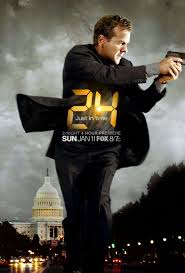
I persuaded a spy to watch “24.”

Seriously.  Dude has a full-time job in the intelligence community, and he’d never seen a single episode of the program.

So the joke always fell flat when I would call him on the phone and scream, “THERE’S NO TIME, JACK!!!!!!”

Last night he did a Season 1 marathon.  And all because a chain-smoking liberal poet told him to.

“IRONY, CHLOE!!!”

Image

Eric Robert Nolan is UNDER THE BED!

Seriously.  Like, right now.  There are a ton of Payday wrappers down here.  I thought I was the only one who was facing that challenge in life.  (The first step is admitting you have a problem.)  Also, that Mickey Mouse ankle sock you lost.  (Tasteful.)

Don’t look so surprised.  You knew I was a weirdo when you friended me on Facebook.  And now I’ve used a public records search to find your house.

Please — nobody say “Yeah, but at least you’re out of the closet.”  Because I’ve been getting a lot of those jokes lately, and I’m not sure how to respond to them.  (Not that there’s anything wrong with that.)

Seriously, though — what I mean is that I am a contributing writer for the May 2014 issue of Under The Bed Magazine, available at the link below for just $3.99.  (And if you love the mag as much as I do, you might consider getting a subscription in which each issue is only $1.99.)  My horror story is entitled “The Song of the Wheat,” and visits a dark, sprawling Kansas farm where children need never be lonely.  For those of you who’ve enjoyed my science fiction-horror, this is my foray into supernatural horror. Think of it as an empiricist’s walk on the wild side.

I can’t describe how fun and cool it is to be able to contribute to Under The Bed.  Check out the magazine’s caveat: “Under the Bed contains gruesome violence, adult situations, freaky sex, unconsequenced drug use, and stuff that will almost certainly give you nightmares.  Under the Bed is intended for mature audiences.  Keep out of reach of children.  Please indulge responsibly.”

I am so pleased at the opportunity to work with Managing Editor Wednesday Lee Friday, and I am honored to see my story featured alongside Under The Bed’s talented other horror writers.

Enjoy!! 🙂

http://www.fictionmagazines.com/shop/u-t-b/under-the-bed-vol-02-no-08/

Image

I am NOT James Woods.

As much as I would like to succeed as a writer, my primary existential goal in life is to finally inform everyone that I am not, in fact, actor James Woods.

I’ve heard about the likeness since I was 16 or so, and even I can admit that the resemblance is quite strong.  It is incredibly cool watching John Carpenter’s “Vampires” and seeing … myself fight the title monsters.

But I’m not him.  Really.

Anyway, I do have Facebook friends who love to exacerbate my neuroses — here is a “separated at birth” -type comparison of me and the actor.  My MOM initially couldn’t tell the difference, and asked why I “looked so funny in the second picture.”

Thanks, Mom.

Sigh.

Image

“Confession,” by Eric Robert Nolan

Celebrate National Poetry Month — here is a link to my most popular poem to date, “Confession,” which was published in Dead Beats Literary Blog in October 2013.  So many readers liked this one.  Just last night I was chatting with a friend in Las Vegas who is a voice actor — he told me that he is actually making a recording of the poem, and will share his own reading of it when he’s created a recording that he’s happy with.  

I was initially surprised at the positive reader feedback for “Confession.”  The first people I’d shown it to after writing it disliked it; the first publisher to which I’d submitted it emphatically rejected it.  Its critical message and sexual imagery are not for everyone.

I remain grateful to Dead Beats for sharing it, and to their readers for letting me know that this piece indeed has a receptive audience.  (Dead Beats is such a terrific publisher for edgier or darker poetry.)  And thanks, of course, to the generous readers who occasionally drop me a note to let me know they liked the poem.

http://www.deadbeats.eu/post/63481494199/confession-by-eric-robert-nolan

A Bridge Too Far …

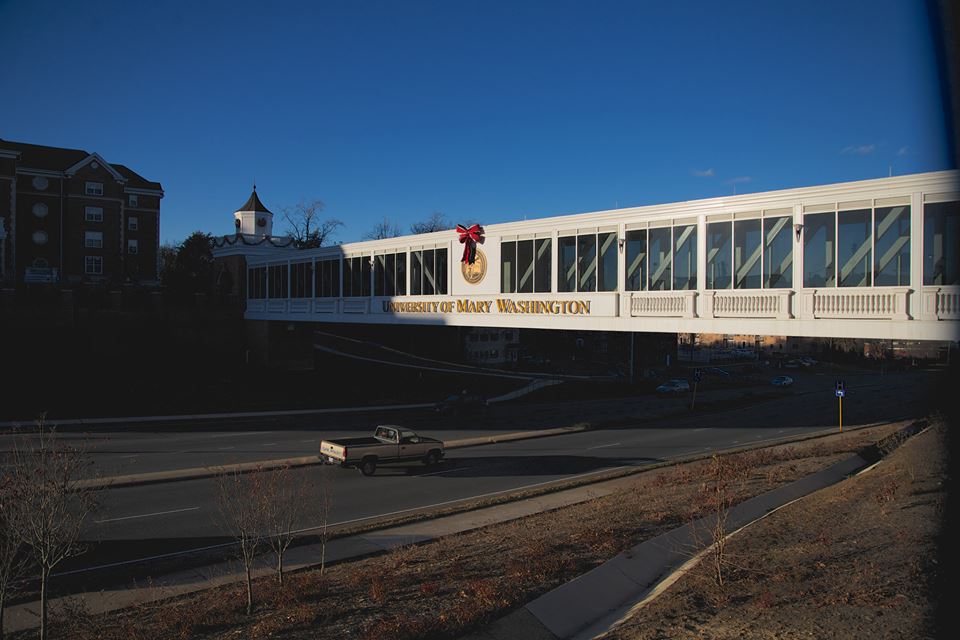
Shown below is the pedestrian bridge over Route 1 in Fredericksburg, Virginia, linking Mary Washington College’s main campus with … a student apartment complex now?  There are those of us who remember when Giant Supermarket occupied that space, along with a huge crafts store that was popular with the girls, and a Domino’s Pizza managed by none other than my great old friend and alumnus, Sanjeev Malhotra.

You know what makes a guy feel old?  Seeing photos of his alma mater and noting the bridge and buildings that he cannot recognize because they have been erected in his absence.  Thank you, Janet Walbroehl Winston and Russell Morgan, for adding to my insecurities by sharing these pictures.

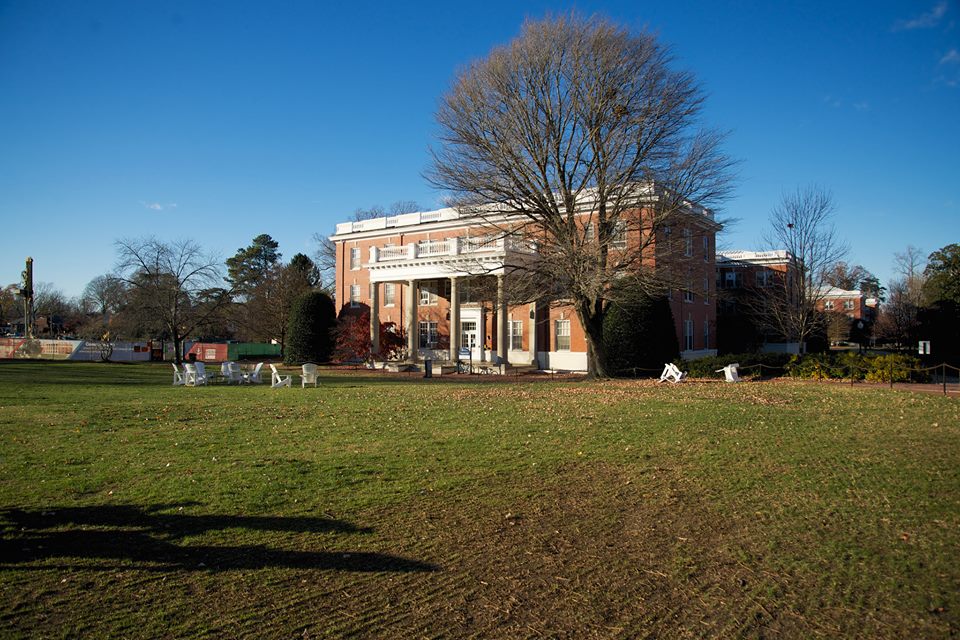
The second photo down is of Virginia Hall, which housed Freshmen women when I attended school.   I and my friend Jeff once went Christmas caroling there … in April.  “Milwaukee’s Best” beer was a contributing factor in our holiday spirit, which was lively and well intentioned, if not timely.  If that cheap beverage was truly Milwaukee’s best, I shudder to think of what the city’s worst might have tasted like.  Hell, even its average might have been poison.

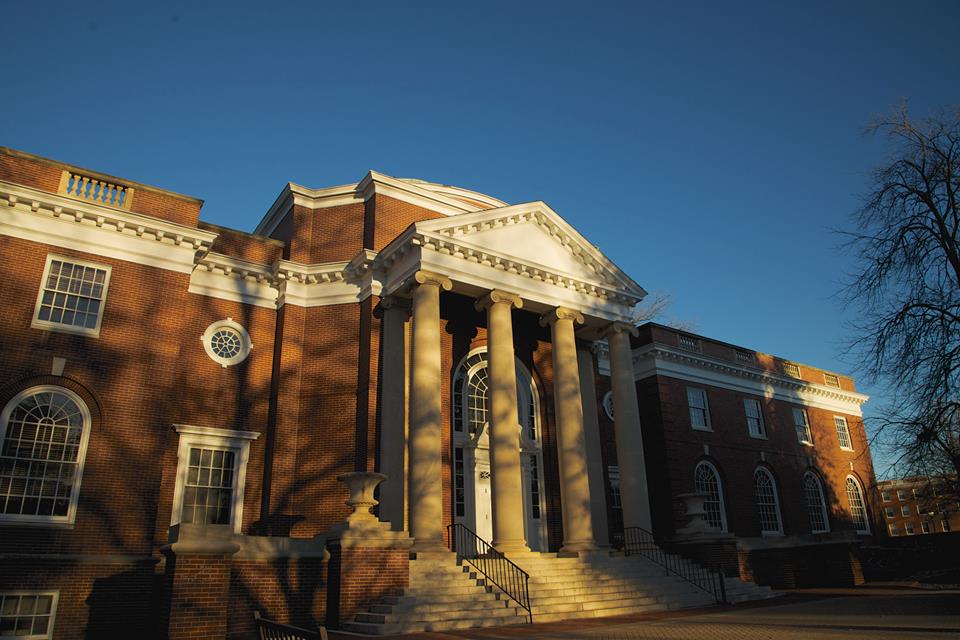
The third photo down is of Trinkle Hall.  It is here where I took Philosophy 101 with Dr. Cynthia M. Grund, an immeasurably talented educator who often employed science fiction films and books as a starting point for discussing philosophical concepts.  I first read Philip K. Dick’s “Do Androids Dream Of Electric Sheep” under Dr. Grund’s guidance, and watched and first gained a genuine understanding of Ridley Scott’s “Blade Runner.”  The class was pure fun, enhanced by a wonderfully creative educational approach — it was one of my favorites.

Dammit … now I am hungry for Domino’s Pizza.


Image

The bridge over Route 1.


Image

Virginia Hall.


Image

Trinkle Hall.


Image

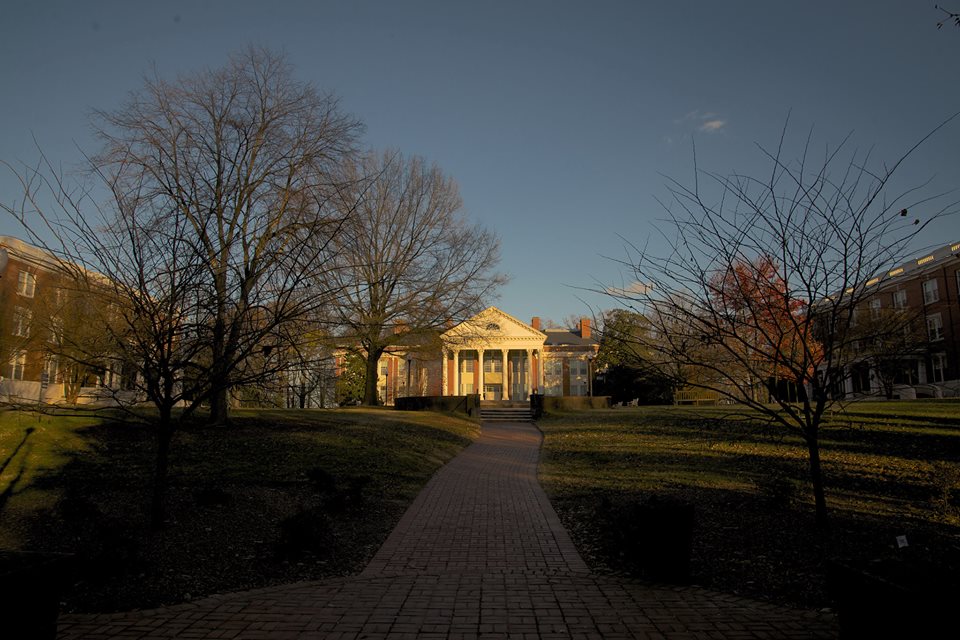
Ball Hall.


Image

Chandler Hall with Virginia Hall at right?


“No.”

Had a list of considered titles for the sequel to “The Dogs Don’t Bark In Brooklyn Any More;” ran them past my Girl Friday.

Her response?

“No.  No.  No.  NO.”

So, in other words, my early creative efforts have met with hearty approbation.

You can’t say she isn’t concise.

Horror comics, a Samurai death poem, and the origin of “Mayakovsky.”

Celebrate National Poetry Month — here’s is Ota Dokan’s famous farewell, written while he died from an assassin’s knife.


“Had I not now that I was dead already

I would have mourned

the loss

of my life.”


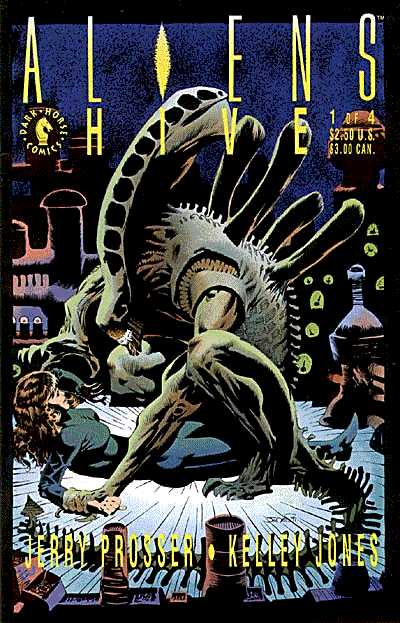
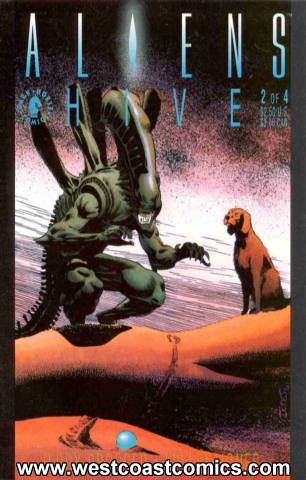
I came across this piece when I was 20 years old and reading Dark Horse Comics’ outstanding “Aliens: Hive” limited series, written by Jerry Prosser and illustrated by Kelley Jones.  (Yes, there are people out there who are nerdy enough to learn poetry from comic books.)  “Hive,” to this day, remains one of the most enjoyable science fiction stories I’ve ever read.  Prosser’s script and characters were amazing, and Jones’ art was beautiful; both men exemplified what two talented creators could accomplish with the under-recognized medium.

Most of my online friends know that “Mayakovsky” is a pseudonym I employ when writing movie reviews and such.  This story’s protagonist is from whom I took the name — not the famous poet.  Like I said … NERDY.

Image

Image

ImageImage


“She drained me like a fevered moon.”

Celebrate National Poetry Month — here is “Fletcher McGee,” from Edgar Lee Masters’ “Spoon River Anthology.”

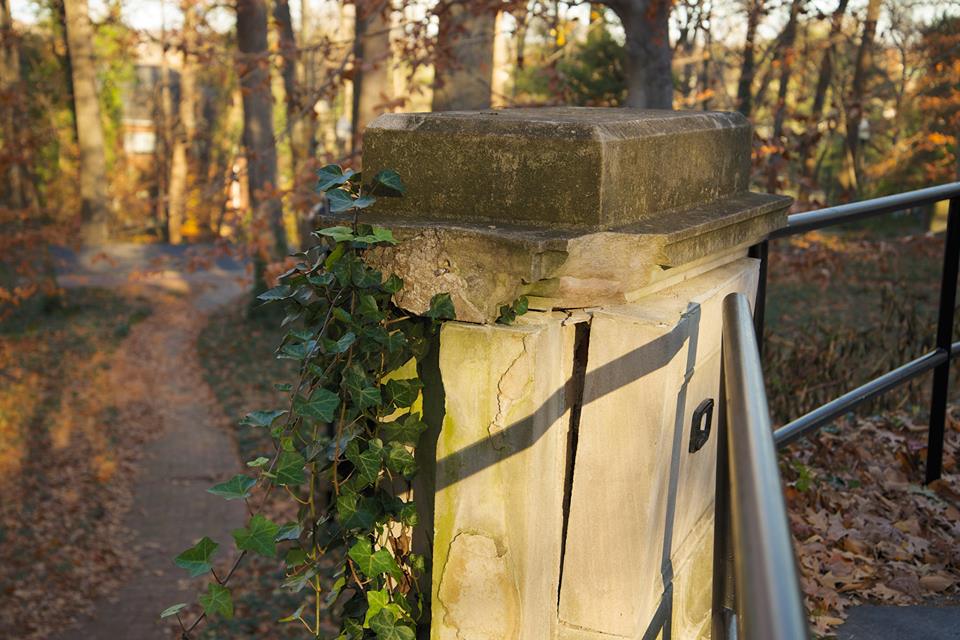
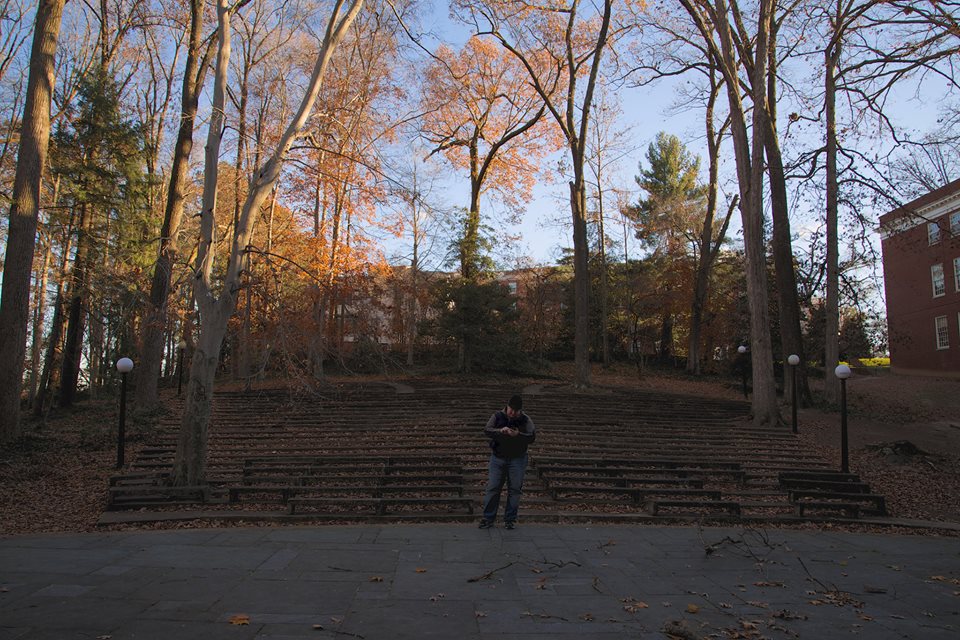
Below it are two photos of Mary Washington College’s outdoor amphitheater.  (Alum Janet Walbroehl Winston took the photos; Russell Morgan is pictured.)  Many, many moons ago, I was cast in an outdoor production of “Spoon River” as a Freshman.  “Fletcher McGee” was one of the roles I portrayed.  I was not Laurence Olivier.  After our first performance, one classmate advised me, “Stop overacting.”  You kinda don’t get much more candid than that, or concise.

Oh, well.  I still had fun.  I have wonderful memories of early Autumn evenings, eating cafeteria cheeseburgers and fish sandwiches, wearing vintage costumes and rehearsing lines with the other 19-year-old kids.  And that amphitheater was a beautiful place among those tall, overarching Fall trees, even if it was in a state of disrepair even then.

After I die, if I wind up speaking like the ghosts in Masters’ “Spoon River,” maybe that’ll be the place I will choose to haunt.

“Fletcher McGee”

She took my strength by minutes,
She took my life by hours,
She drained me like a fevered moon
That saps the spinning world.
The days went by like shadows,
The minutes wheeled like stars.
She took the pity from my heart,
And made it into smiles.
She was a hunk of sculptor's clay,
My secret thoughts were fingers:
They flew behind her pensive brow
And lined it deep with pain.
They set the lips, and sagged the cheeks,
And drooped the eye with sorrow.
My soul had entered in the clay,
Fighting like seven devils.
It was not mine, it was not hers;
She held it, but its struggles
Modeled a face she hated,
And a face I feared to see.
I beat the windows, shook the bolts.
I hid me in a corner
And then she died and haunted me,
And hunted me for life.

Image

Image

Can you hear that distant howling?

I’ve gotten a lot of queries from readers lately about progress on the next book in “The Wolf War” series.

Rest assured — I am working on it.  I promise devastated lands under harsh moonlight, disciplined soldiers moving quietly in the night, and our heroes keeping company with the dead.

I will apprise everyone of the journey as it proceeds.