Tag Archives: Eric Robert Nolan

A short pan of “Velvet Buzzsaw” (2019)

Sorry, but for me “Velvet Buzzsaw” (2019) was a bust.  I’d rate it a 3 out of 10 for being an interesting and ambitious Netflix horror film that nevertheless failed to hold my interest.

My interest was piqued along with everyone else when I first saw the trailer for this earlier this year.  It looked amazing.  It was a high-concept supernatural horror film with great visual effects and a cast that included Jake Gyllenhaal, Rene Russo and John Malkovich.  (The cast also includes Toni Collette, who I’ve recently come to understand is a damned good actress.)  It looked funny too.

But “Velvet Buzzaw” fatally suffers from the characters that it depicts.  All of the above actors portray profoundly irritating characters, and not even their formidable talents make these characters any fun to watch.  The movie takes place in the Miami Beach art world, and the major characters are artists, critics, or gallery owners and employees.  (The plot device here is a collection of haunted paintings that kill their owners.)  With the exception of Malkovich’s artist (“Piers”), these characters are so cloying, trite and pretentious that seeing them on screen is nearly nerve rattling.  You don’t care much that they’re imperiled.  You just want to see them die, so that the movie will be over.

This would have been a far better movie if screenwriter Dan Gilroy chose to depict its events mostly from Piers’ point of view.  I suppose that would have been difficult; he isn’t central to the plot.  But it would have been worth it.

There are some things to like.  Malkovich and Russo re always fun to watch, a lot of the special effects are quite good, and the final demise in the film is actually very well rendered.  (Given the mediocrity of the movie as a whole, I was surprised at how clever and unsettling this was.)  A college buddy of mine with excellent taste in horror actually liked “Velvet Buzzsaw” quite a bit.  So maybe this is just a matter of taste.

I can’t recommend this, though.


velvet_buzzsaw-829687870-large

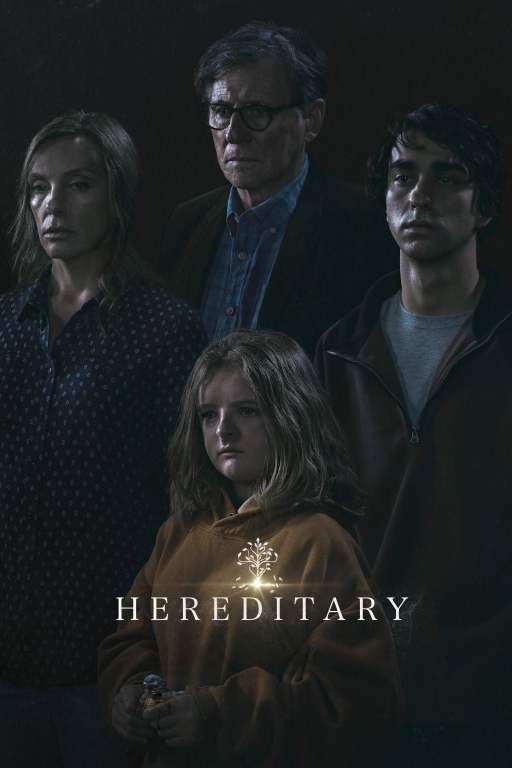
“Hereditary” (2018) is an expert horror film that I’m not sure you should see.

“Hereditary” (2018) is a difficult movie to review.  It’s an exceptionally well made horror film, enough for me to rate it at least a 9 out of 10.  But its content is so disturbing that I’m not sure that I can actually recommend it to others.

From a technical standpoint, the movie is almost perfect.  It’s an astonishingly good first feature film for writer-director Ari Aster, it’s gorgeously shot in the hills and deserts of Utah, and it’s masterfully directed.  The performances are uniformly perfect.  If I were to name each actor who hands in a fantastic performance, I’d simply be reading its cast list.  I can’t remember the last time I watched a feature film in which every single major performance was exemplary.  And “Hereditary” gets damned scary in its third act.   (Seriously, give it time.)

The only flaws that I can think of are extremely minor.  The pacing isn’t perfect.  (The story occasionally seems to slow when events should be accelerating.)  I had problems with the way that one key character was portrayed, and there was one plot point that gave me trouble.  (I can’t say more for fear of spoilers.)  But these things are so forgivable that they hardly merit a mention here.  You simply can’t argue that this movie was expertly assembled.

Yet I didn’t always enjoy “Hereditary.”  I’d be lying by omission if I didn’t state that.  I shut it off more than once, and then came back to it when I felt more able to stomach the brutal events it depicted.

“Hereditary” is more than a “dark” movie; it’s gut wrenching.  Even if you have read its reviews and you’ve seen the movie’s marketing, then you still aren’t anticipating what will transpire on screen.  (I’d even go so far as to say that the film’s marketing was misleading, but I can’t specify why here.)  Yes, there’s a obvious “Rosemary’s Baby” (1968) vibe, and it’s sometimes reminiscent of “The Exorcist” (1973), but the movie pushes well past the boundaries of those films, and it does so fairly early on.  If I, a lifelong horror fan, was turned off by this, then I’m willing to bet that it would also be too much for a lot of casual film goers.  (And indeed, while critics loved this film, audiences last year generally hated it.)

I’m closing with a little bit of trivia.  Toni Collette gives a tour-de-force performance here as the troubled mother.  If she looks familiar to you, that might be because she’s also the mom in another well known supernatural horror film — M. Night Shyamalan’s “The Sixth Sense” (1999).


p9fmuz2Oj3HtEJEqbIwkFGUhVXD-0

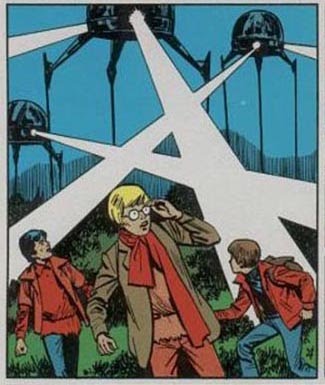
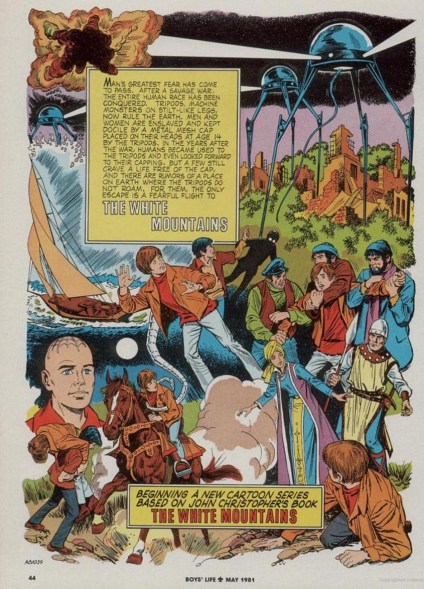
Throwback Thursday: “The Tripods” comic strip in “Boys’ Life” magazine!

I had a subscription to Boys’ Life magazine for a couple of years when I was a Cub Scout in the early 1980’s.  My parents canceled it after a year or two, and I can’t blame them — I just wasn’t reading it.  Boys’ Life was the official magazine of the Boy Scouts of America, and it was pretty wholesome stuff … it just didn’t offer the excitement of my comic books or the occasional copy of Fangoria that I manged to get my hands on.

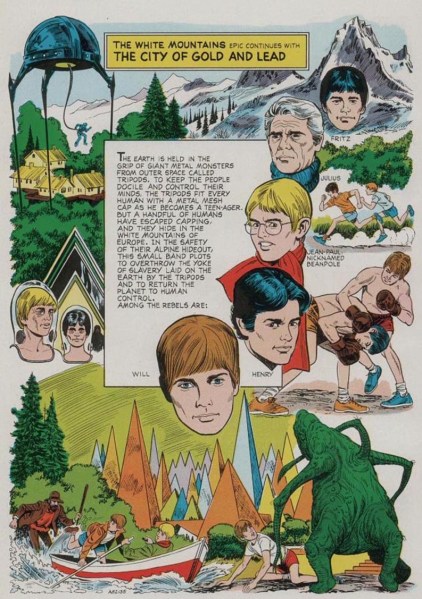
But there was one feature of Boys’ Life that I followed religiously — the serialized comic strip adaptation of John Christopher’s The Tripods book trilogy.  (Christopher published the first three of his books in the late 1960’s; he added a prequel novel in 1988, but that was long after the Boy Scouts and Boys’ Life was behind me.)

The Tripods was cool, dark dystopian stuff.  The story opened with the first book, The White Mountains, to find humanity settled into an agrarian, pre-industrial age in which their overlords were the titular “tripods” — massive three-legged vehicles piloted by unknown beings.  Humans were ritualistically “capped” with a brain-altering device when they reached age 14 — thereafter becoming docile and conformist and easier for the mysterious machines to subjugate.

The White Mountains followed a trio of 13-year-old boys who escaped the “capping” to seek out a human resistance movement; the second book, The City of Gold and Lead, shows two of these protagonists infiltrate the city of the tripods’ operators.  (Spoiler — they’re grotesque aliens.)  The third book, The Pool of Fire, presumably picks up from there, but my Boys’ Life subscription ran out before the magazine got to that.

I recently, however, used this Interwebs thingamajig to discover what looks like a real gem of a find — a 1984 BBC mini-series adaptation of the books.  I started the first episode and it looks quite good.  If I get around to watching the whole thing, I’ll review it here.


40da7d9da25e489860f6e1bc7bccf65a7112394a

3

4

5

2

The renovated Mary Washington College Amphitheatre looks fabulous.

I’m not really clear about when the renovation was completed.  (Was it last summer?)  But it looks absolutely gorgeous.

Check out the pictures here at the Glave & Holmes Architecture website.


A short review of “Captain Marvel” (2019)

“Captain Marvel” (2019) has a couple of weaknesses, but mostly rises above them in its second half to become an entertaining big-budget popcorn movie.  It generally succeeds, and I had a lot of fun with it.  I’d rate it an 8 out of 10.

At first, the movie comes off as a mild disappointment — a boilerplate, made-to-order space opera with a thin script, simplistic dialogue and sometimes average acting.  (I personally don’t think that Brie Larson has the most depth or range of any actress in Hollywood.)

But the movie has a few surprises for us, both in terms of its story and its ability to win us over with humor and its sense of escapist, comic book fun.  Larson does have a lot of onscreen presence and charisma, and she does fine conveying anger and urgency.  She also has great deadpan comic line delivery.  After seeing the film, it’s difficult for me to picture anyone else in the role.

The special effects were nothing short of fabulous.  I didn’t expect to see a Marvel film with a space battle that could compete with those of the “Star Wars” franchise.  The fan service and the continuity with other Marvel films is also terrific.  Speaking of fan service — the Stan Lee tributes were genuinely touching.  One of them was a threefold reference to Lee, Kevin Smith and the 1990’s, when the story is set.  Talk about understanding how to please your target audience.

I’d recommend this.


MV5BMTE0YWFmOTMtYTU2ZS00ZTIxLWE3OTEtYTNiYzBkZjViZThiXkEyXkFqcGdeQXVyODMzMzQ4OTI@._V1_SY1000_CR0,0,675,1000_AL_

Today’s thoughts.

  1. If Mueller’s report is particularly damning, then releasing it on the Ides of March would be one hell of a Shakespearean reference.
  2. Donald Trump autographing Bibles is like me autographing a Gold’s Gym membership. Or a calculus textbook.
  3. I’ll bet yesterday’s Facebook outage did more to prevent Russian meddling in America’s affairs than our President has.


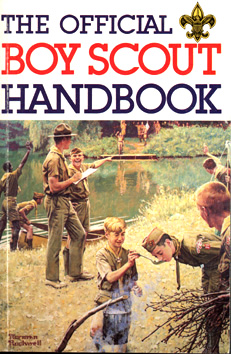
Throwback Thursday: 80’s-era Scouting handbooks.

If you were a Scout in the 1980’s, then I’m sure you remember these.  Yes, I was a Scout for a while too, and I fully realize that will amuse a lot of people who know me.

I’m pretty sure I aced that whole Cub Scout gig, as its only real requirement was being polite to adults, along with maybe doing good deeds every now and then.  I did just fine at the “Webelos” stage too.  Being a Boy Scout, however, had many more requirements — they included, among other things, not dying of exposure.  And here was where the expectations of scouting at last exceeded my natural aptitudes.

So I wasn’t exactly John Rambo out there.  If the Boy Scouts had voted on superlative awards, then I’m pretty sure I would have won “Most Likely to Die in the Wilderness,” or maybe “Most Likely to Perish in a Fire He Inadvertently Started,” or maybe even “Most Likely to Arrive at a Girl Scout Meeting by Mistake.”

Oh, well. I had fun with it.

The painting on the Bot Scout Handbook below, by the way, is “Come and Get It” by Norman Rockwell.  Here’s some trivia for you — if you’re ever surprised by the sheer volume of the man’s paintings, that’s because he completed more than 4,000 in his lifetime.

[Update: I see that I misspelled “Boy Scout” as “Bot Scout” above, but I’m leaving it there because it’s funny.]


bshb9b

boy scout book cover

s-l1600

“Hot Cop,” by Eric Robert Nolan

Hot Cop
protects the Pentagon.
She’s the Lovely Blue Line, people.
You sure can’t call it
“Homely Security.”
If glances were misdemeanors
I’d be a suspect.

(c) Eric Robert Nolan 2016


Pentagon_Station


“Blue Wolves Move in an Indigo Wood,” by Eric Robert Nolan

“Blue Wolves Move In An Indigo Wood”

               “Show me a sane man and I will cure him for you.”
— Carl Gustav Jung

All the colors are off —
Blue wolves move in an indigo wood
Their cobalt backs arrive, arising
Like coarse dorsal fins over
low-lying orange flora,
their beryl heads hung low — every
aquiline cerulean nose is angled down —
tracing the escape of a flaming hare —
their racing red rabbit has evaded them again.

Dreams leave all our long nights’ inner canvases
in singular tints and incongruous
strange iridescence.
Reason, here, is pariah.
Senses are its surrogates.
Vision its impostor
in the illogic’s ether:

Slow stars arc in scarlet.
Racing sable comets
make black wakes against
blinding white night.
A full moon rises in violet —
the fat and full and low-lying fruit of a
dark and overripe plum.

Yellow bucks bounce
high and away in the wolves’ wake —
sun-colored stags beat bright retreat
a running herd of burning gold —
all sunlit sinewed limbs and flashing hooves.

Flurries of green quail flutter,
flushed from fushia grasses —
alate bladed emeralds, blazing away.
The verdant birds burnish silhouettes —
angles on lunar lavender.

But ever all the blue wolves ignore the moon.
Each arrows forth in formation
ardently advancing —
oblivious to bucks and disregarding birds.
It’s the hare that they’re after —
its crimson prints
lure azure noses
and bait the ordered forward pace
of the great broad and blue padded paws.

In a surprising eloquence,
one predator’s head
rises and sonorously
sounds its disinterest.

“See, then, dreamer, see,
“what evades the lucid wit at dawn.
“The obvious moon is the obvious girl;
“your love is a glaring suggestion —
“as bare-faced and as common
“as a hundred thousand loves that came before — her face
“turning and facing away is as plain
“as a routine moonrise, but we,
“we are the Jungian Shadow.
“And our red hare is your red hare
“And hare for one and all.”

The predator’s head is an arrow —
its broad blue ears angle back
as its blue nose rises and scents.
And its voice is song.

“See then, dreamer, see
“what confounds the heart at noon.
“The stags to which we’re indifferent
“Are the heroes of your childhood.
“The flight of every bird is your every
“moment of loss, but we,
“we are the Jungian Shadow.
“And our red hare is your red hare
“and hare for one and all.”

Then the blue nose dips
to sniff the ground again
in the predator’s diligence. If
this wolf’s tones were physical,
they would be blue tears.

“See then, dreamer, see
“what escapes the brain at day, see,
“Arriving at your reservoir,
“that its pedestrian waters
“though shallow, still may drown
“in existential death, so rather
“hunt at its circumference
“the red of a Collective hope.
“We are the Jungian Shadow.
“And our red hare is your red hare
“and hare for one and all.”

Finally its eyes soften,
running from burning blue cobalt
to the warm sky-blue of hopeful new boyhood summers, and yet,
its sad irises reflect
a distant dancing red:
a spinning flame –a prancing hare.

“See, then, dreamer, see
“what renders your pain as prosaic —
“the racing red flame of the hare.
“It might have tempted Ovid once
“or pained the painters of caves,
“baiting them as their discovered fire
“first turned stone to a nocturnal
“canvas — the clay
“reddened their hands but they
“could only glimpse an inner quarry,
“as you glimpse it, now,
“turning away
“from your minutiae.”

“See, then, dreamer, see.
“See a universal grief
“and a shared catharsis
“rendered in red in your sleep:
“blood red, the color of prey,
“sunset red at end of day,
“flame, the color of pain
“and, yet, created light.

“See, then, dreamer, see.
“Hunt with us and hear our call.
“Our red hare is your red hare
“and hare for one and all.”

— (c) Eric Robert Nolan 2016


Wolf_Prints_Mudflatse

Photo credit: Mathieu.S.Addison [CC BY-SA 4.0 (https://creativecommons.org/licenses/by-sa/4.0)%5D, with changes (colorization) by Eric Robert Nolan

My poem for a late March night.

I wrote this four years ago, during another insomniac March.

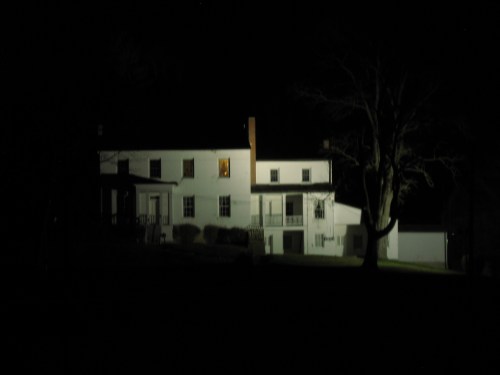
“March Midnight Window,” by Eric Robert Nolan

Cold glass.
One white palm against
A March midnight window.
The hour is struck.
In blackness an indistinct
Day is made another.

Clouds seclude the moon.
To those outside,
The lithe, pale “L” of my hand may be
An alabaster letter,
A sign to other sleepless.
Each, in eisegesis,
Divines its meaning in
Their own midnight hearts —
Whether love or loss I do not know.

(c) 2015 Eric Robert Nolan


Daniel_Hertzler_House_at_night

Photo credit: Nyttend [Public domain]